Understanding the Pincer Grasp: A Critical Developmental Milestone
During the first year of life, your baby undergoes remarkable transformations in motor skills and physical abilities. Among these significant developments, the emergence of the pincer grasp represents a fundamental shift in how children interact with their environment. This refined hand coordination skill involves using the thumb and index finger in a coordinated pinching motion to grasp small objects. Rather than relying on the entire hand to grip items, babies learn to isolate and control specific fingers, enabling them to pick up tiny pieces of food, explore small toys, and eventually engage in activities like writing and drawing.
The pincer grasp typically develops between 8 to 11 months of age, marking a transition from less sophisticated grasping patterns. Understanding this developmental progression helps parents recognize when their child is on track and provides opportunities to encourage this essential skill through intentional play and practice.
Stages of Grasp Development Leading to the Pincer Grasp
Before babies achieve the mature pincer grasp, they progress through several distinct grasping stages. Recognizing these phases helps you appreciate your child’s developmental journey and understand why progression takes time.
The Raking Grasp: Foundation for Fine Motor Control
At around 4 to 6 months of age, babies begin developing what experts call the raking grasp. During this stage, your infant uses their entire hand, raking their fingers across an object in a sweeping motion. This primitive grasping pattern involves using all four fingers together to push objects toward the palm. While it may appear unsophisticated, this stage is essential because it builds foundational hand awareness and strength necessary for later development. Babies practicing the raking grasp are learning that their hands can interact with objects in their environment, setting the stage for more refined movements.
The Palmar Grasp: Whole-Hand Coordination
Between 6 and 8 months, the palmar grasp emerges as babies gain better control. In this stage, your baby holds objects by curling their fingers around items placed in their palm. This represents improved coordination compared to the raking grasp, as it requires more intentional finger positioning. The palmar grasp allows babies to hold toys with greater stability and control. However, this grasp pattern still relies on the entire hand working together rather than isolated finger movements. Around 8 months of age, as core strength and postural stability improve, babies begin transitioning away from the palmar grasp toward more refined patterns.
The Inferior Pincer Grasp: Early Pinching Coordination
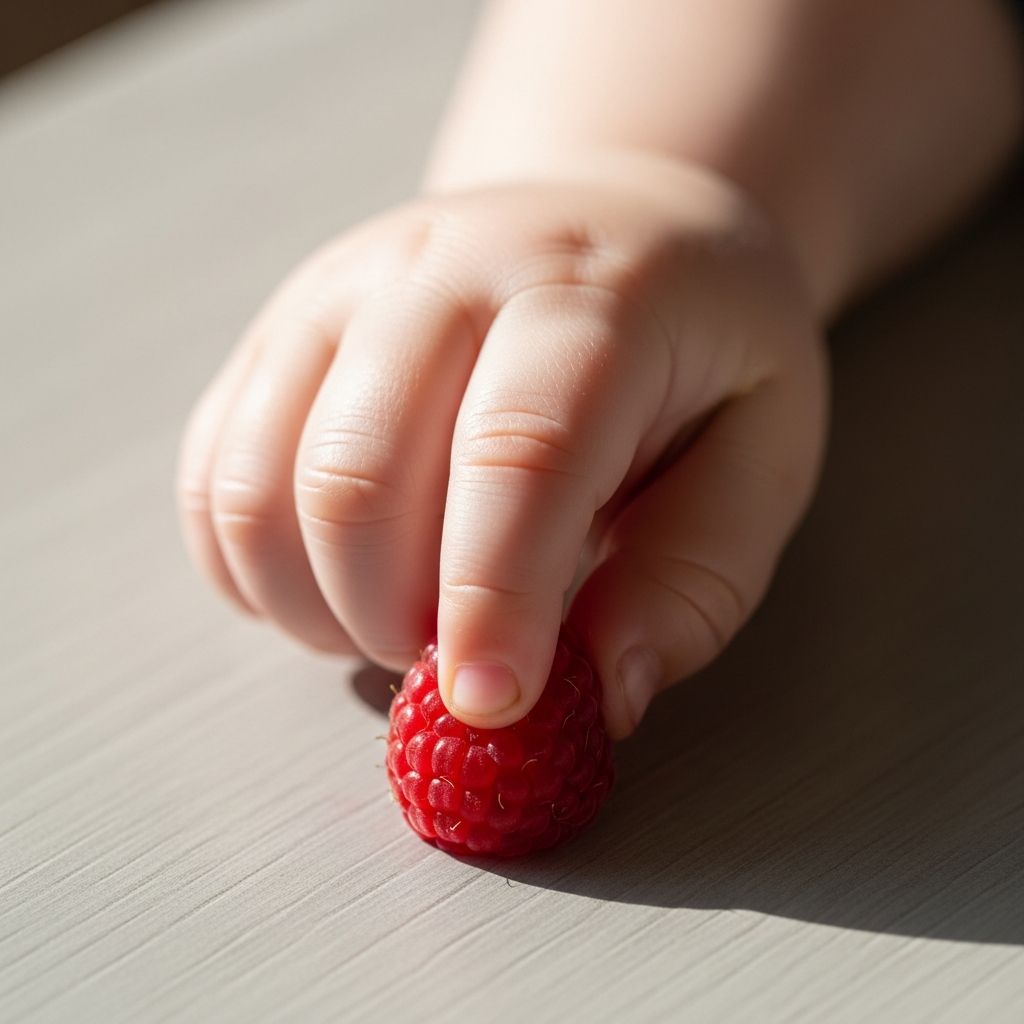
Between 8 and 10 months, many babies develop what developmental specialists call the inferior pincer grasp. At this stage, your child begins bringing the pads (fleshy parts) of the thumb and index finger together in a pinching motion. While this represents significant progress, the tips of the fingers do not yet meet. The grasp appears somewhat clumsy or awkward because the coordination between these two specific fingers is still developing. Your baby can successfully pick up small objects using this technique, such as cheerios or small pieces of soft food, though their success rate may be inconsistent. This stage demonstrates that your child’s nervous system is learning to isolate and coordinate individual finger movements.
The Superior Pincer Grasp: Refined Finger Control
By 9 to 11 months, most babies refine their technique further, developing the superior pincer grasp. At this advanced stage, your child uses the tips (not just the pads) of the thumb and index finger to pick up very small objects with impressive precision. This refined grasp allows babies to successfully manipulate tiny food pieces, small beads, or delicate objects. The superior pincer grasp represents the most mature form of this skill and is typically well-established by 12 months of age. This progression from pads to tips demonstrates your child’s increasingly sophisticated neuromuscular control.
Why the Pincer Grasp Matters for Development
The development of the pincer grasp extends far beyond simply picking up small objects. This skill has profound implications for your child’s overall development and future capabilities.
- Self-Feeding Independence: The pincer grasp enables babies to transition to self-feeding with finger foods. Rather than relying entirely on caregivers, children can pick up pieces of food and bring them to their mouths, fostering independence and allowing them to explore different tastes and textures at their own pace.
- Cognitive Development: Achieving the pincer grasp requires significant neural development. The ability to coordinate thumb and index finger in isolation involves complex brain pathways. As babies practice this skill, they strengthen neural connections that support other cognitive functions, including problem-solving and spatial awareness.
- Pre-Writing Foundation: While it may seem early to discuss writing skills, the pincer grasp is the anatomical foundation for holding pencils and pens. Children who develop refined hand coordination during infancy find the transition to writing more natural and less frustrating in later years.
- Fine Motor Confidence: Successfully manipulating small objects boosts your child’s confidence in their physical abilities. This confidence encourages further exploration and skill development across various activities.
- Toy Exploration: The pincer grasp opens up new possibilities for toy play. Babies can now pick up small puzzle pieces, explore interactive toys with tiny buttons, and engage in more complex play patterns than previously possible.
Creating an Environment That Supports Pincer Grasp Development
Strategic Toy Placement and Selection
Your home environment plays a crucial role in encouraging pincer grasp practice. Rather than overwhelming your child with too many toys, strategically place developmentally appropriate items within easy reach. Select toys that feature objects of varying sizes and textures. Small blocks, soft toys with different surface qualities, and age-appropriate manipulatives encourage your baby to reach and grasp independently. Rotating your toy selection every week or two maintains novelty and sustained interest. When a toy becomes overly familiar, rotating it out and bringing back a previously enjoyed toy creates fresh excitement and motivation for practice.
Establishing Dedicated Practice Sessions
While spontaneous play is valuable, setting aside 10 to 15 minutes daily for focused fine motor practice yields better developmental outcomes. These dedicated sessions don’t need to feel formal or structured. Simply sit with your child and engage in activities specifically designed to encourage pincer grasp development. This consistent, intentional practice strengthens the neural pathways and muscles involved in coordinated finger movements more effectively than occasional, longer sessions.
Following Your Child’s Lead
The most effective learning happens when activities align with your child’s interests and comfort level. Rather than forcing practice with toys your baby seems disinterested in, observe what naturally captures their attention and build practice around those preferences. If your child loves water play, incorporate floating small objects into bath time. If they’re fascinated by textures, explore various materials through tactile exploration. This approach maintains motivation and prevents practice from feeling like a burden.
Evidence-Based Activities to Encourage Pincer Grasp Development
Food-Based Learning Opportunities
Self-feeding with finger foods provides an ideal real-world context for pincer grasp practice. Soft foods like peas, pieces of banana, small cereal pieces, or diced cooked vegetables require your child to use coordinated finger movements to pick up and eat. The natural reward—getting to eat the food—motivates continued practice. During mealtimes, allow your baby to attempt self-feeding even if progress is slow and messy. This hands-on learning integrates fine motor practice into your daily routine seamlessly.
Exploratory Block Play
Blocks of various sizes and materials encourage grasping and manipulation. Wooden blocks provide sensory input through their weight and texture, while plastic blocks offer different tactile experiences. Stacking, knocking down, and transferring blocks from one hand to the other all contribute to pincer grasp development. Blocks accommodate different skill levels—larger blocks for earlier stages and smaller blocks as coordination improves.
Small Object Transfer Activities
Creating simple transfer activities strengthens hand coordination. Place small safe objects (such as soft pompoms, felt balls, or plastic beads under supervision) in a bowl or container and encourage your baby to move them to another container. This activity requires sustained grasp, release, and placement—all components of refined hand control.
Water and Sensory Play
Water activities provide engaging contexts for fine motor practice. Floating small objects in a shallow water play basin gives your baby opportunities to grasp, hold, and manipulate items in a novel sensory environment. The resistance of water adds an interesting tactile element that many babies find motivating.
Musical Exploration with Small Objects
Items that produce sounds when grasped and manipulated capture babies’ attention. Small rattles, plastic containers with contents, or other safe noisemakers encourage repeated grasping and exploration. The auditory feedback reinforces the connection between grasping and creating interesting effects.
Developmental Variation and Individual Timelines
While developmental milestones provide general guidelines, it’s important to remember that all children develop at their own pace. Some babies demonstrate emerging pincer grasp as early as 7 months, while others don’t show clear signs until closer to 11 months. Several factors influence the timing of this development, including overall muscle tone, neurological maturation, and individual temperament.
Early Developers
Babies who develop the pincer grasp earlier benefit from increased challenge as they refine their skills. Offering increasingly smaller objects and more complex manipulation tasks keeps them engaged and builds on their advancing abilities.
Typically Developing Children
Most babies who develop the pincer grasp between 9 and 12 months benefit from regular opportunities to practice with age-appropriate objects. Following their natural interests while gradually increasing complexity supports steady progression.
Later Developers
Some children require more time to develop this skill. Providing frequent, low-pressure opportunities for practice, breaking activities into smaller steps, and celebrating small improvements maintains motivation. Hand-over-hand assistance, where you gently guide your child’s hand through the grasping motion, can help build understanding of the movement pattern.
Children with Developmental Considerations
Children with developmental delays or sensory sensitivities may develop the pincer grasp on a different timeline. Working with an occupational therapist can help identify sensory preferences and develop strategies that integrate fine motor practice into daily routines naturally. For children with sensory sensitivities, experimenting with different textures and object types helps identify which materials most effectively motivate engagement without overwhelming your child.
Supporting Pincer Grasp Development Through Broader Motor Skills
Fine motor skills don’t develop in isolation. Rather, they build on a foundation of gross motor strength and stability. A baby with good core strength and postural control has an easier time focusing energy on precise finger movements. Encouraging plenty of tummy time, practicing reaching movements, and supporting your baby as they begin to sit independently all contribute to the physical foundation necessary for fine motor control.
Activities that encourage crossing the midline—reaching across the body with arms—particularly support brain development related to fine motor coordination. Toys placed at different angles and heights encourage this beneficial movement pattern.
When to Seek Professional Guidance
| Age | Developmental Concern | Recommended Action |
|---|---|---|
| By 15 Months | No signs of pincer grasp development | Consult your pediatrician for developmental screening |
| 12-15 Months | Significant asymmetry (one hand much more developed than the other) | Discuss with pediatrician to rule out underlying issues |
| Any Age | Regression in previously developed skills | Contact pediatrician promptly |
If your child hasn’t developed any form of pincer grasp by 15 months, discussing this with your pediatrician is appropriate. Early identification of developmental delays allows for timely intervention and support. Your doctor can assess whether additional evaluation by a developmental specialist or occupational therapist might be beneficial.
Frequently Asked Questions About Pincer Grasp Development
Is it normal if my 8-month-old hasn’t developed a pincer grasp yet?
Yes, this is entirely normal. The pincer grasp typically emerges between 8 and 11 months, with considerable variation. Some babies show early signs at 7 months, while others don’t demonstrate clear pincer grasp patterns until 11 months. Every child develops at their own pace, and this variation falls within the normal range of development.
What’s the difference between the inferior and superior pincer grasp?
The inferior pincer grasp involves using the pads (fleshy parts) of the thumb and index finger meeting together. The superior pincer grasp involves using the tips of these fingers. The superior pincer grasp represents a more refined, advanced form of the skill that typically emerges around 9-11 months.
How much practice does my baby need daily?
Setting aside 10-15 minutes daily for focused fine motor practice yields better results than occasional longer sessions. However, the most effective approach integrates practice into natural daily activities—allowing self-feeding, water play, and toy exploration throughout the day rather than limiting practice to formal sessions.
My baby developed the pincer grasp early but seems to have lost it. Should I be concerned?
Temporary inconsistency in newly developed skills is normal. Babies may use advanced grasp patterns inconsistently at first, reverting to earlier patterns occasionally. However, if you notice regression in a previously well-established skill across several activities, mention this to your pediatrician.
How can I encourage the pincer grasp if my baby has low muscle tone?
Work with an occupational therapist to develop a plan addressing core strength and postural stability first. As your baby’s overall muscle tone improves, fine motor skills typically follow. Incorporating practice into daily activities with objects your baby naturally enjoys helps maintain motivation.
References
- Pincer Grasp Development: Milestones, Activities, and Expert Guidance — Beaming Health. 2024. https://beaminghealth.com/article/Pincer-Grasp-Development-Milestones-Activities-and-Expert-Guidance
- Pincer Grasp: Age, Activities and Development — The Bump. 2024. https://www.thebump.com/a/pincer-grasp
- Pincer Grasp: Activities for Babies — NAPA Center. https://napacenter.org/pincer-grasp/
- Developmental Milestones: Fine Motor Skills and Visual Development — Children’s Hospital of Orange County (CHOC). https://choc.org/userfiles/file/Rehab-Developmental%20Milestones%20final.pdf
- 6 Ways to Help Baby Practice the Pincer Grasp — Solid Starts. https://solidstarts.com/6-ways-help-baby-practice-pincer-grasp/