Pikachu is officially known around the world as the lovable Electric Mouse Pokémon, but interviews with its original designer reveal that this global icon did not start life as a mouse at all. Instead, its earliest concept took shape from a very different small animal: a squirrel.
This surprising design twist reshapes how fans think about Pikachu’s look, its famous cheeks, and even how Pokémon creatures are built from real-world inspirations.
From ‘Electric Mouse’ to Secret Squirrel: The Big Reveal
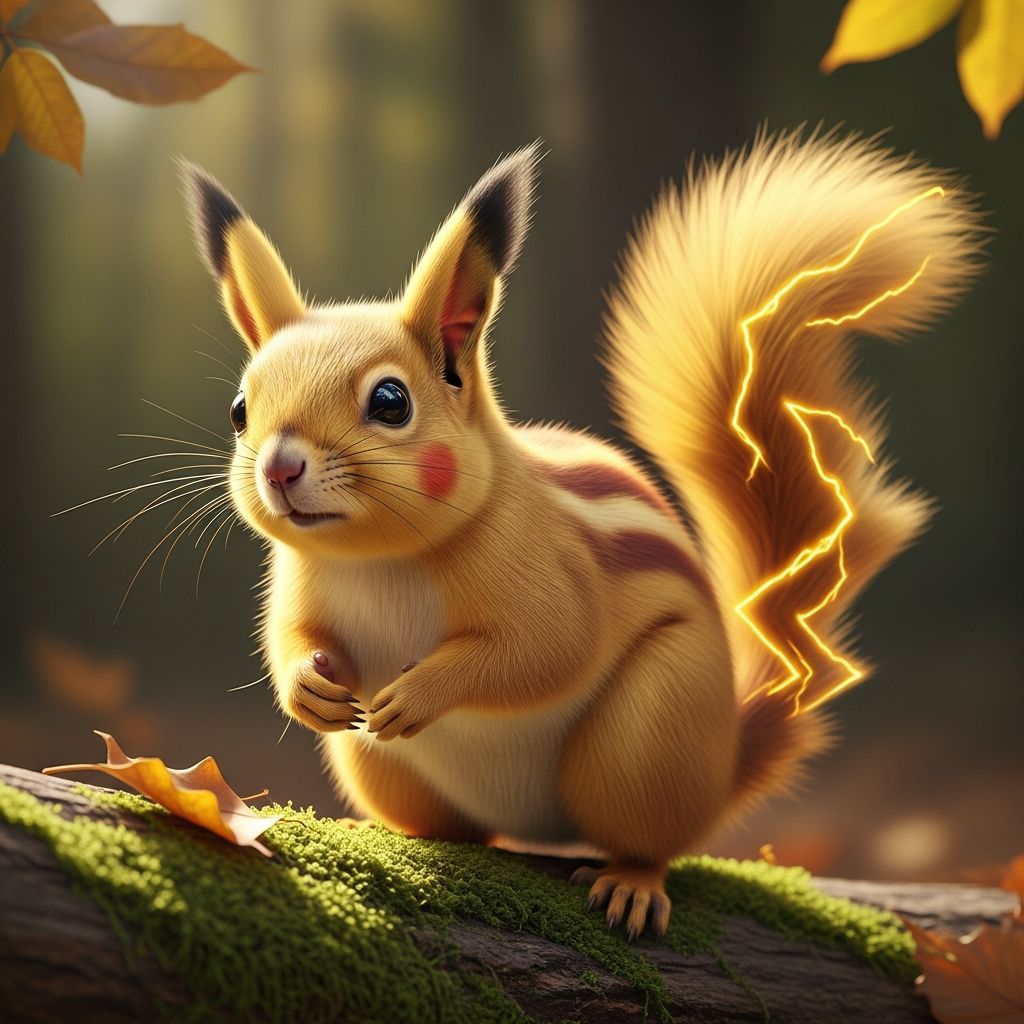
In the games, anime, and official Pokédex entries, Pikachu has always been categorized as a mouse-like creature, complete with rodent features and the label of an “Electric Mouse Pokémon.” However, years after its debut, designer Atsuko Nishida explained in a Japanese newspaper interview that she actually based Pikachu’s original design on a squirrel, not a mouse.
- Designer: Atsuko Nishida, an illustrator who worked at Game Freak on the first Pokémon games.
- Initial brief: Create a cute electric-type monster suitable for a new video game.
- Real inspiration: A squirrel, especially its cheeks and tail.
Once the character was named “Pikachu” and slotted into the early Pokédex, the broader team steered it toward a mouse identity, but the squirrel DNA in the design never truly disappeared.
Why Squirrels Inspired Pikachu’s Look
Nishida has said she was personally fascinated by squirrels at the time she was creating Pikachu and deliberately pulled visual traits from them.
Squirrel Traits That Shaped Pikachu
- Puffy cheeks: Squirrels store food in their cheeks, which can swell out adorably. Nishida translated this to Pikachu as cheek pouches that store electricity instead of nuts.
- Cute tail: Squirrels have long, expressive tails. Pikachu’s tail began from that idea, then was stylized into a bold lightning-bolt shape to match its electric powers.
- Body posture: Squirrels often sit back on their hind legs with a rounded back end. Pikachu’s chunky silhouette and typical poses echo that squirrel-like posture.
- Movement style: In animation and games, Pikachu frequently runs and hops in a way that feels more like a small tree-dwelling animal than a typical house mouse.
These features help explain why Pikachu feels distinct from other rodent-like characters in media. The design is not simply a generic mouse with electricity; it is a hybrid built on squirrel behavior and shape, then refined to fit an electric-type battle monster.
How a Squirrel Became an ‘Electric Mouse’
Even though the earliest design work leaned heavily on squirrel traits, internal decisions at Game Freak and later within the broader Pokémon franchise shifted Pikachu’s presentation toward a mouse.
Behind-the-Scenes Reframing
- Naming impact: Once the name “Pikachu” was chosen, the character was positioned more explicitly as a small rodent-type creature that would be easy for players to understand and recognize.
- Pokédex classification: Early game data and Pokédex entries directly called Pikachu a mouse Pokémon, cementing that identity in official materials.
- Series creator terminology: Satoshi Tajiri reportedly referred to Pikachu as an “electric rodent,” reinforcing the mouse framing over time.
By the time the anime aired and merchandise exploded worldwide, the franchise had fully embraced Pikachu as a mouse, even though its physical blueprint came from a different rodent family.
Pikachu, Squirrels, and Other Real-World Animal Links
Pokémon creatures frequently borrow elements from real animals. Pikachu’s squirrel heritage fits neatly into this larger design philosophy, where many monsters are fun-house reflections of wildlife.
| Pokémon | Primary Inspiration | Real Animal Notes |
|---|---|---|
| Pikachu | Squirrel-based design; presented as a mouse | Puffy cheeks and tail from squirrels; electric type added for gameplay. |
| Dewgong | Dugong | Marine mammal Dugong dugon, found in the Indian and Pacific Oceans. |
| Drowzee | Malayan tapir | Shares body shape and snout with Tapirus indicus. |
| Psyduck | Platypus | Has a broad bill and body reminiscent of Ornithorhynchus anatinus. |
This pattern continues across the franchise, from sea slugs that resemble exotic nudibranchs to bird-like dragons that echo raptors and other real species. Pikachu’s case stands out because the in-universe label (“mouse”) does not match the designer’s original animal inspiration (“squirrel”).
The Step-by-Step Creation of Pikachu
Nishida’s process for shaping Pikachu blended technical limitation, personal taste, and the game team’s feedback.
Early Concept Experiments
- She was first asked to make a cute electric-type monster for the original Japanese games.
- An early design reportedly resembled a long rice cake (daifuku) with ears, but it was not considered cute or iconic enough.
- Turning toward squirrels gave her a more expressive body plan and clear silhouette to work with on low-resolution hardware.
Pixels, Hardware Limits, and Creativity
Working within the constraints of the Game Boy’s limited pixels, Nishida built Pikachu’s shape using large blocks, focusing on a simple outline that would remain readable on a tiny monochrome screen.
- Chunky proportions: A short, rounded body translated better into pixel art than a thin, detailed figure.
- Bold tail shape: A zigzag lightning tail was easy to recognize and immediately communicated the electric typing.
- Cheek circles: Simple filled circles for cheeks gave Pikachu emotion and visual focus, especially when animating electric attacks.
These limitations pushed the design toward iconic simplicity, helping Pikachu stand out among the original 151 creatures.
Why Squirrels Made Sense for an Electric-Type Mascot
Beyond personal preference, squirrels offered several traits that mapped nicely onto an energetic electric-type mascot.
- High energy: Squirrels are quick, alert, and constantly in motion, which pairs well with fast, shocking attacks.
- Tree-dwelling agility: Their ability to dart and leap makes them feel nimble and evasive, like a speedy battle partner.
- Cheek storage metaphor: Just as squirrels hoard food in their cheeks, Pikachu can “store” electrical power there, helping explain its trademark cheek sparks.
By combining these animal qualities with the game’s need for a recognizable electric type, Pikachu landed at a sweet spot of believability and fantasy.
Evolution Line: Pichu, Pikachu, and Raichu
Pikachu’s design success eventually led to a full evolutionary family, each entry adjusting or expanding the core idea.
Pichu: The Baby Electric Rodent
- Introduced later as a pre-evolution, Pichu was created to extend Pikachu’s cuteness into an even smaller form.
- It retains oversized ears and cheeks but looks more fragile and baby-like.
- Pichu emphasizes innocence, often struggling to control its electricity, which reinforces the idea of energy stored in its cheeks.
Raichu: A Stronger, Stylized Evolution
- Raichu, also designed by Nishida, presents a longer body and tail, amplifying Pikachu’s basic squirrel-meets-rodent concept into a more powerful silhouette.
- Its tail remains lightning-shaped but much longer, functioning as a conductor and grounding tool for its stronger electric abilities.
- The design leans more toward a mature battle creature, even as its lineage still hints at that original squirrel-inspired origin.
Together, this family shows how a single animal-based idea can be stretched into multiple life stages with different emotional tones.
Why the ‘Mouse’ Label Stuck With Fans
Despite the squirrel inspiration, most players and viewers never questioned that Pikachu was a mouse. Several franchise-wide decisions ensured that the “mouse” identity dominated public perception.
- In-game text: The Pokédex called Pikachu a mouse Pokémon from the very beginning, and players trusted that label.
- Merchandising: Toys, promotional art, and marketing materials leaned into the mouse angle, making it recognizable across cultures.
- Simple messaging: Mice are more globally familiar as household animals than squirrels in some regions, so describing Pikachu as a mouse made its concept easier to communicate.
Only once the designer spoke in detail about the creative process did the public learn that the visual DNA came from a different rodent altogether.
What Pikachu’s Origin Teaches About Character Design
Learning that Pikachu is visually based on a squirrel but officially labeled as a mouse reveals broader lessons about how iconic characters are made.
- Design can blend species: Artists often fuse traits from several animals to achieve a memorable look. The final label does not always match the starting point.
- Marketing and narrative matter: Once a franchise positions a character in a certain way (like “electric mouse”), that story can outweigh behind-the-scenes details.
- Constraints shape creativity: Hardware limits, art style, and gameplay demands all affected how Pikachu turned out, just as much as the original animal inspiration.
Pikachu’s journey from squirrel-inspired sketch to global mouse mascot highlights how flexible and collaborative game design really is.
Frequently Asked Questions (FAQs)
Is Pikachu officially a squirrel or a mouse?
In official Pokémon materials like the Pokédex, Pikachu is classified as an Electric Mouse Pokémon. However, its original designer, Atsuko Nishida, has stated that the character’s early design was based on a squirrel, especially its cheeks and tail.
Why does Pikachu store electricity in its cheeks?
Nishida was inspired by how squirrels and similar animals store food in their cheeks. She adapted this idea into a fantasy element: instead of nuts, Pikachu stores electrical energy in its cheeks, which explains the sparks and attacks that originate from that part of its body.
Are other Pokémon also based on real animals?
Yes. Many Pokémon draw from real-world species—for example, Dewgong resembles the marine mammal dugong, Drowzee echoes the Malayan tapir, and Psyduck recalls features of the platypus. Other creatures in the series share traits with wild animals and even marine nudibranchs, as nature magazines have pointed out.
Did the creators ever change Pikachu’s design after the first games?
Over time, Pikachu’s proportions were subtly refined in the anime and later games, often making it slimmer and slightly taller, but its core features—round cheeks, lightning tail, and rodent-like body—remained consistent with the original concept.
Why is Pikachu so important to the Pokémon brand?
Pikachu became the franchise’s mascot because of its simple, friendly design and strong emotional appeal. Its easily recognizable silhouette works well in animation, merchandise, and marketing, helping Pokémon build a consistent global image.
References
- ‘Pokemon’ creator reveals what animal Pikachu was based off of — Alternative Press (AltPress). 2018-05-03. https://www.altpress.com/pokemon_pikachu_based_off_squirrel_not_mouse_pokemon_creator_reveals/
- Discover the Animal Pikachu Was Based on According to Its Creators — A-Z Animals. 2023-08-07. https://a-z-animals.com/blog/discover-the-animal-pikachu-was-based-on-according-to-its-creators/
- What Type Of Animal Is Pikachu? Revealed — Toynk Blog. 2024-01-15. https://www.toynk.com/blogs/news/what-type-of-animal-is-pikachu
- Pikachu Design Was Based On A Squirrel Not A Mouse — YouTube (Pichupedia). 2020-06-01. https://www.youtube.com/watch?v=KjrllebP2BM
- 20 Pokémon characters inspired by real wild animals — BBC Wildlife / Discover Wildlife. 2020-08-18. https://www.discoverwildlife.com/animal-facts/pokemon-characters-real-wild-animals