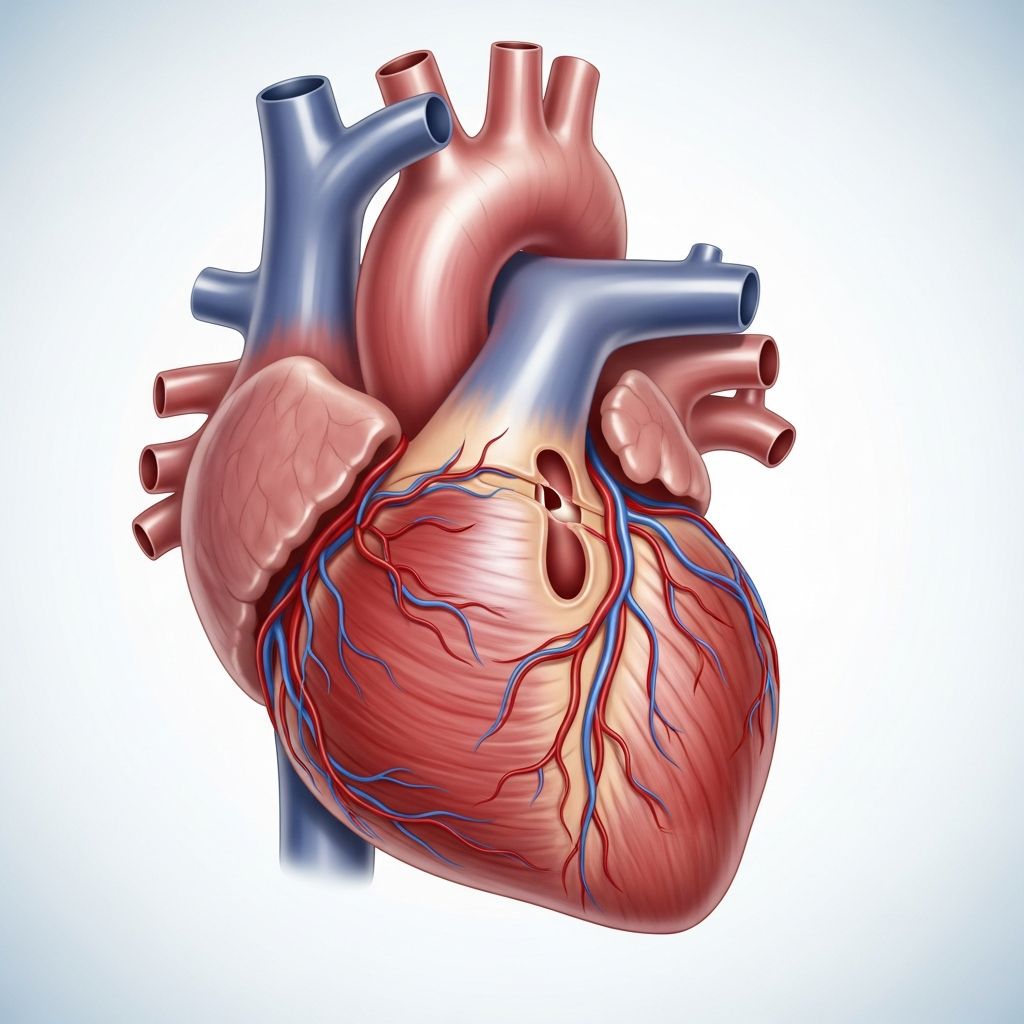
A **patent foramen ovale (PFO)** represents a small flap-like opening between the heart’s upper chambers that fails to seal after birth, affecting about 25% of the population, including many children. This condition often goes unnoticed throughout life without causing issues, but parental awareness is key for monitoring potential risks.
Origins and Developmental Background of PFO
During fetal life, the foramen ovale serves as a vital pathway, directing oxygen-rich blood from the mother’s placenta directly to the baby’s systemic circulation, bypassing non-functional lungs. At birth, the first breath triggers pressure shifts: pulmonary circulation activates, elevating left atrial pressure over the right, which typically fuses the flap shut within months.
In roughly one in four infants, this closure remains incomplete, resulting in a PFO. Genetic influences may contribute, though exact triggers are unclear. Unlike more severe septal defects, PFO rarely impacts growth or daily function in healthy kids, distinguishing small from potentially larger variants that permit notable right-to-left shunting.
Recognizing Signs and When It Matters in Kids
Most children with PFO exhibit no overt symptoms, thriving normally without fatigue, breathlessness, or growth delays. Discovery often occurs incidentally during imaging for unrelated concerns like murmurs or infections.
Rarely, complications arise if shunting allows venous blood—or clots—to enter arterial circulation:
- Cryptogenic stroke or TIA: Clots bypass lung filters, reaching the brain; higher risk post-16 years but noted in youth.
- Migraines with aura: Linked in studies to paradoxical embolization triggering vascular events.
- Diving-related issues: Bubbles from decompression sickness cross via PFO in young divers.
Low-oxygen spells or cyanosis are exceptional, usually tied to coexisting defects. Parents should note sudden headaches, neurological changes, or dive-related symptoms prompting evaluation.
Diagnostic Approaches for Young Patients
Diagnosis hinges on echocardiography, the gold standard for visualizing PFO. Key methods include:
| Method | Description | Advantages in Children |
|---|---|---|
| Transthoracic Echo (TTE) | Non-invasive ultrasound via chest wall | Safe, no sedation; first-line for kids |
| Transesophageal Echo (TEE) | Probe through esophagus for detailed atrial view | Precise for size/shunting; sedation needed |
| Transcranial Doppler with Bubble Study | Detects microbubbles in cerebral arteries post-saline injection | Confirms right-to-left shunt indirectly |
A bubble study—agitating saline with air—enhances detection by mimicking clots, with Valsalva maneuver provoking shunts. Cardiac MRI or CT supplements in complex cases, assessing associated anomalies like atrial septal aneurysm.
Potential Health Risks and Complications
While benign for most, PFO elevates certain risks:
- Stroke risk: Especially cryptogenic events in 16-60-year-olds with high-risk features (large shunt, aneurysm); trials like RESPECT/CLOSE show closure benefit (NNT 20-44 over 5 years).
- Other: Migraines, platypnea-orthodeoxia (rare positional low oxygen), diving decompression illness.
Risk escalates with deep vein thrombosis history, family stroke predisposition, or atrial issues. In children, routine activity restrictions are unnecessary absent symptoms.
Management Strategies Without Intervention
Observation suffices for asymptomatic pediatric PFOs, with periodic echoes if risks present. Lifestyle advice includes:
- Avoiding dehydration or Valsalva-heavy activities pre-diagnosis.
- Scuba caution until cleared; surface-supplied alternatives safer.
- Healthy habits: Exercise, balanced diet to mitigate clot risks.
Antiplatelet therapy (aspirin) may suit select low-risk stroke histories, per specialist input.
Interventional Closure: When and How
Closure is reserved for recurrent cryptogenic stroke/TIA, severe migraines unresponsive to meds, or diving-linked decompression illness—primarily post-adolescence per guidelines (Class I, Level A for 16-60 cryptogenic stroke). Pediatric cases are rarer, weighed against procedural risks.
Procedure Details: Transcatheter via groin vein, deploying double-disc device (e.g., Amplatzer) to seal under echo/fluoro guidance; 1-2 hour outpatient, success >95%. Open surgery obsolete except concomitant repairs.
Post-closure: Dual antiplatelet 1-6 months, then lifelong aspirin; echo follow-up rules out leaks. Complications (1-2%): Device thrombus, atrial fibrillation, perforation—favoring experienced centers.
Long-Term Prognosis and Follow-Up Care
Untreated asymptomatic PFO carries excellent outlook; closure slashes recurrence risk by ~50% in indicated cases. Annual cardiology visits track changes, with sports/endorsement normalization post-clearance.
Adolescents eyeing diving/stroke history need counseling; genetic screening if familial patterns.
FAQs for Parents on Pediatric PFO
Is PFO dangerous for my active child?
Typically no—99.5% experience no issues; monitor for neurological symptoms.
Can my child play sports with PFO?
Yes, absent symptoms or high-risk features; echo clearance ensures safety.
How common is PFO closure in kids?
Rare before 16; prioritized for stroke recurrence or severe complications.
Does PFO cause heart failure?
No direct link; it’s usually hemodynamically insignificant.
Should we test siblings?
Not routinely, but family stroke history warrants pediatric echo discussion.
Empowering Families: Next Steps
Consult pediatric cardiologists for tailored plans; reputable centers offer multidisciplinary care including geneticists for complex cases. Early detection empowers proactive monitoring, ensuring kids thrive despite PFO.
References
- Patent Foramen Ovale — McGovern Medical School, UTHealth. 2023. https://med.uth.edu/heartandvascular/patent-foramen-ovale/
- Patent Foramen Ovale (PFO): History, Diagnosis, and Management — PMC (NCBI). 2024-10-15. https://pmc.ncbi.nlm.nih.gov/articles/PMC11607492/
- Patent Foramen Ovale (PFO) — American Heart Association. 2024. https://www.heart.org/en/health-topics/congenital-heart-defects/about-congenital-heart-defects/patent-foramen-ovale-pfo
- Patent Foramen Ovale — Penn Medicine. 2024. https://www.pennmedicine.org/conditions/patent-foramen-ovale
- Patent Foramen Ovale Closure — YouTube (Cleveland Clinic). 2023-05-10. https://www.youtube.com/watch?v=FezQwyp-mSM
- Patent Foramen Ovale (PFO) — Atlantic Health System. 2024. https://ahs.atlantichealth.org/conditions-treatments/heart-care/heart-vascular-conditions-we-treat/patent-foramen-ovale-pfo.html