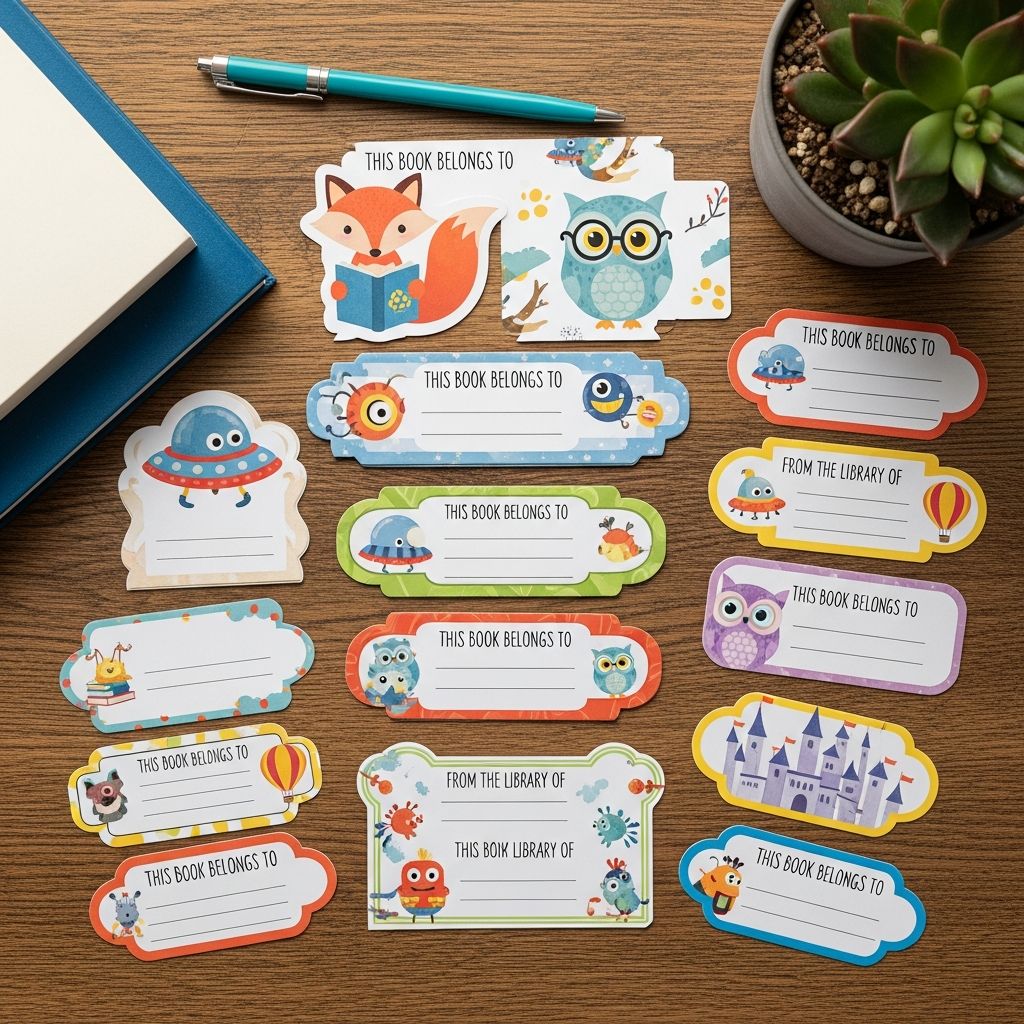
Personalized bookplates are small labels placed inside books that show who owns them, but they can do much more than just prevent lost school supplies. They can encourage reading, give kids a sense of pride, keep home and classroom libraries organized, and turn ordinary books into cherished keepsakes.
Why Personalized Bookplates Matter for Kids
When a child opens a book and sees their name printed inside, that book immediately feels special and truly theirs. This sense of ownership can motivate children to take better care of their books and feel more invested in reading time.
For families and teachers, bookplates also make it easier to track which books belong where, especially during the busy back-to-school season. They offer a simple way to keep personal books, classroom libraries, and borrowed titles clearly labeled with minimal effort.
Benefits of Bookplates for Home and School
Thoughtfully designed bookplates can serve several purposes at once: they label, organize, decorate, and preserve memories. Instead of being just functional stickers, they become a small piece of a child’s story as they grow as a reader.
Whether your child is starting preschool or heading to middle school, adding personalized labels to their books can become a joyful back-to-school ritual. It can also be a gentle way to talk about responsibility and caring for personal belongings.
Key reasons to use bookplates
- Prevents mix-ups: Books are less likely to be permanently lost in classroom or school library swaps.
- Builds ownership: Seeing their name in print signals that books are valuable and worth protecting.
- Supports routines: Labeling books can become part of back-to-school organization each year.
- Captures memories: Special notes or dates on bookplates can help families remember reading milestones.
Planning Your Child’s Bookplate Style
Before you open a design program or pull out your craft supplies, take a moment to think about your child’s interests and the types of books you plan to label. A little planning leads to bookplates that your child will be excited to use and show off to friends.
Consider how the design will look across different book sizes, from tiny early readers to hefty chapter books, and whether you want one universal design or a few themes for different subjects.
Questions to guide your design
- What does your child love right now (animals, space, sports, fairy tales, dinosaurs)?
- Will these bookplates be used only at home, at school, or both?
- Do you want space for just a name, or also a grade level, classroom, or short message?
- Are you printing in color, black-and-white, or using pre-printed stickers to save time?
Design Ideas by Age and Personality
The best bookplate designs reflect the personality of the child who owns the books. Different ages often enjoy different themes and levels of detail, so tailoring the design can make the labels more meaningful and fun.
Use the ideas below as inspiration and adapt them to your own family’s style. You can create digital designs to print or hand-draw simple motifs together for a more personal touch.
For preschool and early elementary kids
- Use bold colors and simple shapes that are easy for young children to recognize.
- Include a large area for their name in clear, easy-to-read lettering.
- Add friendly icons like stars, hearts, animals, or smiling books.
- Consider leaving a small blank space where your child can draw a tiny doodle.
For independent readers and tweens
- Use slightly more sophisticated patterns like stripes, geometric borders, or minimalist icons.
- Match designs to interests, such as sports, music, fantasy, science, or art.
- Include room for short phrases such as “From the shelf of” or “Property of,” keeping the language age-appropriate.
- Offer multiple designs so older kids can choose which style suits each book.
For shared family and classroom libraries
- Keep the layout simple so it works on many different book genres.
- Use neutral colors or a single accent color that fits a wide range of tastes.
- Add space for both the owner’s name and contact details or classroom number.
- Leave a small box to note a category, such as “Math,” “Science,” or “Fiction.”
Practical Layout: What to Include on a Bookplate
A clear layout ensures that bookplates are not only attractive but also easy to read and useful. Think of each label as a tiny information card that quickly tells anyone who picks up the book where it belongs.
You can keep the layout minimalist or add decorative elements around the edges, as long as the essential information remains visible even in smaller books.
| Field | Why It Helps | Good Use Cases |
|---|---|---|
| Child’s name | Makes ownership obvious at a quick glance. | All personal books, home and school. |
| Class or grade | Helps teachers return books to the right student or classroom. | Classroom libraries, shared reading corners. |
| Contact detail | Offers a way for lost books to be returned. | Books that travel to school, activities, or friends’ houses. |
| Date or year | Turns the book into a memory of a specific school year or event. | Gift books, milestone reading achievements. |
| Short note | Adds a personal touch or message of encouragement. | Books from parents, grandparents, or teachers. |
DIY Bookplate Creation: Digital and Handmade Options
There are two main paths to creating personalized bookplates: designing them digitally for printing or crafting them by hand. Both approaches can be tailored to your time, budget, and creative comfort level.
You can take a hybrid approach as well—for example, printing a simple border and text, then letting kids decorate the space inside with markers and stamps.
Digital design approach
Digital bookplates are ideal when you want consistency across many books or need to label multiple children’s collections at once. Free or low-cost design tools make it easy to drag and drop elements without advanced graphic design skills.
- Use a standard label sheet template so sizing works with commonly available sticker paper.
- Choose a readable font for names and small details to avoid eye strain.
- Test print on regular paper before using sticker sheets to ensure alignment.
- Save the final design file so you can quickly reprint or update it each school year.
Handmade and craft-based bookplates
Handmade bookplates add a unique charm that can make each book feel like a tiny art project. Children often take pride in seeing their own drawings or handwriting inside their books.
- Cut rectangles from cardstock, scrapbook paper, or colored index cards.
- Use stamps, washi tape, stickers, or simple doodles to decorate the edges.
- Write the child’s name with a bolder marker and other details with a fine pen.
- Attach the finished bookplates using glue sticks or double-sided tape to avoid wrinkling pages.
Printing and Materials: Getting a Professional Look at Home
With a bit of planning, you can print polished bookplates on a standard home printer. The key is choosing the right paper and testing colors and alignment before committing to full sheets of labels.
Think about where the books will be used. Books that travel in backpacks and are shared between classrooms may benefit from sturdier, more durable label materials.
Recommended materials
- Full-sheet sticker paper: Flexible option that lets you cut labels to any size or shape.
- Pre-cut label sheets: Faster to apply, but designs must match the template exactly.
- Cardstock: Good for glue-in bookplates when you prefer a thicker, more traditional feel.
- Laminated mini-cards: Can be taped in and reused if a book is passed on or resold.
Print quality tips
- Use the highest quality print settings when you want rich colors and sharp lines.
- Allow printed sheets to dry completely before cutting or peeling to avoid smudges.
- Cut slowly with a paper trimmer or sharp scissors for clean, straight edges.
- Store leftover labels flat in a folder to prevent curling or bending before future use.
Organizing Home and Classroom Libraries with Bookplates
Once the bookplates are printed, the next step is deciding how to apply them in a way that actually improves organization. A consistent system will help kids, parents, and teachers quickly find and return books where they belong.
You can use bookplates alone or combine them with color-coding, bins, or simple tracking systems to keep things orderly year-round.
Simple labeling strategies
- Place the bookplate inside the front cover or on the inside of the back cover for easy visibility.
- Apply labels before books go into backpacks or classroom shelves to avoid confusion later.
- Use a slightly smaller label for tiny early reader books so it does not cover important information.
- Create a routine at the start or end of the school year to check that all new books are labeled.
Optional tracking ideas
- Maintain a simple spreadsheet or notebook list of favorite books labeled each year.
- Add a tiny symbol or code on the corner of bookplates to indicate categories, such as a star for favorites or a letter for different subjects.
- Encourage older kids to create their own miniature “library catalog” if they enjoy organizing.
Turning Bookplate Time into a Fun Family Activity
Bookplate creation can be much more than a quick labeling task; it can become a special back-to-school tradition. Involving children in the design and application helps them feel invested and proud of their growing book collections.
This process also offers a natural opportunity to talk about upcoming school goals, favorite stories, and the reading adventures they hope to have in the year ahead.
Family-friendly activity ideas
- Have a “library night” where everyone in the family labels books together at the kitchen table.
- Let each child choose a theme song or playlist while you work to turn it into a mini celebration.
- Set up a small decorating station with markers, stamps, and stickers for customizing labels.
- Take a picture of your child holding a stack of newly labeled books to mark the start of a new school year.
Bookplate Ideas for Gifts and Special Occasions
Personalized bookplates are not just useful for school—they also make thoughtful additions to birthday gifts, holiday presents, and milestone celebrations. A small label inside the cover can turn a simple book into a treasured keepsake.
Friends and relatives who love to give books may appreciate a set of custom bookplates as a stand-alone gift. It allows them to share their love of reading in a personal and lasting way.
Gift-focused bookplate ideas
- Create a design specifically for books given on birthdays, including a space to write the year and age.
- Design a set of bookplates for new babies or toddlers that can be used as their library grows.
- For older kids, add a short quote about learning or imagination that reflects their interests.
- Bundle a favorite book with a small pack of matching bookplates and a special pen for labeling.
Frequently Asked Questions About Kids’ Bookplates
Do bookplates damage books?
When applied carefully, bookplates should not damage books. It is best to avoid very strong, permanent adhesives on rare or highly collectible books and instead use removable labels or lightly glued cardstock. For everyday school and children’s books, standard sticker paper or glue sticks usually work well.
Where is the best place to stick a bookplate?
Most people place bookplates inside the front cover so the information is visible right away. Some prefer the inside back cover to keep the opening pages clean, especially in picture books. Choose one location and use it consistently so kids know where to check for ownership details.
What if my child’s interests change quickly?
Children often switch favorites—from dinosaurs one year to outer space the next. To stay flexible, you can design a simple base layout and change small decorative elements seasonally. Another option is to keep multiple designs on hand and let your child decide which label fits each new book.
Can bookplates be used for library or borrowed books?
Permanent stickers should not be applied to books belonging to libraries or other people. For borrowed books, consider using removable bookmarks or reusable tags that include your child’s name so that books still find their way back to your home if they get mixed up.
How many bookplates should we start with?
A starter set of 20–40 bookplates is usually enough for the average child’s current collection and any new books they receive during the school year. If your family has an especially large home library, you can create additional sets over time, labeling favorites first and working outward.
Making Personalized Bookplates Part of Your Back-to-School Routine
Adding personalized bookplates to your back-to-school checklist is an easy way to bring creativity and organization together. It turns ordinary supplies into something uniquely tailored to your child and sets a thoughtful tone for the new school year.
Whether you choose digital designs, handmade labels, or a mix of both, the result is the same: books that feel special, kids who feel seen, and a reading space that reflects your family’s love of stories and learning.