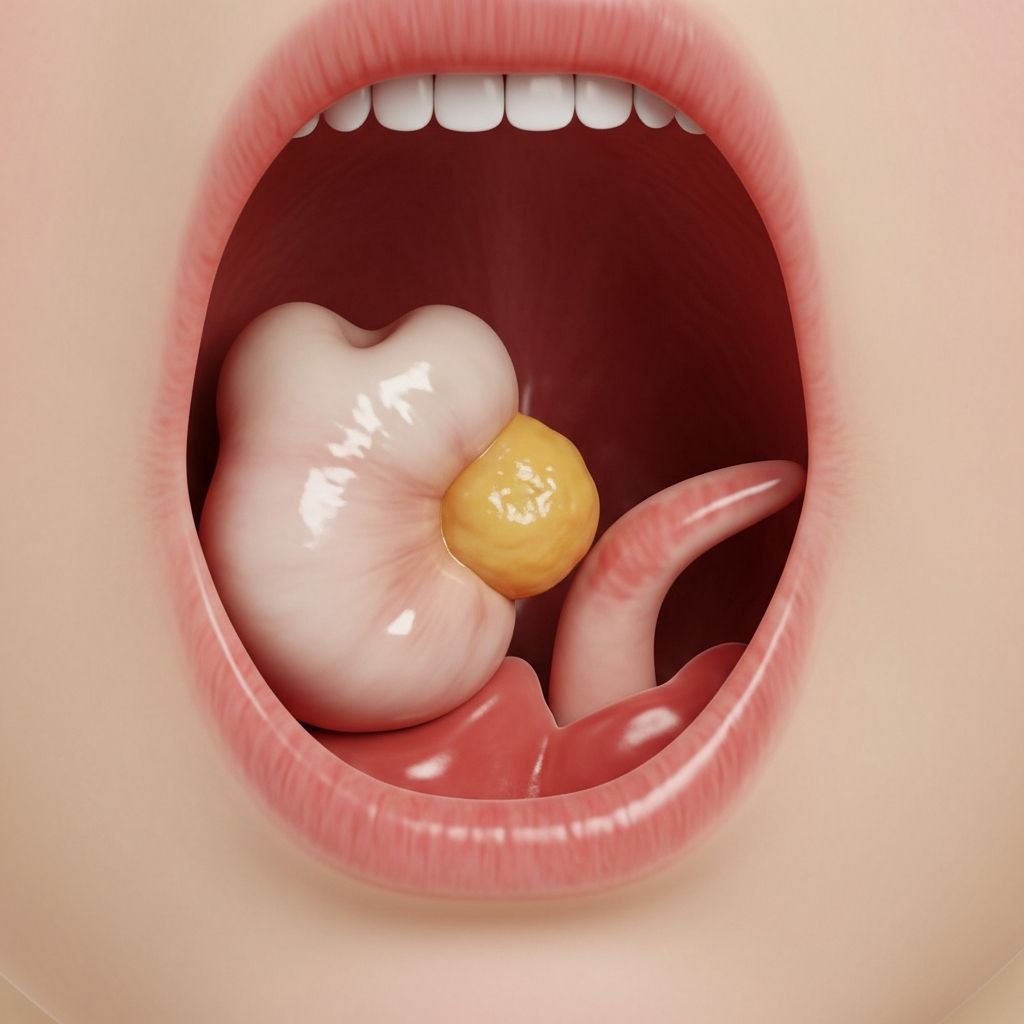
Understanding Peritonsillar Abscess: A Serious Complication of Throat Infections
A peritonsillar abscess represents a collection of infected material that accumulates in the tissue surrounding the tonsils, typically affecting one side of the throat. This condition develops when bacteria penetrate deeper into the tissue layers adjacent to the tonsils, creating a localized pocket filled with pus. While throat infections are common in children, a peritonsillar abscess represents a more serious progression that requires prompt medical attention and intervention. Understanding this condition helps parents recognize warning signs early and seek appropriate care before complications develop.
How Peritonsillar Abscess Develops in Young Patients
The pathway to abscess formation typically begins with acute tonsillitis or pharyngeal inflammation. When a child experiences strep throat or severe tonsillitis, bacteria—most commonly group A streptococcal species—invade the tonsillar tissue. If this initial infection goes untreated or persists despite treatment, the infection can spread beyond the tonsil itself into the surrounding tissue space. The body’s inflammatory response creates swelling and redness, but as the infection intensifies, white blood cells and fluid accumulate, forming an increasingly localized collection of purulent material.
Several factors increase the likelihood of abscess formation. Children who experience frequent throat infections face elevated risk, as do those with poor oral hygiene practices. Delayed treatment of acute strep throat substantially increases the probability of deep tissue involvement. Additionally, smoking and underlying periodontal disease—though more common in adolescents than younger children—can predispose to abscess development. In rare cases, peritonsillar abscess can develop spontaneously without preceding obvious symptoms, though this occurs infrequently with modern antibiotic availability.
Recognizing the Distinctive Symptoms
Parents should remain alert to specific clinical presentations that distinguish a peritonsillar abscess from uncomplicated sore throat. The symptom profile typically includes:
- Severe throat pain localized to one side, often dramatically worse than a typical sore throat
- Difficulty swallowing (dysphagia), sometimes accompanied by drooling
- Distinctive vocal changes producing a muffled, “hot potato” quality to the child’s voice
- Fever accompanied by chills and general malaise
- Restricted mouth opening due to muscular jaw spasm
- Visible swelling and redness affecting the tonsil and surrounding throat tissue
- Swollen lymph nodes on the affected side of the neck
- Ear pain (otalgia) on the side of the abscess
- Body aches, headache, and nausea accompanying systemic illness
The constellation of severe one-sided symptoms distinguishes this condition from typical bilateral tonsillitis. The voice change—often described as sounding like the child is holding a hot potato in their mouth—represents a hallmark finding that warrants immediate evaluation. Most children with this condition appear systemically ill, displaying lethargy and reduced activity levels beyond what typical viral infections produce.
Diagnostic Approaches and Imaging Considerations
Healthcare providers employ multiple strategies to confirm peritonsillar abscess diagnosis. The clinical evaluation begins with a thorough history and physical examination, where the doctor assesses the extent of throat inflammation, neck swelling, and signs of systemic infection. Visual inspection of the throat often reveals a swollen, reddened tonsil with possible bulging into the throat midline, representing mass effect from the accumulated pus collection.
Imaging studies provide definitive confirmation when diagnosis remains uncertain. Ultrasound imaging offers a non-invasive, radiation-free method to visualize the abscess pocket and determine its precise location and size. Computed tomography (CT) scanning provides detailed anatomical information about the abscess and its relationship to surrounding structures, helping clinicians plan intervention strategies. Some clinicians may also perform needle aspiration during the diagnostic phase, which simultaneously serves a therapeutic function by removing some purulent material while confirming bacterial etiology.
Blood cultures occasionally prove helpful in identifying the causative organism, though peritonsillar abscess typically represents a localized infection rather than bacteremia. Culture results from aspirated fluid guide antibiotic selection when organisms resistant to empirical therapy are identified.
Treatment Strategies: Medical and Procedural Approaches
Effective treatment requires both antimicrobial therapy and mechanical drainage of the infected collection. The relative emphasis on each component depends on abscess size, clinical severity, and individual patient factors.
Antibiotic Therapy
Intravenous antibiotics form the cornerstone of initial treatment, particularly in hospitalized patients or those unable to tolerate oral intake. The empirical antibiotic regimen must provide coverage against gram-positive organisms (including streptococci), gram-negative bacteria, and anaerobic species that frequently colonize the oral cavity and deep neck spaces. Traditional penicillin-based approaches remain highly effective, though beta-lactamase-producing organisms have necessitated evolution toward broader-spectrum agents. Combination therapy using ampicillin or amoxicillin with metronidazole provides excellent anaerobic coverage, while clindamycin offers single-agent coverage against both aerobes and anaerobes. Once oral intake becomes tolerable and clinical improvement occurs, transition to oral antibiotics allows completion of therapy at home. Parents must ensure their child completes the full antibiotic course even when symptoms resolve quickly, as premature discontinuation significantly increases recurrence risk.
Drainage Procedures
Drainage of the abscess remains essential and cannot be reliably achieved through antibiotics alone. Two primary procedural approaches exist: needle aspiration and incision with drainage. Needle aspiration, performed under topical anesthesia, involves inserting a sterile needle directly into the abscess cavity to evacuate purulent material. This minimally invasive approach works well for smaller, accessible abscesses and causes less tissue trauma than surgical incision. For larger collections or difficult-to-access pockets, incision and drainage provides more complete evacuation. The surgeon makes a small incision over the abscess site, evacuates the pus, and sometimes places drainage material to prevent reaccumulation. Ultrasound guidance improves procedural accuracy and safety by clearly identifying the abscess location.
Supportive Care Measures
Hospitalization provides appropriate monitoring in most cases, allowing for intravenous antibiotic administration and immediate management of any complications. Intravenous fluid replacement becomes important since affected children typically experience severe dysphagia preventing adequate oral intake, leading to dehydration. Pain management using age-appropriate analgesics significantly improves comfort and helps children maintain better oral intake. Some evidence supports the use of a single dose of intravenous dexamethasone, a corticosteroid, to reduce symptom severity and hospital length of stay, though its routine use remains somewhat controversial among clinicians.
Recovery Expectations and Long-Term Outcomes
Children who receive prompt drainage combined with appropriate antibiotics typically demonstrate rapid clinical improvement. Most patients show substantial symptom relief within 24-48 hours of drainage, with complete recovery expected within 4-7 days in straightforward cases. Hospital discharge often occurs after the child demonstrates ability to tolerate oral intake and antibiotics have been transitioned to oral formulations.
Recurrent abscess formation occurs in approximately 1-5% of treated patients, with highest risk in young children who have experienced multiple prior tonsillitis episodes. When recurrence develops or when a child demonstrates a pattern of five or more tonsillitis episodes within a limited timeframe, formal tonsillectomy becomes appropriate to prevent future episodes. Tonsillectomy, typically performed 4-6 weeks after acute infection resolves, provides definitive prevention of recurrent peritonsillar abscess. In rare cases where infection proves resistant to conservative management, tonsillectomy may be performed immediately alongside abscess drainage.
Preventing Peritonsillar Abscess Development
Prevention strategies focus on prompt recognition and treatment of acute throat infections before complications develop. Any child presenting with severe sore throat, fever, and difficulty swallowing warrants evaluation by a healthcare provider. Rapid testing for streptococcal infection allows early antibiotic initiation, substantially reducing progression to deeper tissue involvement. Parents should ensure their child completes prescribed antibiotic courses entirely, even when symptoms improve quickly, since incomplete treatment increases abscess risk. Maintaining good oral hygiene practices, including regular tooth brushing and dental checkups, supports overall throat health. For older children and adolescents, avoiding smoking and maintaining healthy gum tissue provides additional protection.
When to Seek Immediate Medical Attention
Parents should seek immediate evaluation if their child develops severe unilateral throat pain accompanied by fever, voice changes, difficulty opening the mouth, or difficulty swallowing. Signs of airway compromise—including stridor, severe respiratory difficulty, or drooling from inability to swallow secretions—constitute medical emergencies requiring urgent hospital evaluation. Any child with acute throat infection that fails to improve within 48-72 hours of antibiotic initiation should undergo re-evaluation to assess for abscess formation.
Frequently Asked Questions
How long does treatment typically last?
Most children respond well to treatment within 4-7 days. Antibiotic therapy typically continues for 10-14 days total, though the child may feel substantially better within 2-3 days of drainage and antibiotics. Hospital stays usually last 1-3 days.
Will my child need surgery to remove the tonsils?
Immediate tonsillectomy is uncommon, performed only in select cases. However, if your child experiences recurrent abscesses or has had numerous tonsillitis episodes, tonsil removal may be recommended 4-6 weeks after infection resolves to prevent future episodes.
Is peritonsillar abscess contagious?
The underlying bacterial infection may be contagious, particularly strep throat. However, the abscess itself is not contagious. Standard infection precautions apply during the acute illness phase.
What causes the voice change associated with this condition?
The abscess and surrounding swelling cause the soft tissues of the throat to shift, altering how sound resonates through the oral cavity and pharynx, producing the characteristic muffled “hot potato” voice quality.
Can this condition recur after treatment?
Yes, approximately 1-5% of children experience recurrence. Risk increases with multiple prior tonsillitis episodes. Tonsillectomy effectively prevents recurrence in high-risk children.
What complications can develop if treatment is delayed?
Untreated abscess can spread to adjacent tissue spaces, potentially affecting the airway, causing sepsis, or developing into more serious deep neck space infections requiring more extensive intervention. Prompt treatment substantially reduces these risks.
References
- Peritonsillar Abscess – Conditions and Treatments — Children’s National Hospital. Accessed January 2026. https://www.childrensnational.org/get-care/health-library/peritonsillar-abscess
- Peritonsillar Abscess: Diagnosis and Treatment — American Academy of Family Physicians. 2002-01-01. https://www.aafp.org/pubs/afp/issues/2002/0101/p93.html
- Peritonsillar Abscess – StatPearls — National Center for Biotechnology Information (NCBI), National Institutes of Health. https://www.ncbi.nlm.nih.gov/books/NBK519520/
- Tonsillar Cellulitis and Tonsillar Abscess — Merck Manuals. https://www.merckmanuals.com/home/ear-nose-and-throat-disorders/mouth-and-throat-disorders/tonsillar-cellulitis-and-tonsillar-abscess
- Peritonsillar Abscess — MedlinePlus Medical Encyclopedia. https://medlineplus.gov/ency/article/000986.htm
- Peritonsillar Abscess (for Teens) — Nemours KidsHealth. https://kidshealth.org/en/teens/peritonsillar-abscess.html
- Peritonsillar Abscess: Care Instructions — Kaiser Permanente. https://healthy.kaiserpermanente.org/health-wellness/health-encyclopedia/he.peritonsillar-abscess-care-instructions.uh3906