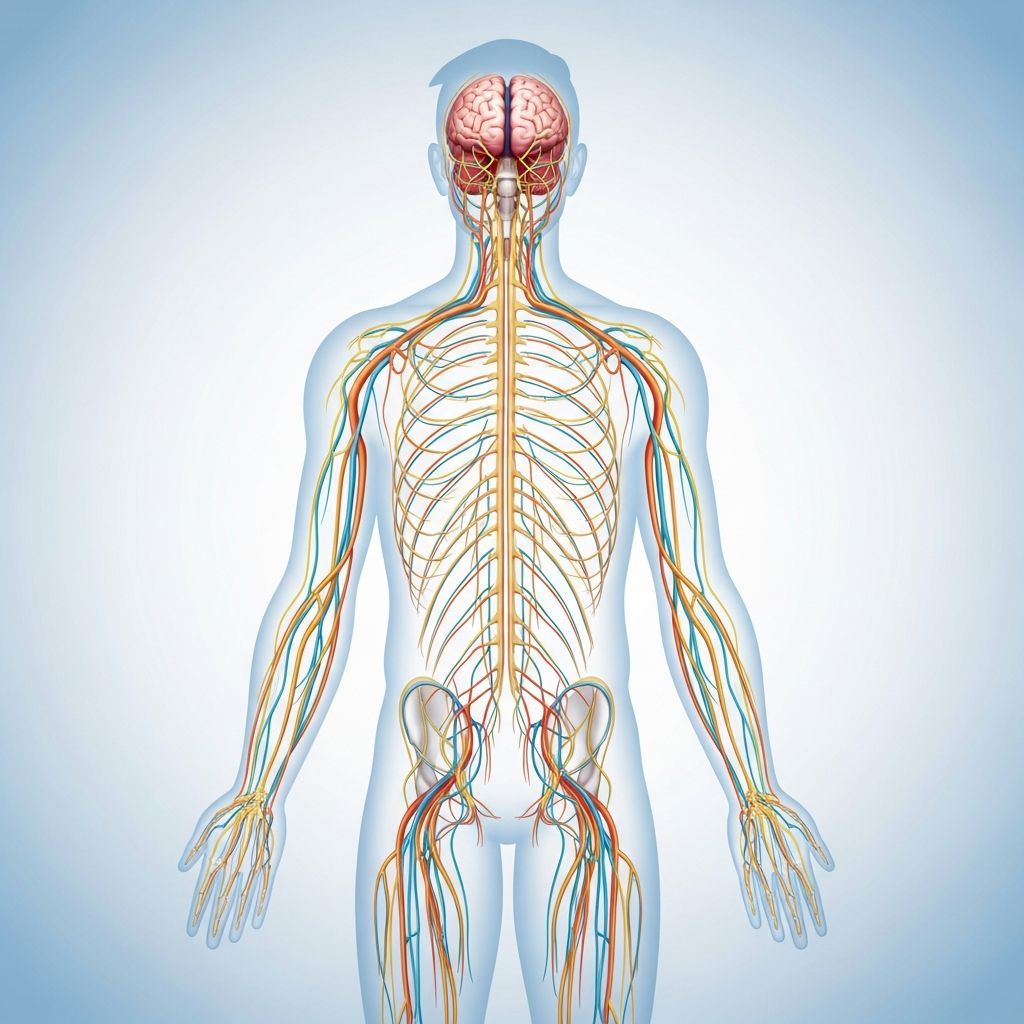
The peripheral nervous system (PNS) serves as the body’s communication highway, linking the brain and spinal cord to every muscle, organ, and sensory receptor. For parents, grasping how this network operates helps in recognizing normal development milestones and spotting potential health concerns in children early.
What Makes Up the Peripheral Nervous System?
Unlike the protected central nervous system (CNS)—comprising the brain and spinal cord—the PNS includes all nerves and ganglia outside these structures. It consists primarily of nerves that branch out like tree limbs, carrying electrical signals to relay information back and forth. These nerves are bundled in protective connective tissues: the epineurium encases the entire nerve, perineurium wraps bundles of fibers called fasciculi, and endoneurium sheathes individual fibers.
The PNS is divided into two main functional categories: the somatic nervous system, which handles voluntary actions, and the autonomic nervous system, which manages involuntary processes. This division ensures coordinated control over both conscious movements and automatic bodily functions vital for a child’s growth and activity.
Key Components: Spinal and Cranial Nerves
Spinal nerves emerge from the spinal cord through intervertebral foramina, forming 31 pairs categorized by region: 8 cervical (C1-C8) for head, neck, shoulders, arms, and hands; 12 thoracic (T1-T12) for back and abdomen; 5 lumbar (L1-L5) for lower abdomen, thighs, and legs; 5 sacral (S1-S5) for legs, feet, and pelvic area; and 1 coccygeal pair. Each spinal nerve begins with dorsal (sensory) and ventral (motor) roots that merge, carrying mixed fibers.
After exiting, spinal nerves split into dorsal rami (supplying back muscles and skin) and ventral rami (innervating limbs and front trunk). Cranial nerves, numbering 12 pairs, originate from the brainstem and handle specialized functions like vision (optic nerve), facial expressions (facial nerve), and chewing (trigeminal nerve).
| Nerve Type | Number of Pairs | Main Body Regions Served |
|---|---|---|
| Cervical | 8 | Head, neck, arms, hands |
| Thoracic | 12 | Chest, back, abdomen |
| Lumbar | 5 | Lower back, thighs, legs |
| Sacral | 5 | Legs, feet, genitals |
| Coccygeal | 1 | Tailbone area |
Somatic Nervous System: Controlling Movement and Sensation
The somatic nervous system (SNS) governs voluntary skeletal muscle movements and processes sensory input from the skin, muscles, and joints. Sensory (afferent) neurons detect stimuli like touch, pain, temperature, and proprioception (body position awareness), transmitting signals to the CNS. For instance, when a child touches a hot surface, sensory neurons rapidly alert the brain, triggering a withdrawal reflex via a spinal reflex arc—bypassing the brain for speed.
Motor (efferent) neurons then carry commands from the CNS to muscles, enabling actions like walking, throwing a ball, or writing. This system is crucial for children’s motor skill development, from crawling to sports participation. Unlike the CNS, PNS neurons, supported by Schwann cells, have regenerative potential, aiding recovery from injuries like cuts or stretches.
- Sensory role: Detects environmental changes and internal positions.
- Motor role: Executes deliberate movements.
- Reflex arcs: Provide instant protection, e.g., knee-jerk response.
Autonomic Nervous System: The Body’s Automatic Regulator
The autonomic nervous system (ANS) operates without conscious effort, innervating smooth muscles, cardiac muscle, and glands to maintain homeostasis. It splits into sympathetic (“fight or flight”), parasympathetic (“rest and digest”), and enteric divisions.
During stress—like a school presentation—the sympathetic system accelerates heart rate, dilates pupils, and redirects blood to muscles. Conversely, the parasympathetic system conserves energy post-activity by slowing the heart, boosting digestion, and promoting relaxation. The enteric nervous system, embedded in the gut, independently controls digestion via myenteric and submucosal plexuses, influenced by ANS signals.
Sympathetic preganglionic fibers exit via thoracic/lumbar spinal nerves, synapsing in paravertebral chain ganglia or prevertebral ganglia via splanchnic nerves. Parasympathetic fibers travel through cranial nerves (e.g., vagus) and sacral nerves. This balance is key for children’s energy management during play and rest.
How the PNS Supports Children’s Daily Life and Growth
In toddlers learning to walk, somatic nerves coordinate muscle contractions and balance feedback. For school-aged kids, the ANS regulates focus during classes (parasympathetic) and energy bursts in recess (sympathetic). Sensory nerves enable exploration—feeling textures, hearing sounds—fostering cognitive growth.
Puberty brings ANS involvement in hormonal and growth regulation, while somatic nerves support increasing physical demands. Proper nutrition, exercise, and sleep bolster PNS health, enhancing myelin production for faster signal transmission.
Common PNS Issues in Children and Warning Signs
Children may face PNS challenges like peripheral neuropathy from infections, trauma, or vitamin deficiencies, causing tingling, weakness, or pain. Bell’s palsy (facial nerve inflammation) leads to temporary facial droop; Guillain-Barré syndrome attacks nerves post-infection, weakening limbs.
Signs to watch: persistent numbness, muscle weakness, uncoordinated movements, or digestive issues. Early intervention via pediatricians, physical therapy, or medications can leverage PNS regeneration. Encourage safe play to prevent nerve compression injuries.
- Tingling or numbness: Possible nerve pressure.
- Weak grip or gait: Motor nerve concern.
- Chronic fatigue: ANS imbalance.
Protecting Your Child’s Peripheral Nervous System
Promote PNS health through balanced diets rich in B vitamins (for nerve insulation), regular exercise (to improve circulation), and avoiding toxins like lead. Limit repetitive strains from gadgets to prevent issues like gamer’s thumb. Annual check-ups catch developmental delays early.
Teach safety: helmets for biking, proper posture for backpacks, to shield spinal nerves. Mindfulness activities enhance parasympathetic tone, aiding stress resilience.
Frequently Asked Questions About the Peripheral Nervous System
What happens if a child’s peripheral nerve is damaged?
PNS damage may cause weakness or sensory loss, but regeneration via Schwann cells offers recovery potential, unlike CNS.
How does the PNS differ in kids versus adults?
Children’s PNS is more plastic, supporting rapid skill learning, but vulnerable to growth-related strains.
Can diet affect the peripheral nervous system?
Yes, deficiencies in B12 or folate impair nerve function; a nutrient-rich diet supports myelin and repair.
Is the PNS involved in reflexes like the knee-jerk?
Absolutely, via somatic reflex arcs for quick, protective responses without brain delay.
What role does the PNS play in digestion for kids?
The enteric and parasympathetic divisions control gut motility and secretion, essential for nutrient absorption.
References
- Peripheral nervous system: Anatomy, divisions, functions — Kenhub. 2023. https://www.kenhub.com/en/library/anatomy/the-peripheral-nervous-system
- Peripheral Nervous System (PNS): Parts and Function — Simply Psychology. 2023. https://www.simplypsychology.org/peripheral-nervous-system.html
- The peripheral nervous system — PubMed (Review Article). 2023-05-15. https://pubmed.ncbi.nlm.nih.gov/37170957/
- The Peripheral Nervous System — SEER Training Modules (National Cancer Institute). 2023. https://training.seer.cancer.gov/anatomy/nervous/organization/pns.html
- Peripheral Nervous System — Cleveland Clinic. 2023-10-20. https://my.clevelandclinic.org/health/body/23123-peripheral-nervous-system-pns