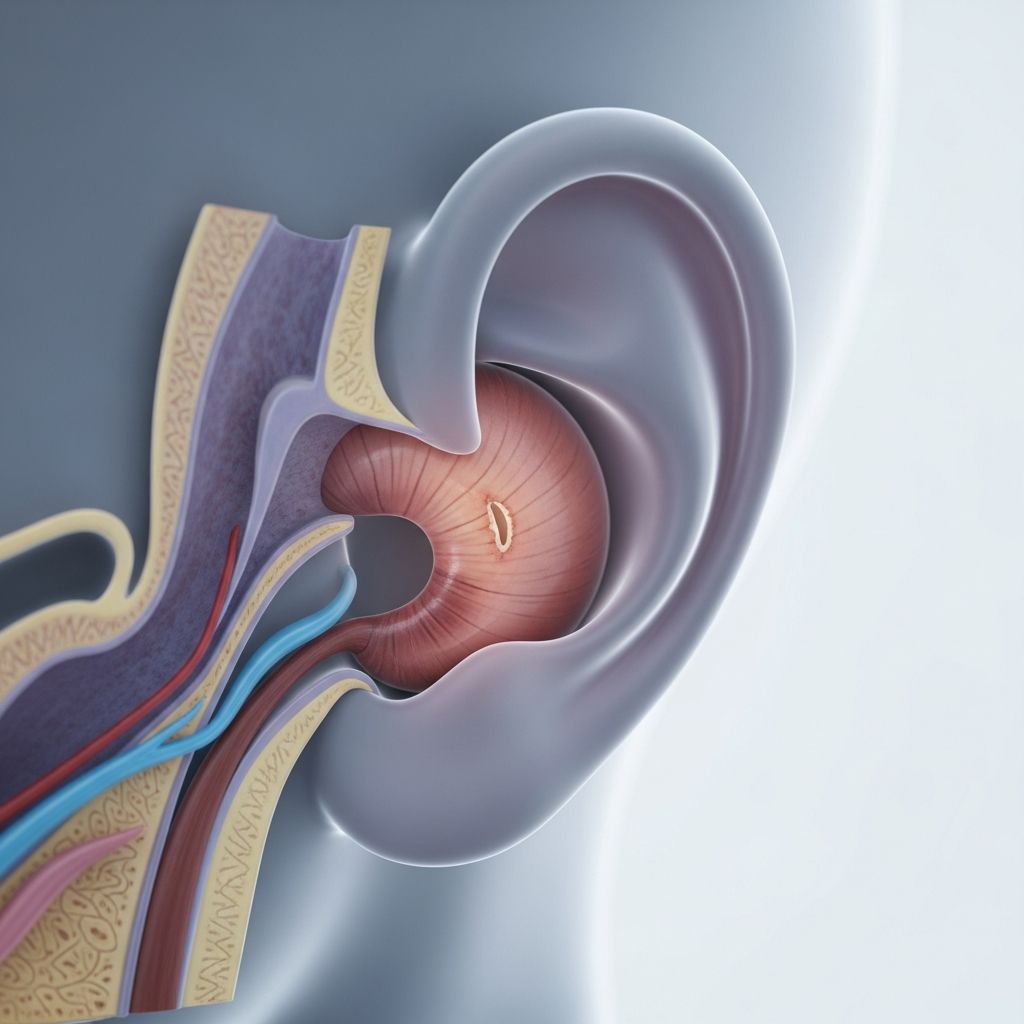
The eardrum is a tiny tissue deep inside your child’s ear, but when something goes wrong with it, the pain and worry can feel huge. This guide explains what the eardrum does, how injuries and infections happen, what symptoms to watch for, and how doctors usually treat these problems. It is written in everyday language so you can feel confident making decisions about your child’s ear health.
How the Eardrum Helps Your Child Hear
The eardrum is a thin membrane that separates the ear canal you can see from the middle ear that lies behind it. When sound waves travel down the ear canal, they strike the eardrum and cause it to vibrate, starting the hearing process. These vibrations are passed to three tiny bones in the middle ear and then on to the inner ear, where they are converted into signals the brain can understand as sound.
Because the eardrum forms a barrier between the outside world and the middle ear, it also helps protect the deeper parts of the ear from germs, water, and debris. A healthy eardrum is flexible enough to move with sound yet strong enough to shield the middle ear from many everyday irritants.
The Parts of the Ear You Should Know
Understanding a few basic ear structures makes it easier to see why eardrum injuries can affect hearing and cause pain. The ear is usually described in three main sections, each with a specific role in hearing.
| Ear Section | Main Structures | What It Does |
|---|---|---|
| Outer ear | Ear flap (pinna), ear canal | Collects sound from the environment and directs it toward the eardrum. |
| Middle ear | Eardrum, three tiny hearing bones, air-filled space, tube to the back of the nose | Amplifies sound vibrations and balances air pressure on both sides of the eardrum. |
| Inner ear | Cochlea (hearing organ), balance organs, hearing nerve | Turns vibrations into electrical signals and sends them to the brain. |
Children’s ears are still growing and the passage that connects the middle ear to the back of the nose is shorter and more horizontal than in adults. This makes it easier for fluid and germs to move into the middle ear, which is one reason ear infections are so common in childhood.
What Is a Perforated Eardrum?
A perforated eardrum is a hole or tear in the membrane that normally seals off the middle ear. The opening may be tiny and heal quickly, or it can be larger and take longer to close. In many children, a small perforation from an infection or sudden pressure change closes on its own within weeks.
Because the eardrum is part of the hearing pathway, a perforation often leads to some degree of temporary hearing loss in that ear. The amount of hearing loss typically depends on how large the hole is and whether other parts of the ear are also affected.
Common Causes of Eardrum Damage in Kids
Parents often associate eardrum problems with loud noises, but there are several ways this delicate structure can become injured or torn. Some causes are sudden and dramatic, while others develop slowly.
Middle Ear Infections
Middle ear infections can cause fluid and pus to build up behind the eardrum, increasing pressure inside the middle ear. When that pressure becomes too great, the eardrum may bulge and eventually tear, allowing the fluid to escape into the ear canal. Children with frequent colds, allergies, or exposure to secondhand smoke may be at higher risk of repeated ear infections that stress the eardrum.
Objects Inserted into the Ear
Everyday items such as cotton swabs, hairpins, toys, and even fingernails can puncture or scratch the eardrum when pushed too far into the ear. Young children may insert objects out of curiosity, while adults sometimes injure the eardrum while trying to “clean” the ear canal. The ear is self-cleaning, so inserting objects for cleaning usually does more harm than good.
Sudden Pressure Changes
Changes in air or water pressure can stress the eardrum, particularly if the pressure inside the middle ear cannot equalize quickly enough. This may happen during air travel, scuba diving, or rapid elevation changes. Children who have nasal congestion or allergic swelling of the nose and throat may be more prone to pressure-related ear problems because the tube that connects the middle ear to the back of the nose may not open easily.
Loud Sounds and Blunt Injury
Very loud sounds, such as explosions or fireworks at close range, can shock the eardrum and cause tearing. Blows to the side of the head, slaps to the ear, or a fall onto water at high speed can also create a sudden pressure wave that damages the membrane. While these causes are less common than infections in young children, they can cause significant injury when they occur.
Warning Signs Parents Should Watch For
Children may not be able to describe exactly what they feel when there is a problem with the eardrum. Paying close attention to symptoms and behavior helps you decide when to seek care. Symptoms can range from mild discomfort to severe pain and drainage.
- Sharp, sudden ear pain, sometimes followed by a feeling of relief if the eardrum tears and pressure is released.
- Ear drainage that may be clear, cloudy, bloody, or pus-like.
- Complaints of muffled hearing, difficulty hearing soft sounds, or turning up the volume on devices.
- Ringing or buzzing noises in the ear.
- Fever, irritability, poor sleep, or tugging at the ear, especially in babies and toddlers.
- Dizziness, unsteadiness, or nausea, particularly with significant middle or inner ear involvement.
Not every earache means the eardrum is torn. Some children have intense pain from pressure behind an intact eardrum. A health professional can look into the ear and determine whether the membrane is whole or perforated.
How Doctors Diagnose Eardrum Problems
To check the eardrum, a clinician usually uses a lighted instrument with a small cone placed gently in the ear canal. This allows a clear view of the membrane’s color, shape, and movement. A normal eardrum looks thin, smooth, and slightly shiny; infection or perforation can change its appearance.
Additional tests may be used to understand how well the eardrum and middle ear are working. These can include measures of how easily the eardrum moves when air pressure in the canal changes, or whether the child responds to sounds at various volumes and pitches. Such information helps guide treatment and follow-up plans.
What Treatment Usually Involves
Treatment for eardrum problems focuses on controlling infection, supporting healing, and protecting hearing. The exact approach depends on the cause, the size of any perforation, and the child’s age and overall health. Many small tears from infections heal without surgery when the underlying problem is treated.
Managing Pain and Infection
Pain relief is a key part of care. Over-the-counter pain medicines recommended by your child’s clinician can make a large difference in comfort, especially at night. In some cases, antibiotic ear drops or oral medicines are prescribed if bacteria are involved or if there is ongoing drainage from the ear.
It is important to use ear drops only when a clinician has recommended them, since some products should not be used if the eardrum is open. Stopping medicines too early or using leftover antibiotics can interfere with proper healing and may not fully treat the infection.
Protecting the Ear While It Heals
Keeping water out of the ear during healing helps reduce the chance of further infection. Children may be advised to avoid swimming and to keep the head above water in the bath or shower until the eardrum has closed. A clinician may suggest using a cotton ball coated with a bit of petroleum jelly in the outer ear opening during bathing to block splashes, as long as nothing is pushed into the canal.
Encourage your child not to blow the nose forcefully or hold the breath and strain, because sudden pressure changes can disturb the healing tissue. Gentle nose blowing, one side at a time, is usually safer and puts less stress on the recovering membrane.
When Surgery Is Considered
Some eardrum perforations are too large or do not close on their own, especially when infections are frequent or the surrounding tissue is scarred. In these cases, a specialist may recommend a procedure to repair the hole. The technique and setting depend on the child’s age and the size and location of the perforation.
During surgical repair, a small patch or graft is placed to bridge the opening and support new tissue growth. Many children go home the same day, and activity restrictions are temporary while healing occurs. After recovery, hearing often improves significantly when the membrane is intact again.
Possible Complications and Long-Term Concerns
Most children with eardrum injuries or infections recover fully, especially when the condition is recognized early and treated appropriately. However, repeated or severe problems can occasionally lead to longer-term issues that may require close monitoring by a specialist.
Potential complications include ongoing hearing loss, repeated infections due to a persistent opening, or abnormal skin growth in the middle ear that can damage nearby structures. Regular hearing checks and follow-up visits help detect these issues early and allow timely treatment.
Protecting Your Child’s Ears Day to Day
Prevention is often easier than treatment. Simple habits and household rules can significantly lower the chances of eardrum injuries and frequent infections. Teaching children to respect their ears from a young age sets the stage for healthy hearing into adulthood.
- Keep small objects and cotton swabs out of children’s reach, and explain that nothing should go into the ear canal.
- Limit exposure to cigarette smoke, which can increase the risk of ear infections.
- Encourage regular handwashing and good cough etiquette to reduce respiratory illnesses that can lead to ear infections.
- Use well-fitting ear protection at loud events and adjust volume limits on headphones and devices.
- Teach older kids how to equalize pressure during flights by swallowing, yawning, or sipping a drink during takeoff and landing.
When to Call the Doctor Right Away
While many mild earaches can wait for a routine appointment, certain signs suggest that your child should be evaluated promptly. Quick medical attention can relieve pain, prevent complications, and protect hearing.
- Severe ear pain that is sudden or persistent.
- Any blood or pus draining from the ear canal.
- Noticeable hearing loss, especially after a loud noise, injury, or infection.
- High fever, stiff neck, extreme fussiness, or lethargy along with ear symptoms.
- Dizziness, loss of balance, or facial weakness on the same side as the affected ear.
If your child wears hearing aids or has a history of ear surgery, it is especially important to seek guidance promptly for any new ear symptoms. The care team familiar with your child’s history can advise on the safest next steps.
Helping Your Child Cope with Ear Problems
Ear pain and hearing changes can be frightening for children, particularly when they do not fully understand what is happening. Calm explanations and reassurance from caregivers make a big difference in how children experience illness and treatment.
Try reading age-appropriate books about visiting the doctor, demonstrating how ear exams work with a toy, or letting the child practice looking into your ear with a pretend instrument. Offering choices, such as which ear to check first or which comfort item to bring, can help a child feel more in control.
Frequently Asked Questions (FAQs)
Can a child still hear with a perforated eardrum?
Many children with a small eardrum tear notice only mild hearing loss, while others may have more obvious difficulty depending on the size and location of the opening. Once the membrane heals or is repaired, hearing often improves significantly, though follow-up hearing checks are important to confirm this.
Is a perforated eardrum always painful?
Some children feel a sharp pain at the moment the eardrum tears, followed by a sudden decrease in pain once pressure is relieved. Others may have only mild discomfort or no noticeable pain at all, especially if the perforation develops slowly during an infection. Drainage, muffled hearing, or popping sensations may still occur even without intense pain.
Can my child swim with a perforated eardrum?
Most clinicians recommend keeping water out of the ear until the eardrum is fully healed to lower the risk of infection. Your child’s clinician can give specific advice about bathing and swimming based on the size of the perforation, whether tubes or other devices are present, and the type of water exposure being considered.
Will my child need surgery if the eardrum is torn?
Many small tears heal on their own without an operation, particularly when infections are treated and the ear is protected from water and further injury. Surgery is usually considered only when a hole persists, causes ongoing hearing loss, or leads to repeated infections despite careful medical management.
How can I tell if my baby has an ear problem?
Babies cannot describe ear pain, so watch for clues such as unusual crying, poor sleep, trouble feeding, or pulling and rubbing at the ear. Fever, congestion, or changes in response to sounds are also important signs. If you are unsure, a visit with a pediatric clinician can provide clarity and reassurance.
Key Takeaways for Parents
The eardrum is small, but it plays a big role in your child’s hearing and comfort. Understanding how it works, recognizing signs of trouble, and knowing when to seek care can greatly reduce the stress around ear infections and injuries. With prompt attention and good preventive habits, most children recover fully and continue to enjoy healthy hearing as they grow.