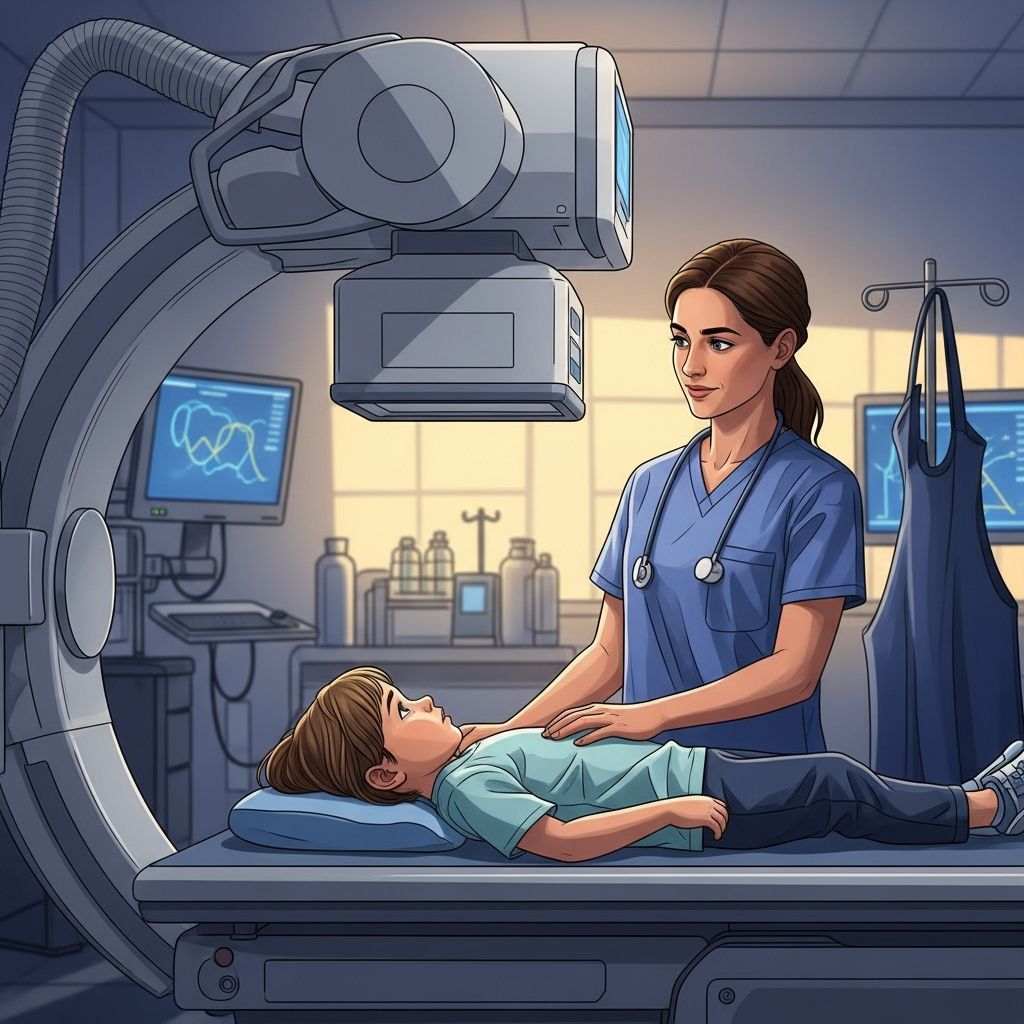
Upper gastrointestinal (GI) X-rays, often called upper GI series, are vital diagnostic tools used to examine a child’s esophagus, stomach, and the upper part of the small intestine. These tests employ fluoroscopy—a real-time X-ray technology—and a contrast agent like barium to create clear images of the digestive tract, helping identify issues such as swallowing problems, reflux, or structural abnormalities.
Reasons Doctors Recommend Upper GI Imaging for Children
Pediatricians order upper GI series when children exhibit symptoms that suggest digestive tract irregularities. Common indicators include persistent vomiting without clear cause, difficulty swallowing, recurrent abdominal pain, or severe heartburn-like indigestion. This imaging helps pinpoint blockages, narrowing (strictures), gastroesophageal reflux disease (GERD), or malformations like pyloric stenosis in infants.
- Swallowing disorders: Detects issues in the esophagus that hinder food passage.
- Unexplained vomiting: Reveals obstructions or abnormal motility.
- Abdominal discomfort: Identifies inflammation, ulcers, or hernias.
- Reflux evaluation: Assesses how stomach contents back up into the esophagus.
In neonates and toddlers, it’s particularly useful for congenital conditions, while in older kids, it aids in diagnosing conditions linked to infections or dietary issues.
Preparation Essentials: Getting Your Child Ready
Success of the upper GI test hinges on proper preparation, primarily ensuring the stomach is empty to allow clear barium visualization. Doctors provide tailored fasting guidelines based on age, typically ranging from 3-6 hours without food or liquids.
| Age Group | Fasting Requirement | Additional Notes |
|---|---|---|
| Under 2 years | 3 hours NPO (nothing by mouth) | No solids all day; clear liquids may be allowed earlier per doctor. |
| 2-6 years | 4 hours NPO | Avoid all solids; follow exact instructions to avoid rescheduling. |
| Over 6 years | 6 hours NPO | Discuss medications; inform about allergies. |
Parents should disclose allergies, especially to contrast materials, and recent surgeries. Bringing comfort items like a favorite toy or blanket reduces anxiety. Arrive early for registration, and one parent can usually accompany the child throughout.
Step-by-Step: What Occurs During the Procedure
The upper GI series unfolds in a fluoroscopy suite, a specialized X-ray room with a large imaging table and overhead camera. A pediatric-trained radiologic technologist, radiologist, and sometimes a child life specialist guide the process, prioritizing comfort.
- Arrival and gowning: Change into a hospital gown to prevent clothing interference with images.
- Initial scan: Lie on the table for a preliminary abdominal X-ray to establish a baseline.
- Contrast administration: Drink flavored barium—a thick, milkshake-like liquid (chocolate or strawberry options often available)—via straw, bottle, or cup. For reluctant children, a nasogastric tube may be used sparingly.
- Fluoroscopy imaging: As barium coats the esophagus, stomach, and duodenum, the radiologist captures live video-like images. The child turns side-to-side, tilts, or flips to prone position while holding still; the camera moves overhead without contact.
- Optional enhancements: Some cases involve effervescent crystals to produce gas for double-contrast views, improving detail.
- Small bowel follow-through (if ordered): Additional timed X-rays every 15-30 minutes track barium through the small intestine, extending duration to 4-6 hours.
The core exam lasts 20-45 minutes; young children might use a rotating cradle for positioning assistance. Cooperation is encouraged with praise, and parents provide reassurance.
Safety Profile: Benefits Outweigh Minimal Risks
Upper GI series are classified as safe, noninvasive procedures with low radiation exposure comparable to routine dental X-rays, and no residual radiation remains post-exam.
Key Benefits:
- Precise anatomical and functional assessment of upper GI tract.
- Barium rarely causes allergies; iodine-based alternatives available if needed.
- Outpatient-friendly, often same-day results aiding swift treatment.
Potential Risks (Rare):
- Constipation: Barium can firm stools; hydration advised post-exam.
- Aspiration: Minimal if properly supervised, especially in infants.
- Mild discomfort: From positioning or barium taste.
Radiologists minimize radiation via pulsed fluoroscopy and lead shielding. No sedation is typically required, preserving natural physiology.
After the Exam: Recovery and Follow-Up Care
Post-procedure, children resume normal activities immediately unless a follow-through extends the visit. Hydration is crucial to expel barium, preventing impaction—offer plenty of fluids and high-fiber foods.
- Expect white, chalky stools for 1-2 days.
- Monitor for severe constipation, vomiting, or abdominal pain; contact your doctor if noted.
- Avoid heavy meals initially; light diet eases transition.
Results are reviewed promptly by the radiologist, with findings shared via your pediatrician. Abnormalities may prompt endoscopy or further tests.
Common Concerns Addressed: Parental FAQs
Parents often worry about their child’s experience. Here’s clarity on frequent questions:
Will the barium taste bad for my child?
Flavored options make it palatable, like a milky shake. Most kids tolerate it well; toys distract during drinking.
Is radiation safe for growing kids?
Yes, doses are optimized and far below harmful levels, with benefits justifying use per pediatric radiology guidelines.
What if my child refuses to drink barium or turn?
Child life specialists use play therapy; gentle tube insertion is a last resort. Cooperation improves with parental presence.
How long until normal eating?
Immediately after, unless follow-through; start with easy-to-digest foods.
Can siblings or both parents join?
One parent typically; siblings wait outside for safety. Check facility policy.
Comparing Upper GI to Other GI Tests
| Test Type | Focus Area | Duration | Sedation Needed? |
|---|---|---|---|
| Upper GI Series | Esophagus, stomach, duodenum | 20-45 min (+ follow-through) | No |
| Barium Swallow | Esophagus only | 10-20 min | No |
| Small Bowel Series | Entire small intestine | 3-6 hours | No |
| Endoscopy | Direct visualization/biopsy | 30 min | Often yes |
Upper GI excels in dynamic function views, unlike static ultrasounds or invasive scopes.
Empowering Parents: Tips for a Smoother Experience
Discuss the test age-appropriately beforehand—frame it as a ‘special camera looking at tummy pictures.’ Practice turning on a couch. Post-exam, celebrate with a treat. Trust the team’s expertise; they’ve handled countless pediatric cases.
For infants, feeding schedules align preparation seamlessly. Teens appreciate procedural details to reduce fear. Always voice concerns to the care team—they adapt for special needs.
Advances in Pediatric GI Imaging
Modern fluoroscopy cuts radiation by 50-70% via digital tech. Low-volume barium and gas-contrast hybrids enhance safety. Future MRI alternatives emerge, but upper GI remains gold standard for cost-effective, real-time motility assessment.
References
- Your Child’s Upper GI (UGI) Series: What to Expect — Massachusetts General Hospital. 2023. https://www.massgeneral.org/children/imaging/upper-gi-series-what-to-expect
- UGI Procedure — Lurie Children’s Hospital. 2024-01-15. https://www.luriechildrens.org/en/specialties-conditions/x-ray/ugi-procedure/
- Upper GI x-ray — RadiologyInfo.org (Radiological Society of North America). 2025-06-10. https://www.radiologyinfo.org/en/info/uppergi
- Upper GI (UGI) — Arkansas Children’s Hospital. 2023-05-20. https://www.archildrens.org/-/media/Files/programs-and-services/radiology/UpperGI_english.pdf
- Understanding Esophagrams, Upper GI and Small Bowel Series for Your Child — Children’s Nebraska. 2024. https://www.childrensnebraska.org/radiology-and-imaging-services/understanding-esophagrams-upper-gi-and-small-bowel-series-for-your-child
- Upper GI Series — Boston Children’s Hospital. 2024-03-01. https://www.childrenshospital.org/conditions-treatments/upper-gi-series