Pediatric sleep studies, also known as polysomnograms, are essential diagnostic tools used to evaluate sleep disorders in children. These tests monitor various physiological functions during sleep to identify issues such as obstructive sleep apnea, which affects breathing and overall health. Parents play a crucial role in ensuring the study provides accurate results by preparing their child appropriately.
Understanding the Need for a Sleep Study in Children
Sleep is vital for children’s growth, learning, and emotional well-being. When disruptions occur, such as frequent snoring, labored breathing, or daytime fatigue, a sleep study becomes necessary. The American Academy of Pediatrics recommends testing children who snore habitually, especially if accompanied by gasps, pauses in breathing, or learning difficulties. Conditions like obstructive sleep apnea (OSA) can lead to attention problems and poor academic performance if untreated.
Physicians often refer children with enlarged tonsils, obesity, or symptoms of disturbed sleep for evaluation. Confirming OSA through polysomnography is critical before considering treatments like adenotonsillectomy, particularly in high-risk cases. Early diagnosis helps prevent complications such as growth delays or cardiovascular strain.
Types of Pediatric Sleep Evaluations
Sleep assessments for children primarily include overnight polysomnography and daytime multiple sleep latency tests (MSLT). Overnight studies capture a full night’s sleep data, while MSLT measures excessive daytime sleepiness following the nocturnal test.
- Overnight Polysomnogram: Conducted in a sleep lab, this test records brain activity, breathing, and movements from evening until morning.
- Multiple Sleep Latency Test (MSLT): Involves scheduled naps to gauge how quickly a child falls asleep, helping diagnose narcolepsy or severe sleepiness.
Some centers offer home-based studies for milder cases, but lab settings provide more comprehensive monitoring with video and audio recording.
Preparation Steps for Your Child’s Sleep Study
Proper preparation ensures reliable results and minimizes discomfort. Start by consulting your child’s doctor about medications; some may need adjustment as they can alter sleep patterns or data interpretation. Continue asthma treatments and bring devices like CPAP masks if used.
On the study day:
- Bathe and wash your child’s hair thoroughly; avoid oils, gels, or sprays that interfere with sensors.
- Eliminate caffeine sources like chocolate, tea, or soda after early afternoon.
- Prevent napping to promote natural sleep during the test.
- Pack comfort items: favorite toys, blankets, pajamas, and snacks from home.
Arrive early, typically 1-2 hours before bedtime, to allow setup time. One parent usually stays overnight to provide reassurance.
The Overnight Sleep Study Procedure
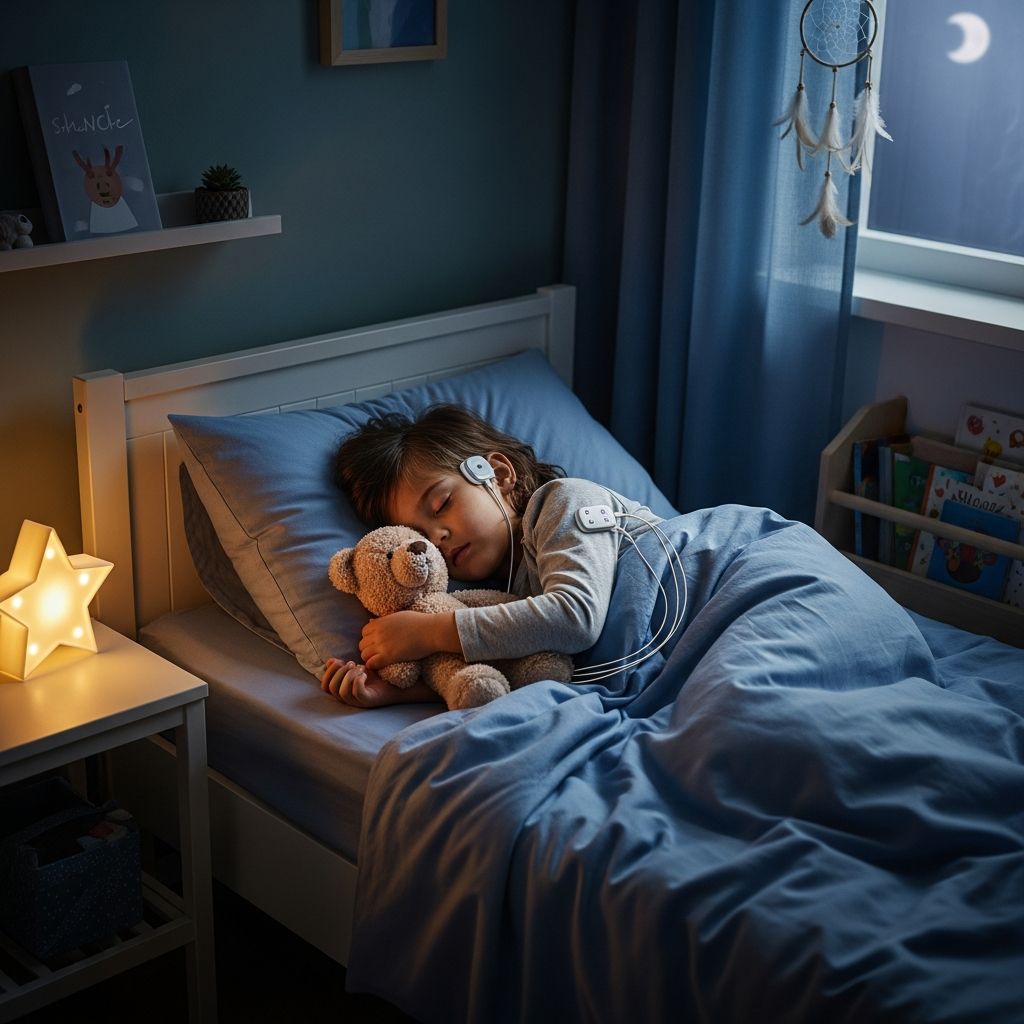
Studies begin in the evening, around 6:30-7:30 p.m., and conclude by 5:30-6:00 a.m. A trained sleep technologist applies sensors painlessly, a process taking 30-60 minutes. Children may need gentle restraint like blankets for infants to stay still.
Sensors monitor:
| Function | Sensor Placement | Purpose |
|---|---|---|
| Brain waves (EEG) | Scalp electrodes with paste | Determine sleep stages |
| Eye movements | Face electrodes | Track REM sleep |
| Heart rate and rhythm | Chest electrodes | Monitor cardiac activity |
| Breathing patterns | Nasal cannula, chest/abdomen belts | Detect apneas or hypopneas |
| Oxygen and CO2 levels | Finger/toe clip, nasal sensor | Assess respiratory efficiency |
| Leg movements | Leg/arm electrodes | Identify periodic limb issues |
The technologist observes remotely via video and audio, intervening if needed for bathroom breaks. Your child follows their normal bedtime routine in a comfortable, home-like room.
Daytime Testing: The MSLT Explained
If ordered, MSLT follows the overnight study. Children wake by 7 a.m. and attempt naps every two hours, starting around 8:30-9:00 a.m., until late afternoon. No sleep is permitted between naps; engage in quiet activities like reading or homework, with electronics off during tests.
Same sensors track how quickly sleep onset occurs, measuring latency. The session ends around 5:00-6:00 p.m.
Comforting Your Child During the Process
Unfamiliar settings and wires can cause anxiety. Explain the study as a “sleepover with special stickers” using age-appropriate language. Bring familiar items to create security. Technicians are skilled in pediatric care, often using distractions like stories or videos during setup.
For toddlers or infants, wrapping or gentle holding aids cooperation. Reassure them sensors come off easily in the morning with warm water.
After the Study: What Happens Next
Sensors are removed post-study, leaving no marks. A preliminary report may be discussed, but full analysis by a sleep specialist takes days to weeks. Results detail sleep efficiency, apnea events, oxygen dips, and disruptions.
Treatments may include CPAP therapy, surgery, or behavioral changes based on findings. Follow-up ensures effective management.
Common Sleep Disorders Diagnosed
- Obstructive Sleep Apnea (OSA): Blocked airways cause breathing pauses; common in children with large tonsils.
- Central Sleep Apnea: Brain fails to signal breathing muscles.
- Periodic Limb Movement Disorder: Involuntary jerks disrupt sleep.
- Insomnia or Hypersomnia: Assessed via MSLT.
Benefits and Importance of Early Diagnosis
Untreated disorders impair concentration, growth, and behavior. Studies enable targeted interventions, improving quality of life. Regular screening during check-ups catches issues early.
Frequently Asked Questions (FAQs)
Is the sleep study painful for my child?
No, sensors are non-invasive and painless. Setup requires stillness but no needles or sedation.
How long does the entire process take?
Overnight: 10-12 hours; MSLT adds a full day until evening.
Can both parents stay overnight?
Typically one parent; check with the center.
What if my child won’t cooperate with sensors?
Technicians use comforting techniques; rescheduling is rare but possible.
Will insurance cover the study?
Most plans do for medically indicated tests; verify beforehand.
When will we get results?
1-2 weeks; discuss with your doctor.
This guide empowers parents to navigate pediatric sleep studies confidently. Prioritize sleep health for your child’s optimal development.
References
- Prepare for Your Child’s Sleep Study — Children’s Hospital of Philadelphia (CHOP). 2023. https://www.chop.edu/centers-programs/sleep-center/your-childs-appointment
- Pediatric Sleep Center | Sleep Study — Lurie Children’s Hospital. 2024. https://www.luriechildrens.org/en/specialties-conditions/pediatric-sleep-specialist/
- American Academy of Pediatrics publishes clinical guideline on sleep apnea in children — American Academy of Sleep Medicine (AASM). 2012-10-30. https://aasm.org/american-academy-of-pediatrics-publishes-clinical-guideline-on-sleep-apnea-in-children/
- Pediatric Polysomnography: Know When to Refer — Children’s Health. 2023. https://www.childrens.com/research-innovation/research-library/research-details/pediatric-sleep-studies-know-when-to-refer
- Sleep Study (Polysomnogram) — Nemours KidsHealth. 2024. https://kidshealth.org/en/parents/sleep-study.html
- Sleep Study — Nationwide Children’s Hospital. 2023. https://www.nationwidechildrens.org/family-resources-education/health-wellness-and-safety-resources/helping-hands/sleep-study