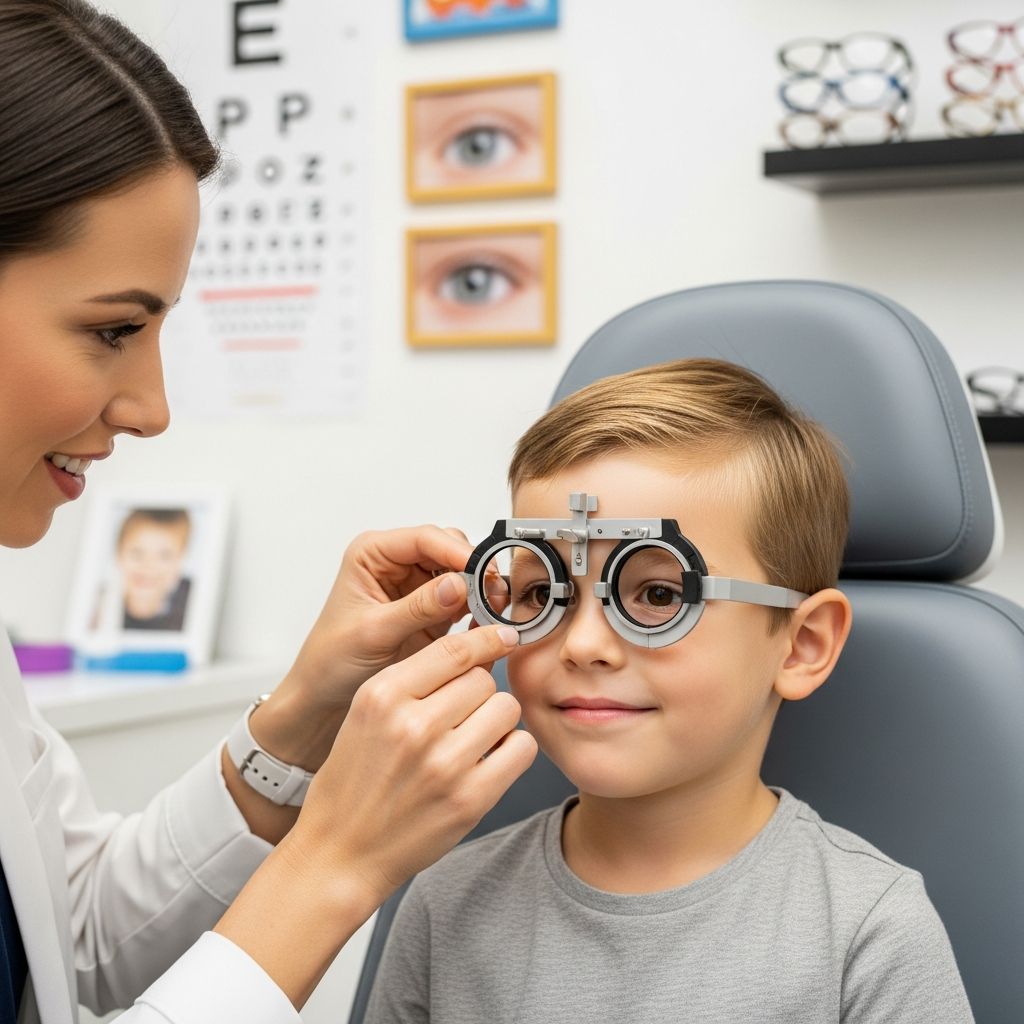
Children’s vision develops rapidly in the early years, making proactive eye care crucial for their cognitive, social, and physical growth. Understanding pediatric optometry helps parents identify issues early, ensuring optimal visual health that supports learning and play.
Why Vision Matters in Child Development
A child’s eyes are key to exploring their world, from grasping toys as infants to reading textbooks in school. Poor vision can mimic learning disabilities, causing frustration or behavioral challenges. The Centers for Disease Control and Prevention emphasizes vision screenings to catch problems early, as untreated issues may lead to permanent deficits. Regular monitoring aligns with guidelines from the American Optometric Association, recommending exams at specific milestones to track progress.
During infancy, visual systems mature, enabling focus, depth perception, and color recognition. By school age, uncorrected refractive errors affect up to 20% of children, impacting academic performance. Early intervention preserves full potential, preventing conditions like amblyopia from becoming irreversible.
Recommended Schedule for Children’s Eye Examinations
Timing eye exams correctly prevents overlooked problems. Here’s a breakdown:
- Birth to 6 months: Initial screening during well-child visits checks basic functions like pupil response and eye alignment.
- 6-12 months: First comprehensive exam assesses tracking, focus, and health, per AOA guidelines.
- 3 years: Preschool evaluation detects refractive errors or misalignment before formal education.
- School entry (5-6 years): Annual or biennial checks monitor changes as vision stabilizes.
- School years and beyond: Exams every 1-2 years, or more if issues arise, until age 18.
These intervals allow optometrists to baseline healthy development and adjust for rapid growth spurts.
Understanding Common Childhood Vision Disorders
Several conditions affect young eyes, often without obvious symptoms. Parents should know these to advocate effectively.
| Condition | Description | Potential Impact | Treatment Options |
|---|---|---|---|
| Amblyopia (Lazy Eye) | Reduced vision in one eye from brain favoring the stronger eye. | Poor depth perception, reading struggles. | Patching, atropine drops, vision therapy. |
| Strabismus (Misaligned Eyes) | Eyes not pointing same direction, causing crossed or wandering appearance. | Double vision, amblyopia risk. | Glasses, prism lenses, surgery if needed. |
| Refractive Errors | Myopia (nearsightedness), hyperopia (farsightedness), astigmatism blurring focus. | Headaches, squinting, fatigue. | Corrective lenses, orthokeratology. |
| Convergence Insufficiency | Eyes struggle to team up for near tasks. | Eye strain during reading. | Vision therapy exercises. |
These issues peak in preschool and school years, with early detection via comprehensive exams being key.
Inside a Child-Friendly Eye Examination
Pediatric optometry uses age-appropriate techniques to keep kids engaged. Expect a 30-45 minute visit with these components:
- Visual Acuity: Charts with pictures or letters measure clarity at distance and near.
- Refraction: Retinoscopy, often with cycloplegic drops for accuracy in young children, determines lens needs.
- Binocular Testing: Cover tests, prism bars assess eye teaming and alignment.
- Movement and Fields: Tracking toys evaluate muscle control and peripheral awareness.
- Health Check: Slit-lamp or dilated fundus exam spots structural issues.
For toddlers, play-based methods like following lights replace traditional responses. Optometrists prioritize objective data like retinoscopy over subjective reports from uncooperative patients.
Spotting Warning Signs at Home
Parents are first-line detectives. Watch for:
- Squinting or closing one eye to see better.
- Frequent head tilting or thrusting forward.
- Complaints of headaches, blurry vision, or dizziness.
- Avoiding reading, losing place, or rubbing eyes excessively.
- Redness, tearing, or light sensitivity.
These cues warrant prompt professional evaluation. Frequent eye rubbing, for instance, risks corneal scratches or infections; rinse with cool water instead.
Daily Habits to Protect Young Eyes
Lifestyle choices bolster exam outcomes. Key strategies include:
- Nutrition: Vitamin A-rich foods like carrots, spinach, eggs support retinal health.
- Screen Limits: Follow 20-20-20 rule; cap daily use, especially pre-bedtime.
- Outdoor Time: Natural light reduces myopia risk.
- UV Protection: Sunglasses block harmful rays during play.
- Safety Gear: Goggles for sports prevent injuries.
Hydration aids tear production, preventing dry eyes from screens or environment.
Treatment Pathways and Follow-Up Care
Post-exam, options range from glasses to therapy. Myopia management like atropine or special lenses slows progression. Amblyopia therapy demands compliance—patching 2+ hours daily. Follow-ups track efficacy, adjusting as needed. Lensometry verifies prescription accuracy at visits.
Parental involvement ensures success: supervise therapy, model habits, schedule consistently. Vaccinations prevent rare threats like measles-related blindness.
Frequently Asked Questions
How often should my infant have an eye check?
At well-child visits initially, with a full exam by 6-12 months.
Can too much screen time harm kids’ eyes?
Yes, it causes strain and myopia risk; enforce breaks and limits.
What if my child rubs eyes a lot?
It may signal allergies or fatigue; rinse gently, see optometrist if persistent.
Is strabismus fixable in older kids?
Early treatment is best, but options exist into teens.
Do all kids need glasses?
No, but 1 in 4 school-age children do for refractive issues.
Partnering with Pediatric Optometrists
Choose specialists trained in child exams for best results. They use fun tools, explain clearly, and offer tailored plans. Discuss family history, as genetics influence risks like myopia. Empower yourself with knowledge—your vigilance complements professional care, securing your child’s bright visual future.
References
- Clear Vision: A Parent’s Guide to Pediatric Eye Care — Cedar Creek Eye Care. 2023. https://www.cedarcreekeyecare.com/clear-vision-a-parents-guide-to-pediatric-eye-care/
- The Ultimate Guide to Pediatric Eye Exams for Optometry Students — Eyes On Eyecare. 2023. https://eyesoneyecare.com/resources/ultimate-guide-pediatric-eye-exams-optometry-students-cheat-sheet/
- 5 Important Eye Care Tips For Kids — Bakersfield Eye Care. 2021-10-11. https://www.bakersfieldeyecare.com/2021/10/11/5-important-eye-care-tips-for-kids-2021/
- The Basics of Pediatric Eye Care: Why Early Vision Screening Matters — Eyewise. 2023. https://www.eyewise.com/blog/the-basics-of-pediatric-eye-care-why-early-vision-screening-matters.html
- Children’s Vision Basics: Tips for Parents at Every Stage — EyeCare Associates. 2023. https://www.webeca.com/eye-care-resources/childrens-vision-101
- Keep an Eye on Your Child’s Vision — Centers for Disease Control and Prevention (CDC). 2024. https://www.cdc.gov/vision-health/prevention/youth-vision-problems.html
- Tips for Children’s Eye Health and Safety Month — Medical Group NJ. 2023. https://www.medgroupnj.com/tips-for-childrens-eye-health-and-safety-month/health/3163/