When Professional Dedication Becomes Personal Love
In the intensive care environment of pediatric hospitals, nurses witness profound moments of vulnerability, resilience, and human connection on a daily basis. These medical professionals dedicate their careers to providing critical care during patients’ most fragile moments. Yet occasionally, the bonds formed in these clinical settings transcend the hospital walls and create lifelong family connections. One such remarkable story involves Angela Farnan, a seasoned pediatric intensive care unit nurse whose three decades of professional experience culminated in an unexpected but deeply meaningful personal journey. Her decision to adopt a patient she cared for represents more than a single adoption story—it exemplifies how compassion, professional excellence, and human connection can intersect in ways that transform lives.
A Career Built on Compassion in Critical Care
Angela Farnan’s professional path demonstrates the profound impact that dedicated healthcare workers have on their patients and families. For 32 years, Farnan has worked as a nurse in pediatric intensive care units, environments where patients face life-threatening conditions and families navigate unimaginable stress. Throughout her career, she has cared for thousands of infants and young children, each bringing unique medical challenges and heartbreaking circumstances. This extensive experience positioned her not only as a skilled clinical provider but also as someone deeply familiar with the emotional dimensions of pediatric healthcare.
Working in a PICU requires exceptional emotional resilience alongside medical expertise. Nurses in these settings balance technical knowledge with the ability to provide comfort to frightened families during critical moments. Farnan’s three-decade tenure suggests she had developed both the clinical competence and emotional intelligence necessary to navigate these complex situations effectively. Her willingness to go beyond standard patient care—building genuine relationships with families and considering their long-term wellbeing—reveals a healthcare professional whose impact extended far beyond standard job descriptions.
The Medical Journey That Changed Everything
The story of Blaze began with a heartbreaking medical diagnosis. Born with a congenital heart defect, Blaze required surgical intervention just three days after his birth. Congenital heart defects represent structural abnormalities in the heart that develop before birth. These conditions vary considerably in severity, with some requiring immediate surgical repair and others managed through medication and monitoring over time. Blaze’s particular condition necessitated not one but multiple surgical interventions, each requiring intensive pre- and post-operative care.
Following his first surgery at three days old, Blaze required months of careful monitoring and recovery support. Angela Farnan became his primary charge nurse, providing the specialized care that recovering cardiac patients need. This wasn’t a brief hospital stay but an extended period during which Farnan monitored Blaze’s vital signs, managed his medications, coordinated with surgical teams, and provided developmental support during a critical period of his life. The intensive nature of this care created a foundation for the connection that would develop between Farnan, Blaze, and his birth mother.
Family Circumstances and the Need for Interim Care
Behind every adoption story lies a complex family situation that led to the decision to place a child with another caregiver. In Blaze’s case, his birth mother faced significant obstacles in providing the specialized home care her son required following his cardiac surgeries. She did not live near the hospital where Blaze received treatment, creating logistical challenges for consistent care coordination. Additionally, the financial burden of pediatric cardiac care—including medications, equipment, regular medical appointments, and potential emergency situations—exceeded what she could manage independently.
When families face such circumstances, they must make incredibly difficult decisions about their children’s wellbeing. Blaze’s mother had witnessed firsthand the exceptional care her son received from Angela Farnan over the months of his recovery. Rather than entrusting her son to unfamiliar foster care arrangements, she identified someone she had come to trust—his dedicated nurse—as a potential guardian during the critical period before his second surgery.
Building Trust Through Professional Excellence
The relationship between Blaze’s mother and Angela Farnan developed through their shared focus on the baby’s medical needs and recovery. They encountered each other regularly at OSF Children’s Hospital, where Blaze received his cardiac care. During these interactions, Blaze’s mother observed not only Farnan’s clinical competence but also her genuine affection for her son. The nurse demonstrated knowledge, attentiveness, and an authentic care that extended beyond the scope of her job responsibilities.
This trust did not form overnight. Rather, it developed through consistent, reliable professional behavior over an extended period. Farnan answered questions, explained medical procedures, updated the mother on her son’s progress, and demonstrated that she viewed Blaze as more than simply another patient in her care. The relationship transcended the typical nurse-patient-family dynamic and became characterized by mutual respect and genuine care. By the time Blaze’s mother made her request, she had established a foundation of trust that made asking such a profound question possible.
The Pivotal Conversation and Decision
The moment that changed everything occurred in March 2018, the day of Blaze’s second cardiac surgery. This was an emotionally charged time—a mother about to entrust her son to surgeons for a critical procedure, watching her young child face life-threatening medical intervention. In this context of profound vulnerability and stress, Blaze’s mother posed an extraordinary question: would Angela Farnan and her husband consider permanently adopting Blaze?
Farnan described this conversation as deeply emotional. She noted that Blaze’s mother was in tears, having wrestled with an agonizing decision about her son’s future. This was not a casual request but a heartfelt plea from a mother who loved her son and wanted to ensure he received the care, stability, and opportunities she could not provide. Farnan remembered the moment with clarity, understanding its significance and the vulnerability required for a mother to ask another woman to become permanent parent to her child.
The decision that Farnan and her husband, Rick, faced required careful consideration. However, Rick Farnan later indicated that for them, the choice was straightforward: they had already fallen in love with Blaze during the months they had cared for him. The question was not whether they could love him, but whether they could commit to the legal, financial, and emotional responsibilities of parenthood. For a couple that had long desired to become parents, the answer came quickly and with certainty.
From Foster Care to Permanent Family
The transition from temporary caregiver to adoptive parent represented a significant legal and personal transformation. Angela and Rick Farnan took Blaze into their home between his cardiac surgeries, providing the intensive care he required during recovery. This was not casual babysitting but active medical management—administering medications, monitoring for complications, coordinating with healthcare providers, and providing the kind of specialized attention that a post-surgical cardiac patient requires.
During this period, the Farnans had opportunity to understand the full scope of parenting Blaze. They experienced his needs across 24 hours, not just during hospital shifts. They learned his personality, his preferences, his developmental patterns, and his medical requirements. This extended time together allowed the family bonds to deepen beyond the initial connection made in the hospital setting.
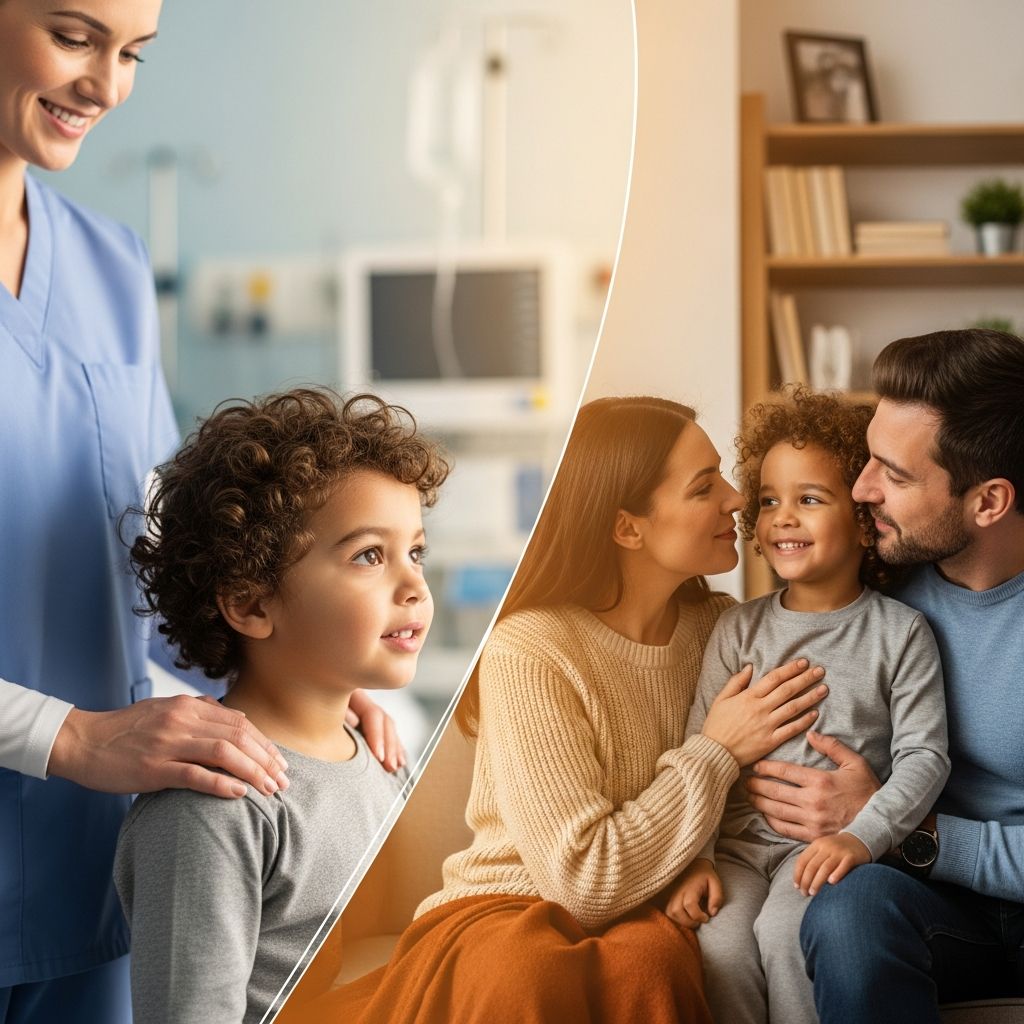
The adoption was finalized on June 8, 2018, nearly three months after Blaze’s mother first posed the question to Angela. The legal process transformed what had been an informal caregiving arrangement into a permanent family relationship recognized by law. Blaze Farnan, now officially part of the Farnan family, had found not merely a caregiver but a forever home with people who had demonstrated their commitment to his wellbeing through both professional excellence and personal love.
Life After Surgery and Present Day
The medical journey that shaped Blaze’s early life has continued to require ongoing attention. His congenital heart defect necessitated another surgical intervention before his fifth birthday. Despite these medical challenges, Blaze has achieved developmental milestones that demonstrate the positive impact of stable, loving family care combined with excellent medical management. He can now walk independently, ride his bicycle, and engage in typical childhood activities. These accomplishments represent not merely physical recovery from surgery but the broader thriving that occurs when a child receives comprehensive support for both medical and developmental needs.
Blaze’s progress illustrates how proper post-operative care, consistent medical follow-up, and family stability contribute to children’s ability to flourish despite serious congenital conditions. His story demonstrates that with appropriate support systems and dedicated caregivers, children born with significant medical challenges can achieve quality of life and independence that might not have been possible without such comprehensive care and family commitment.
The Deeper Significance of Angela’s Journey
Angela Farnan’s adoption of Blaze holds personal significance beyond the immediate family. For 32 years, Farnan had wanted to become a mother. Throughout her nursing career, she had cared for thousands of children, pouring her maternal instincts into her professional role. However, personal circumstances had not previously led to motherhood through conventional means. Her reflection on this experience demonstrates how she came to understand her situation through a lens of faith and purpose: “I’ve always wanted to be a mother and then you just have to realize and trust in God and believe that he has a greater purpose for you.”
This perspective suggests that Farnan viewed her adoption of Blaze not as a solution to personal disappointment but as fulfillment of a greater purpose. She recognized that her three decades of professional experience, her presence at precisely the right hospital during Blaze’s medical crisis, and her development of trust with Blaze’s birth mother represented a convergence of circumstances that created this unique opportunity. Her willingness to embrace uncertainty and trust in outcomes beyond her immediate control reflects a spiritual perspective that guided her decision-making.
Healthcare, Family, and Human Connection
The Farnan family’s story challenges conventional boundaries between professional and personal spheres. In healthcare settings, professional ethics require that providers maintain appropriate distance and avoid conflicts of interest. Yet the story of Angela and Blaze demonstrates how genuine human connection and professional excellence can coexist. The professional relationship that formed the foundation for this family did not compromise Farnan’s clinical care; rather, her commitment to excellent care created the conditions for trust and connection to develop.
This narrative also highlights the reality that families navigating pediatric medical crises need more than clinical expertise. They need relationships with healthcare providers who see their children as whole people deserving of comprehensive support. When medical professionals bring not only technical knowledge but also genuine human compassion to their work, they create environments where families feel supported during their most vulnerable moments.
Questions About Family, Adoption, and Care
Q: How common is adoption between healthcare workers and their patients?
A: While specific statistics are limited, such adoptions remain relatively uncommon due to professional ethics guidelines and the complexities involved in transitioning from professional to family relationships. However, when circumstances align—including genuine need, trust, and mutual benefit—healthcare providers and their patients’ families may form lasting bonds that evolve into family relationships.
Q: What role did Blaze’s biological mother play in the adoption process?
A: Blaze’s birth mother initiated the conversation about adoption, making the heartfelt decision to ask Angela if she and her husband would consider permanent guardianship. She remained emotionally connected to her son and made choices she believed would best serve his wellbeing, demonstrating that adoption in this context represented a loving decision rather than abandonment.
Q: How does a congenital heart defect impact a child’s long-term prognosis?
A: The long-term outlook depends on the specific defect, its severity, and the surgical interventions available. Modern cardiac surgery has dramatically improved survival rates and quality of life for children with congenital heart disease. Many children, like Blaze, can engage in normal childhood activities with ongoing medical monitoring and, when necessary, additional surgeries.
Q: What support systems are important for families managing pediatric cardiac conditions?
A: Families benefit from access to specialized cardiac care, consistent relationships with healthcare providers, financial support for medications and equipment, coordination of appointments across multiple providers, and emotional support through the stress of managing a child’s serious medical condition. Strong family networks and community resources significantly impact outcomes.
References
- Nurse adopts baby she spent months caring for between his two heart surgeries — CBS News. 2018-06-11. https://www.cbsnews.com/news/nurse-adopts-baby-she-spent-time-caring-for-between-his-two-heart-surgeries/
- Congenital Heart Defects — Centers for Disease Control and Prevention (CDC). 2024. https://www.cdc.gov/heartdisease/congenital_heart_defects.htm
- This PICU nurse adopts the baby boy she cared for between heart surgeries — Motherly. 2018. https://www.mother.ly/life/picu-nurse-adopts-baby-boy-she-cared-for-between-heart-surgeries/
- Nurse adopts sweet baby she cared for in Illinois intensive care unit — ABC News. 2018-06-08. https://abcnews.com/GMA/Family/nurse-adopts-sweet-baby-cared-illinois-intensive-care/story?id=61353901
- Pediatric Intensive Care Unit (PICU) Nursing — American Association of Critical-Care Nurses (AACN). https://www.aacn.org/
- Outcomes and management of congenital heart disease — American Heart Association. 2024. https://www.heart.org/en/get-involved/advocate/federal-priorities/congenital-heart-defects