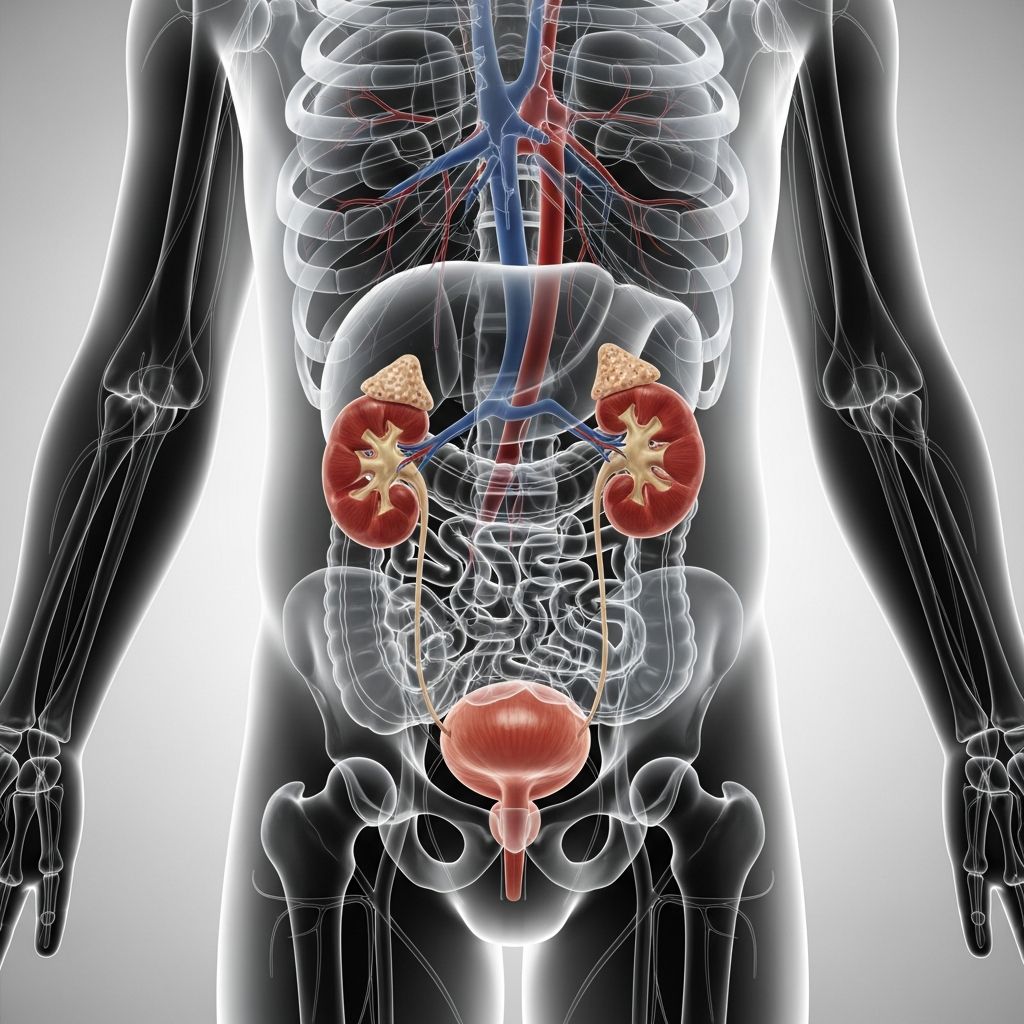
The kidneys and urinary system play critical roles in maintaining a child’s overall health by filtering waste, balancing fluids, and supporting other bodily functions. Understanding these organs helps parents recognize normal development and spot potential issues early.
Anatomy of the Pediatric Urinary System
Children’s urinary system consists of two bean-shaped kidneys located in the back below the ribcage, paired ureters, a muscular bladder, and the urethra. Each kidney contains about one million nephrons, the microscopic filtering units essential for waste removal.
- Kidneys: Purplish-brown organs that process roughly 200 liters of blood daily in adults, scaled proportionally in children to remove toxins and excess water.
- Ureters: Narrow tubes, about 10-12 inches long in older kids, that use peristaltic waves to transport urine to the bladder every 10-15 seconds.
- Bladder: Expandable sac holding up to 400-500 ml in adolescents, signaling fullness via nerves to the brain.
- Urethra: Shorter in girls (about 1.5 inches) than boys (8 inches), expelling urine during voiding.
Core Functions of Kidneys in Growing Kids
Beyond urine production, kidneys regulate electrolyte balance, blood pressure, and hormone levels crucial for child development. They filter blood through glomeruli, where high pressure forces fluid into tubules for reabsorption of nutrients and secretion of wastes.
| Function | Description | Impact on Children |
|---|---|---|
| Waste Filtration | Remove urea, creatinine, and excess salts via nephrons | Prevents toxin buildup; normal creatinine 0.3-1.5 mg/dL based on size |
| Fluid Balance | Adjust urine concentration per hydration needs | Adapts to play, sports, or illness to avoid dehydration |
| Hormone Production | Erythropoietin for red blood cells; activate vitamin D | Supports growth, bone health, anemia prevention |
| Blood Pressure Control | Renin release maintains vascular tone | Essential during rapid growth phases |
In nephrons, blood enters via renal arteries at the hilus, branches to glomeruli for initial filtration, then tubules fine-tune composition before urine drains via calyces and pyramids.
How Urine Formation Works Step-by-Step
Urine production involves glomerular filtration, tubular reabsorption, and secretion. Blood plasma minus proteins becomes filtrate; 99% water and solutes reabsorbed, yielding 1-2 liters daily in kids.
- Filtration: Glomerulus forces 125 ml/min of fluid; keeps cells/proteins.
- Reabsorption: Proximal tubule reclaims 65% water, glucose, sodium.
- Secretion: Distal tubule adds potassium, hydrogen ions.
- Concentration: Collecting ducts under ADH/aldosterone adjust final output.
Urine travels ureters to bladder, where sphincters control release. Full bladder contracts, relaxes internal sphincter, then voluntary external sphincter for voiding.
Age-Specific Milestones in Urinary Development
Newborn kidneys filter at 30-50% adult capacity, maturing rapidly. Infants void 20+ times/day; toddlers every 2-3 hours, school-age kids 4-6 times. Bedwetting common until age 7 in 15% children.
- Infants (0-12 months): Concentrate urine poorly; frequent small voids normal.
- Toddlers (1-3 years): Gain bladder control; potty training averages 2-3 years.
- School Age (4-12 years): Hold 1 oz/year of age; night control by 5-7 years.
Recognizing Urinary Tract Issues in Children
Common problems include infections (UTIs in 8% girls by adolescence), vesicoureteral reflux, and stones. Symptoms: painful urination, fever, foul-smelling urine, incontinence.
| Condition | Symptoms | Risk Factors |
|---|---|---|
| UTI | Burning, frequency, back pain | Girls, poor hygiene, constipation |
| Reflux | Recurrent UTIs, poor growth | Congenital valve issues |
| Enuresis | Bedwetting >5 years | Genetics, deep sleep |
| Stones | Bloody/painful pee | Dehydration, diet |
Kidney function assessed via BUN/creatinine; elevated levels signal impairment (e.g., double creatinine = 50% function).
Preventive Care and Hygiene Tips for Parents
Encourage hydration (4-8 cups/day), prompt bathrooming, front-to-back wiping in girls. Limit caffeine/sugary drinks; treat constipation.
- Monitor voiding patterns during illnesses.
- Promote fiber-rich diets for regularity.
- Seek pediatric nephrologist for recurrent issues.
When to Consult a Pediatric Specialist
Red flags: blood in urine, swelling, high fever without source, growth delays, uncontrolled hypertension. Ultrasound/BUN tests guide diagnosis.
Frequently Asked Questions (FAQs)
What causes frequent urination in kids?
Often normal, but diabetes, UTIs, or anxiety possible; track intake/output.
Is bedwetting a sign of kidney problems?
Rarely; usually developmental. Persistent post-7 years warrants evaluation.
How much should my child drink daily?
About 1-2 liters, more active/hot weather; pale urine indicates good hydration.
Can diet affect kidney health?
Yes; low-salt, high-fiber reduces stones/UTIs. Excess protein strains filters.
What tests check kidney function?
Urinalysis, blood creatinine/BUN, ultrasound; GFR estimates clearance.
References
- For parents: Kidneys and Urinary Tract — Akron Children’s Hospital / KidsHealth. 2023. https://www.akronchildrens.org/kidshealth/en/parents/kidneys-urinary.html
- How Kidneys Work — Children’s Hospital Colorado. 2024-10-15. https://www.childrenscolorado.org/doctors-and-departments/departments/kidney/how-kidneys-work/
- Urinary System Anatomy and Function — Cincinnati Children’s Hospital. 2025. https://www.cincinnatichildrens.org/health/u/urinary-system
- Anatomy and Function of the Urinary System — Nationwide Children’s Hospital. 2024. https://www.nationwidechildrens.org/family-resources-education/family-resources-library/anatomy-and-function-of-the-urinary-system
- Your Kidneys (for Kids) — Nemours KidsHealth. 2023-05-01. https://kidshealth.org/en/kids/kidneys.html