Diagnostic imaging plays a crucial role in modern pediatric care, allowing doctors to visualize internal structures without invasive surgery. From detecting fractures to evaluating organ function, these non-invasive tools help pinpoint issues quickly and accurately, guiding effective treatments for infants, toddlers, and teens.
Why Imaging Matters in Child Health
Children often face unique medical challenges, such as congenital anomalies, injuries from play, or unexplained fevers. Imaging provides clear insights into bones, organs, and blood vessels, enabling precise diagnoses. Unlike adults, kids require specialized approaches to minimize discomfort and radiation exposure while maximizing image quality.
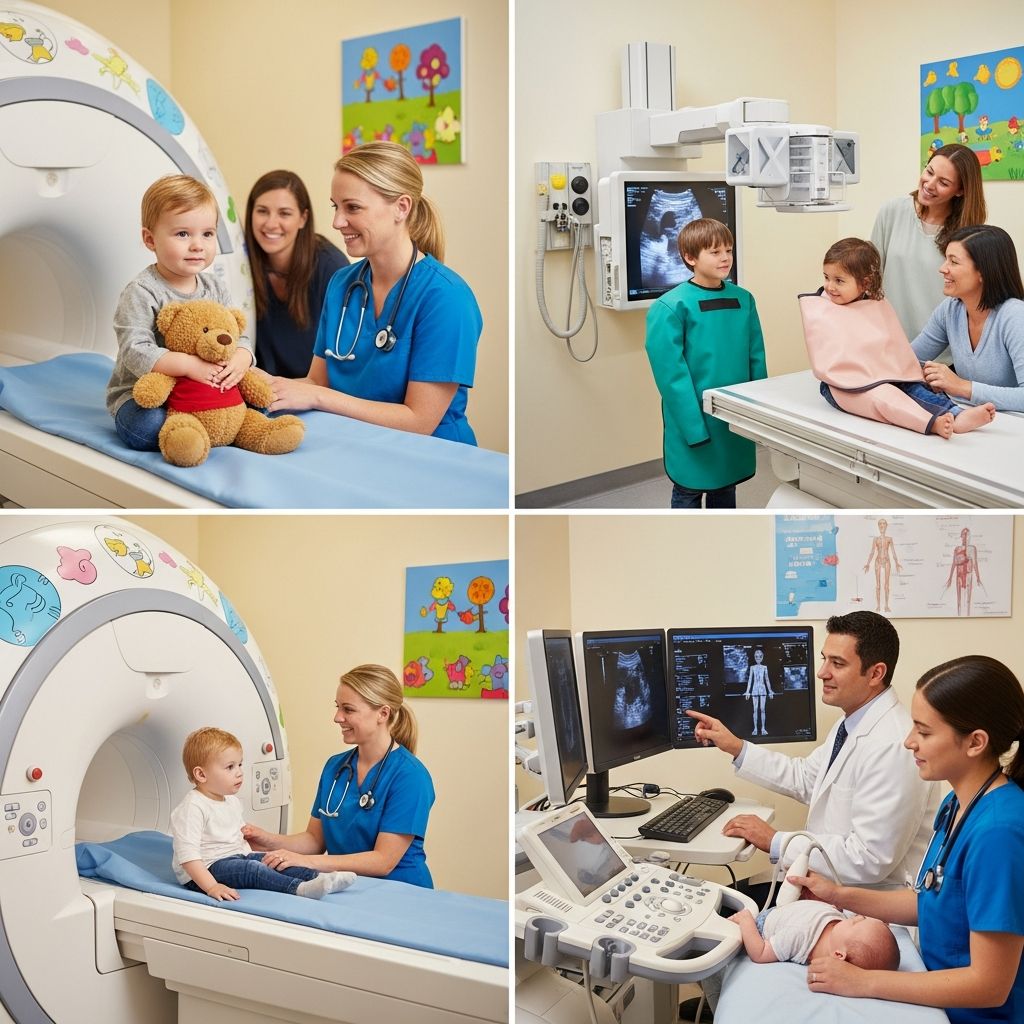
Pediatric radiologists, trained specifically for young patients, select the least invasive method first. This patient-centered strategy ensures safety and reduces anxiety, with facilities often featuring child-friendly environments like colorful rooms and distraction tools.
Common Diagnostic Imaging Techniques
Several imaging modalities are routinely used in pediatrics, each suited to specific needs. Understanding these helps parents feel prepared.
- X-rays: The most frequent initial test, ideal for bones, chest, and abdomen. They detect pneumonia, fractures, swallowed objects, or stones in kidneys/gallbladder. Exams last under 15 minutes with exposure less than a second; guardians wear lead aprons.
- Ultrasound: Uses sound waves for real-time views of soft tissues, heart, kidneys, or fetuses. No radiation makes it safe for repeated use; a gel-covered probe glides over skin.
- CT Scans: Deliver cross-sectional ‘slices’ for detailed 3D images of injuries, tumors, or infections. Advanced protocols keep radiation low via ALARA principles (As Low As Reasonably Achievable).
- MRI/MRA: Magnetic fields create high-resolution images of brain, spine, or vessels without radiation. Scans take 30-60 minutes; kids may need sedation for stillness.
- Nuclear Medicine Scans: Trace radioactive materials highlight organ function, like kidney performance (DMSA) or stomach emptying.
Specialized X-Ray Procedures
Beyond standard X-rays, contrast-enhanced studies provide deeper insights. For instance, a barium enema outlines the colon for blockages, while an esophagram checks swallowing mechanics. Modified barium swallows assess throat function during eating, vital for kids with choking risks.
| Procedure | Purpose | Duration |
|---|---|---|
| Barium Enema | Colon evaluation | 30-60 min |
| Upper GI Series | Esophagus/stomach | 20-40 min |
| VCUG | Urinary tract reflux | 5-15 min |
Interventional Radiology: Minimally Invasive Solutions
Pediatric interventional radiology (PIR) combines imaging with tiny tools for treatments avoiding open surgery. Specialists insert catheters via small skin nicks, guided by X-ray, ultrasound, or CT, to drain fluids, biopsy tissues, or place lines like PICCs for long-term IV access.
Common PIR procedures include:
- Biopsies: Needle samples from tumors or lesions under imaging guidance, often same-day discharge.
- Joint injections/aspirations: Relieve pain or analyze fluid.
- Vascular treatments: Clear blockages or map vessels with angiography.
- Drainages: Remove abscesses or bile duct obstructions using balloons.
These methods reduce recovery time, scarring, and risks compared to surgery, with child-life specialists easing fears.
Radiation Safety in Pediatric Imaging
Radiation concerns are valid, but modern protocols prioritize safety. X-rays and CTs use minimal doses tailored to child size/age, far below harmful levels. Ultrasound and MRI involve none, preferred when possible.
Key safety measures:
- ALARA Principle: Lowest dose for diagnostic quality.
- Lead shielding for non-imaged areas.
- Short scan times and high-speed detectors.
- Pregnancy screening for guardians.
Benefits always outweigh risks when clinically justified; discuss alternatives with your doctor.
Preparing Your Child for an Imaging Test
Preparation varies by test. Fasting may be needed for contrast studies or sedation; arrive early for registration and pre-op talks with nurses, anesthesiologists, and radiologists.
Tips for success:
- Explain simply: “It’s like a superhero camera taking pictures inside.”
- Use distractions: Tablets, toys, or music.
- Practice stillness at home.
- Dress comfortably; remove metals for MRI.
For VCUGs, a catheter fills the bladder with contrast; potty-trained kids void on the table. Sedation ensures young ones stay still during longer scans.
What Happens During the Procedure
Expect a team-oriented process. Techs position your child on padded tables; parents often stay nearby in aprons. Machines hum or click, but most steps are quick.
- Check-in and gowning.
- IV placement if needed for contrast/sedation.
- Positioning and imaging (hold breath for X-rays).
- Post-scan verification by radiologist.
Interventional cases move to PACU for recovery monitoring.
After the Imaging: Recovery and Results
Most kids resume normal activities immediately. Drink fluids post-contrast to flush agents. Watch for rare issues like rashes or pain.
Results: Radiologists review images promptly, sharing preliminary findings. Full reports go to your pediatrician within hours/days for discussion. Follow-ups may include repeat imaging.
Frequently Asked Questions (FAQs)
Is radiation from pediatric X-rays safe for my child?
Yes, doses are extremely low and optimized; lifetime risk is minimal compared to diagnostic benefits.
Can I stay with my child during the MRI?
Often yes, behind a screen; sedation is common for under-6s to prevent motion blur.
How do you keep kids still without sedation?
Child-life experts use games, videos, and swaddling; older kids follow breath-holding cues.
What if my child has implants or claustrophobia?
Screen beforehand; open MRI options exist, and counseling helps anxious kids.
Are interventional procedures painful?
Minimal with local anesthesia; most are outpatient with quick recovery.
Choosing the Right Pediatric Imaging Center
Seek board-certified pediatric radiologists, ALARA-compliant facilities, and family support services. Accreditation by bodies like the American College of Radiology ensures quality.
Questions for providers:
- What imaging alternatives exist?
- What’s the exact radiation dose?
- Sedation protocols?
- Expected wait for results?
Emerging Advances in Pediatric Radiology
AI enhances image analysis for faster, accurate reads. Low-dose CT and hybrid scanners reduce exposure further. Portable ultrasound empowers bedside care, especially in NICUs.
These innovations promise even safer, child-optimized diagnostics ahead.
References
- Radiology Patient Procedures — Children’s Hospital Pittsburgh. 2023. https://www.chp.edu/our-services/radiology/patient-procedures
- Pediatric X-ray Exam — RadiologyInfo.org. 2024-01-15. https://www.radiologyinfo.org/en/info/pediatric-xray
- Pediatric Interventional Radiology — Society of Interventional Radiology. 2023. https://www.sirweb.org/for-patients/conditions-and-treatments/pediatric-interventional-radiology/
- Pediatric Radiology — Radiology Group of Abington. 2024. https://abingtonradiology.com/services/diagnostic-imaging/pediatric-radiology/
- Pediatric Radiology — UC Davis Health. 2025-06-01. https://health.ucdavis.edu/diagnosis/pediatric-radiology/
- What to Expect for Your Child’s Procedure — Children’s National Hospital. 2024. https://www.childrensnational.org/get-care/departments/interventional-radiology/what-to-expect
- Pediatric Interventional Radiology — Image Gently. 2023. http://www.imagegently.org/Procedures/Interventional-Radiology/What-is-Interventional-Radiology