Skin protects your body like a shield. When something goes wrong with it, a special kind of doctor called a dermatologist can help. Kids sometimes need skin doctors too, especially when rashes, bumps, or birthmarks do not go away on their own.
This guide is written in kid-friendly language to explain who dermatologists are, why some focus only on children, and what happens when you visit one.
What Is a Dermatologist?
A dermatologist is a medical doctor who takes care of problems with your skin, hair, and nails. They treat people of all ages, from babies to older adults. Skin is the largest organ of your body, so having a doctor who understands it well is important.
Main Jobs of a Dermatologist
- Finding out what is wrong with skin, hair, or nails by looking closely and asking questions.
- Treating skin problems with creams, medicines, light therapy, or small procedures.
- Checking moles and spots to make sure they are safe and not signs of skin cancer.
- Helping prevent problems by teaching about sun protection and daily skin care.
What Makes a Pediatric Dermatologist Different?
Some dermatologists get extra training to care only for children. They are called pediatric dermatologists. Pediatric means they work with kids from birth through the teenage years.
| Type of Doctor | Who They Treat | Focus Areas |
|---|---|---|
| General Dermatologist | Children and adults | All kinds of skin, hair, and nail conditions |
| Pediatric Dermatologist | Babies, kids, and teens only | Skin problems that are common or special in children |
Why Kids Sometimes Need a Pediatric Dermatologist
Children’s skin is not just “smaller adult skin.” It grows, heals, and reacts in ways that can be different from adults.
- Some conditions, like infant birthmarks or diaper rashes, mostly happen to babies.
- Other problems, like acne, become more common in preteens and teens.
- Certain childhood skin diseases may look different than they do in adults, so they need special knowledge to diagnose.
Pediatric dermatologists are trained to understand these differences and to talk and work with kids in ways that help them feel safe and comfortable.
How Do You Become a Skin Doctor?
Dermatologists go through many years of school and training before seeing patients on their own.
Steps to Become a Dermatologist
- College: Learn science and other subjects to prepare for medical school.
- Medical School: About four years of training to become a doctor (MD or DO).
- Dermatology Residency: Several years of special training in skin, hair, and nail diseases, usually in large hospitals.
Extra Training for Pediatric Dermatologists
Doctors who want to focus on children take an additional pediatric dermatology fellowship after residency.
- They learn to care for newborns through teenagers with skin problems.
- They get practice in treating rare or complicated skin diseases in kids.
- They often help teach other doctors and students about children’s skin conditions.
Common Skin Problems in Kids
Skin issues make up a large share of doctor visits for children. Some are mild and go away on their own, but others need help from a dermatologist or pediatric dermatologist.
Everyday Skin Concerns
- Rashes: Red, bumpy, or itchy patches that can come from allergies, infections, or irritants.
- Dry skin: Rough, flaky areas that can be uncomfortable, especially in cold weather.
- Bug bites: Swollen, itchy bumps from insects such as mosquitoes or fleas.
- Sunburn: Red or painful skin after spending too long in the sun without protection.
Conditions That Often Need a Skin Doctor
- Eczema (atopic dermatitis): A long-lasting, itchy rash that often appears in bends of elbows or knees and may flare up over time.
- Acne: Pimples, blackheads, and whiteheads that show up on the face, chest, or back, especially during puberty.
- Birthmarks: Colored spots or raised areas present at or soon after birth, such as certain blood vessel growths called hemangiomas.
- Warts: Rough bumps caused by a virus that can grow on fingers, feet, or other body parts.
- Psoriasis: A chronic condition that causes thick, scaly patches and may look different in kids than in adults.
- Skin infections: Bacterial, viral, or fungal infections that can cause redness, pain, blisters, or crusting.
Many of these problems are very common, and dermatologists see them every day in their clinics.
What Does a Dermatologist Do During a Visit?
Skin doctors usually work in outpatient clinics, but they can also see children in the hospital if needed. A visit is often easier and less scary if you know what to expect.
Before the Appointment
- Bring a list of medicines and creams you are using.
- Be ready to explain when the problem started and how it has changed.
- Wear clothes that make it simple for the doctor to see the skin area that bothers you.
During the Skin Check
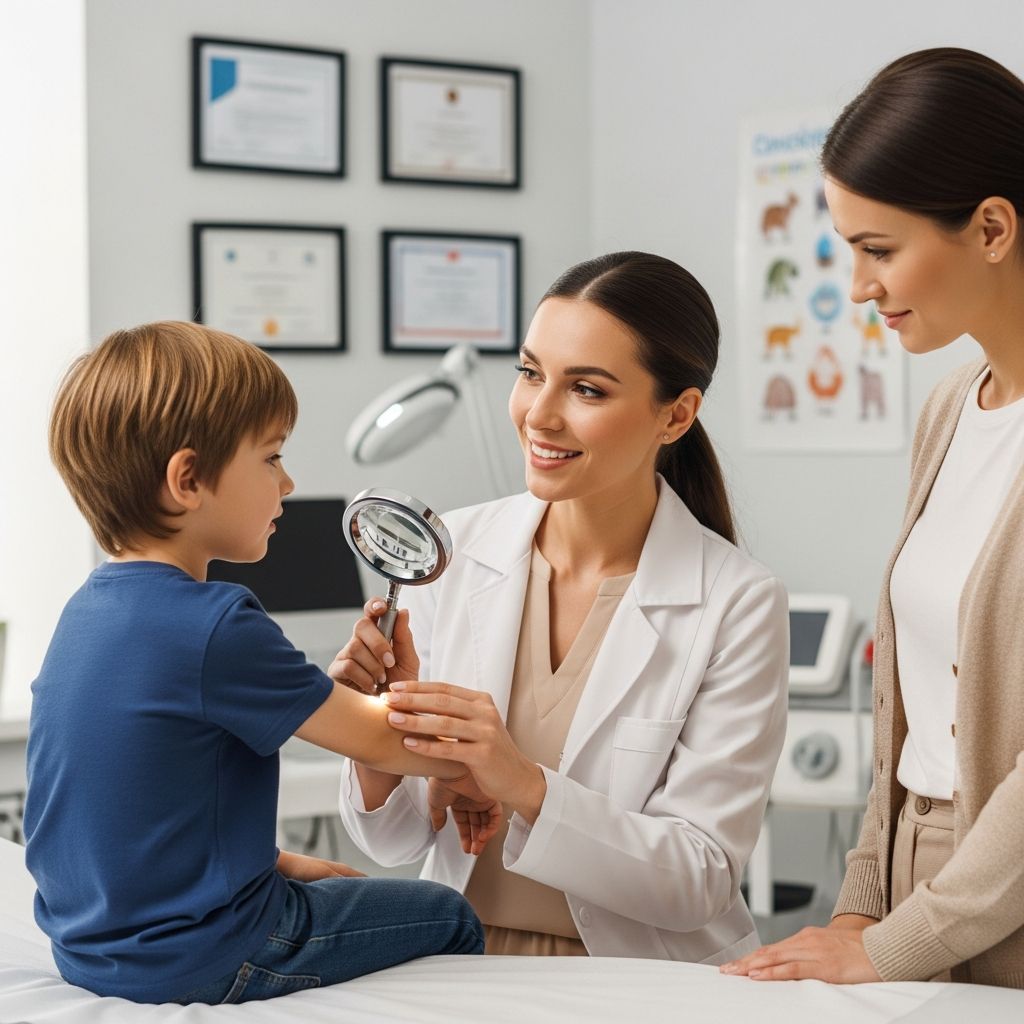
Most of the time, no needles are needed. The dermatologist mainly uses eyes, hands, and questions to understand the problem.
- The doctor looks closely at the skin, and sometimes at the whole body, even if only one spot seems affected.
- They ask about itching, pain, or burning and whether anything makes it better or worse.
- They may ask if anyone else in the family has had similar skin issues.
Tests and Small Procedures
In some cases, the dermatologist may need extra tests to be sure of the diagnosis.
- Skin scraping or swab: Gently taking a small sample from the surface to look for germs under a microscope.
- Skin biopsy: Removing a tiny piece of skin with numbing medicine so it does not hurt; the sample is then examined in a lab.
- Patch testing: Putting small amounts of possible allergens on the skin to see if they cause a reaction, helpful for contact allergies.
How Do Dermatologists Treat Skin Problems?
After figuring out what is going on, the dermatologist creates a treatment plan that fits the child’s age, skin type, and condition.
Types of Treatments
- Topical medications: Creams, ointments, and gels placed directly on the skin to reduce redness, itching, or infection.
- Oral medicines: Pills or liquids used for infections, allergies, severe acne, or immune-related conditions.
- Light therapy (phototherapy): Special lights used in a safe way to treat conditions like psoriasis or severe eczema.
- Minor procedures: Removing warts, moles, or cysts; using lasers for some birthmarks or scars.
Helping Families at Home
Education is a big part of a pediatric dermatologist’s job.
- They explain how and when to use medicines correctly.
- They suggest daily skin care routines, like gentle baths and moisturizers.
- They talk about triggers to avoid, such as certain soaps, fabrics, or foods, when relevant.
- They help kids and families cope with how skin diseases can affect feelings and social life.
When Should a Child See a Skin Doctor?
Sometimes a pediatrician or family doctor can handle simple skin problems. Other times, they may refer a child to a pediatric dermatologist for extra help.
Signs It Is Time to Ask About a Dermatology Visit
- A rash or spot has lasted for weeks without getting better.
- Skin problems keep coming back after treatment.
- A mole or birthmark changes in size, shape, or color.
- Skin issues cause severe itching or pain or disturb sleep.
- The condition makes a child feel very embarrassed or worried about their appearance.
Doctors who focus on children’s skin understand how these issues can affect playtime, school, and self-confidence, and work with families to improve both health and quality of life.
How to Help Keep Your Skin Healthy
Kids can do a lot to care for their own skin every day. A dermatologist may review many of these tips during a visit.
Daily Skin Care Tips for Kids
- Wash with gentle, fragrance-free cleansers instead of harsh soaps.
- Use lukewarm water in the bath or shower, not very hot water.
- Pat skin dry with a towel instead of rubbing hard.
- Apply moisturizer after bathing to help lock in water.
- Avoid picking at pimples, scabs, or bug bites to lower the chance of scars and infection.
Smart Sun Safety
- Wear sunscreen with SPF 30 or higher on exposed skin when outside.
- Reapply sunscreen about every two hours, or after swimming or sweating.
- Use hats, sunglasses, and clothing to cover skin when possible.
- Try to stay in the shade during the middle of the day when the sun is strongest.
Frequently Asked Questions (FAQs)
Do dermatologists only look at skin?
Dermatologists mainly care for skin, but also treat problems with hair and nails. For children, this can include hair loss, scalp problems, nail infections, and more.
Will visiting a pediatric dermatologist hurt?
Most visits do not hurt. The doctor usually only looks at your skin and asks questions. If a small procedure is needed, they use numbing medicine to make it as comfortable as possible.
Can my regular pediatrician treat my skin problem?
Many everyday issues, like mild rashes or simple infections, can be treated by your regular doctor. If the problem is hard to diagnose, keeps coming back, or is more serious, your doctor may send you to a pediatric dermatologist.
Are skin diseases in kids common?
Yes. Skin problems are responsible for a large portion of children’s visits to the doctor, and they range from minor issues to more complex diseases. That is one reason why pediatric dermatology exists as a special field.
What can I do to prepare my child for a dermatology visit?
Tell your child that the doctor will mostly look at their skin and talk with them. Bring notes about when the problem started, any treatments you have tried, and family history of skin issues. This helps the dermatologist make the best plan.
References
- What Is a Pediatric Dermatologist? — American Academy of Pediatrics / HealthyChildren.org. 2022-09-21. https://www.healthychildren.org/English/family-life/health-management/pediatric-specialists/Pages/What-is-a-Pediatric-Dermatologist.aspx
- Pediatric Dermatology — EBSCO Research Starters. 2021-01-01. https://www.ebsco.com/research-starters/health-and-medicine/pediatric-dermatology
- Dermatology (Pediatric Dermatology Subspecialty Description) — Council of Pediatric Subspecialties (CoPS). 2020-01-01. https://www.pedsubs.org/about-cops/subspecialty-descriptions/dermatology/
- Pediatric Dermatologist Fellowship Training — American Board of Dermatology. 2023-01-01. https://www.abderm.org/residents-and-fellows/fellowship-training/pediatric-dermatology
- Advancements in Pediatric Dermatology: Exploring New Treatments and Mechanisms — Sandy Springs Pediatrics & Adolescent Medicine. 2023-07-10. https://sandyspringspediatrics.com/advancements-in-pediatric-dermatology-exploring-new-treatments-and-mechanisms/
- Why Pediatric Dermatology Matters — Coastal Dermatology & Medspa. 2022-05-01. https://www.coastaldermonline.com/blog/why-pediatric-dermatology-matters
- What Is Pediatric Dermatology? — Happy Skin Dermatology, PLLC. 2024-08-16. https://www.happyskindermatology.com/2024/08/16/what-is-pediatric-dermatology/