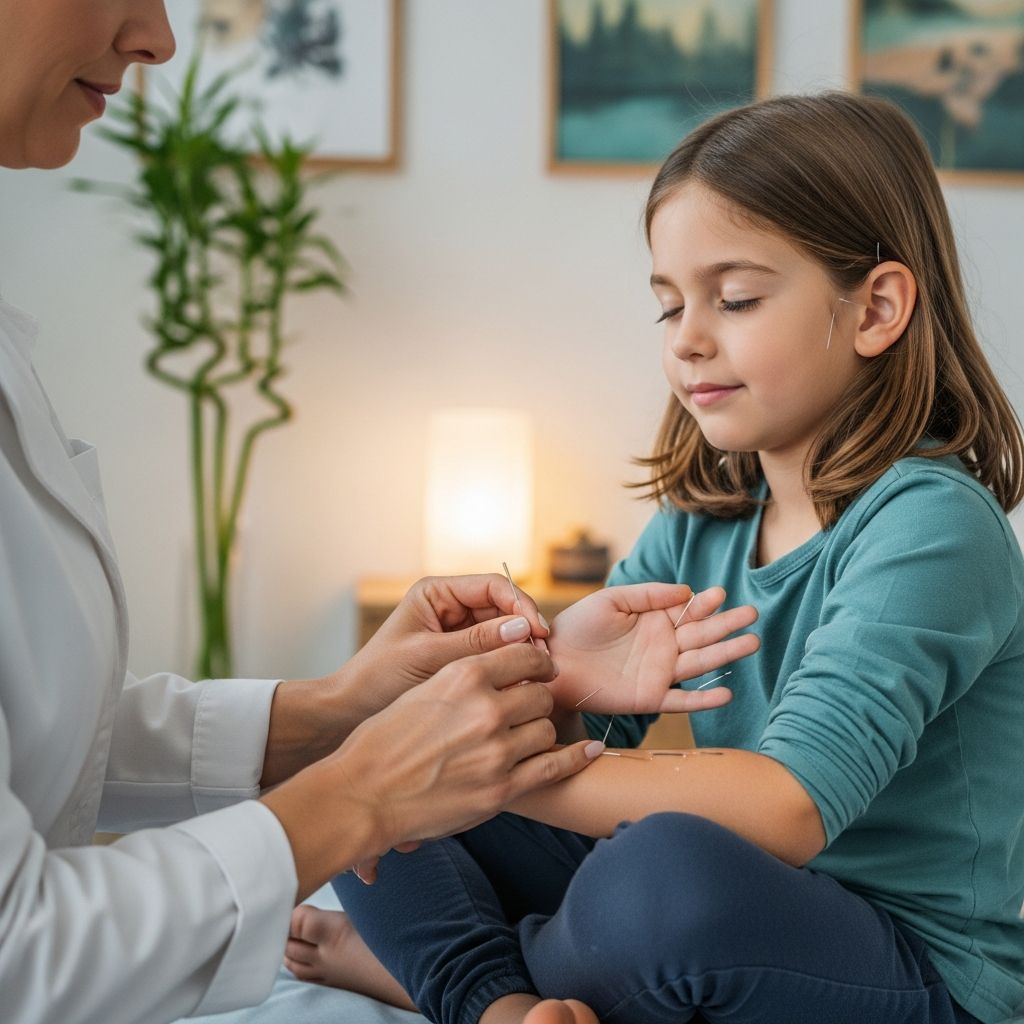
Gentle needle therapy rooted in ancient traditions offers modern relief for children’s ailments, backed by clinical reviews showing low risks and targeted benefits.
Understanding Pediatric Acupuncture Basics
Acupuncture involves inserting ultra-thin needles into specific body points to balance energy flow, known as qi, and promote natural healing. For children, practitioners adapt this by using fewer points, shallower insertions, and shorter sessions to match developing bodies. This approach leverages kids’ heightened sensitivity, often yielding faster responses than in adults.
Historical roots trace to Traditional Chinese Medicine, but today’s pediatric version integrates Western safety standards. Parents increasingly turn to it for holistic options amid rising interest in non-drug therapies, with about 150,000 U.S. children receiving treatments annually as of early 2000s data.
Proven Benefits in Child Health
Research highlights acupuncture’s role in managing key pediatric concerns. It effectively reduces postoperative nausea and vomiting, with subgroup analyses showing a 37% lower risk compared to controls (RR = 0.63, 95% CI = 0.51–0.80). Chemotherapy-induced symptoms also improve, making it valuable for young cancer patients.
Pain relief stands out too. One study noted a 1.4-point drop on a 0-10 pain scale in acupuncture groups versus 0.6 in standard care (P = 0.038). Conditions like digestive issues, anxiety, sleep disturbances, and muscle weakness respond well, with common applications for diarrhea, facial paralysis, and limb mobility.
- Nausea control: Strong evidence post-surgery or chemo.
- Pain management: Effective for various acute and chronic types.
- Digestive aid: Helps with common tummy troubles.
- Emotional balance: Supports anxiety and sleep in kids.
- Mobility support: Improves strength and paralysis recovery.
Safety Profile: Low Risks Explained
Pediatric acupuncture carries a very low complication rate. Reviews peg serious events at 1:10,000 to 1:100,000 treatments, akin to penicillin risks. A dedicated pediatric analysis found 1.55 minor adverse events per 100 sessions, mostly mild like slight soreness or redness.
About 11% of cases see transient effects, underscoring overall tolerability. No heightened risks beyond adults when protocols are followed. Key is avoiding needling open fontanels in infants or treating overly fatigued kids.
| Risk Type | Incidence | Details |
|---|---|---|
| Serious Complications | 1:10,000–1:100,000 | Rare; linked to poor technique. |
| Minor Effects | 1.55 per 100 treatments | Soreness, bruising; resolves quickly. |
| Comparable Risk | Like penicillin | Safe as common meds. |
Age-Appropriate Treatment Methods
Techniques scale to a child’s age and comfort. Newborns to toddlers often get needle-free options like shonishin tools, acupressure, or tuning forks that rub or tap points. Older kids tolerate fine needles (thinner than hypodermics) with minimal sensation—often just warmth or tingles.
Sessions last 15-30 minutes, using 1-5 points versus adults’ 10+. Practitioners build trust through play, explanations, and parental involvement. For sensitive cases, laser or massage substitutes ensure zero pain.
Non-Needle Alternatives
- Acupressure: Finger pressure on points.
- Shonishin: Specialized pediatric tools for gentle scraping/tapping.
- Tuning forks: Vibration stimulates pathways.
- Massage: Tui na style for circulation.
Choosing Qualified Pediatric Practitioners
Select licensed acupuncturists with pediatric training. Verify state licensure, child-specific certifications, and experience via NCCAOM or similar bodies. Inquire about kid session adaptations and success rates.
Top clinics follow sterile protocols: single-use needles, sanitized spaces. Hospitals like St. Jude integrate it safely under medical oversight. Avoid untrained providers to minimize rare risks from improper methods.
Integrating with Conventional Pediatric Care
Acupuncture shines as complementary, not replacement, therapy. Coordinate with pediatricians for holistic plans, especially chronic issues. It may reduce medication needs for side effects, enhancing overall outcomes.
Evidence supports use alongside drugs, with no major interactions noted in reviews. Discuss openly; many pediatric centers now offer integrative options.
Real Parent Experiences and Outcomes
Families report calmer kids post-treatment, with improvements in sleep, digestion, and mood. One review noted high tolerance, even among needle-shy children via gentle intros. Long-term, it fosters resilience without reliance on pills.
Frequently Asked Questions
Is acupuncture safe for young children?
Yes, when by licensed pediatric experts using adapted techniques. Risks match everyday meds; mild effects are rare and brief.
What age can kids start acupuncture?
No minimum; infants use non-needle methods, scaling up with age.
Does it hurt kids?
Rarely; most feel nothing or mild tingles. Pain-free options available.
Can it help with my child’s anxiety or tummy issues?
Yes, evidence shows benefits for emotional and digestive health.
Who shouldn’t get acupuncture?
Kids with bleeding disorders, severe phobias, or acute illness; delay if exhausted.
Getting Started: Practical Parent Guide
Consult your doctor first. Research local providers, schedule a consult. Prepare kids with simple stories. Track progress in a journal. Most see benefits in 4-6 sessions.
Costs vary; insurance may cover for certain conditions. Prioritize quality over price for safety.
References
- Safety and Efficacy of Acupuncture in Children: A Review of the Evidence — Jindal V, Ge A, Mansky PJ. Journal of Pediatric Hematology/Oncology. 2008-06-25. https://pmc.ncbi.nlm.nih.gov/articles/PMC2518962/
- Acupuncture for Children: Studies, Treatment and Health Benefits — Santa Barbara Herb Clinic. Accessed 2026. https://santabarbaraherbclinic.com/acupuncture-for-children-health-care/
- Is Acupuncture Safe for Children? Pediatric Safety Guide — ACA Acupuncture. Accessed 2026. https://acaacupuncture.com/blog/is-acupuncture-safe-for-children-safety-comfort-and-treatment-guidelines/
- Acupuncture – Together by St. Jude — St. Jude Children’s Research Hospital. Accessed 2026. https://together.stjude.org/en-us/treatment-tests-procedures/integrative-medicine/acupuncture.html
- Major Benefits of Acupuncture in Pediatric Health — Acupuncture Council. Accessed 2026. https://acupuncturecouncil.com/major-benefits-of-acupuncture-in-pediatric-health/