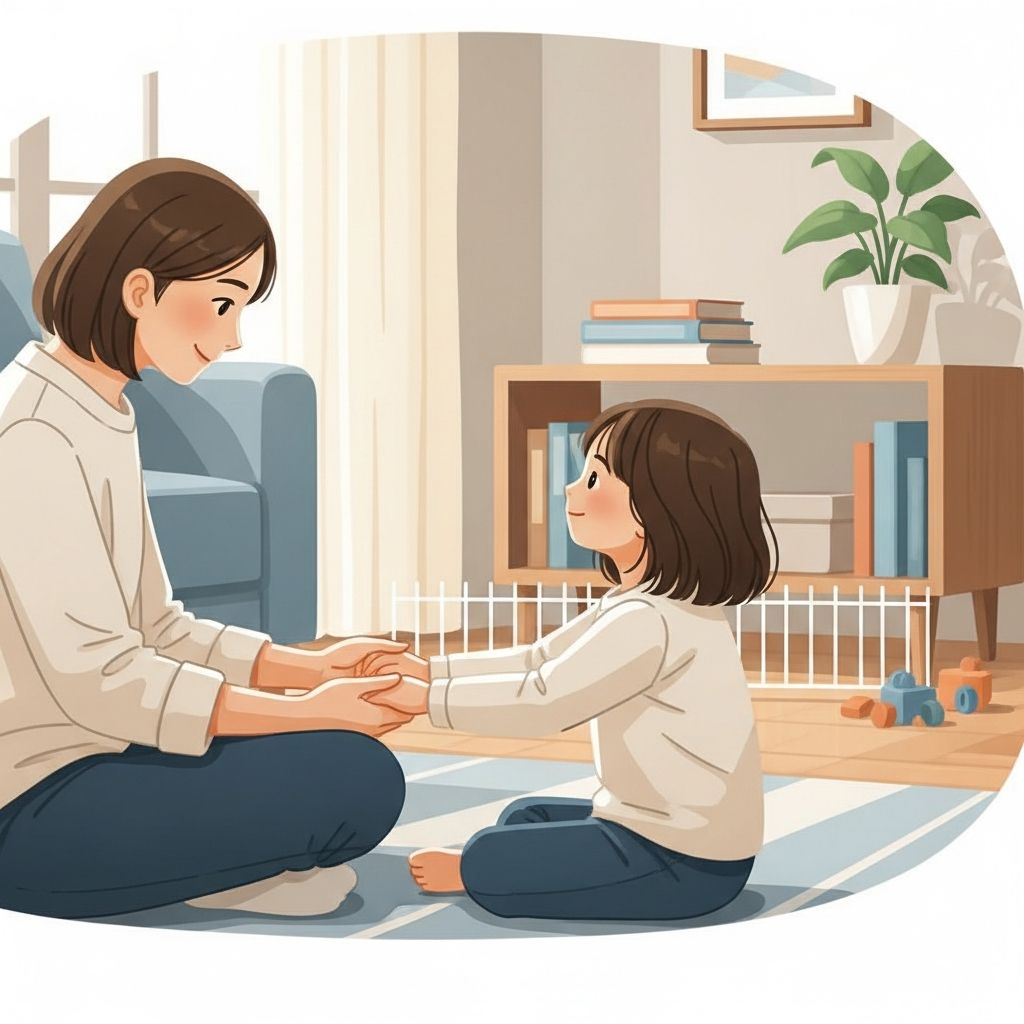
Peaceful parenting is often misunderstood as letting children rule the house, but in reality it is a disciplined, evidence-informed approach that combines warm connection with clear, consistent limits and no punitive discipline.
Instead of controlling children through fear or rewards, peaceful parenting focuses on teaching skills, protecting the relationship, and helping children develop inner self-control.
What Peaceful Parenting Really Means
At its core, peaceful parenting is a relationship-based, non-punitive way of raising children that emphasizes:
- Parental self-regulation – the adult manages their own emotions before responding.
- Emotional connection – children feel seen, safe, and valued.
- Coaching, not controlling – parents guide, teach, and model rather than punish.
- Firm, respectful limits – boundaries are clear, consistent, and delivered with empathy.
This style draws heavily from research on secure attachment, which links warm, responsive caregiving to better emotion regulation, social skills, and resilience in children.
Peaceful Parenting vs Permissive Parenting
Peaceful parenting is frequently confused with permissive parenting. They may look similar at a glance because both avoid harsh punishment, but they are fundamentally different in how they handle limits and responsibility.
| Aspect | Peaceful Parenting | Permissive Parenting |
|---|---|---|
| View of limits | Essential for safety, respect, and learning; held with empathy. | Often weak or inconsistent; limits may be avoided to prevent conflict. |
| Discipline approach | Guides behavior through teaching, problem-solving, and natural consequences. | May ignore misbehavior or give in quickly without teaching alternatives. |
| Parental role | Kind leader and emotional coach; responsible for structure and safety. | Friend-like, often uncomfortable taking charge or saying no. |
| Child’s experience | Feels connected yet secure in predictable boundaries. | Feels loved but can be unsure where the limits are. |
| Long-term goal | Inner self-discipline, empathy, and problem-solving skills. | Short-term peace, avoiding distress, sometimes at the cost of structure. |
Core Principles of Peaceful Parenting
1. Regulate Yourself Before You Respond
Children are still developing their brains’ capacity for impulse control and emotional regulation, especially in the early years. When a parent stays calm, the child’s nervous system is more likely to settle as well.
Key practices include:
- Pausing before reacting, especially when angry or overwhelmed.
- Using grounding tools (slow breathing, stepping away briefly, labeling your feeling internally).
- Owning your emotions: “I’m feeling very frustrated, so I’m going to take a breath before we talk.”
- Repairing if you lose your temper: “I yelled earlier; that wasn’t okay. I’m sorry. Let’s try again.”
This is not about perfection; it is about modeling how to handle big feelings constructively.
2. Connect Before You Correct
Research on attachment indicates that children are more cooperative when they feel securely connected and understood. Peaceful parenting puts the relationship first, even during conflict.
Ways to strengthen connection include:
- Daily one-on-one time, even 10–15 minutes, with undivided attention.
- Using eye contact, gentle touch, and a warm tone of voice.
- Reflecting feelings: “You’re really disappointed that playtime is over.”
- Sharing laughter and play to diffuse tension and build closeness.
Connection does not mean agreeing with everything your child wants; it means you stay emotionally available while holding the line.
3. Guide With Empathy and Firm Boundaries
Peaceful parenting replaces punishments (like yelling, shaming, or spanking) with guidance, problem-solving, and natural or logical consequences.
Key elements:
- Clear expectations: Children know what is allowed and what is not.
- Kind firmness: Limits are calm, non-negotiable where safety or respect is involved.
- Empathy for feelings: Children are allowed to be upset about the limit.
- Support to succeed: You help the child follow the limit, instead of only announcing it.
Example pattern:
- State the limit briefly: “I won’t let you hit.”
- Offer an alternative: “You can tell me you’re mad or hit this pillow.”
- Follow through physically if needed, gently blocking or moving the child.
Why Peaceful Parenting Does Not Mean “Anything Goes”
Because peaceful parents avoid harsh methods, observers sometimes assume the children are allowed to do whatever they want. In reality, peaceful parenting uses structure, routines, and consistent boundaries, but with empathy instead of fear.
How Limits Work in Peaceful Homes
Typical peaceful-parenting limits might include:
- Respect for people and animals: no hitting, biting, or hurting others.
- Respect for property: using household items safely; helping clean up messes.
- Health and safety: seatbelts, bedtimes, screen-time limits, nutrition boundaries.
- Family responsibilities: age-appropriate chores and contributions.
The difference lies in how these limits are enforced: through calm follow-through, problem-solving, and collaboration rather than threats or punishment.
Common Misconceptions About Peaceful Parenting
- “Kids never hear ‘no’.”
Children do hear no; it is simply paired with empathy and alternatives (“No, we’re not buying toys today. You can choose to look or help me pick groceries.”). - “There are no consequences.”
Consequences are used, but they are natural (e.g., toy breaks when thrown) or logical (toy is put away temporarily if thrown), not arbitrary or shaming. - “Parents are pushovers.”
Peaceful parents are gentle but firm; they stay kind while also being the leader who maintains safety and respect. - “Children become entitled or spoiled.”
When limits are steady and parents coach responsibility, children learn empathy, problem-solving, and accountability, not entitlement.
Benefits of Peaceful Parenting
A growing body of research on positive, attachment-based parenting and non-punitive discipline shows several potential benefits for children and families.
- Improved emotional regulation
Children learn to name, tolerate, and manage big feelings when caregivers consistently respond with calm, validation, and guidance. - Stronger parent–child relationships
Warm, responsive caregiving is associated with secure attachment, which supports trust, resilience, and better social skills. - More cooperation over time
When kids feel safe and understood, they are more likely to follow guidance, not just out of fear but from internal motivation. - Reduced parental stress
Parents who focus on self-regulation and connection often report less guilt and fewer power struggles, even though the early transition can be challenging. - Long-term skills
Children practice empathy, conflict resolution, and self-discipline—skills linked to better outcomes in school, relationships, and mental health.
Practical Strategies for Everyday Situations
Setting Limits Without Punishment
Try this general 4-step approach:
- Connect first: Get close, use your child’s name, and make eye contact.
- State the limit briefly: One or two clear sentences, no lectures.
- Empathize with feelings: Name the emotion or desire you see.
- Offer an alternative or solution: Provide a yes where you can.
Example for grabbing a toy:
- “You really want that truck. It looks fun.” (connection + empathy)
- “I won’t let you grab it from your brother.” (clear limit)
- “You can ask for a turn or choose another toy while you wait.” (alternative)
Handling Tantrums Peacefully
Tantrums are a normal part of development as children’s brains learn to manage intense emotions. A peaceful response might include:
- Staying close so the child is not alone with overwhelming feelings.
- Keeping them and others safe (gently blocking hits, moving fragile items).
- Using few words during the peak—your calm presence matters more than explanations.
- After the storm, talking about what happened and naming feelings: “You were really mad when we had to leave. Next time we can plan a 5-minute warning.”
Natural and Logical Consequences
Instead of imposed punishments, peaceful parents let children experience outcomes that are directly linked to their choices, while offering support and reflection.
- Natural consequence: If a child refuses to bring a jacket, they feel cold and learn to consider the weather next time (while the parent still protects from real harm).
- Logical consequence: If a child repeatedly throws blocks at others, blocks are put away temporarily, and the child is offered another safe way to release energy.
The focus is on learning and repair, not revenge or shame.
Supporting Yourself as a Peaceful Parent
It is difficult to stay calm, connected, and consistent if you are exhausted or overwhelmed. Peaceful parenting includes caring for the parent as well.
- Address your own triggers: Reflect on which behaviors set you off and why—often they link back to how you were raised.
- Build a toolbox: Breathing, short breaks, supportive friends or groups, and professional help if needed.
- Lower perfectionism: Progress, not perfection; repairs after conflict are powerful for trust.
- Keep learning: Books, courses, or therapy based on attachment, positive discipline, or peaceful parenting can offer concrete tools.
Frequently Asked Questions (FAQs)
Does peaceful parenting mean I never say no?
No. Peaceful parenting uses clear, consistent limits; you simply say no with empathy instead of anger or threats. Children still hear and experience firm boundaries.
If I do not punish, how will my child learn?
Children learn through modeling, repetition, problem-solving, and experiencing natural or logical consequences, all within a safe, connected relationship. Punishment can stop behavior short-term but does not reliably build inner self-control.
Won’t my child walk all over me if I am kind?
Kindness is not the same as weakness. Peaceful parenting pairs warmth with firm leadership. You stay friendly and respectful while still confidently enforcing non-negotiable limits.
What if my child keeps breaking the same rule?
Repeated misbehavior is often a sign that your child needs more support, not harsher consequences: clearer expectations, more practice, problem-solving, or help managing emotions. You still follow through with logical consequences, but you also look for the underlying need.
Am I failing if I sometimes yell?
No. All parents lose their cool at times. Peaceful parenting encourages you to take responsibility, apologize, and repair: “I’m sorry I shouted. I was overwhelmed. You don’t deserve to be yelled at.” This models accountability and emotional honesty.
References
- The Peaceful Parenting Guide: Strategies for Calm and Connection — MamaZen. 2023-03-15. https://www.mamazen.com/post/peaceful-parenting-guide
- About Peaceful Parenting — Grow Happy Kids. 2022-09-01. https://www.growhappykids.com/about-peaceful-parenting
- The Peaceful Parenting Philosophy — Genevieve Simperingham. 2021-05-10. https://www.peacefulparent.com/the-peaceful-parenting-philosophy/
- Peaceful Parenting: How-To, Benefits, Side Effects, and Examples — Healthline. 2020-08-25. https://www.healthline.com/health/parenting/peaceful-parenting
- What is a Peaceful Parent? — Aha! Parenting (Peaceful Parent, Happy Kids). 2022-04-18. https://www.peacefulparenthappykids.com/guide/peaceful-parenting
- What is Peaceful Parenting? — Reimagine Peaceful Parenting. 2021-11-02. https://reimaginepeacefulparenting.com/peacefulparenting/
- The Ultimate Guide to Peaceful Parenting — Jai Institute for Parenting. 2023-02-10. https://www.jaiinstituteforparenting.com/the-ultimate-guide-to-peaceful-parenting
- 3 Key Steps Towards Peaceful Parenting — Dr. Mari Kovanen. 2020-06-30. https://www.drmarikovanen.co.uk/3-key-steps-towards-peaceful-parenting-parenting-when-you-have-experienced-inadequate-parenting-and-bringing-up-children-who-will-change-the-world/