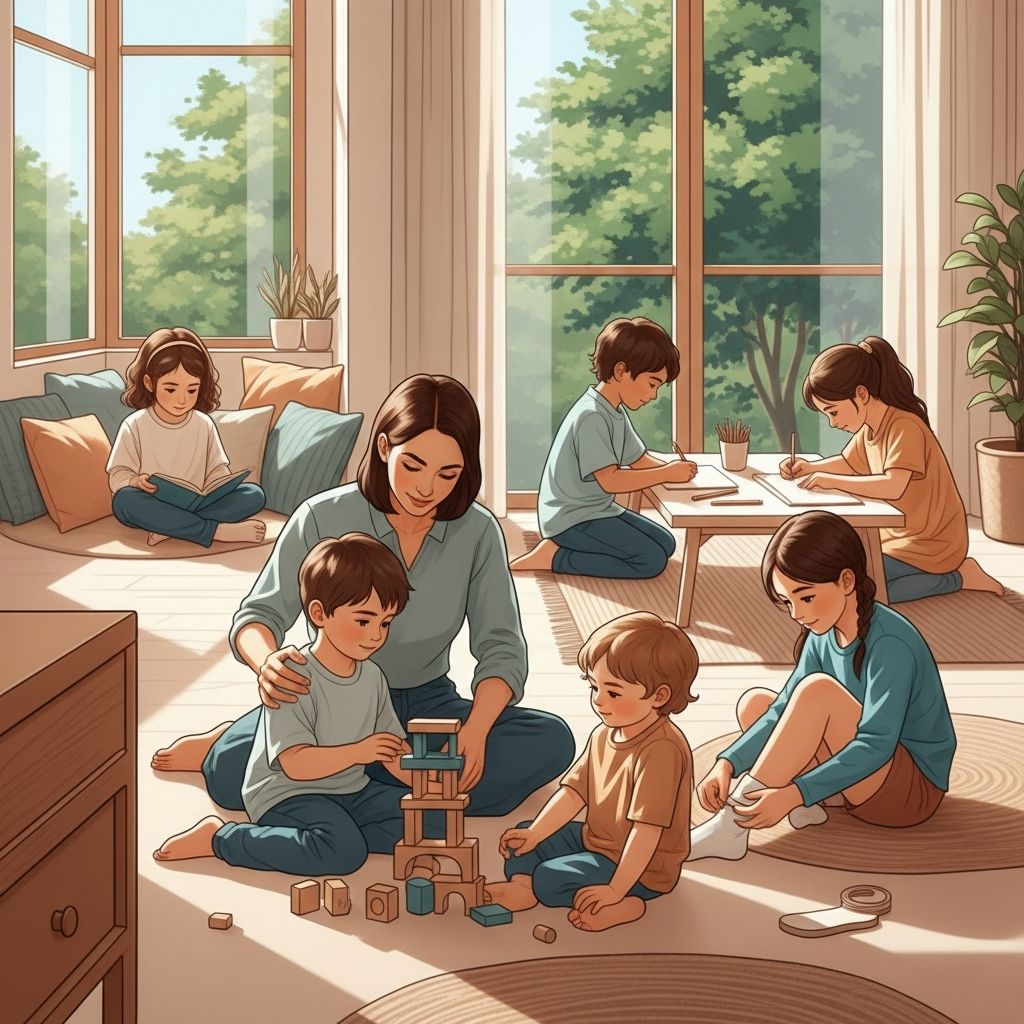
Parenting does not have to be a constant cycle of yelling, threats, and guilt. Peaceful parenting is a relationship-centered approach that helps you guide your child with empathy and clear limits instead of fear and punishment. It asks you to lead with connection, regulate your own emotions, and coach your child through theirs, so your home gradually becomes calmer, more cooperative, and more deeply connected.
What Peaceful Parenting Really Means
Peaceful parenting is not about being a perfect, endlessly patient parent or raising a child who never misbehaves. It is about how you respond to challenging behavior: choosing understanding instead of reactivity, curiosity instead of blame, and guidance instead of control. The focus shifts from “How do I make my child obey right now?” to “How do I help my child grow the skills they need for the long term?”
At its core, peaceful parenting treats children as developing humans with real needs, real feelings, and immature nervous systems, not as small adults who should already know how to behave. You remain the leader, but you lead like a coach and protector, not like a dictator or a doormat.
- It values connection over control.
- It uses limits, not threats.
- It emphasizes teaching, not punishing.
- It expects mistakes on both sides, followed by repair.
The Three Pillars of a Peaceful Home
Although every family is different, peaceful homes tend to rest on three interlocking pillars: your ability to stay grounded, the strength of your bond with your child, and the way you set and maintain limits. When one pillar weakens, the others strain; when they are all supported, daily life feels far easier.
1. Your Calm Is the Foundation
Children are highly sensitive to adult nervous systems. If you are tense, reactive, or frequently overwhelmed, your child will often mirror that energy in their own behavior. Learning to regulate your emotions does not mean never feeling angry; it means noticing that anger early and choosing not to act it out on your child.
Small, consistent habits can expand your emotional capacity over time:
- Pause before you respond. When you feel triggered, silently count to five or turn away for a few seconds before speaking.
- Breathe lower and slower. Inhale through your nose, feel your belly rise, and exhale longer than you inhale.
- Name your state. Silently note, “I feel frustrated,” or “I feel anxious,” to create distance from the feeling.
- Plan recovery time. Build small refueling moments into your day so you are not parenting from complete depletion.
2. Connection as Your Everyday Superpower
Children behave better when they feel better and more connected. Connection is not a rare, big event like a vacation; it is the steady drip of warmth, attention, and trust your child experiences with you throughout daily life. When your child trusts that you are on their side, they are more willing to cooperate and more open to your guidance.
Connection grows through many small, repeated gestures:
- Making eye contact and using your child’s name.
- Offering physical affection that your child enjoys: hugs, playful wrestling, sitting close.
- Scheduling small pockets of one-on-one time, even just 10–15 minutes a day.
- Taking your child’s feelings seriously, even when you cannot give them what they want.
3. Limits With Respect, Not Fear
Peaceful parenting rejects the idea that you must choose between being kind and being in charge. Children actually feel safer and calmer when adults provide firm, predictable limits, as long as those limits are enforced respectfully. Limits show your child where the edges are; your empathy shows them they are still loved when they bump into those edges.
Effective limits are:
- Clear. The rule is simple and concrete, not vague or shifting.
- Consistent. You follow through calmly most of the time, not only when you are in a bad mood.
- Compassionate. You acknowledge the disappointment or frustration the limit causes.
- Reasonable. The limit fits your child’s age, abilities, and stage of development.
Coaching Instead of Controlling
Traditional discipline often tries to control behavior from the outside using fear, shame, or rewards. Peaceful parenting instead aims to build inner discipline: the child learns to recognize their own feelings, consider other people, and make better choices because it feels right, not just to avoid getting in trouble.
Think of yourself as an emotional coach. A coach expects mistakes, studies them without judgment, and uses them as learning opportunities. The same approach works with children.
| Situation | Control-Based Reaction | Coaching-Based Response |
|---|---|---|
| Child shouts “No!” and refuses to leave the park. | Threaten punishment, drag them to the car, or shout back. | Calmly acknowledge feelings, restate the limit, and offer a small choice (“Walk or hop to the car?”). |
| Child hits a sibling over a toy. | Yell, send to their room, demand they say sorry. | Separate children for safety, describe what happened, and guide repair (“What can you do to help your brother feel better?”). |
| Child ignores instructions multiple times. | Label them as disobedient, escalate to harsh consequences. | Get close, gain attention first, and collaborate on a simple plan to follow the instruction. |
Understanding Misbehavior as Communication
From a peaceful parenting perspective, behavior is information. When a child is acting out, they are not trying to make your life miserable; they are showing you that something inside is out of balance. This might be tiredness, hunger, sensory overload, anxiety, the need for connection, or a skill gap (for example, not yet knowing how to wait or share).
Instead of jumping straight to consequences, pause and ask, “What is this behavior telling me?” You may not always know, but simply looking for the need behind the behavior softens your response and opens up more helpful options.
- Is your child overstimulated (too much noise, activity, or screens)?
- Is your child physically uncomfortable (hungry, thirsty, sick, or tired)?
- Is your child craving connection (has the day been full of separation or rushing)?
- Is there a skill they lack (sharing, waiting, expressing anger with words)?
Practical Tools for Everyday Challenges
Philosophy is useful, but parents also need concrete strategies they can reach for when things are falling apart. The following tools are simple, repeatable actions you can start using today. Over time, they form a new default way of responding to your child.
Connection-Focused Rituals
Rituals are small, predictable moments that anchor your relationship. They can be playful or quiet, elaborate or very simple; what matters is that they happen regularly and that your child can count on them.
- Morning check-in. A two-minute cuddle, stretch, or joke before the rush of the day.
- One-on-one “special time.” 10–20 minutes where your phone is away and your child leads the play.
- Bedtime wind-down. The same short sequence every night: wash, stories, snuggle, talk about one good thing from the day.
- Reunion ritual. A consistent greeting when you or your child come home: a hug, a handshake, or a silly dance.
Cooperation Without Bribes or Threats
Instead of relying on bribes or threats, you can invite cooperation by making tasks more connected, clear, and manageable. This does not mean you must negotiate every request; it means you deliver instructions in ways that respect your child’s brain and dignity.
- Get close. Move near your child, crouch to their level, and gain eye contact before giving an instruction.
- Use when–then phrasing. “ When your shoes are on, then we can go to the playground.”
- Offer limited choices. “Do you want to brush teeth before or after pajamas?”
- Turn tasks into games. Use races, timers, or pretend play to make routines more engaging.
Repairing After You Lose Your Cool
No parent stays calm all the time. Peaceful parenting assumes that you will sometimes shout, say things you regret, or handle a situation badly. What matters most is what you do afterward. Repair teaches your child that relationships can survive conflict and that everyone is responsible for their own behavior, including adults.
Repair might include:
- Taking responsibility for your actions: acknowledging that your reaction was not okay.
- Validating your child’s feelings about what happened.
- Briefly explaining what you will try to do differently next time.
- Inviting your child to share how they felt and what they need now to feel safe again.
Preventive Routines That Support Peace
Many daily battles are not about defiance; they are about timing, transitions, and tired brains. Thoughtful routines can greatly reduce how often your child is pushed beyond their limits. When your day follows a loose, predictable rhythm, your child spends less energy worrying about what will happen next and has more capacity for cooperation.
Daily Rhythm Checklist
Use this checklist as inspiration to design your own family rhythm, rather than a strict timetable. The goal is to notice where friction usually appears and soften those points in advance.
- Mornings: Is there enough buffer time to get ready without constant rushing?>
- Meals and snacks: Are they spaced so that your child is not repeatedly pushed into over-hungry meltdowns?
- Movement: Does your child get opportunities to run, climb, and play each day?
- Quiet time: Is there a screen-free pocket in the day for rest or calm play?
- Sleep: Is bedtime late enough to fit your reality, but early enough that your child is well-rested most days?
Common Myths About Peaceful Parenting
Because peaceful parenting rejects harsh punishment, it is often misunderstood as permissive or weak. In reality, it requires significant inner strength and consistency. Clarifying what peaceful parenting is not can help you feel more confident holding boundaries while remaining kind.
- Myth: “If I do not punish, my child will never learn.”
Children learn through experience, modeling, and guidance. Natural and logical consequences, delivered with empathy, can teach far more effectively than fear. - Myth: “Being peaceful means I should never say no.”
Children need adults to say no to protect their safety, health, and long-term wellbeing. Peaceful parenting changes how you say no, not whether you say it. - Myth: “If my child is upset, I must fix it immediately.”
Your job is to support, not to erase every uncomfortable feeling. Allowing your child to feel angry, sad, or disappointed while you stay calm teaches emotional resilience. - Myth: “Peaceful parenting is only for naturally calm parents.”
Calm is a skill that can be grown. Many peaceful parents started out as yellers and changed gradually through practice and support.
Caring for Yourself So You Can Care for Them
Trying to parent peacefully while running on empty is like trying to pour from a dry cup. Your patience, creativity, and empathy depend heavily on your own physical and emotional reserves. Investing in your wellbeing is not selfish; it is a form of responsible leadership.
Self-care in this context does not need to be glamorous or time-consuming. It can be as basic as meeting your fundamental needs and asking for help when you are overwhelmed.
- Prioritize adequate sleep whenever possible, even if that means simplifying other areas of life.
- Eat regularly and drink water so low blood sugar and thirst are not driving your reactivity.
- Schedule short, predictable breaks from caregiving, even 15–20 minutes, to reset your nervous system.
- Seek connection with other adults who understand your parenting values.
- Consider therapy, coaching, or support groups if old patterns or trauma make calm parenting especially hard.
Starting Small: A Gentle Action Plan
Transforming your parenting style is a process, not an overnight makeover. Trying to change everything at once usually leads to burnout and self-criticism. Instead, pick one or two small, concrete shifts and practice them consistently until they feel natural, then add more as you are ready.
- Choose a personal pause signal. Decide on a phrase or action (“Pause,” a hand on your heart, three breaths) to use whenever you feel anger rising.
- Pick one daily connection ritual. It might be bedtime stories, a morning hug, or a five-minute game after dinner.
- Rewrite one common script. Replace a frequent threat or criticism with a calmer, clearer statement ahead of time so it is ready when you need it.
- Reflect once a day. At the end of the day, briefly notice what went well, what was hard, and one thing you want to try tomorrow.
Frequently Asked Questions About Peaceful Parenting
Is peaceful parenting the same as permissive parenting?
No. Permissive parenting avoids limits; peaceful parenting uses clear limits delivered with respect. You can firmly insist on safety, routines, and values while also listening to your child’s perspective and acknowledging their feelings.
What if my child still misbehaves even when I am calm and connected?
Misbehavior does not disappear just because you change your approach. Children are still developing, testing boundaries, and learning self-control. The difference is that your child gradually develops stronger inner skills and a more trusting relationship with you, which reduces the intensity and frequency of problems over time.
How do I handle aggressive behavior like hitting or biting?
Your first priority is safety: calmly block or stop the behavior and separate children if needed. After everyone is safe, you can name what happened, validate the underlying feelings, and guide your child toward a better way to express those feelings or solve the problem next time.
Can peaceful parenting work with more than one child or in a busy household?
Yes, but it may take more planning and creativity. Short, frequent moments of connection, simple routines, and realistic expectations become especially important when there are multiple children or time pressures. You will not respond perfectly every time, but even partial shifts can noticeably improve the atmosphere at home.
What if I grew up with harsh discipline and find myself repeating it?
Noticing that you are repeating old patterns is already a powerful step forward. You can learn new skills now, even if they were not modeled for you as a child. Consider seeking extra support, practicing self-compassion, and celebrating every small moment where you respond differently than your caregivers did.
Peaceful parenting is less about a set of perfect techniques and more about a direction: moving steadily toward more calm, more connection, and more conscious choices. As you practice regulating your own emotions, strengthening your bond with your child, and setting respectful limits, you gradually replace cycles of power struggle with a family culture of empathy, cooperation, and lasting trust.