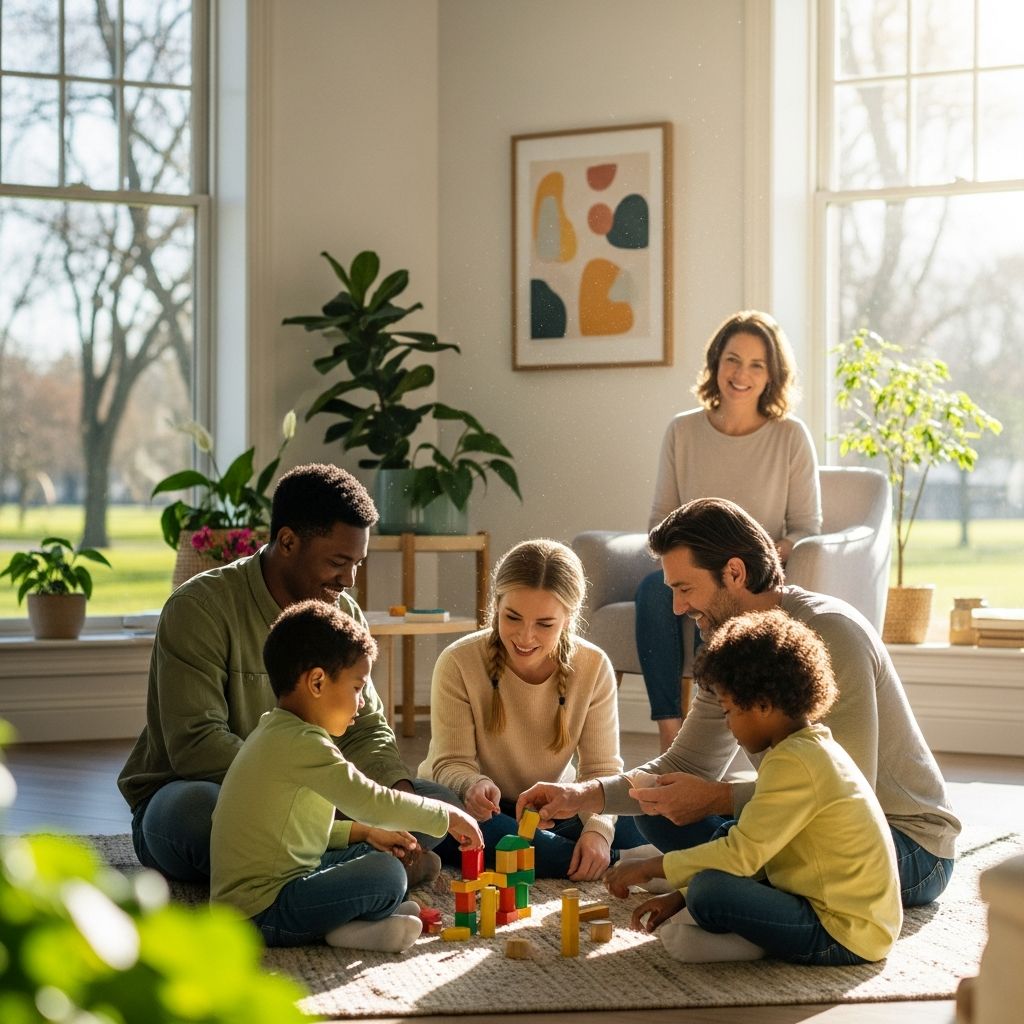
Peaceful parenting is a relationship-based approach that focuses on emotional connection, empathy, and guidance instead of punishment or fear. Research shows that parenting styles emphasizing warmth, responsiveness, and consistent boundaries support healthier emotional development and better long-term outcomes for children. Many parents, however, find it difficult to stay calm, patient, and consistent without support—this is where coaching can make a meaningful difference.
What Peaceful Parenting Really Means
Peaceful parenting is not permissive and it does not ignore challenging behavior. It rests on three intertwined pillars:
- Strong emotional connection between parent and child
- Parental self-regulation and self-awareness
- Respectful, teaching-focused discipline instead of punishment
Instead of relying on fear or shame to control behavior, peaceful parenting helps children understand their emotions, learn from mistakes, and cooperate because they feel safe and connected.
Core Principles of a Peaceful Parenting Approach
Although families are unique, most peaceful parenting practices can be grouped around several core principles.
1. Connection First, Correction Second
Children are more able to listen, problem-solve, and accept limits when they feel seen and understood. Emotional connection acts as a buffer against daily stressors and power struggles.
- Offer eye contact, gentle touch, and a calm tone before addressing behavior.
- Reflect what your child seems to be feeling: “You look really frustrated.”
- Prioritize brief moments of one-on-one time each day to strengthen the bond.
2. Emotional Regulation as a Parenting Skill
Staying calm in the middle of a tantrum or sibling argument is challenging, especially when parents carry their own stress and history. Mindful emotional regulation helps parents respond instead of react.
- Notice early signs of rising anger or overwhelm in your body.
- Use grounding strategies—slow breathing, pausing, or briefly stepping away when safe.
- Model coping skills out loud: “I am feeling tense, so I am taking a deep breath.”
3. Guidance Over Punishment
Rather than focusing on “What consequence can I give?”, peaceful parenting asks, “What is my child learning from this interaction?” Studies link punitive discipline to more aggression and anxiety, while warm, firm guidance is associated with better self-regulation and social skills.
- Use natural or logical consequences instead of arbitrary punishments.
- Explain the reasons behind rules in age-appropriate language.
- Involve children in problem-solving after conflicts.
4. Boundaries with Empathy
Peaceful parenting honors both the child’s feelings and the adult’s responsibility to keep everyone safe. Limits are non-negotiable, but they are delivered with kindness rather than harshness.
- Validate emotion: “You’re really angry that screen time is over.”
- Hold the limit: “And it’s still time to turn it off.”
- Offer support: “Do you want a hug or some quiet time while you calm down?”
Why Parents Seek Peaceful Parenting Coaching
Many caregivers discover peaceful parenting through books or articles, but translating ideas into daily life—especially under stress—can be difficult. Coaching offers structured, compassionate support for real-family challenges.
| Common Challenge | How Coaching Helps |
|---|---|
| Frequent yelling, guilt, or feeling “out of control” | Builds emotional regulation skills and tailored calming strategies. |
| Daily battles over routines, homework, or screens | Designs predictable routines, clear limits, and collaborative problem-solving. |
| Child tantrums, aggression, or sensitivity | Explores what behavior is communicating and develops supportive responses. |
| Differences between co-parents | Clarifies shared values and creates a consistent, respectful approach. |
| Feeling burned out, resentful, or alone | Provides validation, accountability, and practical tools for self-care. |
What Happens in Peaceful Parenting Coaching
While each coach has a unique style, most peaceful parenting coaching processes include several key elements designed to create sustainable change.
1. Clarifying Your Vision and Values
The coaching relationship typically begins by exploring what kind of family culture you hope to create and how you want your child to remember you as a parent. This becomes a compass for decisions and daily responses.
- Identify core values such as respect, honesty, playfulness, or responsibility.
- Reflect on how you were raised and what you want to repeat—or do differently.
- Clarify long-term goals: raising a child who is confident, kind, and capable.
2. Understanding Child Development and Behavior
Coaching often includes education about age-typical behavior, brain development, and emotional needs. Knowing what is developmentally expected can reduce shame and reframe misbehavior as communication.
- Learn what skills your child can reasonably manage at their age.
- Differentiate between “won’t” (defiance) and “can’t yet” (skill gap).
- Recognize common triggers such as hunger, fatigue, transitions, or overstimulation.
3. Building Your Emotional Regulation Toolkit
Research on mindful parenting and self-compassion shows that when adults manage their own stress, children show better emotional and behavioral outcomes. Coaching helps you design practical tools you can use in the heat of the moment.
- Create a simple pre-game routine for stressful parts of the day (mornings, bedtime).
- Experiment with specific calming practices you can realistically use.
- Plan how to repair with your child when you do lose your temper.
4. Designing Connected Routines and Rituals
Consistent, predictable routines help children feel secure and reduce conflict. When connection is woven into routines, cooperation becomes more likely.
- Add short connection moments before transitions (a quick game, cuddle, or shared joke).
- Use visual schedules or checklists for younger children to increase independence.
- Create simple family rituals—weekly walks, story time, or gratitude moments.
5. Practicing Respectful Discipline Strategies
Coaching supports you to move from theory to practice with real-life examples from your home. Over time, you develop a repertoire of responses that feel both firm and kind.
- Setting limits clearly and calmly, without threats or bribes.
- Using problem-solving conversations once everyone is calm.
- Teaching repair—apologizing, making amends, and trying again.
Benefits of Peaceful Parenting for Children and Parents
Peaceful parenting is linked to a range of emotional and relational benefits. While every child and family is different, research on supportive, responsive parenting shows consistent positive patterns.
Benefits for Children
- Improved emotional regulation: Children learn to name and manage big feelings by watching how adults cope and by receiving support instead of criticism.
- Secure attachment: Warm, consistently responsive parenting supports secure attachment, which is associated with better mental health and relationships into adulthood.
- Stronger problem-solving skills: Collaborative discussion of conflicts helps children practice negotiation, perspective-taking, and responsibility.
- Higher self-esteem: Feeling heard and respected, even when they make mistakes, contributes to a stable sense of self-worth.
Benefits for Parents and Families
- Reduced stress and yelling: Parents who use mindfulness and connection-based strategies report less conflict and more parenting satisfaction.
- Closer family relationships: A calmer emotional climate makes it easier to enjoy time together and recover from inevitable conflicts.
- Greater confidence in parenting choices: Coaching and education replace confusion and self-doubt with clarity and a coherent approach.
- More cooperative home environment: Over time, children internalize family values and need fewer external reminders or threats.
Is Peaceful Parenting Right for Every Family?
Peaceful parenting is flexible enough to be adapted to different cultures, temperaments, and family structures. However, it is not a quick fix and does not remove all conflict or distress. Instead, it changes how families move through challenging moments.
For some parents, trauma history, chronic stress, or mental health conditions can make self-regulation especially hard. Coaching can complement, but not replace, therapy or medical support when those are needed.
How to Get the Most from Peaceful Parenting Coaching
Parents who experience the greatest transformation often bring curiosity and a willingness to experiment. The goal is not perfection, but gradual, sustainable change.
- Come prepared with specific situations that feel stuck or overwhelming.
- Notice small shifts in yourself and your child and share them with your coach.
- Practice one or two new strategies at a time instead of trying to change everything at once.
- Allow room for setbacks; use them as information, not as proof of failure.
Frequently Asked Questions (FAQs)
Does peaceful parenting mean I never say “no”?
No. Peaceful parenting involves clear, consistent boundaries. The difference lies in how you communicate limits—firmly, without shaming, and while acknowledging your child’s feelings.
What if my child’s behavior gets worse when I stop punishing?
When you shift approaches, children may test boundaries to see if you really mean it. With time, consistent limits, and connection, behavior usually improves as children feel safer and more understood.
Can peaceful parenting work with strong-willed or highly sensitive children?
Yes. Strong-willed and sensitive children often especially benefit from approaches that emphasize respect, predictability, and emotional coaching. Coaching can help you tailor strategies to your child’s temperament.
How is coaching different from therapy?
Parent coaching focuses on present challenges, practical strategies, and future goals. Therapy typically explores mental health conditions, trauma, or deep emotional patterns. Some families use both, in collaboration with qualified professionals.
How long does it take to see changes?
Some parents notice small shifts—such as less yelling or quicker repairs—within a few weeks of consistent practice. Deeper changes in family dynamics usually unfold over months as new patterns replace old habits.
References
- The Peaceful Parenting Guide: Strategies for Calm and Connection — MamaZen. 2023-03-15. https://www.mamazen.com/post/peaceful-parenting-guide
- Peaceful Parenting: What It Is, Benefits, & Tips for Practice — Choosing Therapy. 2023-06-01. https://www.choosingtherapy.com/peaceful-parenting/
- 10 Peaceful Parenting Tips: Techniques to Soothe Your Child — Skillpoint Therapy. 2022-09-10. https://www.skillpointtherapy.com/peaceful-parenting/
- Powerful Possibilities of the Transformational Parenting Process — Jai Institute for Parenting. 2022-05-20. https://www.jaiinstituteforparenting.com/peaceful-parenting-method
- Peaceful Parenting: How-To, Benefits, Side Effects, and Examples — Healthline. 2020-08-20. https://www.healthline.com/health/parenting/peaceful-parenting
- Mindful parenting: what it is, benefits & 10 ways to practice — Calm. 2023-02-14. https://www.calm.com/blog/mindful-parenting