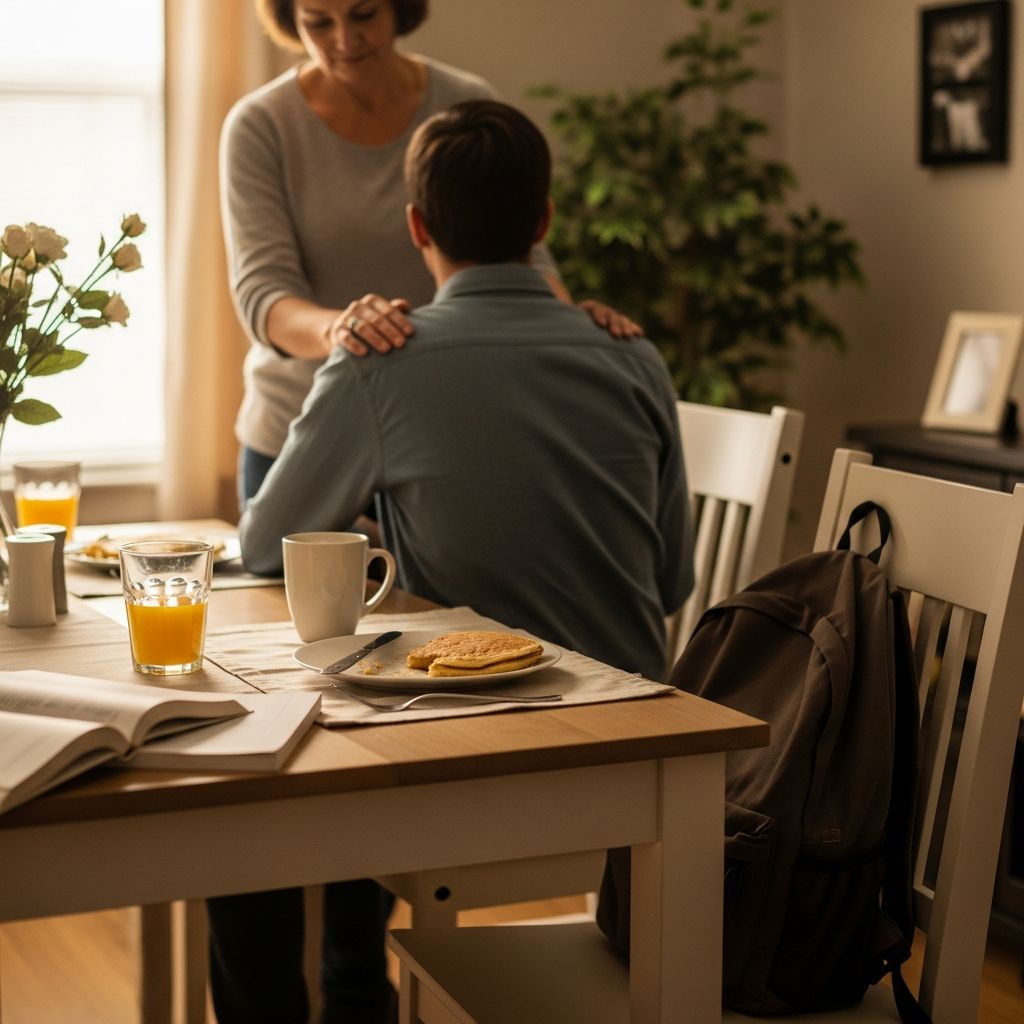
Peaceful parenting is an approach that prioritizes connection, respect, and emotional awareness instead of fear, shame, or harsh control. It does not mean permissive parenting, and it does not require parents to be perfect; it asks parents to lead with empathy while still holding firm, clear limits.
What Peaceful Parenting Really Means
At its core, peaceful parenting starts from the belief that children behave best when they feel safe, understood, and connected. Instead of asking, “How do I stop this behavior right now?” it invites the question, “What is my child feeling and needing, and how can I guide them through this?”
This mindset shift moves parenting away from power struggles and toward collaboration, coaching, and long-term skill-building. The goal is not to raise an obedient child at any cost, but to raise a capable, emotionally intelligent person who cooperates because they feel respected and involved.
Key Principles of a Peaceful Parenting Home
While every family is unique, several core principles tend to show up in peaceful, connection-based households. These principles can be adapted to different cultures, temperaments, and family structures.
- Connection before correction: Parents prioritize the relationship and emotional safety before trying to teach or redirect behavior.
- Firm limits, gentle delivery: Boundaries are clear and consistent, but they are explained and enforced without shaming, threats, or physical punishment.
- Emotional coaching: Big feelings are treated as opportunities to teach self-regulation, not as misbehavior that must be shut down.
- Modeling, not lecturing: Parents strive to show the behaviors they want to see—respect, honesty, calm—rather than only talking about them.
- Curiosity over assumptions: Instead of jumping to conclusions about motives, parents ask questions and seek to understand what is driving the behavior.
Why Children Thrive with Peaceful Parenting
Children who grow up with peaceful yet firm parenting usually feel safer expressing themselves and making mistakes, which is essential for real learning. They are not walking on eggshells, guessing when the next explosion will happen; they can trust that even when they cross a line, their parent will stay in the role of a calm leader.
This sense of safety and connection supports the development of self-control, empathy, problem-solving, and confidence. Over time, children learn not just what to do, but why it matters, and they develop an internal compass instead of relying only on external rewards or punishments.
The Parent’s Inner Work: Calm Is a Skill
Peaceful parenting does not start with the child; it starts with the adult’s capacity to stay regulated under stress. Children are still learning how to manage their impulses and emotions, so they borrow calm from the adults around them. When parents react from anger or panic, children often match that energy and escalate further.
Developing a calmer presence is an ongoing practice, not a personality trait one either has or lacks. Parents can cultivate this skill by planning ahead for triggers, practicing simple grounding techniques, and repairing quickly when they slip into yelling or harshness.
Simple Grounding Strategies for Parents
- Pause to take three slow breaths before responding to defiance or whining.
- Silently name your own feeling (“I am frustrated”) to create space between emotion and action.
- Step into another room for a brief reset, if everyone is safe.
- Prepare a short phrase you can repeat in hard moments, such as “My child is having a hard time, not giving me a hard time.”
Discipline Without Shouting, Shaming, or Spanking
For many adults, the word “discipline” is tangled up with punishment. In peaceful parenting, discipline means teaching and guiding. The question becomes: “How can I help my child learn from this situation and do better next time?”
That doesn’t mean letting hurtful behavior slide. It means replacing fear-based tactics with strategies that build skills: impulse control, empathy, responsibility, and the ability to repair after mistakes.
Examples of Peaceful Discipline in Action
- Natural consequences: If a toy is thrown and could hurt someone, that toy is put away for a while. The focus is on safety and learning, not on revenge or humiliation.
- Problem-solving conversations: After everyone is calm, parent and child revisit what happened and brainstorm together: what went wrong, what the child was feeling, and what they could try next time.
- Do-overs: Children are invited to try again with the same situation (a greeting, a request, a sibling interaction) so they can practice a better response.
- Repair and reconnection: When voices are raised or hurtful words are spoken, parents lead the way in apologizing, modeling how to take responsibility and reconnect.
Everyday Communication that Builds Cooperation
The way adults talk to children shapes how children listen and respond. Peaceful parenting communication respects children as people, even though they still need boundaries and guidance. Tone, word choice, and timing all matter.
Parents can reduce power struggles and increase cooperation by using language that is clear, respectful, and specific, rather than vague, sarcastic, or threatening.
| Less Helpful Phrase | Peaceful Alternative |
|---|---|
| “Because I said so!” | “This is not safe, so we are stopping now. We can talk about another option.” |
| “Stop crying, it’s not a big deal.” | “You’re really upset. I’m here with you. Tell me what feels so big right now.” |
| “If you don’t listen, you’re going to get in trouble.” | “You can choose to put your shoes on now or I’ll help you in one minute. Which do you prefer?” |
| “You’re so bad when you act like that.” | “That choice hurt your brother. Let’s figure out how you can make this right.” |
Setting Boundaries Without Harshness
Peaceful parenting is often misunderstood as “letting kids do anything they want.” In reality, the approach depends on clear, consistent limits that are enforced kindly but firmly. Children need boundaries to feel safe and to understand what is expected of them.
The difference is in how those boundaries are communicated and upheld. Instead of controlling through fear, parents stand steady and compassionate while holding the line.
Steps for Setting a Peaceful Boundary
- State the limit clearly: Use simple, concrete language: “The answer is no to more screen time today.”
- Empathize with the feeling: “You wish you could keep watching. It’s hard to stop when it’s fun.”
- Offer a choice within the limit: “You can help me with dinner or build with blocks while I cook. Which do you choose?”
- Stay calm if there is protest: Allow crying, disappointment, or frustration without changing the limit.
- Follow through consistently: When children see that gentle words do not mean “maybe,” trust grows.
Supporting Emotional Intelligence in Children
Emotional intelligence is the ability to notice, understand, and manage feelings in oneself and in others. Children are not born with these skills fully developed; they learn them, in large part, from how adults respond to their emotions.
When a child melts down, hits a sibling, or withdraws in shame, a peaceful parent sees a “teachable moment” for emotional literacy. Instead of shutting down feelings, the parent helps the child put words to the experience and find healthier ways to cope.
Practical Emotion-Coaching Tools
- Name the feeling: “You look angry” or “You seem disappointed” gives children vocabulary for their inner world.
- Normalize the emotion: “Everyone feels that way sometimes” reduces shame and defensiveness.
- Link feelings and behavior: “When you feel left out, you sometimes push. Let’s find a different way to tell your friends.”
- Brainstorm coping strategies: deep breaths, drawing, squeezing a pillow, asking for help, or taking a break.
Creating Daily Routines that Reduce Chaos
Routine is a quiet form of peaceful discipline. Predictable patterns help children know what comes next, which lowers anxiety and resistance. When mornings and bedtimes are always chaotic, behavior usually worsens because everyone is running on stress.
Designing a few simple, visual routines can decrease the number of instructions you need to give and the number of arguments you have to manage. Instead of constant verbal reminders, you can point to the routine and work through it together.
Ideas for Calm-Boosting Routines
- Morning checklist: A picture chart with steps such as “get dressed,” “eat breakfast,” “brush teeth,” and “pack backpack.”
- After-school ritual: Five minutes of connection (snack and chat or snuggle) before starting homework or chores.
- Bedtime flow: The same order each night: bath, pajamas, story, gratitude or sharing about the day, lights out.
- Weekly family check-in: A short meeting to celebrate wins, share feelings, and make plans together.
When You Lose Your Cool: Repairing with Your Child
No parent can stay peaceful all the time. Parents get tired, overwhelmed, or triggered by memories of how they were raised. The goal is not to avoid every mistake but to repair quickly and model how healthy relationships recover from conflict.
Repair restores trust and shows children that everyone is still learning. It transforms parental missteps into powerful lessons about accountability and resilience.
How to Repair After a Tough Moment
- Calm yourself first so your apology is genuine, not defensive.
- Describe your own behavior without blaming the child: “I yelled earlier, and that was not okay.”
- Validate your child’s experience: “It might have felt scary or unfair.” Invite them to share their feelings.
- State how you want to handle it next time and what you are working on.
- Reconnect through a hug, play, or a shared activity if your child is receptive.
Peaceful Parenting in Different Ages and Stages
Peaceful principles stay the same across childhood, but the details shift as kids grow. The way you respond to a two-year-old’s tantrum will look different from how you respond to a teenager’s eye-roll, but both still call for empathy, limits, and calm leadership.
Below is a brief overview of how this might play out across common stages.
| Age Range | Common Challenges | Peaceful Parenting Focus |
|---|---|---|
| Toddlers (1–3 years) | Tantrums, biting, hitting, resistance to transitions | Safety, simple limits, emotion naming, lots of physical comfort and playful redirection |
| Preschoolers (3–5 years) | Power struggles, big feelings about sharing or waiting | Choices within limits, clear routines, stories and play to rehearse skills |
| School-age (6–11 years) | Homework battles, sibling conflicts, rule testing | Problem-solving together, logical consequences, strengthening empathy and responsibility |
| Teens (12+ years) | Independence, privacy, social media, risk-taking | Mutual respect, collaborative rule-setting, coaching decision-making, maintaining connection through honest dialogue |
Frequently Asked Questions About Peaceful Parenting
Does peaceful parenting mean I never say “no”?
No. Saying “no” is part of keeping children safe and teaching them about limits, resources, and respect for others. Peaceful parenting changes how you say “no” and what you do afterward, but it does not erase the word from your vocabulary.
The difference is that “no” is delivered calmly and paired with empathy and, when appropriate, an explanation or an alternative. Children might still get upset, but they can trust that your boundaries are steady rather than unpredictable or punitive.
What if my child just doesn’t listen?
When children consistently ignore instructions, it often signals disconnection, unclear expectations, or developmental limits rather than simple disrespect. It can help to look at the whole pattern: timing, tone, transitions, and whether the child feels heard in other parts of their day.
Practical steps include getting on the child’s eye level, using fewer words, building in transition warnings (“five minutes until we leave”), and making time for one-on-one connection so cooperation does not feel like a one-way street.
Can I start peaceful parenting if I’ve relied on punishment before?
Yes. Families can change course at any time, even if established patterns have been in place for years. The shift may feel awkward at first, and children may test to see whether the new approach is real and consistent.
Openly naming the change can help: explain that you are learning new ways to handle problems and that you are committed to being both kind and firm. Over time, as children experience more trust and predictability, the relationship and behavior often improve.
Will peaceful parenting make my child unprepared for the “real world”?
On the contrary, peaceful parenting aims to prepare children for real-world relationships by teaching respect in both directions. Instead of learning to submit to whoever is louder or more powerful, children learn to communicate, negotiate, and stand up for themselves while considering other people.
They also practice handling disappointment, taking responsibility, and repairing after conflict—skills that are vital for friendships, school, work, and future partnerships.
Putting It All Together
Peaceful parenting is not a script to follow perfectly; it is a direction to keep moving toward: more connection, more awareness, more intentionality. There will be chaotic mornings, slammed doors, and moments when everyone says things they regret. What matters is that, over time, the overall pattern shifts from control and reactivity to guidance and cooperation.
By working on your own regulation, setting clear and kind limits, and treating emotions as teachable moments, you build a family culture where children can grow into thoughtful, confident people—and where parents can feel proud not just of their children’s behavior, but of the relationship they are building together.