When a beloved actor steps out of the spotlight and into the kitchen with a child, something special happens: the world gets a glimpse of family life that feels both relatable and inspirational. In this case, actor Patrick Dempsey baking cookies with his daughter turned into a moment that captured hearts, sparked conversation, and reminded people everywhere how powerful simple family rituals can be.
The Viral Moment: Patrick Dempsey in the Kitchen
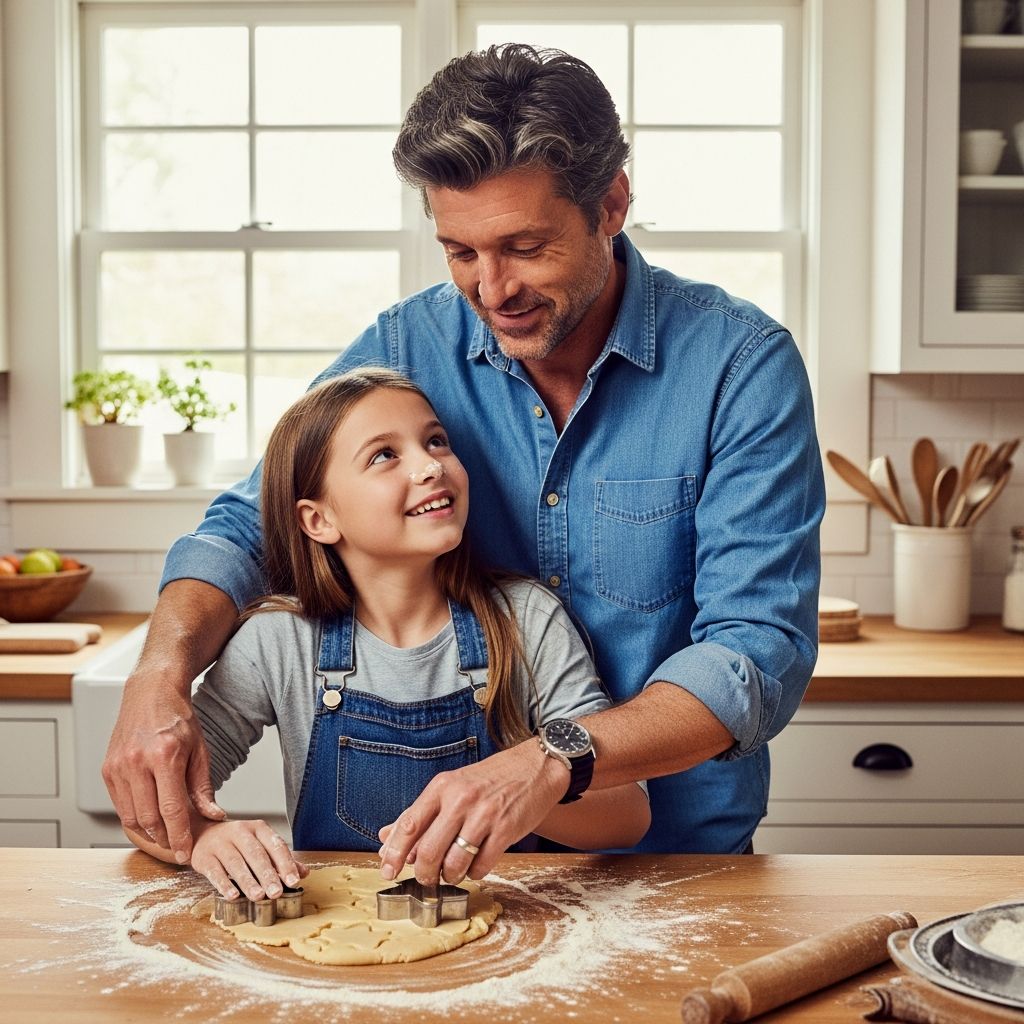
The central moment of the story is beautifully simple: a dad and his grown daughter, side by side, measuring ingredients, laughing, and baking cookies together. The familiar face of Patrick Dempsey, usually seen in scripted scenes, appears instead in a cozy, candid home setting focused on family and food.
What resonates with viewers is not just the celebrity factor, but the sense of authenticity. The kitchen is a place of flour-dusted countertops, shared tasks, and casual conversation, and seeing a famous father join his daughter there reinforces the message that meaningful connection does not require a red carpet—just a shared recipe and a little time.
- It shows Patrick in a relaxed, down-to-earth role as a dad rather than an actor.
- The interaction feels unscripted, with natural smiles and genuine teamwork.
- The focus is on togetherness and the joy of making something delicious from scratch.
Meet the Daughter Behind the Cookies
At the heart of the baking session is Dempsey’s daughter, a young woman who is clearly confident, capable, and at home in the kitchen. She is not just passively assisting; instead, she appears to lead the process, guiding her dad through the steps as they work together on the cookie recipe.
This dynamic subtly flips the traditional parent–child script: the daughter takes on the expert role while the father happily follows her lead. That role reversal highlights an important stage of parenting—learning to appreciate and celebrate a grown child’s skills, passions, and independence.
- She demonstrates ownership of the recipe and the overall flow of the baking session.
- Her confidence underscores how family support can help children grow into capable adults.
- The interaction between them balances playful teasing with evident mutual respect.
Why Cookie Baking Feels So Relatable
Cookies are one of the most universal comfort foods, and baking them is a familiar activity across generations. As a result, seeing a celebrity parent making cookies with a child evokes a sense of nostalgia for viewers, reminding many of their own childhood afternoons spent in warm kitchens with parents or grandparents.
This relatability is a big part of what makes the moment resonate online. People do not need to know the exact recipe to connect with the scene; the sound of utensils, the sight of mixing bowls, and the anticipation of a warm cookie from the oven all speak their own universal language.
- Cookie baking is simple enough for beginners but satisfying for experienced bakers.
- The activity creates natural opportunities for conversation and laughter.
- The end result—freshly baked cookies—feels like a shared reward for the time spent together.
Father–Daughter Bonding in Adulthood
One of the most striking aspects of the story is that the daughter is not a small child but an adult. This underscores an important truth: parent–child bonding does not end when kids grow up. Instead, it changes shape, often becoming more collaborative and friendship-like while still retaining a deep emotional core.
In the video and coverage of this moment, the two move around the kitchen with an ease that suggests years of shared experiences. They joke, consult each other, and share responsibilities in a way that emphasizes equality rather than hierarchy, showing how strong family connections can adapt over time.
- Adult children often appreciate quality time even more because it competes with busy schedules.
- Collaborative activities like cooking encourage mutual respect and appreciation.
- Parents can use these moments to stay involved in their children’s lives in a supportive, non-intrusive way.
Celebrity Parenting: When Fame Meets Everyday Life
The article also taps into a larger cultural fascination: how celebrities parent their children. Viewers are accustomed to seeing stars at premieres or in carefully controlled interviews, so simple home videos showing them chopping, stirring, and taste-testing are surprisingly powerful.
This glimpse into Dempsey’s life humanizes him and bridges the gap between his on-screen persona and his off-screen reality. Instead of grand gestures or extravagant experiences, the focus is on modest, everyday parenting—something many families can identify with, regardless of their background.
| Aspect | Public Image | In the Kitchen |
|---|---|---|
| Setting | Red carpets, sets, interviews | Home kitchen, casual environment |
| Focus | Career, roles, glamour | Family, food, shared time |
| Clothing | Styled looks, designer outfits | Everyday clothes, aprons, comfort wear |
| Energy | Polished, curated, formal | Relaxed, playful, spontaneous |
The Role of Social Media in Sharing the Moment
The cookie-baking video or clips did not stay within the walls of the kitchen; they reached a wider audience through social media. Platforms where short, heartfelt moments spread quickly allowed fans and casual viewers alike to react, comment, and share.
Reactions ranged from lighthearted admiration to emotional reflections. Many people noted how refreshing it was to see a well-known actor fully engaged with a child in such a grounded way, and some even mentioned feeling inspired to recreate similar bonding experiences in their own homes.
- Fans responded with comments about how sweet, wholesome, and genuine the interaction felt.
- Parents shared that the video reminded them to slow down and spend intentional time with their kids.
- Some viewers focused on the cookies themselves, asking about recipes and baking tips.
Lessons About Intentional Parenting
Beyond the charm of the specific moment, the story illustrates broader themes of intentional parenting. Rather than orchestrating an elaborate outing, Dempsey participates in something simple but meaningful, allowing his daughter to shine while offering his presence and attention.
This approach aligns with modern views on positive parenting, which emphasize responsiveness, collaboration, and emotional availability. When parents are willing to enter a child’s world—whether that world is baking, music, gaming, or another passion—they validate the child’s interests and strengthen the emotional bond.
- Intentional parenting focuses on quality of time, not just quantity.
- Parents show love by engaging with a child’s genuine interests.
- Shared creative tasks encourage conversation that might not happen in more formal settings.
How Cooking Together Builds Skills and Confidence
Cooking is far more than a means to an edible end; it is a practical classroom where life skills are learned. Measuring, timing, multitasking, and following steps all contribute to a sense of competence. When an adult child confidently leads a parent through a recipe, it signals that those skills have taken root.
In addition, the kitchen can be a safe environment for trial and error. If the cookies turn out perfectly, everyone celebrates. If they are a bit underbaked or too crispy, the moment can turn into a lesson in resilience, humor, and problem-solving—all without high stakes.
- Cooking develops planning, organization, and attention to detail.
- Shared tasks give parents and children a chance to practice cooperation.
- Small mistakes are manageable and often become funny family stories.
Creating Your Own Cookie-Baking Tradition
The article’s themes naturally inspire readers to consider how they might bring a similar tradition into their own homes. Baking cookies together does not require professional equipment or advanced skills; a basic recipe, a mixing bowl, and a bit of patience are usually enough.
Families can personalize the experience by experimenting with different flavors, shapes, and decorations. Over time, a particular cookie or ritual—such as always baking on a certain holiday or sharing a taste-test before the batch cools—can become a cherished tradition that children remember well into adulthood.
- Choose a simple, fail-friendly cookie recipe for the first session.
- Assign age-appropriate tasks so everyone has a role.
- Focus more on conversation and connection than on achieving perfect results.
Emotional Impact on Viewers
For many people following the story, the image of a father and daughter baking together sparked emotional responses rooted in their own memories or wishes. Some were reminded of late parents or grandparents, while others felt encouraged to start new traditions with their own kids before time slips away.
That emotional resonance explains why such seemingly small, domestic moments can garner so much positive attention. In an era often filled with stressful headlines, a short video of cookie dough, shared laughter, and gentle teasing becomes a brief but meaningful respite.
- Viewers projected their own family experiences onto the scene.
- The story served as a reminder that love is often communicated through daily routines.
- People appreciated seeing a public figure prioritize family over image, even for a moment.
Key Takeaways for Modern Families
Stepping back from the specific details, the cookie-baking moment highlights several key lessons that modern families can adopt. These lessons apply whether there is a celebrity in the house or not, because they are grounded in universal human needs for connection, recognition, and shared joy.
What matters most is not the complexity of the activity, but the spirit in which it is done. When family members are present, attentive, and willing to share space and responsibility, simple routines like baking can become emotional anchors that strengthen relationships over time.
- Everyday rituals can be more powerful than extravagant events.
- Letting children lead in their areas of strength builds mutual respect.
- Digital sharing can extend the positive impact of wholesome family moments.
Frequently Asked Questions (FAQs)
1. Why did this cookie-baking video attract so much attention?
The video stood out because it combined a well-known public figure with an ordinary, highly relatable activity: baking cookies with a child. Viewers were drawn to the authenticity, warmth, and simplicity of the interaction, which offered a refreshing contrast to more polished, staged celebrity appearances.
2. What makes cooking together such an effective bonding activity?
Cooking encourages cooperation, communication, and shared focus on a common goal. Because it involves tangible steps and a tasty outcome, it naturally repeats over time, turning into a ritual that helps families create lasting memories and inside jokes.
3. Is kitchen bonding only meaningful when children are young?
No. The story of Patrick Dempsey baking with his grown daughter shows that these moments can be just as meaningful in adulthood. In fact, when both parent and child bring their own skills and independence to the kitchen, the activity can feel even more collaborative and mutually satisfying.
4. How can busy parents incorporate similar moments into their schedules?
Parents do not need long stretches of free time to create meaningful rituals. Even setting aside one evening a month for a simple cooking project, breakfast together, or a shared snack prep can provide structure and continuity that children look forward to.
5. Do the cookies themselves matter, or is it more about the experience?
While it is always fun when the cookies taste great, the deeper value lies in the experience. The conversations, jokes, and shared sense of accomplishment are what children and parents tend to remember years later, long after the last crumb has disappeared.