The Passover story, rooted in the biblical Book of Exodus, recounts the Israelites’ journey from bondage in Egypt to liberation under Moses’ leadership. This narrative of divine intervention, plagues, and redemption holds profound lessons in freedom and faith, ideal for sharing with children during family gatherings.
Building a Foundation: Why Share This Ancient Narrative?
Introducing young minds to Passover fosters cultural awareness and moral understanding. At its core, the tale emphasizes themes of justice, protection, and gratitude for deliverance from oppression. Parents can frame it as a real-life adventure where ordinary people witness extraordinary events, sparking curiosity about history and spirituality.
Start by gauging your child’s age and attention span. For toddlers, focus on visuals like colorful illustrations of the burning bush or the parting sea. Older kids, around 5-10, can handle the sequence of events with dramatic flair. This approach ensures the story resonates without overwhelming details.
Key Characters: Heroes and Helpers in the Drama
- Moses: A Hebrew baby saved from Pharaoh’s decree, raised in the palace, who encounters God and leads the exodus.
- Pharaoh: The stubborn ruler who refuses to free the slaves despite warnings and plagues.
- God: The ultimate protector who orchestrates miracles to secure freedom.
- Miriam and Yocheved: Moses’ sister and mother, showcasing bravery and family bonds.
Personify these figures to make them relatable. Describe Moses as a brave explorer called by a fiery voice, or Pharaoh as a tough king who learns a hard lesson about fairness.
The Journey Begins: From Enslavement to the Call
Long ago, the Israelites lived in Egypt after Joseph’s time, thriving until a new Pharaoh enslaved them, fearing their numbers. He ordered baby boys drowned, but one mother hid her son in a river basket. Pharaoh’s daughter rescued him, naming him Moses.
Growing up privileged yet aware of his roots, Moses fled to the desert after defending a slave. There, a burning bush spoke: God chose him to demand freedom. Hesitant at first, Moses returned with his brother Aaron.
Trials of Persuasion: The Ten Plagues Unfold
Pharaoh’s defiance led to ten plagues, each escalating to show divine power:
| Plague | Description | Lesson for Kids |
|---|---|---|
| 1. Blood | Nile River turns to blood. | Water, essential for life, changes to remind of consequences. |
| 2. Frogs | Hopping everywhere. | Even small creatures obey a greater force. |
| 3. Lice | Infesting people and animals. | Discomfort teaches listening. |
| 4. Wild Beasts | Swarming the land. | Chaos shows need for order. |
| 5. Livestock Disease | Animals fall ill. | Health is a gift. |
| 6. Boils | Painful sores on skin. | Personal suffering prompts change. |
| 7. Hail | Fiery ice storms. | Nature’s fury demands respect. |
| 8. Locusts | Devouring crops. | Loss highlights provision from above. |
| 9. Darkness | Three days of blackout. | Light represents hope. |
| 10. Firstborn | Death passes over marked homes. | Protection through obedience. |
Use props like red water for blood or toy frogs to act out plagues, turning education into play. Explain each as a step toward freedom, building suspense.
The Pivotal Night: Instructions for Protection
Before the final plague, God instructed slaughtering a lamb, smearing blood on doorposts, and eating unleavened bread hastily. This Passover meal signaled safety—the angel passed over obedient homes.
For kids, mimic this with safe activities: paint doorframes with washable red paint or bake flat matzah. Discuss how families prepared to flee, packing lightly for a rushed escape.
Escape and Miracle: Crossing the Red Sea
With firstborns lost, Pharaoh relented. Israelites fled, but his army pursued to the sea. Trapped, they prayed; Moses raised his staff, parting waters into walls. They crossed on dry ground; waves crashed on Egyptians.
Recreate with a blanket sea: kids walk through while you shake edges. This visual cements the miracle of deliverance.
Interactive Retelling: Games and Crafts for Engagement
Make storytelling active:
- Freeze Tag Salvation: Tag freezes players; unfreezing mirrors God’s rescue.
- Plague Hunt: Hide plague symbols (frog stickers, hail balls) for collection.
- Doorpost Art: Draw blood-marked doors, naming loved ones protected.
- Matzah Bake-Off: Mix flour and water for quick flatbread, racing to mimic haste.
These turn passive listening into memorable participation, reinforcing themes through senses.
Seder Table Traditions: Foods That Tell the Story
The Seder meal revives the narrative:
- Matzah: Bread of affliction, baked in flight.
- Maror: Bitter herbs for slavery’s pain.
- Charoset: Sweet mortar of brick-making.
- Zeroa: Shank bone for sacrifice.
- Beitzah: Egg for new life.
- Four Cups: Joy of redemption.
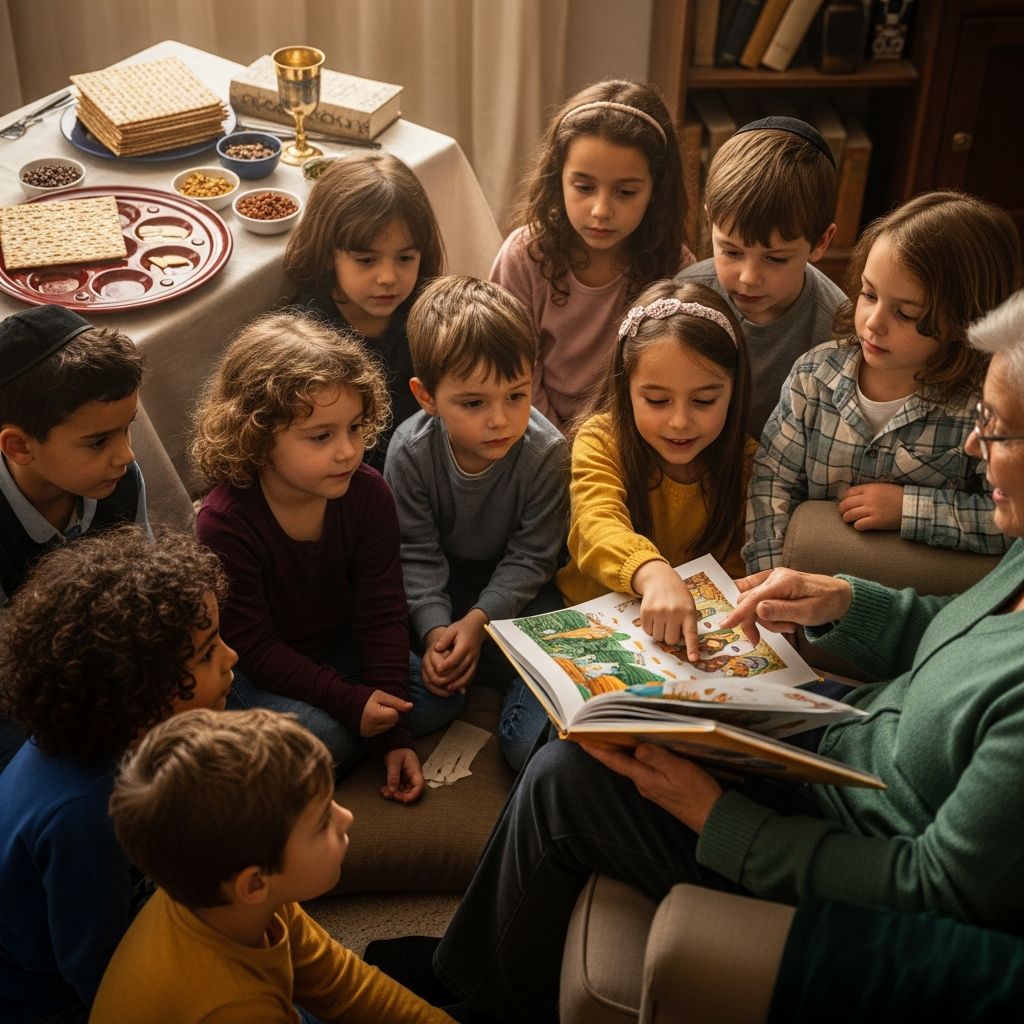
Let kids arrange a mini-Seder plate, tasting each symbolic food while explaining its role. Sing simple songs like ‘Dayenu’ for fun.
Age-Tailored Approaches: From Tiny Tots to Tweens
For 2-4 Year Olds: Use puppets for Moses and Pharaoh; focus on happy ending.
For 5-7 Year Olds: Sequence plagues with hand motions; discuss feelings of fear and joy.
For 8-12 Year Olds: Explore deeper meanings like freedom’s responsibilities; debate Pharaoh’s choices.
Adapt to keep engagement high, avoiding scary elements for sensitive children.
Addressing Tough Questions: Slavery, Plagues, and Fairness
Kids may ask why bad things happened. Explain plagues targeted oppressors, sparing Israelites, teaching accountability. Slavery’s evil underscores valuing freedom today. Frame God as just protector.
Connect to modern justice: How do we help those needing freedom now?
Extending the Lesson: Year-Round Connections
Link Passover to daily life: gratitude prayers, helping others, quick obedience. Watch kid-friendly animations or read picture books post-Seder.
Frequently Asked Questions
What is the simplest way to start the Passover story with toddlers?
Use a baby doll as Moses in a basket, floating it in a tub to show rescue by the princess.
How can I make the plagues less frightening?
Present them as magic tricks gone wrong for Pharaoh, emphasizing God’s control and happy resolution.
Why unleavened bread?
Israelites left so fast, dough didn’t rise—symbolizing urgency of freedom.
Can non-Jewish kids enjoy Passover learning?
Absolutely; focus on universal themes of bravery and liberation.
What’s a quick family activity?
Part the ‘sea’ with pillows; march through singing freedom songs.
This comprehensive guide empowers parents to weave Passover’s timeless message into family bonds, creating lasting memories of faith and heritage. (Word count: 1678)
References
- Children’s Bible Lesson: The Passover — Ministry to Children. Accessed 2026. https://ministry-to-children.com/childrens-lesson-passover/
- The Passover Story for Kids — Kveller. Accessed 2026. https://www.kveller.com/the-passover-story-for-kids/
- Moses and the Story of Passover For Kids! — YouTube (BibleProject or similar). 2021. https://www.youtube.com/watch?v=89t-Sa3CQNY
- The Passover Story for Kids — PJ Library. Accessed 2026. https://pjlibrary.org/beyond-books/holidays-for-kids/passover-hub/articles/the-passover-story-for-kids
- The Passover Story in Short — Chabad.org. Accessed 2026. https://www.chabad.org/holidays/passover/pesach_cdo/aid/1827/jewish/The-Passover-Story-in-Short.htm
- Passover — Britannica Kids. Accessed 2026. https://kids.britannica.com/kids/article/Passover/353602