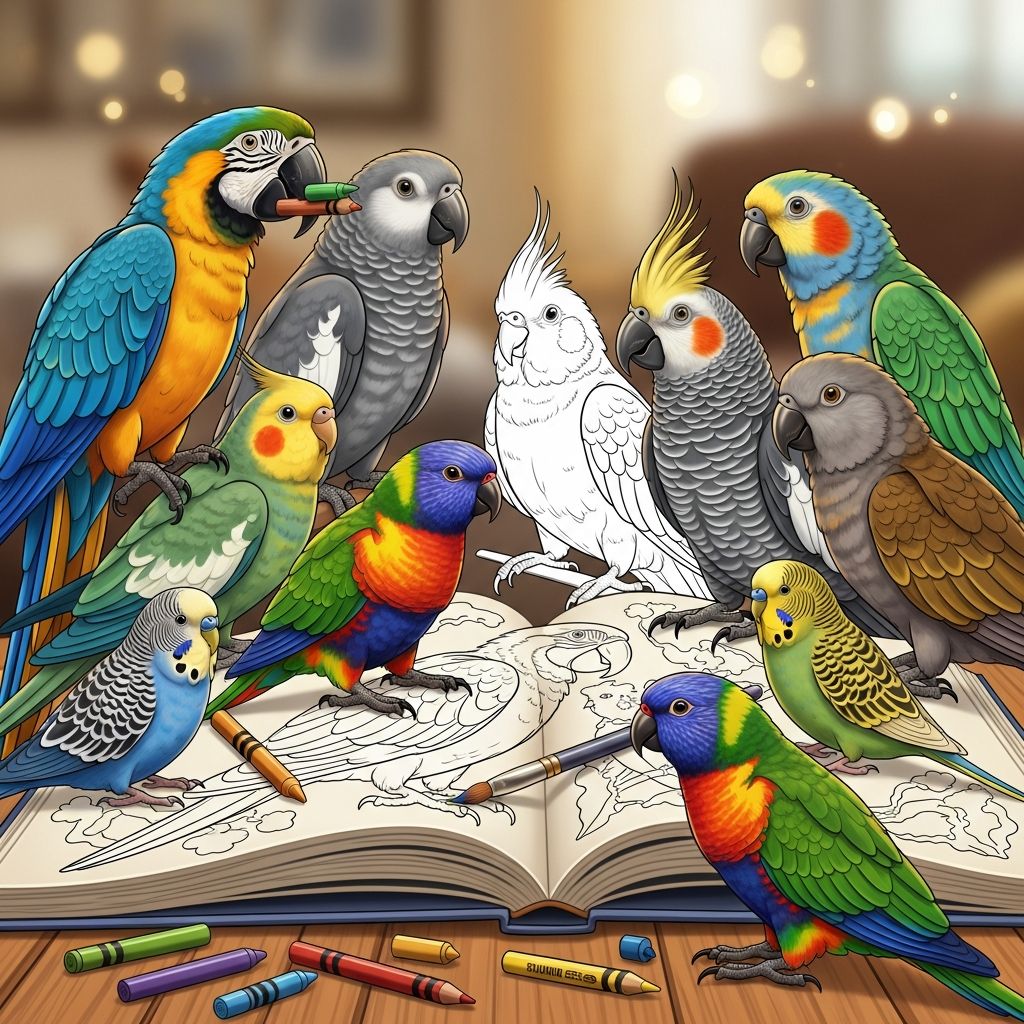
Parrot coloring pages turn blank outlines of tropical birds into bright, imaginative scenes that children can customize in any way they like. These simple printables offer a low-prep activity that supports creativity, fine motor skills, and early learning while keeping kids happily engaged.
Why Parrots Make Amazing Coloring Subjects
Parrots are famous for their vivid feathers and playful personalities, which makes them ideal for coloring pages. Kids can experiment with bold color choices while learning about real bird species and their habitats.
- Vibrant feathers invite kids to mix and match colors instead of sticking to a single shade.
- Distinctive shapes, such as curved beaks and long tails, help children notice details as they color.
- Parrots naturally appear in diverse settings, from jungle trees to pirate shoulders, inspiring imaginative storytelling.
Benefits of Parrot Coloring Pages for Kids
Coloring is more than a quick way to keep kids busy; it also supports important developmental skills. Parrot-themed pages combine these benefits with a light introduction to biology and geography.
- Fine motor practice: Holding crayons or colored pencils and filling small spaces helps strengthen finger muscles.
- Hand-eye coordination: Children learn to guide their strokes within outlines, improving control and precision.
- Focus and patience: Completing a colorful bird encourages kids to stick with a task from start to finish.
- Color recognition: Talking about shades like emerald, lime, and turquoise builds vocabulary around color.
- Emotional expression: Kids can express moods through color choices and patterns on each parrot.
Types of Parrot Coloring Pages You Can Create or Use
Parrot coloring sheets come in many styles, from quick, simple outlines for toddlers to detailed scenes older children can spend longer on. Offering a range keeps the activity interesting over time.
| Type of Parrot Page | Best For | Key Features |
|---|---|---|
| Simple cartoon parrots | Toddlers and preschoolers | Large shapes, thick lines, minimal small details |
| Realistic parrot portraits | School-age kids and tweens | Feather textures, shading areas, accurate beaks and claws |
| Jungle and rainforest scenes | Nature-loving kids of all ages | Leaves, flowers, tree branches, and other animals |
| Pirate-themed parrots | Storytelling and pretend play | Hats, treasure chests, ships, and fun accessories |
| Patterned parrots | Older kids and adults | Intricate designs, repeating patterns, mandala-style feathers |
Setting Up a Parrot Coloring Station at Home
A small, organized coloring area makes it easy for kids to begin creating whenever there is free time. You do not need expensive supplies to build a welcoming art corner.
- Keep a stack of printed parrot pages in a folder or tray within kids’ reach.
- Provide a simple cup or box filled with crayons, colored pencils, or washable markers.
- Use a clipboard or a hard surface to turn any part of the house into a miniature art studio.
- Place a small recycling bin nearby for paper scraps and empty packaging.
Creative Ways to Color Parrot Pages
Encourage kids to think beyond plain coloring by challenging them to use different techniques and materials. Simple prompts can transform a basic worksheet into a mini art project.
- Ask children to use at least three shades of green on one bird to explore blending and layering.
- Invite them to outline the parrot in one color, then fill in with softer shades inside the lines.
- Provide cotton swabs or blending stumps for lightly smudging colored pencil textures on the feathers.
- Offer sticker sheets and let kids add stars, hearts, or leaves into the background scene.
- Encourage them to name each parrot and write that name on the page as a finishing touch.
Educational Ideas: Turn Coloring Into a Mini Parrot Lesson
Parrot coloring pages can double as simple learning tools when you connect them to facts about birds, habitats, and conservation. Small bits of information are usually enough for young children.
- Locate on a world map where certain parrot species live, such as tropical forests or island regions.
- Discuss what parrots eat, including fruits, seeds, and nuts, then add these foods into the background.
- Compare the beak shape of a parrot to that of other birds, pointing out how it helps them crack shells.
- Talk briefly about why protecting forests is important for wild parrots and other animals.
Age-Appropriate Parrot Coloring Activities
Adjusting the difficulty of the pages and the surrounding activities keeps the experience positive for different age groups. Matching tasks to abilities helps children feel capable and proud of their work.
For Toddlers and Preschoolers
- Offer large, bold parrot outlines with minimal details and thick black lines.
- Use chunky crayons or washable markers that are easy to grip.
- Focus on basic color naming rather than staying inside the lines.
For Early Elementary Kids
- Introduce more detailed parrots with individual feathers and background elements.
- Encourage kids to plan their colors before they start, such as choosing a primary palette.
- Ask them to add simple labels like “wing,” “tail,” and “beak” around the bird.
For Older Kids and Tweens
- Provide complex scenes or patterned parrots that require patience and precision.
- Suggest shading from dark to light within each feather to practice realistic coloring.
- Invite them to design an entire rainforest scene extending beyond the printed outline.
Fun Projects Using Finished Parrot Coloring Pages
Instead of letting colored pages pile up, transform them into simple crafts or decorations. This adds new life to the artwork and teaches kids that their creations have value.
- Wall gallery: Hang favorite parrots on a bulletin board or along a hallway string with clothespins.
- Homemade cards: Cut out a colored parrot and glue it onto folded cardstock to make greeting cards.
- Bookmarks: Trim a vertical strip featuring the parrot, laminate it, and punch a hole for a ribbon.
- Room decor: Tape colored pages onto a bedroom door or around a desk area.
- Puppet play: Attach a colored parrot to a craft stick and use it as a puppet during stories.
Simple Step-by-Step Parrot Coloring Activity
When children feel unsure about where to start, a short step-by-step plan can help them get going. The goal is not perfection but enjoyment and confidence.
- Step 1: Choose a parrot page and look closely at the different sections: head, wings, tail, and background.
- Step 2: Pick a small group of colors, such as green, yellow, blue, and red.
- Step 3: Start with the largest areas first, such as the body and wings.
- Step 4: Add details like the beak, eyes, and individual feathers.
- Step 5: Fill in the background with sky, leaves, or patterns to complete the scene.
Tips for Parents and Teachers
Parrot coloring pages are flexible enough to fit into family time at home or structured classroom activities. With a bit of planning, they can become a recurring resource instead of a one-time project.
- Pair coloring sessions with short read-aloud books about birds or rainforests.
- Set a time limit to avoid frustration, especially for younger children who tire quickly.
- Celebrate effort rather than neatness to encourage experimentation and risk-taking.
- Store completed pages in a binder so children can flip through and see their progress over time.
Frequently Asked Questions About Parrot Coloring Pages
Are parrot coloring pages suitable for very young children?
Yes, parrot coloring pages can work well for toddlers and preschoolers when the designs are simple and printed large. Thick outlines, fewer small details, and washable coloring tools help keep the experience fun and frustration-free.
What materials work best for coloring parrots?
Crayons are durable and ideal for younger kids, while colored pencils offer more control and shading options for older children. Washable markers can be used for bright, bold colors, as long as there is adequate protection for surfaces and clothing.
Can parrot coloring pages be used in the classroom?
Parrot pages fit easily into lessons on animals, habitats, or even language arts. Teachers can pair them with brief facts, vocabulary lists, or short writing prompts to extend learning beyond the coloring itself.
How can I make the activity more challenging for older kids?
Consider giving older children more detailed designs or asking them to create their own background around a simple parrot outline. You can also challenge them to model their colors after a real species using reference images rather than inventing random combinations.
What if my child prefers imaginative colors instead of realistic ones?
Imaginative color choices are perfectly fine and can even encourage creativity and personal expression. If you want to incorporate learning, you can still talk briefly about real parrots afterward while celebrating the unique, fantasy-inspired artwork.
Making Parrot Coloring a Regular Creative Habit
Building a small routine around parrot coloring pages—such as a weekly “tropical art” afternoon—gives kids something to look forward to. Over time, they will naturally experiment with new techniques, colors, and details, turning a simple sheet of paper into a gateway for imagination, confidence, and calm.