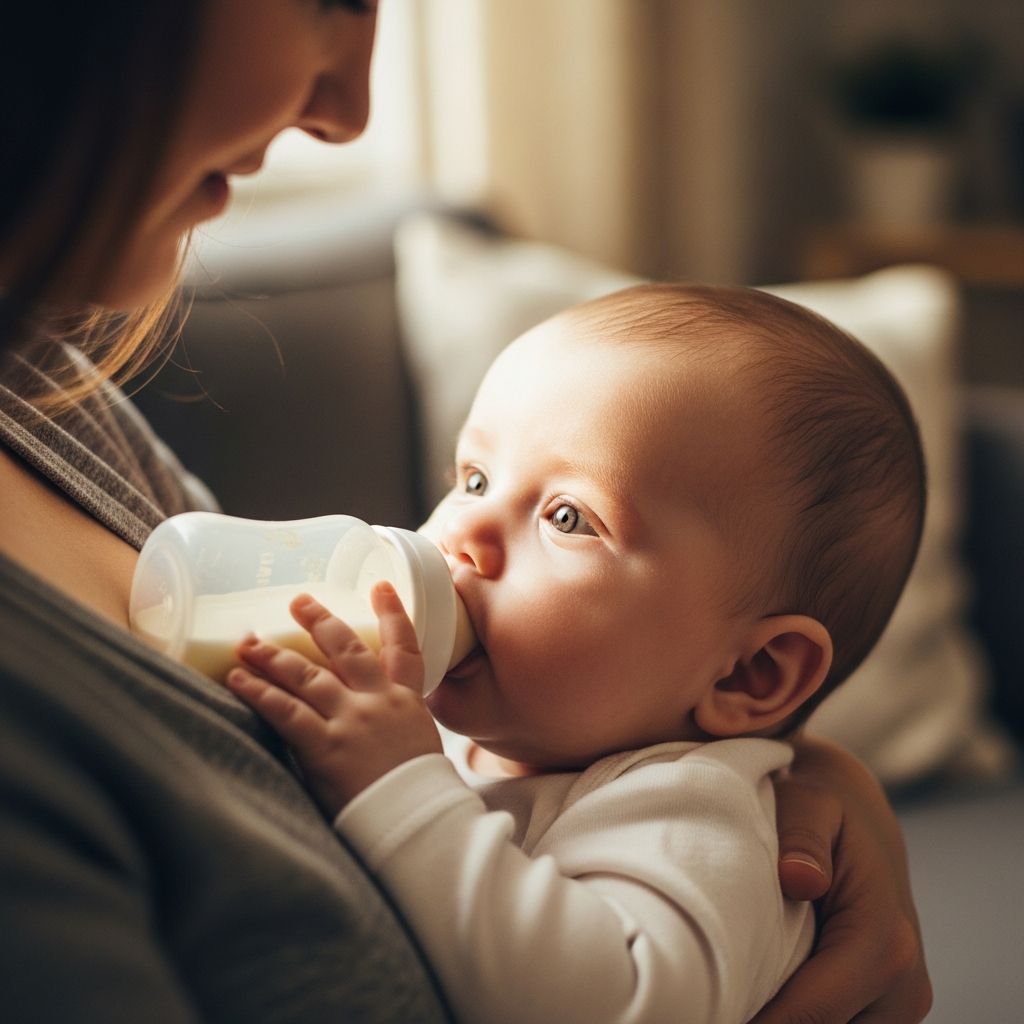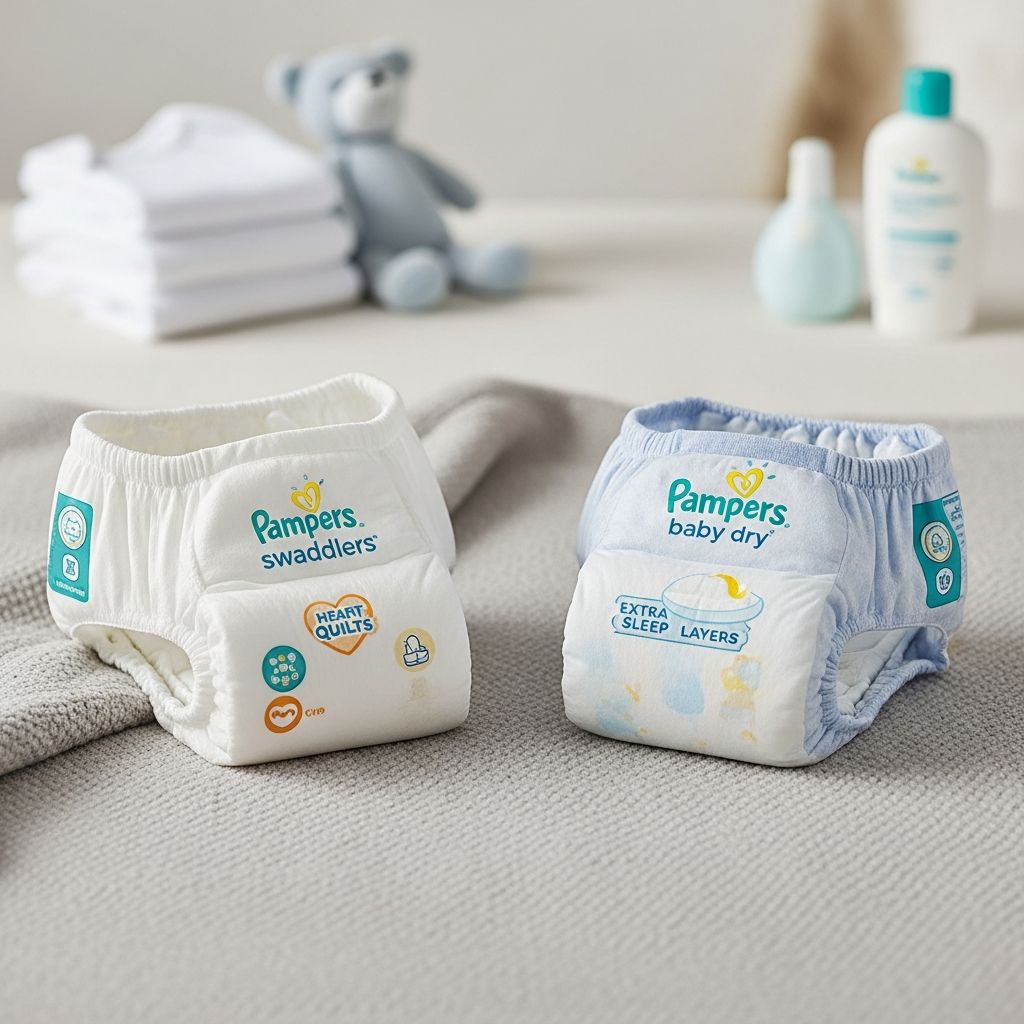
If you are standing in the diaper aisle wondering whether to buy Pampers Swaddlers or Pampers Baby Dry, you are not alone. Both are popular disposable diapers under the same brand, but they are designed with slightly different priorities: one leans toward soft comfort for younger babies, the other toward long-lasting dryness and overnight protection.
This guide explains how Swaddlers and Baby Dry differ in absorbency, comfort, fit, sizes, and everyday use, and offers practical tips for choosing the best option at each stage of your baby’s first years.
Big Picture: How These Two Diapers Are Positioned
Pampers positions these two lines with distinct goals in mind.
- Swaddlers – a premium comfort diaper focused on softness, gentle materials, and features that suit newborns and younger infants, including an umbilical cord cutout in the smallest sizes.
- Baby Dry – a high-absorbency diaper engineered for all-night dryness with multiple absorbent layers and air channels, intended for longer stretches between changes and overnight use.
In practice, many families use both: Swaddlers during the newborn and early-infant months for softness and fit, then Baby Dry when their baby starts sleeping longer stretches or becomes more active and harder to change at night.
Feature Comparison at a Glance
| Feature | Pampers Swaddlers | Pampers Baby Dry |
|---|---|---|
| Main focus | Premium softness and gentle comfort | All-night dryness and long-lasting absorbency |
| Absorbent design | Soft, absorbent core with channels for moisture distribution | Multiple (up to five) layers for enhanced wetness protection |
| Overnight suitability | Good, but not the most absorbent option for older/heavier wetters | Specifically highlighted for up to 12 hours of dryness |
| Comfort & softness | Very soft, cushioned feel; often perceived as the softest Pampers line | Cotton-like, but slightly less plush than Swaddlers |
| Newborn features | Umbilical cord notch in newborn sizes | No cord notch in most Baby Dry newborn offerings |
| Wetness indicator | Included in all sizes | Included in smaller sizes (N, 1, 2) depending on market |
| Hypoallergenic & skin tested | Hypoallergenic, accredited as skin-safe | Hypoallergenic, accredited as skin-safe |
| Best for | Newborns, young infants, sensitive skin, daytime comfort | Overnight, heavy wetters, older babies and toddlers |
Absorbency and Overnight Protection
Absorbency is usually the deciding factor once your baby starts sleeping longer stretches at night. Both diaper lines are designed to pull moisture away from the skin and lock it in the core to help protect against diaper rash.
How Swaddlers Manage Moisture
Swaddlers use a soft, highly absorbent core and internal channels that help distribute liquid throughout the diaper rather than letting it pool in one spot. This design provides:
- Good daytime protection for frequent newborn and infant changes.
- Skin protection by wicking moisture away from the surface layer that touches your baby.
- A balance between dryness and soft, cushioned comfort.
For most newborns and small infants, Swaddlers provide plenty of absorbency because babies at this stage are usually changed very frequently.
How Baby Dry Extends Dryness
Baby Dry is built with multiple absorbent layers (Pampers describes up to five layers of wetness protection) and breathable channels to keep moisture locked away for longer stretches. According to Pampers, these diapers are designed to deliver up to 12 hours of dryness, which aligns with their positioning as an overnight choice.
- Multiple layers help spread and trap urine so the surface feels drier against the skin.
- Air channels support breathability, which may help reduce the risk of moisture-associated skin breakdown when diapers are worn longer.
- This design is particularly useful once your child sleeps through longer portions of the night or is harder to change while asleep.
Which Offers Better Protection Against Diaper Rash?
Diaper rash is influenced by wetness, friction, and exposure to irritants such as urine and stool. Both Swaddlers and Baby Dry are hypoallergenic and use breathable, skin-safe materials that have been accredited by skin health organizations. From a skin health perspective:
- Swaddlers can be ideal for very young or sensitive-skinned babies because of their softness and frequent change schedule.
- Baby Dry may reduce overnight wetness exposure in older babies by keeping urine away from the skin for longer stretches.
Regardless of diaper choice, regular changes, gentle cleansing, and allowing the skin to dry fully are key to preventing diaper dermatitis.
Comfort, Softness, and Skin Friendliness
Parents often describe Swaddlers as feeling more like a soft cloth, while Baby Dry has a slightly thinner and more utilitarian feel. These impressions match how Pampers presents the lines: one as premium comfort, the other as a workhorse for dryness.
Why Swaddlers Feel So Soft
- Plush top sheet designed to be gentle on delicate newborn skin.
- Cushioned core that gives the diaper a quilted feel rather than a stiff structure.
- Umbilical cord notch in smaller sizes that avoids rubbing against the healing cord stump.
Pampers reports that Swaddlers are independently reviewed and accredited as skin-safe and hypoallergenic, and they do not include substances such as natural rubber latex, parabens, or certain added fragrances. This skin-focused design is particularly important in the first weeks of life, when the skin barrier is still developing.
Comfort Features in Baby Dry
Baby Dry uses a cotton-like outer cover and flexible sides to maintain comfort even as the diaper fills. Although not as plush as Swaddlers, Baby Dry is:
- Breathable, allowing air to move through the diaper to help keep the skin cooler.
- Hypoallergenic and skin-safe, similar to Swaddlers.
- Designed to stay relatively thin, which can be more comfortable under clothes for active toddlers.
Fit, Flexibility, and Size Range
Fit affects leak protection, comfort, and how easily your baby moves. Both Swaddlers and Baby Dry are available in multiple sizes and use stretchy sides to help the diaper move with your baby.
Swaddlers: Fit for the Smallest Babies
- Size range typically starts at preemie/newborn and extends into toddler sizes.
- Flexible waistband and leg cuffs that gently hug smaller bodies and help contain loose newborn stools.
- Wetness indicator in every size, which is especially helpful for caregivers new to diapering.
The umbilical cord cutout in newborn Swaddlers helps avoid friction over the stump, aligning with pediatric guidance to keep the area clean, dry, and minimally disturbed while it heals.
Baby Dry: Fit for Longer Wear and Older Babies
- Size range commonly runs from newborn or Size 1 up through toddler sizes suitable for older babies working toward potty training.
- Soft, stretchy sides that allow freedom of movement for crawling and walking babies.
- In many markets, a wetness indicator is present in the smaller sizes (N, 1, 2) to assist with newborn care.
As your child becomes more active, a snug yet flexible fit can help prevent leaks at the legs and back while still allowing rolling, crawling, and climbing.
Cost, Value, and When to Use Each
Exact pricing varies by retailer and region, but families often notice that diapers marketed for premium comfort can cost slightly more per diaper than more utilitarian high-absorbency options. How you use each line can help manage costs.
Smart Ways to Combine Swaddlers and Baby Dry
- Newborn phase: Use primarily Swaddlers for softness, the umbilical cord notch, and easy-to-read wetness indicators.
- Transitional phase (around 3–6 months): Continue Swaddlers in the daytime if you like the feel, and introduce Baby Dry at night if your baby starts soaking through regular diapers.
- Toddler phase: Many families switch mostly to Baby Dry for toddlers, especially for naps and nights, because of its extended absorbency.
This blended approach allows you to prioritize comfort when changes are frequent and prioritize absorbency once stretches between changes get longer.
Choosing Based on Your Baby’s Age and Habits
Which diaper is “better” often depends more on your baby than on the product itself. Consider these scenarios as a guide.
Best Choice for Newborns
- Recommended starting point: Swaddlers.
- Reasons:
- Umbilical cord cutout to protect the stump in the early weeks.
- Very soft materials suited for delicate skin.
- Wetness indicator on all sizes to help new caregivers know when to change.
Best Choice for Older Babies and Nighttime
- Recommended for overnights and heavy wetters: Baby Dry.
- Reasons:
- Multiple absorbent layers help keep babies dry for up to 12 hours, according to Pampers.
- Good for babies who leak through standard daytime diapers at night.
- Breathable channels support comfort during longer wear.
What If Your Baby Has Sensitive Skin?
Both diapers are marketed as hypoallergenic and are reviewed by skin health organizations. If your baby tends toward sensitive skin:
- Start with Swaddlers because of their softness and gentle design.
- Change promptly after soiling, as prolonged contact with stool and urine is a key driver of irritation.
- If you move to Baby Dry for nights, monitor the skin for any change and adjust your routine if needed.
Practical Tips for Testing and Switching
Because every baby is different, the most reliable way to choose is to test both and see how your baby’s skin, sleep, and comfort respond.
- Buy small packs first to avoid committing to a big box before you know what works.
- Watch for red marks around the thighs or waist, which may suggest sizing or fit issues rather than a problem with the diaper line itself.
- Check for overnight leaks as your baby grows; leaking may mean it is time to adjust size or move to Baby Dry for sleep.
- Consider climate: in hot, humid conditions, breathable diapers and frequent changes help keep the skin healthier.
Frequently Asked Questions (FAQs)
Which is better overall, Pampers Swaddlers or Baby Dry?
Neither is universally better; Swaddlers are often preferred for newborn comfort and softness, while Baby Dry is usually favored for overnight dryness and older babies who sleep longer.
Can I use Swaddlers overnight?
Yes, many babies do fine overnight in Swaddlers, especially in the early months. However, if you notice leaks or heavy overnight wetness, Baby Dry or even more specialized overnight diapers may provide better protection.
Are Pampers Baby Dry safe for my baby’s skin?
According to Pampers, Baby Dry diapers are hypoallergenic, breathable, and independently reviewed as skin-safe, with no natural rubber latex or added parabens. For most babies, they are safe when used with regular diaper changes and good hygiene.
When should I move from Swaddlers to Baby Dry?
Common times to switch include when your baby starts sleeping longer stretches at night, when you notice more frequent overnight leaks, or when your baby becomes more active and harder to change as often.
Is one type more eco-friendly than the other?
Both are conventional disposable diapers; neither Swaddlers nor Baby Dry is marketed as biodegradable. Pampers offers other lines that incorporate more plant-based materials, but they still are not fully compostable. If environmental impact is a top priority, you may also want to research cloth options or hybrid systems.
References
- Choosing the Best Diaper for Your Baby — Pampers (Procter & Gamble). 2023-04-20. https://www.pampers.ca/en-ca/about-pampers/diapers-and-wipes/article/which-diaper-to-choose
- Pampers Swaddlers vs Baby Dry: The Ultimate Diaper Debate — Rookie Moms. 2023-08-10. https://www.rookiemoms.com/pampers-swaddlers-vs-baby-dry/
- Our Ultimate Diaper Comparison Chart — Pampers (Procter & Gamble). 2022-11-02. https://www.pampers.com/en-us/products/diaper-comparison-chart
- Diaper Rash in Infants and Children: Causes, Management, and Prevention — American Academy of Dermatology Association. 2021-06-15. https://www.aad.org/public/parents-kids/skin-conditions/diaper-rash
- Infant Skin Care — American Academy of Pediatrics. 2020-10-29. https://www.healthychildren.org/English/ages-stages/baby/bathing-skin-care/Pages/Infant-Skin-Care.aspx