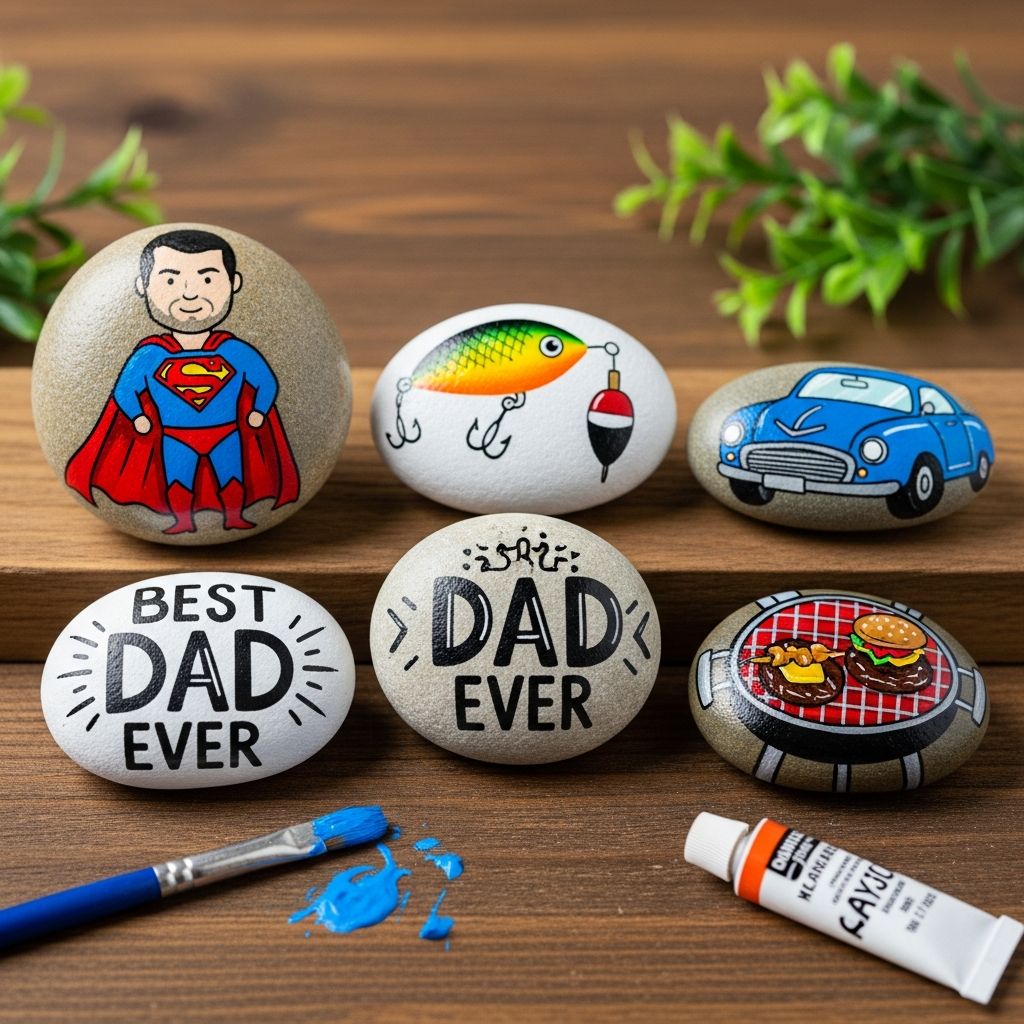
Painted rocks are an affordable, meaningful, and surprisingly beautiful way to create a Father’s Day gift that children of all ages can proudly make. With a few basic supplies and a bit of imagination, you can transform ordinary stones into tiny works of art that celebrate everything your kids love about Dad.
Why Painted Rocks Make the Perfect Dad Gift
Store-bought presents have their place, but handmade gifts carry stories, effort, and emotion that cannot be replicated by anything on a shelf. Painted rocks are especially powerful because they are small, durable, and easy for children to personalize in their own style.
- They are budget-friendly and use simple materials.
- They capture your child’s current drawing style and handwriting as a time capsule.
- They can be kept on a desk, nightstand, workbench, or in the garden as daily reminders of love.
Planning Your Painted Rock Project
Before anyone dips a brush in paint, it helps to think through a few details: who is participating, where the rocks will be used, and what kind of messages or images will be most meaningful for Dad. A bit of planning ensures the activity stays fun and stress-free.
- Decide whether the project is a surprise or something you involve Dad in as a family activity.
- Think about where Dad might display the rocks: at work, in the car, in the garden, or on a special shelf.
Gathering Materials and Tools
You do not need specialty tools to make stunning painted rocks, but choosing the right basics makes the process smoother. Most supplies can be found in a general craft store or even around the house.
Essential Supplies
- Smooth rocks or pebbles (river rocks and beach stones work well)
- Acrylic craft paint or paint pens in assorted colors
- Small to medium paintbrushes
- Permanent markers for outlining and lettering
- Clear sealer (spray or brush-on) if the rocks will be handled often or placed outdoors
- Disposable plate or palette for holding paint
- Cups of water and paper towels for cleaning brushes
Optional Helpful Extras
- Painter’s tape or stickers to create simple shapes or stripes
- Stencils for younger children who need guidance with letters or basic shapes
- Glitter glue, metallic paint, or glow-in-the-dark accents for special effects
- Small box, tin, or bag to present the finished rock collection as a set
Choosing and Preparing Your Rocks
The rock itself is your canvas, so its shape and surface will influence your design. Take time to pick stones that match the idea your child has in mind, and then prepare them so paint adheres well and colors appear bright.
How to Select the Best Stones
- Look for rocks with one broad, flat side for faces, messages, or simple scenes.
- Choose smaller, rounded stones for abstract patterns, dots, or initials.
- Avoid rocks that are crumbly, cracked, or very rough, as they are harder to paint.
Cleaning and Priming the Surface
Clean rocks help paint stick and keep colors from looking muddy. In many cases, a simple wash and dry is enough for indoor keepsakes.
- Rinse each rock under water and gently scrub off dirt or sand.
- Let the rocks dry completely on a towel before painting.
- For extra bright colors, consider a thin base coat of white acrylic paint on the main surface and let it dry.
Safety Tips When Crafting with Kids
Because this project often involves young children, safety and setup matter. A little preparation can prevent spills, frustration, and arguments over shared materials while still allowing kids to experiment and play.
- Cover the table with newspaper, an old sheet, or a plastic tablecloth.
- Dress kids in old clothes or smocks, and keep wet wipes or a damp cloth nearby.
- Offer child-safe paints and supervise closely when permanent markers or clear sealers are in use.
Design Ideas That Celebrate Dad
One of the joys of painted rocks is how flexible they are: children can scribble, write messages, or create detailed scenes, all on the same material. Encourage kids to think about what makes their dad unique so each stone feels personal rather than generic.
Theme Suggestions
- Dad’s hobbies: tools, fishing, books, sports, grilling, gaming.
- Shared memories: camping trips, bedtime stories, favorite songs, family jokes.
- Character traits: brave, funny, kind, patient, strong.
Simple Message Ideas
Children can combine pictures with short phrases that Dad can read every time he picks up or sees the rock. Keep the wording short enough to fit and easy for kids to write.
- “Best Dad Ever” on a bright, bold background.
- “You Rock” with a cartoon rock character.
- “My Hero” next to a cape or superhero emblem.
- “Thanks for Helping Me Grow” on a rock painted like a plant or tree.
Age-Appropriate Project Ideas
Different ages bring different strengths to the craft table. Younger children excel at color and bold shapes, while older kids can handle writing, patterns, and fine detail. Matching designs to developmental stages keeps everyone confident and engaged.
| Age Range | Suggested Activities | Helpful Tips |
|---|---|---|
| Toddlers (2–3) | Finger prints, simple color blocks, dots and swirls | Pre-paint a base color and let them add a few accents |
| Preschoolers (4–5) | Smiley faces, hearts, suns, basic shapes, handprints | Use thicker brushes and show one simple design at a time |
| Early Elementary (6–8) | Short words, cartoon characters, sports balls, tools | Lightly sketch designs in pencil first if needed |
| Older Kids (9+) | Patterned backgrounds, detailed scenes, layered messages | Introduce fine-tip pens and more advanced shading or line work |
Step-by-Step: Creating a Rock Gift Set for Dad
Rather than making a single stone, consider creating a small collection of rocks that work together as a unified gift. Each family member can contribute, or one child can design a mini-series of rocks that tell a story about their relationship with Dad.
1. Choose a Central Theme
Start by picking one main idea that connects all the rocks. This could be “Dad’s Superpowers,” “All the Things We Love About You,” or “Our Favorite Memories with Dad.” The clearer the theme, the easier it is for kids to come up with individual designs for each stone.
2. Select and Label Rocks
- Gather 3–7 rocks with similar sizes or shapes.
- Assign each rock a specific focus (for example: “funny,” “strong,” “caring,” “adventurous”).
- Lightly write the word on the back in pencil so kids remember what each rock represents.
3. Paint Background Colors
Painting a background first makes it easier for text and images to stand out. Encourage kids to pick colors that remind them of their dad—his favorite color, the team he roots for, or shades that match his workspace.
- Apply one or two coats of background color, letting each coat dry.
- Use contrasting colors for details so words stay readable.
4. Add Messages and Illustrations
Once the background is dry, it is time to layer on meaning. Older kids can write full words or phrases, while younger children can contribute symbols that an adult later labels if needed.
- Use permanent markers or fine brushes for lettering.
- Encourage kids to add small icons next to words—such as a heart next to “kind,” a star next to “brave,” or a funny face next to “silly.”
5. Seal and Finish
To protect the artwork, especially if the rocks will live outdoors or be handled frequently, finish with a clear sealer. Adults should handle any aerosol products in a well-ventilated area or outside.
- Allow all paint and marker lines to dry completely.
- Apply a thin, even coat of sealer and let it dry according to the product instructions.
- Flip and seal the back if desired, especially if you have added the child’s name or year.
Creative Ways to Present Painted Rock Gifts
How you give the rocks can be as memorable as the artwork itself. Instead of simply handing over individual stones, turn them into a small ritual or display that highlights their meaning and invites Dad to interact with them.
Display and Packaging Ideas
- Arrange the rocks in a small wooden box with tissue paper, turning it into a “treasure chest” of memories.
- Line them up on a piece of cardboard or foam board, labeled as “Dad’s Strengths” or “Reasons We Love You.”
- Place them in a plant pot, around the base of a houseplant or herb garden that Dad cares for.
- Hide them around the house or yard and send Dad on a simple scavenger hunt with clues from the kids.
Turning Rocks into Everyday Reminders
The best handmade gifts do not disappear into a drawer; they become part of daily routines. Painted rocks are ideal for this because they can sit in many places where Dad already spends time and can easily be moved as life changes.
- Keep a single rock on Dad’s work desk as a paperweight with a motivational message.
- Place a few stones on his bedside table as a nightly reminder that he is appreciated.
- Scatter “you rock” stones in the car’s cup holder or glove box so he sees them on busy days.
Encouraging Kids to Express Gratitude
Beyond the final product, this craft is a chance to help children reflect on their relationship with their father. Painting and writing on rocks can open conversations about what they notice and value in Dad’s daily life.
- Ask open-ended questions while they paint: “What do you love doing with Dad?” or “When does Dad make you feel safe?”
- Invite kids to share the story behind each rock when they present the gift, giving Dad a window into their perspective.
Common Troubleshooting Tips
Even simple projects come with little hiccups. Smudged paint, spilled water, or kids changing their minds mid-design are normal. Having a few strategies ready makes it easier to keep the atmosphere light and positive.
- If colors blend accidentally, let the rock dry and paint a fresh base coat to start again.
- Keep spare rocks on hand so a child can begin a new design if they feel stuck or frustrated.
- Remind kids that imperfect lines and quirky drawings are part of what makes handmade gifts special.
Frequently Asked Questions
How far in advance should we start the project?
Starting a week or two before Father’s Day gives families enough time for paint to dry, sealer to cure, and any last-minute additions from siblings or relatives. Planning ahead also leaves space for relaxed painting sessions instead of rushing everything into a single afternoon.
Can we do this project without acrylic paint?
Yes. While acrylic paint offers vibrant color and durability, kids can also use washable paint, crayons, or paint pens for a softer, more temporary finish. If the rocks will stay indoors and be handled gently, non-permanent materials may be completely sufficient.
What if my child does not like drawing?
Not all kids enjoy detailed artwork, and that is okay. Focus on simple patterns—stripes, dots, color blocks—or let them choose a single color background while an adult or older sibling adds a short word or symbol on top.
Can we involve multiple family members in one gift?
Absolutely. Each child can contribute one or more rocks that reflect their unique relationship with Dad, and adults or grandparents can even join in with their own stones. When grouped together, the rocks tell a layered story of how Dad supports the entire family.
How do we protect the rocks if they stay outside?
For outdoor display, choose a weather-resistant sealer and apply multiple thin coats, allowing each layer to dry fully. Place the rocks somewhere with decent drainage so they are not constantly sitting in water, which can gradually wear away even sealed paint.
Final Thoughts on Painted Rock Gifts for Dad
A small painted stone may seem simple, but in a child’s hands it becomes a canvas for gratitude, memories, and admiration. Taking time to gather rocks, mix colors, and talk about what makes Dad special transforms this craft into a shared experience that everyone can enjoy. Long after Father’s Day has passed, those little stones will continue to whisper, in their own colorful way, just how deeply Dad is loved.