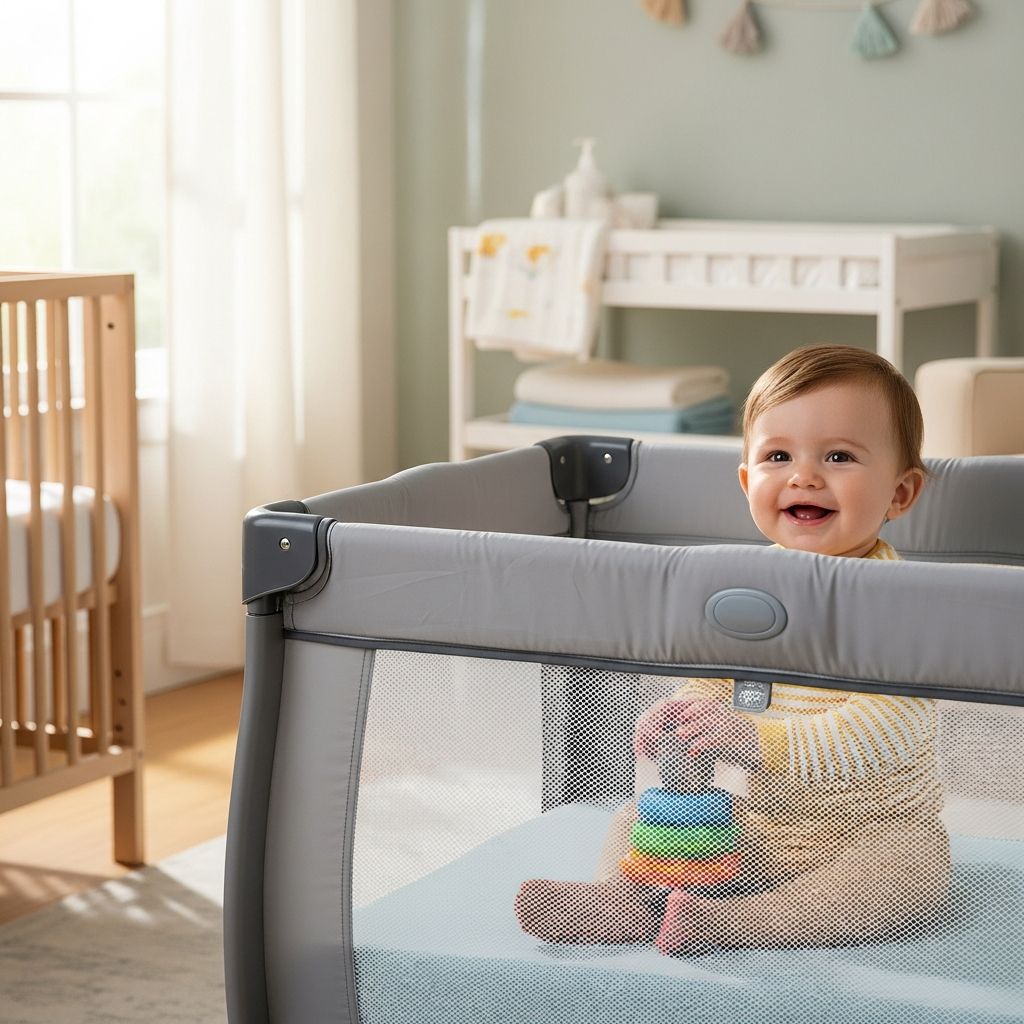
Pack and plays (also called playards or travel cribs) are some of the most versatile pieces of baby gear, pulling double duty as a portable sleep space and a contained play area. This guide walks through what they are, which features matter, how to use them safely, and how to pick the right one for your family’s lifestyle.
What Is a Pack and Play, Exactly?
A pack and play is a foldable, enclosed space designed for babies and toddlers to sleep or play in. It usually consists of a metal or plastic frame, mesh sides, and a firm bottom panel that supports a thin mattress or pad.
Parents often use pack and plays as a secondary sleep space in the living room or at a grandparent’s house, as well as a safe spot to contain a mobile baby while they cook, shower, or work nearby. Because they fold down and store in a carry bag, they are also popular as travel cribs.
- Portable: Designed to fold and fit in a travel bag.
- Multi-use: Works as a play space, nap spot, or temporary overnight sleep solution.
- Age range: Typically usable from newborn (with approved bassinet insert) to toddler stage, within the manufacturer’s weight and height limits.
Why Pack and Plays Are So Popular
Parents choose pack and plays because they offer flexibility that a stationary crib cannot. Whether you are visiting family, staying in a hotel, or just need your baby close in a different room, a pack and play can usually go where you go.
They also tend to be more budget-friendly than buying multiple cribs or bassinets for different rooms, and many models include add-ons like changing tables or newborn sleepers that stretch your gear budget even further.
- Cost-effective: One purchase can cover travel crib, playpen, and sometimes changing station needs.
- Space-saving: Helpful for small apartments or multi-level homes where carrying a full-size crib is unrealistic.
- Familiar environment: Your baby can sleep in the same playard at home and on the go, which can ease transitions.
Key Features to Compare Before You Buy
Not all pack and plays are built the same. Some are bare-bones and ultra-lightweight, while others focus on extra features like bassinet levels, changers, or advanced fabrics. Before you click “add to cart,” it helps to prioritize which features will actually matter day to day.
1. Size and Weight
Consider both open and folded dimensions. A larger model may give your toddler more room to play, but it can be harder to move between rooms or fit in a car trunk. Weight matters, too, if you plan to carry it up and down stairs or through airports.
- Home-only use: Slightly heavier, roomier models can be fine.
- Frequent travel: Look for lightweight frames and compact fold sizes.
- Small spaces: Double-check measurements against your bedroom or living room layout.
2. Ease of Setup and Fold
Some playards can be assembled with a single pull in the center or push of a button, while others have multiple latches and steps. If you anticipate setting it up multiple times per week, invest in a model designed for quick, intuitive folding.
- One-step fold mechanisms reduce frustration during travel or bedtime.
- Clear locking indicators on the rails help ensure the frame is fully secure before use.
- A standing fold (where it folds without needing to flip upside down) can be more convenient in tight spaces.
3. Bassinet and Newborn Attachments
Many pack and plays come with an elevated bassinet insert designed for younger babies. This raises the sleep surface so you do not have to bend as far, and it can help keep a newborn more visible while you relax or work nearby.
- Weight limits: Always check the maximum weight and stop using the bassinet when your baby exceeds it or can roll over.
- Attachment style: Look for secure clips or zippers that keep the bassinet level and snug.
- Design purpose: Only use bassinet accessories that the manufacturer explicitly states are safe for sleep.
4. Mattress and Comfort
The mattress or pad in a pack and play is intentionally firm and relatively thin to support safe sleep, which can feel different from a crib mattress. While soft extras may seem cozy, they introduce unneeded risk and are not recommended for infants.
- Use only the mattress included with your playard or one approved by the manufacturer.
- Pair it with a fitted sheet specifically sized for your model to avoid dangerous gaps.
- Resist adding padding, toppers, or pillows, especially for babies under one year old.
5. Materials and Breathability
Most modern playards use mesh sides for visibility and airflow. Some premium options go further with breathable mattresses, organic fabrics, or certifications for low chemical emissions, which can appeal to families focused on minimizing indoor air pollutants.
- Look for full-mesh sides on all four panels to maximize ventilation.
- Check whether fabrics are removable and machine-washable, especially if your baby has reflux or allergies.
- If you care about off-gassing, research certifications related to chemical safety and emissions.
6. Extra Features
Extra features can be helpful, but they also add bulk and cost. Think about whether you genuinely need a built-in changing table, storage caddy, or vibration and sound modules or whether a simpler playard better fits your routine.
- Changing tables and napper attachments are convenient in the newborn stage but quickly outgrown.
- Storage pockets or caddies can keep diapers, wipes, and pajamas close by for nighttime changes.
- Wheels on at least one end make it easier to move the playard between rooms.
Feature Snapshot: Travel-Focused vs Home-Focused Models
The table below summarizes how different types of pack and plays generally compare. Use it as a quick reference while you shop.
| Feature | Travel-Focused Pack and Play | Home-Focused Pack and Play |
|---|---|---|
| Weight | Very light, often under 15 lb | Heavier, often 20 lb or more |
| Folded Size | Compact, backpack or slim bag | Bulkier, rectangular storage bag |
| Setup Speed | Optimized for fast hotel or airport setup | Still portable, but may have more steps |
| Extras | Minimal accessories, focus on simplicity | Often includes bassinet, changer, storage, or toys |
| Best For | Families who travel often or live in very small spaces | Primary play space on one level of the home |
Safety Guidelines for Pack and Play Use
Safe use matters more than any brand name. A high-end playard used incorrectly can still be hazardous, while a simpler model can be very safe if you follow current sleep and equipment guidelines.
Because recommendations evolve, always double-check your product manual and pediatrician’s guidance, but the general principles below are a strong starting point.
Safe Sleep Basics
- Place your baby on their back for all sleep, including naps.
- Keep the sleep surface flat and firm, without wedges, bumpers, pillows, or toys.
- Use a single fitted sheet designed for your specific playard mattress.
- Stop using newborn inserts or inclined loungers for unsupervised sleep if they are not explicitly rated as safe sleep surfaces.
Weight and Height Limits
Every pack and play has manufacturer-specified weight and height limits for both the main playard and any included bassinet or attachment. Respecting those limits helps prevent collapses, tipping, or climbing accidents.
- Stop using the bassinet level when your baby exceeds the posted weight limit or starts rolling, pushing up, or sitting.
- Discontinue the entire playard when your child can climb out or when their height approaches the top rail level.
- Never modify the playard structure to extend its life beyond what the manufacturer intended.
Setup and Inspection
Most incidents involving playards trace back to improper setup, worn parts, or added items that interfere with the original design. Make setup checks part of your routine, especially after travel or storage.
- Confirm all side rails are fully locked before placing your baby inside.
- Ensure the floor panel or mattress lies flat without gaps at the edges.
- Inspect mesh and seams regularly for holes, tears, or loose threads, and discontinue use if you find damage.
- Check for recalls if you inherit or buy a second-hand model, and only use products that meet current safety standards.
Real-Life Ways to Use a Pack and Play
Beyond acting as a portable crib, a pack and play can support your daily routines at home and away. Thinking through how you will use it most often can help determine which style you should buy.
- Living room nap spot: Set up the playard where you spend the most time so you can keep an eye on naps without constantly walking back to the nursery.
- Safe play zone: Offer a few age-appropriate toys while you cook or answer emails, knowing your baby is contained from stairs or pets.
- Grandparent or sitter setup: Leave a playard at a caregiver’s home so your baby always has a consistent sleep space.
- Travel crib: Bring it on road trips, visits, or vacations so bedtime feels familiar in new environments.
- Outdoor shade area: On mild days, use it under a canopy or shade to let baby enjoy fresh air while remaining contained and off the ground (always supervised).
Cleaning and Maintenance Tips
Babies are messy, and your pack and play will inevitably see spit-up, snacks, and the occasional diaper leak. A simple maintenance routine will help keep it fresh and extend its lifespan for siblings or future trips.
- Check the manual for approved cleaning methods and avoid harsh chemicals that might damage mesh or finishes.
- Spot clean minor spills quickly with mild soap and water to prevent stains.
- If the fabric is removable, wash it on a gentle cycle and air dry to avoid shrinkage.
- Allow the playard to fully dry after cleaning or outdoor use before storing it to prevent mold and mildew.
- Store the playard in a cool, dry area away from direct sunlight to minimize fading and material breakdown.
Quick Buying Checklist for Busy Parents
If you are standing in the aisle or comparing tabs on your browser, run through this quick checklist before you decide. It will keep you focused on function instead of just colors and add-ons.
- Does it meet current safety standards and avoid recalled designs?
- Is it light enough and compact enough for how often you plan to travel?
- Is the setup intuitive, or are there multiple steps you know will frustrate you at bedtime?
- Are the bassinet and accessories clearly labeled for safe sleep or awake-time only?
- Do the dimensions fit your home’s layout and the spaces where you will use it most?
- Is the price reasonable given how long you expect to use the product?
FAQs About Pack and Plays
Can a baby sleep overnight in a pack and play?
Yes, if the pack and play is used exactly as intended, many families safely use it for overnight sleep. The key factors are a flat, firm sleep surface, a correctly fitted sheet, and an empty interior with no loose bedding or toys. Always follow the same safe-sleep rules you would for a crib.
How long can my child use a pack and play?
Most children outgrow their pack and play somewhere between 2 and 3 years old, but the actual timeline depends on your child’s size and mobility. You should stop using the playard once your child approaches the maximum height listed in the manual or shows clear signs of trying to climb out.
Is a pack and play a replacement for a crib?
Some families use a pack and play as a primary sleep space, especially in small apartments or for the first year of life. Others prefer a full-size crib for daily use and use the playard primarily for travel and naps in other rooms. Neither choice is inherently better; what matters is consistent, safe sleep practices.
Do I need all the extra attachments?
Extras like changing tables, napping inserts, and storage organizers can be convenient during the newborn months, but they are not strictly necessary. If you are on a tight budget or plan to travel frequently, a simpler, lighter model may serve you better than an all-in-one design.
Are second-hand pack and plays safe?
A gently used playard can be a budget-friendly option, but it requires extra caution. Verify that the model has not been recalled, inspect it thoroughly for damage, and make sure it still includes the original mattress panel and hardware. If anything seems unstable or worn, it is safer to invest in a new unit.
Choosing the Right Pack and Play for Your Family
A pack and play can simplify daily life, offer peace of mind, and follow your child from sleepy newborn days to active toddler play. By focusing on safety, portability, ease of use, and the way you actually live, you can confidently choose a model that supports your routines rather than complicating them.
Use this guide as a reference while you shop, and remember that the “best” pack and play is the one that fits your home, your budget, and—most importantly—your baby’s safety and comfort.