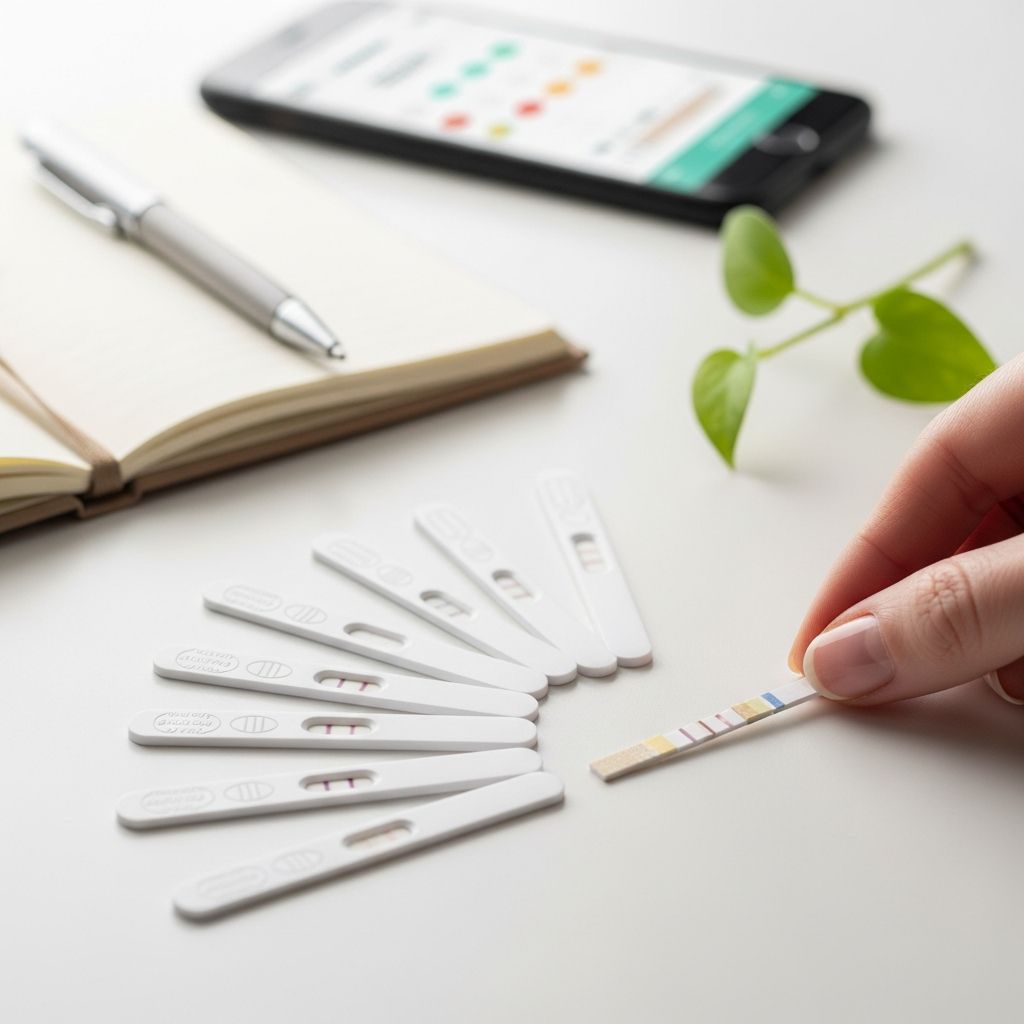
Ovulation test strips offer a simple, at-home method to detect peak fertility by identifying luteinizing hormone (LH) surges in urine, typically occurring 24-36 hours before ovulation. These tools empower individuals trying to conceive by narrowing down the fertile window, when conception is most likely.
Understanding the Science Behind Ovulation Prediction
The menstrual cycle involves hormonal fluctuations that prepare the body for potential pregnancy. Around mid-cycle, a surge in LH triggers the ovary to release a mature egg, marking ovulation. Ovulation test strips function like pregnancy tests but target LH instead of hCG. When LH levels rise above a threshold, the strip indicates a positive result, signaling imminent ovulation.
This process aligns with the fertile window: the five days leading up to ovulation and the day of ovulation itself. Sperm can survive up to 72 hours in the reproductive tract, so timing intercourse during this period optimizes chances. Studies confirm these tests are 97-99% accurate at detecting LH surges when used properly.
Types of Ovulation Tests Available
Options range from basic analog strips to advanced digital kits, each suited to different needs.
- Analog Strips: Inexpensive paper strips dipped in urine or midstream. Results show via lines: a control line confirms validity, and a test line as dark or darker signals positive LH surge.
- Digital Tests: User-friendly with displays showing smiley faces or ‘Peak’ for positives, reducing interpretation errors. They often track multiple hormones like estrogen for broader fertile window detection.
- Combo Kits: Include pregnancy tests alongside ovulation strips for comprehensive cycle monitoring.
Choosing depends on budget and cycle regularity; analog strips suffice for most, while digital aids those preferring clarity.
Step-by-Step Guide to Using Ovulation Strips
Proper technique ensures reliable results. Follow these steps:
- Determine Start Day: Begin testing 4-5 days before expected ovulation, often around cycle day 10 for 28-day cycles. Track cycles for 2-3 months if irregular.
- Collect Urine: Use first morning urine or mid-afternoon samples; avoid excessive fluids beforehand to prevent dilution.
- Test Application: Dip strip for 5-10 seconds up to the max line, or hold midstream for 5-20 seconds. Lay flat and wait 3-5 minutes.
- Read Results: Positive: test line matches or exceeds control. Negative: faint test line. Invalid: no control line—retest.
- Act Promptly: Positive means ovulate within 24-48 hours; have intercourse that day and next.
| Result Type | Appearance | Action |
|---|---|---|
| Negative | One line or faint test line | Continue testing daily |
| Positive (Peak) | Test line ≥ control line or smiley | Intercourse within 24-48 hours |
| Invalid | No control line | Retest with new strip |
Maximizing Accuracy and Reliability
Achieve precise readings by addressing common variables:
- Timing Matters: Test same time daily, ideally 10 AM-3 PM when LH is concentrated.
- Hydration Control: Limit fluids 2 hours prior to avoid dilute urine.
- Cycle Tracking Integration: Combine with basal body temperature (BBT) charting—post-ovulation temperature rises 0.5°F—and cervical mucus observation (egg-white consistency signals fertility).
- Storage: Keep strips in cool, dry places; expired ones yield false results.
For irregular cycles, extended charting refines predictions. Fertility apps can log results for patterns.
Interpreting Results and Troubleshooting
Understanding nuances prevents misreads. A faint line indicates rising LH but not yet peak; continue testing. Persistent positives may suggest multiple surges or hormonal issues—consult a doctor.
Common issues:
- False Negatives: Testing too early/late or dilute urine.
- False Positives: Fertility medications like clomiphene elevate LH; menopause or PCOS can mimic surges.
- No Surge: Possible anovulation; see specialist after 3-6 months trying.
Post-positive, expect ovulation soon; confirm with BBT shift. If no period in 14 days, test for pregnancy—LH and hCG differ, so ovulation tests aren’t pregnancy indicators.
Pros, Cons, and Cost Considerations
Advantages:
- 97-99% LH detection accuracy.
- Affordable: $0.50-$2 per strip; bulk packs economical.
- Non-invasive, empowers cycle awareness.
- Useful for IUI timing.
Limitations:
- Doesn’t assess mucus quality or egg viability.
- Cumulative cost for long-term use.
- Ineffective with certain meds or conditions.
Weigh against alternatives like ultrasound for clinical precision.
Enhancing Conception Success Beyond Testing
Strips pinpoint timing; lifestyle amplifies odds. Maintain healthy BMI, reduce stress, ensure preconception vitamins (400mcg folic acid daily). Partners should optimize sperm health via diet, avoiding heat/smoking.
Track over months: fertile window shortens with age, so persistence key. If under 35 and trying 12 months without success, or over 35 after 6 months, seek fertility evaluation.
Frequently Asked Questions (FAQs)
Can ovulation strips predict pregnancy directly?
No, they detect LH for ovulation, not hCG for pregnancy. Use pregnancy tests post-missed period.
How soon after a positive should I try conceiving?
Within 24-48 hours; sperm viability allows pre-ovulation intercourse.
What if my lines never match?
May indicate no ovulation; combine methods or consult a professional.
Are digital tests more accurate than strips?
Equally accurate at LH detection; digital eases reading.
Do birth control pills affect results?
Stop 1-2 cycles prior; residual hormones may interfere.
Advanced Strategies for Complex Cycles
For PCOS or perimenopause, two-step tests (LH + estrogen) extend fertile window visibility. Professional monitoring via bloodwork or ultrasound complements home tools. Apps integrating OPK data with wearables provide holistic insights.
Research from Mayo Clinic emphasizes combining kits with natural signs for robust fertility mapping. Cleveland Clinic notes OPKs aid 99% fertile prediction, ideal for targeted efforts.
Empower your journey: consistent use demystifies cycles, turning data into action. Patience and informed timing transform trying to conceive.
References
- How Do Ovulation Test Strips Work — My Expert Midwife. 2023. https://myexpertmidwife.com/blogs/my-expert-midwife/ovulation-test
- How (and Why) to Use At-Home Ovulation Tests To Get Pregnant — Cleveland Clinic. 2024-10-15. https://health.clevelandclinic.org/should-you-use-ovulation-strips-to-get-pregnant
- Ovulation Test Strips Instructions for Use — Pregmate. 2023. https://www.pregmate.com/pages/ovulation-test-strips-instructions-for-use
- Using an Ovulation Test — WebMD. 2024. https://www.webmd.com/baby/how-to-use-an-ovulation-test
- Ovulation tests: How they work and when to take them — Flo Health. 2024. https://flo.health/getting-pregnant/trying-to-conceive/tracking-ovulation/ovulation-tests
- Using ovulation tools to predict fertility — Mayo Clinic Health System. 2023-05-10. https://www.mayoclinichealthsystem.org/hometown-health/speaking-of-health/using-ovulation-kits-to-predict-fertility