The ova and parasite (O&P) test is a vital diagnostic tool used to identify intestinal parasites and their eggs in children’s stool samples. This examination plays a crucial role in diagnosing infections that can cause digestive issues, especially in young ones exposed through contaminated food, water, or soil.
Understanding Intestinal Parasites in Children
Children are particularly susceptible to parasitic infections due to their exploratory behaviors, such as playing in sandboxes or consuming unwashed produce. Common parasites include Giardia, which leads to diarrhea and bloating, and pinworms, causing anal itching. These organisms disrupt nutrient absorption, potentially leading to malnutrition if untreated.
Parasitic infections often stem from poor hygiene, travel to endemic areas, or daycare settings where germs spread easily. Early detection via the O&P test prevents complications like dehydration or growth delays.
Reasons Doctors Recommend the O&P Test
- Persistent diarrhea lasting over a week without clear cause.
- Abdominal pain, cramps, or unexplained weight loss.
- Visible worms or eggs around the anal area.
- Recent travel to regions with high parasite prevalence.
- Exposure to contaminated water sources, like streams or pools.
Physicians typically order this test after ruling out bacterial or viral causes through initial stool cultures. It’s especially useful when symptoms mimic other conditions like irritable bowel issues.
How to Prepare Your Child for the Test
Preparation is straightforward but requires parental diligence to ensure sample accuracy. No special diet is needed, but inform the doctor about recent antibiotics or antiparasitic medications, as they can skew results.
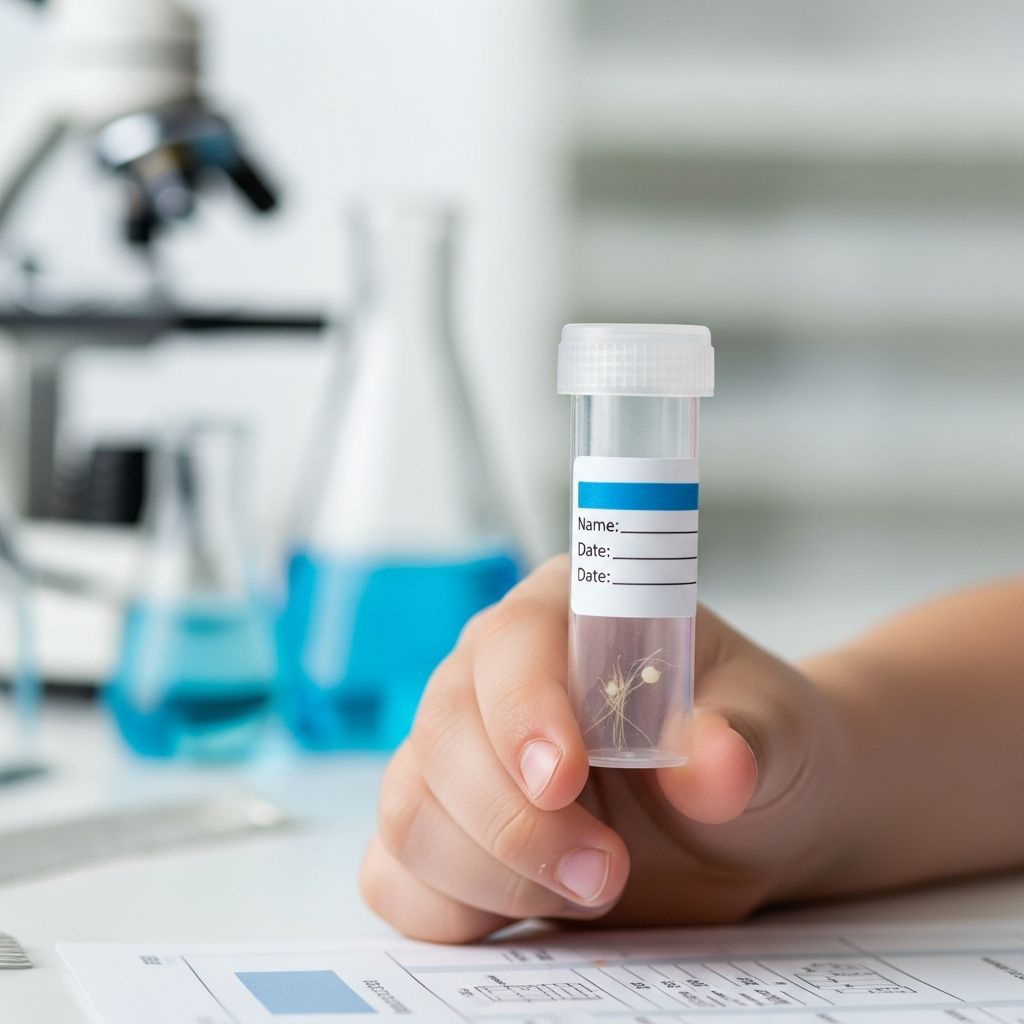
- Collect stool in a clean, wide-mouthed container provided by the lab.
- Avoid urine or water contamination in the sample.
- Refrigerate the sample if not delivering immediately, but do not freeze.
- For pinworm detection, use a clear tape method pressed against the anal area in the morning before bathing.
Explain the process to your child using age-appropriate language to reduce anxiety. Frame it as a simple “poop check” to catch any “bad bugs.”
The Step-by-Step Collection Process
Gathering the sample at home is key for most O&P tests. Use disposable gloves and follow these steps:
- Have your child defecate into a potty chair or toilet hat to catch the stool easily.
- Select a thumbnail-sized portion from different areas of the stool, including surface and inner parts.
- Place it into the preservative vial using the provided spoon.
- Seal tightly and label with name, date, and time.
Multiple samples over consecutive days increase detection rates, as parasites shed intermittently. Labs prefer three samples collected on alternate days.
What Occurs in the Laboratory
Once received, technicians process the stool through several techniques:
| Method | Purpose |
|---|---|
| Ova and Parasite Concentration | Separates parasites from debris using chemicals and centrifugation. |
| Staining | Applies dyes to highlight eggs and organisms under microscope. |
| Direct Smear | Quick wet mount examination for motile parasites. |
| Fluorescence Microscopy | Uses UV light for enhanced visibility of certain parasites. |
Experienced parasitologists examine slides for characteristic shapes, sizes, and movements of ova or trophozoites.
Potential Risks and Discomforts
This non-invasive test poses minimal risks. The main challenge is ensuring proper collection without contamination. Some children may feel embarrassed, but reassurance helps. Rarely, preservatives in vials cause mild skin irritation if spilled.
Unlike blood draws or imaging, no radiation or needles are involved, making it child-friendly.
Interpreting Test Results
Results typically return in 2-5 days. Negative findings mean no detectable parasites, but false negatives occur if shedding was low. Positive results specify the parasite type, guiding targeted treatment like metronidazole for Giardia or mebendazole for worms.
- Pathogen not detected: Monitor symptoms; retest if persistent.
- Parasite identified: Doctor prescribes medication; follow-up test confirms clearance.
- Other findings: May indicate yeast or bacteria, prompting further tests.
Family members might need screening if pinworms are found, as they spread easily.
Treatment Options After Positive Results
Treatment varies by parasite:
- Giardia: Oral antibiotics like tinidazole, combined with hydration.
- Roundworms: Albendazole single dose.
- Pinworms: Pyrantel pamoate; repeat in two weeks.
Emphasize hygiene: handwashing, nail trimming, and laundry to prevent reinfection. Probiotics aid gut recovery post-treatment.
Preventing Parasitic Infections in Kids
Proactive measures reduce risks:
- Wash hands before meals and after bathroom use.
- Cook meats thoroughly and wash fruits/vegetables.
- Avoid swallowing water while swimming.
- Discourage geophagia (dirt-eating).
- De-worm pets regularly.
In high-risk areas, boil or filter water. Schools should promote hygiene education.
When to Seek Repeat Testing
If symptoms linger post-treatment, request retesting. Chronic carriers may need extended therapy. Annual checks suit children in endemic zones or with recurrent issues.
Common Myths About Stool Tests
- Myth: One sample suffices. Fact: Multiple collections boost accuracy to 90%+.
- Myth: Only travelers need it. Fact: Local outbreaks occur via playgrounds.
- Myth: Results are instant. Fact: Lab analysis takes days.
Frequently Asked Questions (FAQs)
Q: How accurate is the O&P test?
A: Highly accurate with multiple samples, detecting 80-95% of infections when properly collected.
Q: Can my child eat normally before the test?
A: Yes, no dietary restrictions, but note any recent medications.
Q: What if the test is negative but symptoms continue?
A: Discuss alternatives like endoscopy or blood tests with your doctor.
Q: Is the test painful?
A: No, it’s just stool collection—no needles or scans involved.
Q: How soon after treatment should we retest?
A: Usually 2-4 weeks to confirm parasite elimination.
Advanced Diagnostic Alternatives
For elusive cases, doctors may use PCR tests on stool for DNA detection or endoscopy for direct visualization. Antigen tests quickly spot Giardia or Cryptosporidium.
Combining O&P with blood work assesses nutritional impacts from chronic infections.
Role of Pediatricians in Parasite Management
Pediatricians educate families, interpret results, and coordinate care. They monitor growth charts to spot infection effects early.
In outbreaks, public health collaborates for community screening.
References
- Pediatric Orthopedic Testing & Diagnosis — University Health. 2023. https://www.universityhealth.com/pediatrics/services/orthopedics/testing-diagnosis
- Evaluation Procedures for Orthopedic Problems — Phoenix Children’s Hospital. 2024. https://phoenixchildrens.org/specialties-conditions/evaluation-procedures-orthopedic-problems
- Chapter 4: The Pediatric Orthopaedic Examination — Rady Children’s Hospital / Lowell and Winters’ Pediatric Orthopedics, 7th Ed. 2020-12-01. https://www.rchsd.org/documents/2020/12/chapter-4-lowell-and-winters-pediatric-orthopedics-7th-ed.pdf
- Pediatric Orthopedic Testing — Children’s Hospital of Orange County (CHOC). 2024. https://choc.org/orthopedics/testing/
- Pediatric Orthopedic Examination — PubMed / Wolters Kluwer. 2019-11-26. https://pubmed.ncbi.nlm.nih.gov/31779826/