The original American Girl dolls represent a unique fusion of play, education, and storytelling that has enchanted generations of children since their debut. Launched in 1986, these 18-inch dolls bring pivotal moments in American history to life through richly detailed narratives and accompanying accessories, making learning an adventure rather than a chore.
The Vision Behind the Dolls
Pleasant Rowland, a former teacher with a passion for history, founded the Pleasant Company in Wisconsin after a transformative visit to Colonial Williamsburg. Disappointed by the lack of age-appropriate dolls for girls, she envisioned characters that mirrored the lives of 8- to 14-year-old girls across different eras. This idea blossomed into the American Girls Collection, which generated $1 million in its first year alone.
Rowland’s goal was simple yet profound: use dolls to spark curiosity about the past. Each doll comes with books narrated from the character’s perspective, immersing children in authentic historical contexts. By 1998, Mattel acquired the brand for $700 million, but the core mission remained intact. Over 36 million dolls have been sold since inception, proving their lasting appeal.
Launch of the First Trio
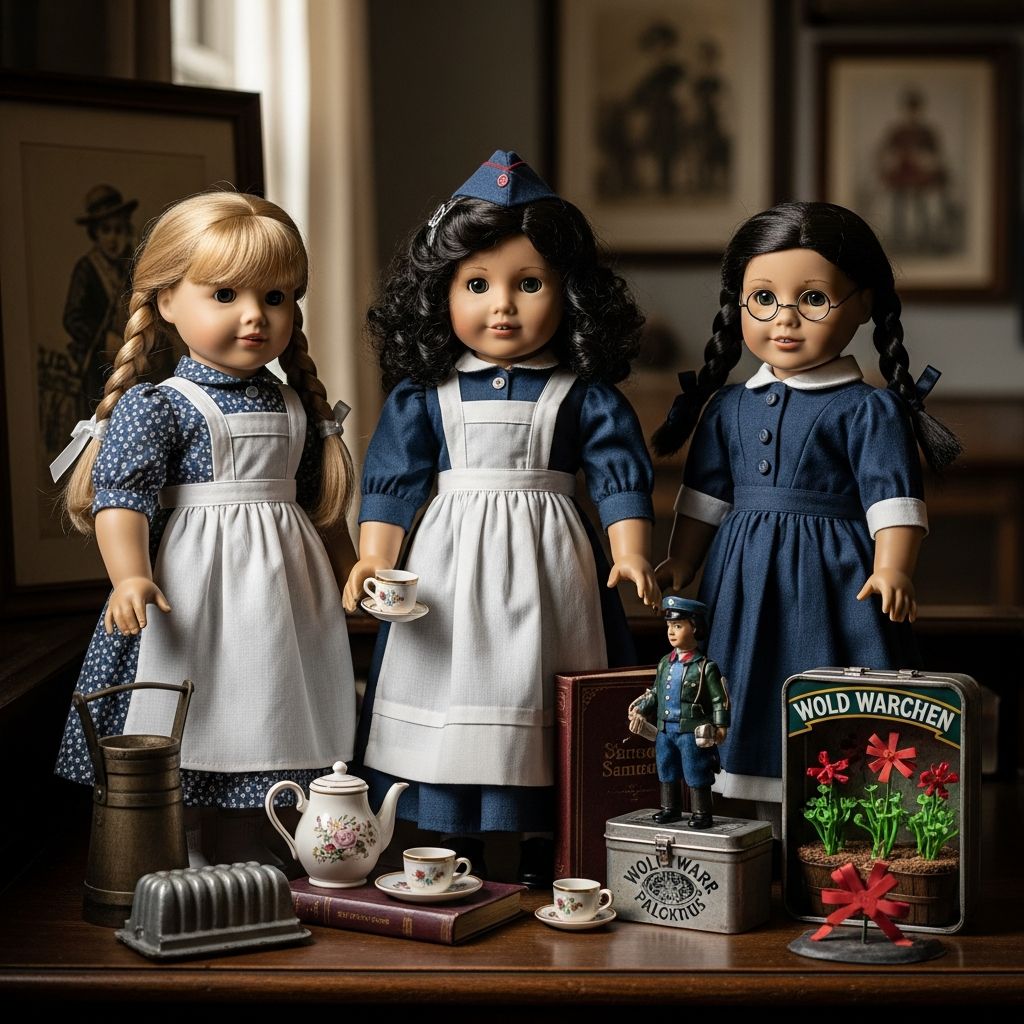
In 1986, the collection debuted with three pioneering characters: Kirsten Larson, Samantha Parkington, and Molly McIntire. These dolls set the standard for what would become a beloved line, each embodying resilience amid historical challenges.
- Kirsten Larson (1854): A Swedish immigrant arriving in Minnesota’s frontier, Kirsten navigates pioneer life, blending her heritage with new beginnings. Her story highlights immigration struggles and cultural adaptation.
- Samantha Parkington (1904): An orphan in a wealthy New York household, Samantha explores themes of friendship, social change, and growing independence in the early 20th century.
- Molly McIntire (1944): Living on the home front during World War II, Molly deals with family separation, rationing, and patriotism, offering a poignant look at wartime childhood.
These initial releases included detailed outfits, furniture, and books, encouraging immersive role-play that deepened historical understanding.
Expansion Through the Ages
Building on early success, new characters were introduced periodically, each anchored in distinct historical periods. By 1991, Felicity Merriman joined, representing pre-Revolutionary War Virginia with her love for horseback riding and spirited independence.
| Character | Era | Key Themes |
|---|---|---|
| Felicity Merriman | 1774 | Independence, patriotism, equestrian adventures |
| Addy Walker | 1864 | Escape from slavery, resilience, equality |
| Kit Kittredge | 1934 | Great Depression, journalism, resourcefulness |
Addy Walker, released in 1993, broke new ground as the first non-white doll, her narrative tracing a daring escape from slavery to Philadelphia, emphasizing hope and advocacy. Subsequent additions like Kit Kittredge captured the Great Depression’s hardships, showcasing ingenuity through her aspiring reporter persona.
Other notables include Josefina Montoya (1824, New Mexico frontier), Kaya (1764, Nez Perce tribe), and more recent ones like Claudie Wells (1922, Harlem Renaissance) and twins Isabel and Nicki Hoffman (1999, modern environmentalism). Each expands the tapestry of American experiences.
Educational Impact and Play Value
American Girl dolls transcend mere toys; they are gateways to history. Studies and anecdotal evidence suggest they enhance empathy and retention of historical facts by personalizing events—turning abstract timelines into relatable stories. The accompanying books, written at accessible reading levels, foster literacy while dolls and accessories promote fine motor skills and imaginative play.
Parents often note how these dolls encourage discussions on diversity, perseverance, and social justice. For instance, Addy’s story prompts conversations about abolitionism, while Molly’s highlights women’s roles in WWII. Accessories like period clothing, pets, and playsets add layers of engagement, from Kirsten’s log cabin to Felicity’s stable.
Evolution of the Brand
While historical dolls remain the heart, the brand diversified. In 1995, contemporary lines like Truly Me (customizable to match the owner) emerged, alongside Bitty Baby for younger children, Girl of the Year for current issues, and WellieWishers for friendship-building. The Historical Characters line, rebranded briefly as BeForever in 2014, reverted to its original name in 2019.
Today, American Girl offers online resources, journals, and events at their experiential stores, blending retail with education. Despite corporate shifts, the originals retain cult status among collectors and families.
Collecting and Preserving Originals
For enthusiasts, original dolls from the Pleasant Company era (pre-Mattel) are prized for their craftsmanship. Kirsten, Samantha, and Molly in mint condition can fetch high prices at auctions. Tips for collectors include:
- Inspect for original tags and boxes to verify authenticity.
- Focus on complete sets with books and accessories for value.
- Join communities for trading and restoration advice.
Modern reproductions maintain quality, but vintage pieces evoke nostalgia. Storage in cool, dry places prevents fabric fading, ensuring longevity.
Why These Dolls Endure
At their core, original American Girl dolls empower girls by showcasing protagonists who overcome adversity. They promote values like courage (Kirsten), compassion (Samantha), and duty (Molly), resonating across generations. In an era of digital distractions, their tactile, narrative-driven play offers irreplaceable benefits.
Recent releases continue this legacy, with Claudie’s jazz-age vibrancy and the Hoffmans’ activism, proving the brand’s adaptability. Families report dolls sparking multi-generational bonding, as grandparents share era-specific memories.
Frequently Asked Questions
What ages are American Girl dolls best for?
Designed for ages 8 and up, but younger children enjoy them with supervision due to small accessories.
Are original dolls still available?
Many are retired but purchasable via resale markets; current historical dolls update stories while honoring originals.
How do they teach history?
Through first-person books and era-accurate details, making events personal and memorable.
Can dolls be customized?
Historical dolls have fixed looks, but Truly Me line allows personalization.
What’s the value of vintage dolls?
Varies; complete original sets can exceed $200, with rare items higher.
This comprehensive look at original American Girl dolls underscores their role in nurturing informed, empathetic children. With over 1,700 words of detailed exploration, from origins to ongoing influence, they stand as timeless treasures.
References
- American Girl – Wikipedia — Wikipedia contributors. 2023-10-15. https://en.wikipedia.org/wiki/American_Girl
- The history of American Girl Dolls — Main Street Magazine. 2022-05-20. https://mainstreetmag.com/the-history-of-american-girl-dolls/
- Meet History: The Original American Girl Dolls — CompleteSet. 2021-11-10. https://www.completeset.com/meet-history-the-original-american-girl-dolls/
- Historical Characters — American Girl Wiki. 2024-01-05. https://americangirl.fandom.com/wiki/Historical_Characters
- Our Story — American Girl. 2025-03-12. https://www.americangirl.com/pages/our-story
- American Girls dolls introduced history to a generation of girls — George W. Bush Presidential Center. 2023-07-18. https://www.bushcenter.org/publications/american-girls-dolls-introduced-history-to-a-generation-of-girls
- Historical Characters: 18 Inch Dolls & More — American Girl. 2026-01-28. https://www.americangirl.com/pages/historical-characters