Monitoring body temperature is a fundamental aspect of home healthcare, particularly for parents tracking their children’s wellness. Oral temperature measurement stands out as a convenient and generally reliable method for older children and adults, offering insights into potential fevers or illnesses. This guide explores the essentials of oral thermometry, from proper techniques to accuracy considerations and comparisons with other sites, empowering families to make informed health decisions.
Why Oral Temperature Matters in Daily Wellness
The human body maintains a core temperature around 98.6°F (37°C), though oral readings typically range from 96.4°F to 99.1°F (35.8–37.3°C) due to the mouth’s proximity to the sublingual artery. Deviations signal infections, inflammation, or other conditions. For families, mastering oral checks means quick fever detection without invasive methods, ideal for school-age kids who can cooperate.
Oral thermometry’s appeal lies in its non-invasiveness and speed. Unlike rectal methods, which are gold standards for infants, oral suits children over 5 years and adults. However, accuracy hinges on technique and timing—recent hot drinks or gum chewing can skew results by up to 1°F.
Normal Ranges and What They Mean
Understanding benchmarks prevents overreaction. A normal **oral temperature** falls between 96.4°F and 99.1°F. Fever thresholds vary: generally, 100.4°F (38°C) rectally equates to about 99.5°F orally, but studies show oral often underestimates by 1.1°F on average.
| Method | Normal Range (°F) | Fever Threshold (°F) | Notes |
|---|---|---|---|
| Oral | 96.4–99.1 | ≥99.5 | Average 1.1°F lower than rectal |
| Rectal | 97.9–100.4 | ≥100.4 | Most accurate for infants |
| Axillary | 95.9–98.6 | ≥99.0 | 0.5–1°F lower than oral |
| Tympanic | 96.8–100.0 | ≥100.0 | Variable; often higher than rectal |
This table highlights correlations, aiding parents in cross-referencing readings.
Step-by-Step Guide to Accurate Oral Measurement
Precision starts with preparation. Wait 20–30 minutes after eating, drinking, smoking, or exercising to avoid distortions. Clean the thermometer with soap and water or alcohol first.
- Select the right tool: Use a digital oral thermometer (blue tip) for safety and speed, reading in 10–30 seconds.
- Prepare the person: Explain the process to kids for cooperation. Have them sit calmly.
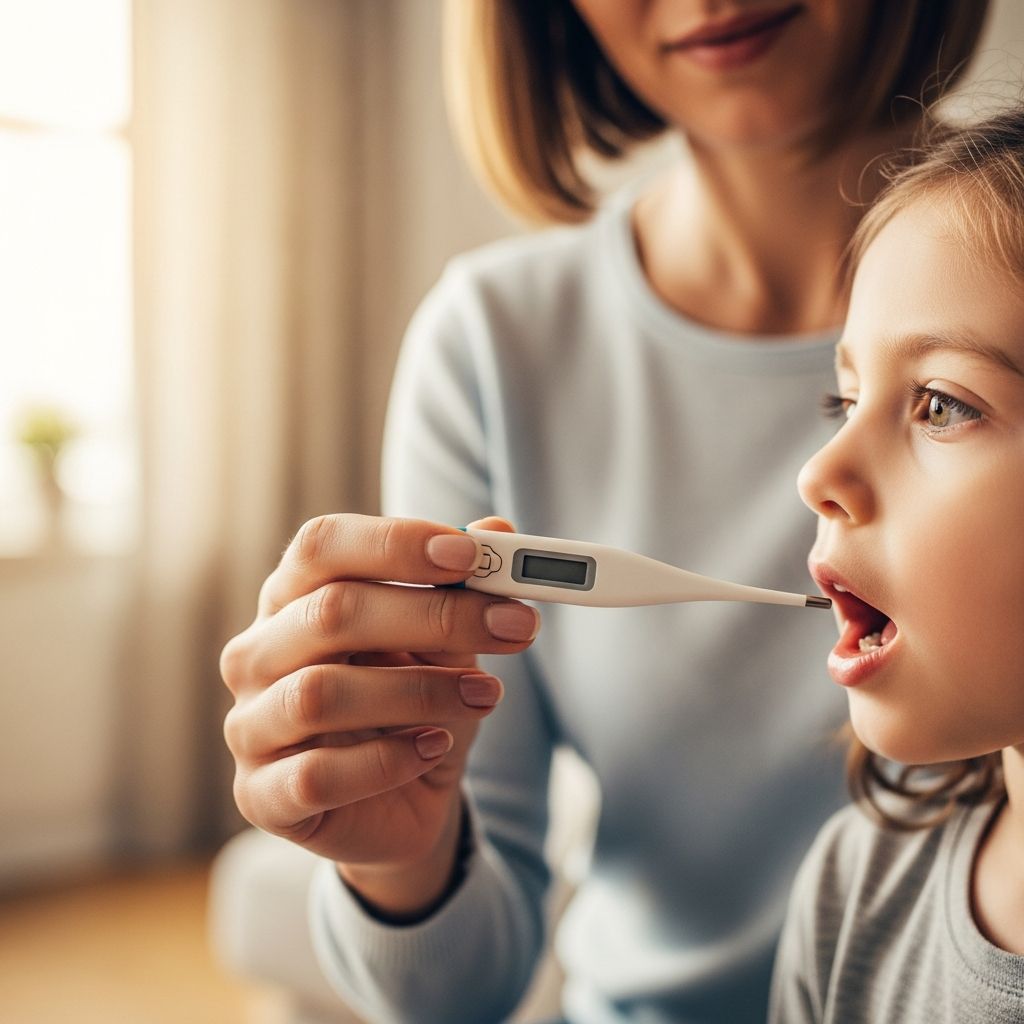
- Position correctly: Insert under the tongue in the posterior sublingual pocket, off-center. Instruct to close lips, breathe through nose, avoid talking or biting.
- Wait and read: Hold until beep (usually 10–20 seconds). Note the display without removing prematurely.
- Clean up: Wipe with alcohol; store dry.
For restless kids, practice with games or rewards builds trust. Always recheck if doubtful.
Factors Influencing Oral Temperature Readings
Several variables affect reliability:
- Recent intake: Hot/cold beverages raise/lower temps temporarily.
- Oral habits: Gum, smoking, or dehydration alter baselines.
- Age and cooperation: Young children may mouth-breathe, invalidating readings.
- Time of day: Temps peak in late afternoon, dip at night.
- Device quality: Cheap models vary; opt for calibrated digitals.
Studies confirm oral underestimates rectal fever by up to 2.91°F in some cases, detecting only 33% of true fevers at 100.4°F rectal cutoff. Adjust expectations accordingly.
Comparing Oral to Other Temperature Methods
Oral shines for convenience but isn’t universal. Rectal remains supreme for newborns (most accurate core proxy). Tympanic (ear) is quick but inconsistent, often 0.22°F higher than rectal yet varying widely.
Axillary (armpit) and temporal (forehead) are easiest for infants but least precise, lagging oral by 0.5–1°F. Electronic forehead scanners rival probes but require steady aim.
In adults, oral matches rectal closely if technique is flawless. For kids under 5, switch to rectal/ear to avoid false negatives—oral misses 67% of rectal fevers.
When Oral Thermometry Shines and When to Switch
Ideal for cooperative school-age kids and adults during routine checks. Use for tracking trends over single readings. Switch if:
- Child under 5 or can’t keep mouth closed.
- Recent oral activity suspected.
- Severe illness (rectal better for accuracy).
- Neonatal care (always rectal).
Optimal oral cutoffs for predicting rectal fever: 98.9°F (84.7% sensitivity). High positive predictive value (97%) means oral fever rarely misses true positives.
Safety Tips for Home Thermometer Use
Prevent mishaps:
- Never use oral thermometer rectally (color-code: blue oral, red rectal).
- Supervise children fully.
- Battery-check devices regularly.
- Avoid glass/mercury models—digital only.
- Sanitize between users.
For families, multi-method kits cover all ages.
Interpreting Results and Next Steps
Mild elevations (99–100°F oral) may be normal; monitor hydration, rest. True fever (≥100°F oral, equating ~101°F rectal) warrants antipyretics like acetaminophen (dosed by weight). Seek care if:
- Persistent >3 days.
- >104°F.
- Accompanied by lethargy, rash, breathing issues.
Trend logging helps doctors: note time, method, symptoms.
Choosing the Best Thermometer for Your Family
Invest wisely:
| Type | Best For | Pros | Cons | Cost Range |
|---|---|---|---|---|
| Digital Oral | Kids 5+, Adults | Accurate, fast, cheap | Requires cooperation | $5–15 |
| Rectal Probe | Infants | Gold standard | Invasive | $10–20 |
| Tympanic | Toddlers+ | Quick | Ear fit sensitive | $20–50 |
| Forehead Scanner | All ages | Non-contact | Movement error | $15–40 |
Follow manufacturer guides for calibration.
Frequently Asked Questions (FAQs)
Can I use oral temperature for toddlers?
Not reliably—opt for rectal or tympanic due to cooperation issues and lower accuracy.
How long after eating can I take oral temp?
Wait 20–30 minutes for stabilization.
Is oral or ear more accurate?
Oral is reliable with good technique; ear varies more (up to 2°F discrepancy).
What if oral reads low but child seems sick?
Recheck rectally; oral misses ~67% of fevers.
Are forehead thermometers as good as oral?
Similar accuracy if used right, but 0.5–1°F lower.
Empowering Families Through Knowledge
Consistent oral temperature monitoring builds health literacy. Combine with symptom watching for proactive care. Consult pediatricians for personalized advice, especially recurrent fevers.
References
- Oral and Tympanic Membrane Temperatures Are Inaccurate to … — NIH/PMC. 2011-12-01. https://pmc.ncbi.nlm.nih.gov/articles/PMC3236177/
- Oral Temperature – Vital Sign Measurement Across the Lifespan — OpenTextBC. 2023-01-01. https://opentextbc.ca/vitalsignmeasurement/chapter/oral-temperature/
- Fever Temperatures: Accuracy and Comparison – Topic Overview — MyActiveHealth. 2024-01-01. https://www.myactivehealth.com/hwcontent/content/special/tw9223.html
- Temperature Measurement — UF Health. 2024-01-01. https://ufhealth.org/conditions-and-treatments/temperature-measurement
- Fever Temperatures: Accuracy and Comparison — MyHealth Alberta. 2024-01-01. https://myhealth.alberta.ca/Health/pages/conditions.aspx?hwid=tw9223
- Thermometers: Understand the options — Mayo Clinic. 2024-08-15. https://www.mayoclinic.org/diseases-conditions/fever/in-depth/thermometers/art-20046737