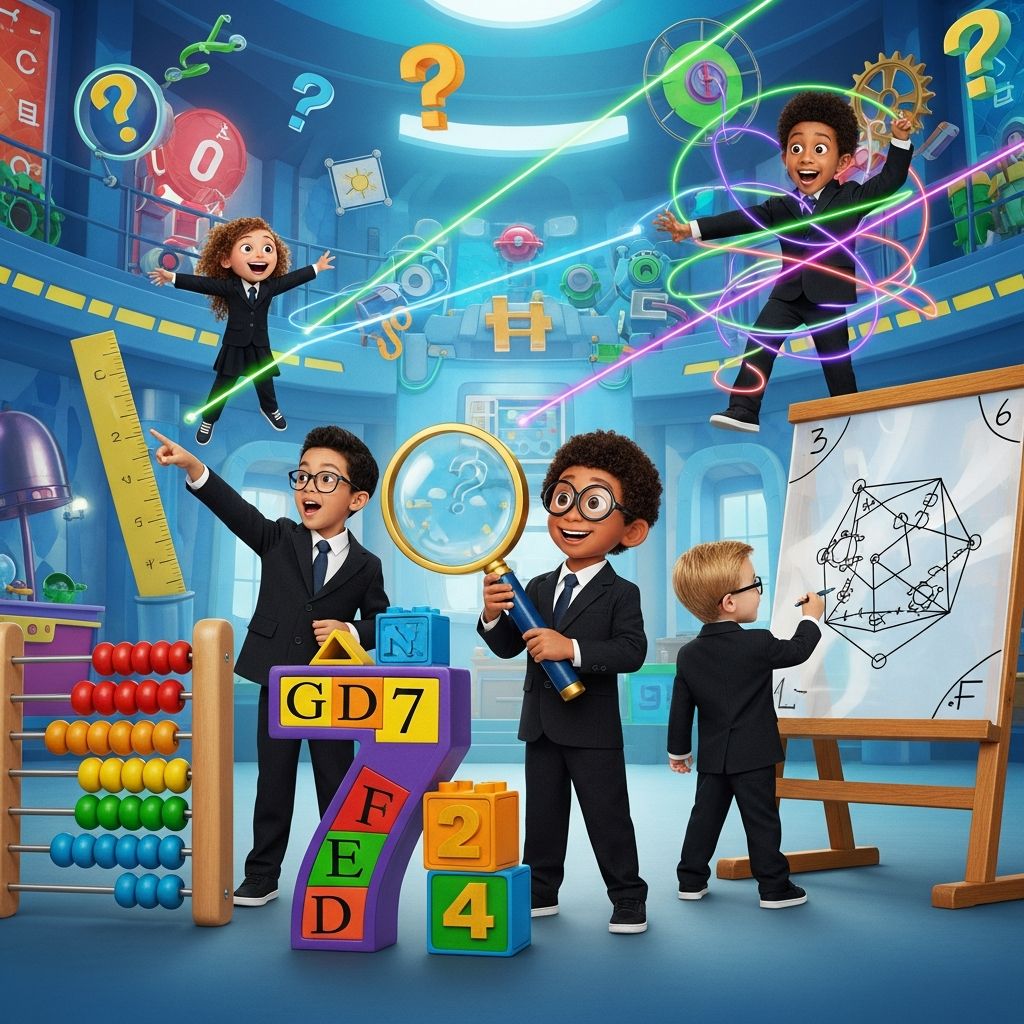
“Odd Squad” is a live-action PBS Kids series where smart, capable children solve strange, often hilarious problems using math, logic, and teamwork. Rather than treating kids as passive viewers, the show invites them to think along, make predictions, and see themselves as confident problem solvers.
What Is “Odd Squad” About?
“Odd Squad” follows young agents who work in a quirky, kid-run organization dedicated to investigating and fixing all the odd and unusual things that happen in their town. Each case involves some kind of math or logic challenge, like patterns, measurement, or basic operations, woven naturally into the story.
The agents use gadgets, critical thinking, and collaboration to restore order. Adults appear in the world, but kids clearly run the show, which helps child viewers imagine themselves as capable and competent.
Key Educational Themes
Although “Odd Squad” looks like a comedy-mystery series, it has a strong educational backbone. Episodes often focus on core math and thinking skills that children encounter in early elementary grades.
- Foundational math concepts such as addition, subtraction, patterns, and measurement.
- Logical reasoning, including cause and effect, if–then thinking, and comparisons.
- Perseverance and trying multiple strategies to solve a tricky problem.
Math Learning Benefits
Many families look for programming that feels fun but still supports school skills. “Odd Squad” stands out because it builds math knowledge through stories rather than drills or quizzes.
Children see math as a useful tool for solving real problems in the story world, rather than just a subject on a worksheet. This connection can help reduce math anxiety and encourage a positive attitude toward learning.
Examples of Math Skills Reinforced
- Recognizing and extending patterns.
- Skip counting and grouping objects.
- Comparing quantities (greater than, less than, equal to).
- Measurement of length, time, and volume in simple contexts.
Critical Thinking and Problem Solving
Beyond math, “Odd Squad” trains kids to think like detectives. Each mission is a puzzle that demands careful observation, hypothesis testing, and evaluation of different strategies.
Children are encouraged to consider multiple possibilities, reject ideas that do not fit the evidence, and keep trying until they arrive at a workable solution. This kind of structured problem solving can transfer to homework, games, and everyday challenges.
Problem-Solving Habits the Show Models
- Defining the problem clearly before jumping to a solution.
- Breaking a big problem into smaller, more manageable parts.
- Checking work and revising when something does not add up.
Teamwork and Social Skills
A core theme of “Odd Squad” is that agents rarely work alone. They share ideas, divide tasks, and respect one another’s strengths, even when personalities clash or mistakes happen.
For young viewers, this models healthy collaboration and shows that asking for help is a strength, not a weakness. Children also see examples of apologizing, forgiving, and bouncing back after disagreements.
Positive Social-Emotional Messages
- Listening to other perspectives and incorporating new ideas.
- Handling frustration when a plan fails and staying calm.
- Recognizing that everyone has different talents to contribute.
Representation and Role Models
“Odd Squad” features a diverse cast of children in leadership roles, which gives many viewers a chance to see themselves on screen as scientists, detectives, and leaders. This can be especially powerful for kids from underrepresented backgrounds.
The agents are portrayed as capable, responsible, and creative, without relying on stereotypes. They use humor, kindness, and persistence, which parents often appreciate as traits they want their own children to admire and imitate.
Why Kids Love the Show
Educational value alone does not guarantee that children will want to watch something. “Odd Squad” succeeds because it balances learning with fun, using absurd situations, running gags, and imaginative gadgets.
Cases involve strange creatures, unusual weather, and surreal mysteries, which keeps the pace lively. Kids enjoy the sense of being in on the joke while still following a coherent story.
Fun Elements That Keep Kids Engaged
- Goofy villains and over-the-top oddities.
- Creative gadgets that often tie back to the math idea.
- Catchy phrases and humorous misunderstandings.
How “Odd Squad” Fits into Healthy Screen Time
Parents often worry about too much screen time, but not all shows have the same impact. When used thoughtfully, a high-quality educational series like “Odd Squad” can complement school learning and family activities.
Rather than leaving the show on in the background, families may find it more helpful to watch together when possible or to talk with children about what they saw and how the characters solved each case.
Tips for Parents
- Co-watch occasionally and ask your child to explain the problem and the solution in their own words.
- Connect the episode’s math ideas to real life, such as measuring ingredients or comparing prices while shopping.
- Set clear viewing limits and balance screen time with active play, reading, and offline games.
Suggested Activities to Extend Learning
Turning viewing into active learning does not have to be complicated. Even simple follow-up activities can reinforce the concepts children encounter in “Odd Squad” episodes.
- Home “Odd Squad” missions: Create simple household mysteries that require counting, measuring, or sorting to solve.
- Math scavenger hunt: Ask children to find patterns, shapes, or specific numbers around the house or neighborhood.
- Agent notebook: Encourage kids to keep a small notebook where they draw diagrams or write clues for their own imaginary cases.
Quick Overview Table
| Aspect | How “Odd Squad” Helps Kids |
|---|---|
| Math Skills | Introduces concepts like patterns, counting, and measurement through stories instead of drills. |
| Thinking Skills | Encourages logical reasoning, testing ideas, and revising plans when they do not work. |
| Social Skills | Models cooperation, communication, and respectful disagreement within a team. |
| Confidence | Shows children as capable agents who solve problems and make meaningful decisions. |
| Entertainment | Combines comedy, adventure, and imaginative gadgets to keep kids engaged. |
Frequently Asked Questions
What age group is “Odd Squad” best for?
“Odd Squad” is generally designed for early elementary school children who are starting to learn basic math concepts and enjoy mystery-style stories. Younger or older siblings may also watch, but the math and humor are especially tuned to kids in the lower grades.
Is “Odd Squad” appropriate for sensitive kids?
The show’s oddities and villains are presented in a light, comedic way, and episodes avoid realistic violence or frightening scenes. For very sensitive children, parents may wish to preview an episode, but most families find the tone gentle and playful.
Does watching “Odd Squad” really help with math?
Educational television is not a replacement for direct instruction or practice, but a well-designed show can reinforce concepts, boost confidence, and make math feel more approachable. When parents or caregivers talk with children about what they watched, the learning benefits tend to increase.
How often should my child watch?
There is no single correct number of episodes, but many families aim for limited, intentional viewing as part of an overall balanced screen-time plan. A few episodes per week, combined with conversation and real-world practice, can be enough to expose children to the show’s positive messages.
Can we use “Odd Squad” in a classroom or homeschool setting?
Teachers and homeschoolers often use short clips or entire episodes to introduce or review math topics, followed by guided activities. When paired with hands-on tasks and discussion, the show can be a helpful supplement to more traditional lessons.