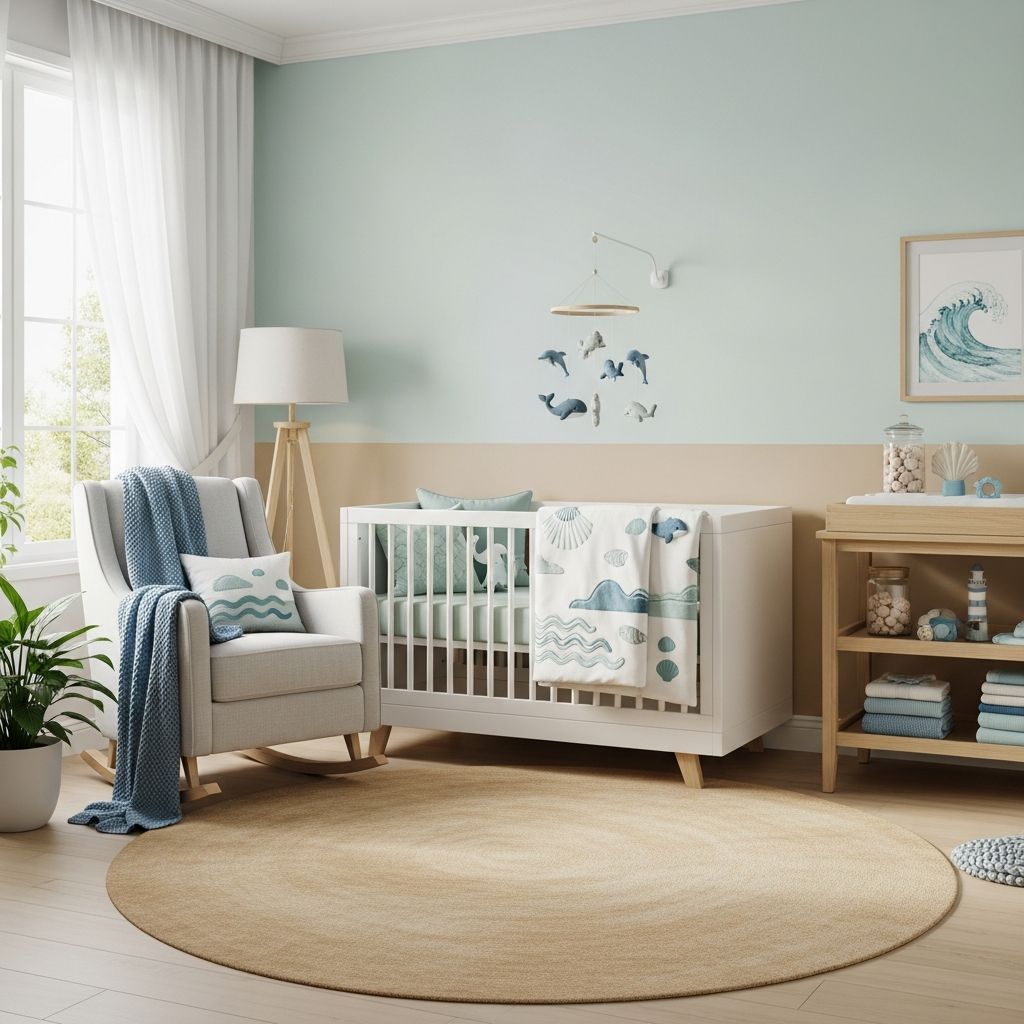
Ocean-inspired nurseries are popular because they balance calm colors with playful details, creating a space that feels soothing for sleep yet imaginative for play. This guide walks through every step of designing a sea-themed nursery that is practical, safe, and uniquely yours.
Why Choose an Ocean Theme?
The ocean is naturally associated with calmness and gentle movement, which translates beautifully into a nursery environment. Soft blues, sandy neutrals, and gentle wave-like patterns help create a restful space that supports naps, bedtime, and quiet bonding moments.
At the same time, marine life and seaside textures introduce fun and curiosity, giving you endless options for age-appropriate artwork, toys, and decor that can grow with your child from newborn to toddler.
Planning Your Vision and Mood
Before buying anything, decide how you want the room to feel. A clear vision will keep you from overbuying and will help all your choices—paint, furniture, fabrics, and decor—work together instead of competing for attention.
- Dreamy and soft: Think muted blues, seafoam green, off-white, and delicate patterns.
- Bright and playful: Mix deeper blues with coral, sunny yellow, or teal accents.
- Modern coastal: Focus on clean lines, minimal decor, and a limited color palette with natural wood.
Collect a few inspiration images, note what you like about them—colors, textures, or specific decor pieces—and use that as your reference point throughout the design process.
Ocean-Inspired Color Palettes
Color is the foundation of your nursery’s mood. For an ocean-inspired space, prioritize colors that evoke water, sand, and sky, and then layer in small pops of brighter tones for visual interest.
| Style | Main Colors | Accent Colors | Best For |
|---|---|---|---|
| Soft Coastal Calm | Pale blue, seafoam, warm white | Light tan, driftwood gray | Families seeking a serene, airy feel |
| Playful Underwater | Aqua, medium blue | Coral, sunny yellow, mint | Parents who want a colorful, kid-forward room |
| Modern Nautical | Navy, crisp white | Camel, brass, muted red | Small spaces and contemporary homes |
| Neutral Shoreline | Beige, ivory, gray | Sage, dusty blue | Gender-neutral nurseries and long-term flexibility |
Choose one primary wall color and repeat it in textiles and artwork so the room feels cohesive instead of busy. Limit yourself to two or three accent shades to avoid overwhelming the small space typical of a nursery.
Walls: Paint, Murals, and Art
The walls are your biggest visual surface and have the strongest impact on how ocean-inspired the room feels. You can create a subtle nod to the sea or a full underwater adventure depending on the approach you choose.
- Simple paint: A single soft blue or seafoam color with white trim gives a calm, timeless background.
- Accent wall: Paint one wall a deeper shade, such as navy or teal, behind the crib for a focal point.
- Removable decals: Add whales, fish, or waves as peel-and-stick decals that you can change as your child grows.
- Hand-painted mural: Consider a gentle wave horizon, a shoreline, or stylized seaweed for a one-of-a-kind look.
If you prefer minimal walls, hang a few framed prints with sea creatures, shells, or abstract water-inspired art to bring in the theme without committing to a full mural.
Furniture Basics with a Coastal Twist
The core nursery pieces—a safe crib, a changing area, and a comfortable chair—do not need to be ocean themed themselves. Instead, pick versatile furniture and let the decor and textiles deliver the theme.
- Crib: White, natural wood, or light oak finish works well with coastal color palettes and is easy to reuse in the future.
- Dresser or changing table: Choose a sturdy piece with drawers for storage; a removable changing top allows it to grow with your child.
- Chair: Select a rocker or glider with washable fabric in a neutral or soft blue tone for both comfort and longevity.
You can give furniture a subtle ocean feel by swapping out hardware for brass, rope, or shell-inspired knobs, or by adding a woven basket under or beside each piece for storage.
Textiles That Evoke the Sea
Textiles are one of the safest and easiest ways to play with pattern and color in a nursery. They also add softness, texture, and warmth, which are essential in a baby’s room.
- Rugs: Look for jute, braided cotton, or low-pile rugs in sandy tones, soft blue, or wavy patterns that hint at ripples in water.
- Crib bedding: Choose fitted sheets with subtle motifs like tiny fish, waves, or stars; avoid bulky comforters in the crib for safety.
- Blankets and throws: Drape lightweight, breathable blankets over a chair or shelf in colors that complement your palette.
- Curtains: Sheer or linen-style curtains in white or pale blue allow natural light to filter in while softening the room.
Mix a few different textures—smooth cotton, chunky knits, woven fibers—to mimic the variety found along a shoreline without overwhelming the eye.
Decor: Bringing the Underwater World to Life
Once the foundation of the room is ready, layer in decor that speaks to your chosen version of the ocean theme. Aim for pieces that are both decorative and functional whenever possible.
- Wall decor: Framed sea animals, abstract wave prints, or minimalist line drawings of shells.
- Shelves: Display a few favorite books, a soft plush whale or turtle, and a small plant in a sand-colored pot.
- Mobiles: Hang a mobile with fabric fish, gentle waves, or clouds above the crib, positioned according to safety guidelines.
- Lighting: Add a table lamp or nightlight with a textured, woven, or glass base reminiscent of sea glass or driftwood.
- Storage baskets: Use seagrass or rope-handled baskets to store toys, blankets, and extra linens while reinforcing the coastal feel.
Choose a few standout items that feel special—such as a large ocean-themed print or a uniquely shaped lamp—and let the smaller accents support them rather than compete.
Layout Tips for a Functional Nursery
A thoughtful layout will make your daily routines smoother, especially during night feedings and diaper changes. Start by sketching your room and marking windows, doors, and outlets, then plan where each major piece will go.
- Crib placement: Position the crib on a solid wall away from direct sunlight, drafts, and cords.
- Changing station: Keep this close to storage for diapers, wipes, and clothes, ideally within arm’s reach.
- Nursing or feeding corner: Place your chair near an outlet for a lamp or sound machine, with a small side table for water, burp cloths, and a book.
Ensure there is a clear path through the room with nothing to trip over in low light; consider a low, warm nightlight so you can move around quietly without turning on bright overhead lights.
Safety Considerations in a Themed Nursery
It is easy to become excited about decor and forget that a nursery is first and foremost a safe sleeping and play space. Safety principles remain the same regardless of theme and should guide every design choice.
- Keep the crib free of pillows, bumpers, and large stuffed animals to maintain a clear sleep surface.
- Secure furniture to the wall with anchors to prevent tipping when your child becomes mobile.
- Choose cordless window coverings or secure cords well out of reach.
- Use wall hooks and decor that are firmly attached, not heavy pieces directly over the crib.
When selecting paints or finishes, opt for low- or no-VOC products and allow the room to air out fully before your baby begins sleeping there.
Making the Room Grow with Your Child
An ocean-inspired nursery can easily transition into a toddler or young child’s room with a few thoughtful decisions from the start. Focus on a flexible foundation and swappable decor.
- Choose classic furniture that works beyond the baby stage, such as a convertible crib and a dresser that looks appropriate in any child’s room.
- Favor removable wall elements—like decals, art prints, and hanging decor—over permanent murals if you think your child’s interests will change quickly.
- As your child grows, you can shift from gentle ocean motifs to more adventurous themes like sailing, marine biology, or surfing by updating art and textiles.
This approach allows the ocean theme to evolve organically rather than requiring an expensive redesign in just a few years.
Budget-Friendly Ocean Nursery Ideas
Creating a beautiful themed nursery does not require an enormous budget. With a clear plan and a willingness to mix high- and low-cost items, you can design a room that feels intentional and polished.
- Prioritize the basics: Spend more on a safe crib, mattress, and comfortable chair, and save on accessories.
- DIY art: Paint simple waves or abstract circles in ocean colors on canvas for inexpensive, one-of-a-kind wall art.
- Shop secondhand: Look for gently used dressers or chairs that can be refreshed with new hardware or a washable slipcover.
- Use what you have: Neutral furniture, baskets, and lamps you already own can be adapted with small touches like new shades or textiles.
By focusing on a cohesive color palette rather than buying only themed products, you can achieve an ocean feel without paying a premium for every item in the room.
Simple Styling Checklist
When you are ready to bring the room together, use this quick checklist to stay on track and avoid overdecorating.
- One main wall color that reflects your ocean palette.
- A safe crib with a simple, coordinated fitted sheet.
- A comfortable chair for feeding and cuddling.
- At least two storage solutions, such as baskets and a dresser.
- Two or three ocean-inspired art pieces or decals.
- Textiles that echo your color scheme: rug, curtains, and one or two blankets.
- Soft, warm lighting for evenings and a gentle nightlight.
Keep stepping back and checking how the room feels; if it starts to feel crowded, remove one decor item rather than adding another.
Frequently Asked Questions
Is an ocean theme suitable for any gender?
Yes, an ocean theme is naturally versatile and can be easily adapted for any gender or for a shared room. By leaning more neutral with tans, grays, and soft blues, you can keep the look open and timeless, while brighter accents or specific characters can tailor the room to your personal taste if you choose.
How can I keep the nursery from looking too busy?
Limit patterned items to just a few key pieces, such as the rug, crib sheet, and one wall accent, and keep everything else relatively simple. Repeating the same two or three colors throughout the room gives it structure and calm, even if the patterns or motifs differ.
What lighting works best in an ocean nursery?
A layered lighting plan works best: a main overhead light for cleaning and organizing, a soft lamp or wall sconce for bedtime routines, and a low-level nightlight for middle-of-the-night visits. Look for lamp bases made of wood, woven fibers, or frosted glass to support the ocean aesthetic without relying on overt theme designs.
Can I DIY an ocean-themed nursery without artistic skills?
Absolutely. Simple touches like a single painted accent wall, framed prints, and coordinated textiles go a long way and require no drawing or painting ability. If you want a mural look without painting, removable wallpaper or decals can provide the same effect with less effort and commitment.
How soon before baby arrives should I complete the nursery?
Many parents find it helpful to finish painting and major furniture setup at least a few weeks before the due date, giving time for fumes to dissipate and for any last-minute adjustments. Smaller decor items can be added gradually, even after the baby arrives, as you see which elements are most useful and which are purely decorative.
Designing an ocean-inspired nursery is about more than just a theme; it is about creating a peaceful, functional environment where both you and your baby can relax, connect, and grow. By focusing on calm colors, comfortable furniture, thoughtful storage, and a few well-chosen sea-inspired details, you can build a space that feels like a gentle shoreline retreat inside your own home.