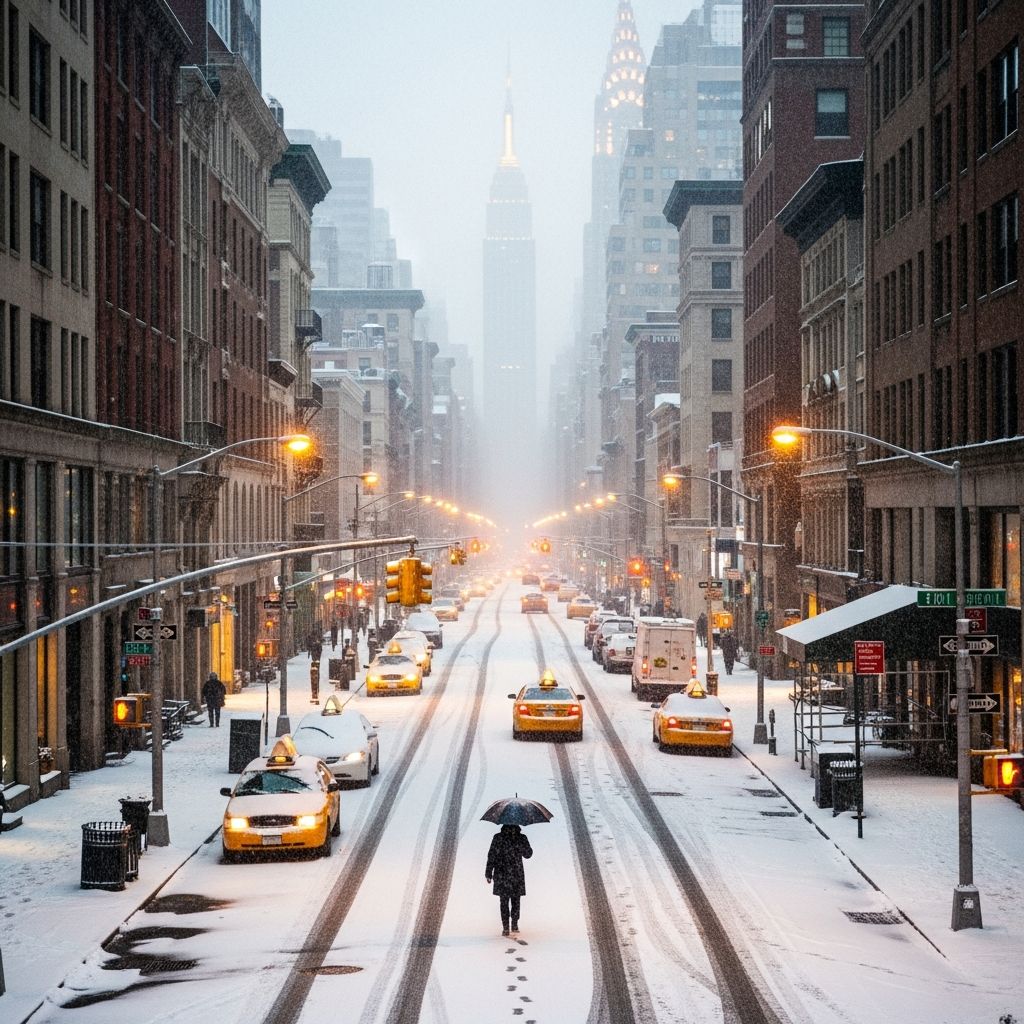
New York City public schools recently experienced their first traditional snow day since 2019, closing buildings entirely during a massive snowstorm without requiring remote learning. This shift marks a departure from years of mandatory virtual instruction during severe weather, emphasizing student and staff safety above all.
The Return of the Classic Snow Day
In response to a forecasted blizzard dumping 18 to 24 inches of snow across the city, Mayor Zohran Kwame Mamdani declared a local state of emergency. Public school buildings, except those serving as warming centers, shut down completely on February 23, allowing children a full day off without screens or assignments. This decision harks back to pre-pandemic norms when snow accumulation heavy enough to disrupt travel meant no school at all.
The announcement came swiftly as snow mixed with rain transitioned into heavier falls overnight. City officials coordinated with the New York State Education Department to secure a waiver from the strict 180-day instructional requirement, citing extraordinary circumstances. Without this exemption, schools would have defaulted to remote sessions, a practice ingrained since COVID-19 protocols but now reconsidered for extreme weather events.
Emergency Measures and Travel Restrictions
The state of emergency imposed strict measures to clear roads and protect residents. Non-essential vehicles faced a ban from 9 p.m. Sunday to noon Monday, limiting access to streets, highways, bridges, and tunnels. Exemptions applied only to emergency services, public transit, medical deliveries, food supplies, fuel, utilities, and critical repairs.
Violations carry penalties as Class B misdemeanors, underscoring the seriousness. Sanitation deployed over 2,600 plows and more than doubled emergency snow shovelers to 1,000, tackling the unprecedented accumulation. Trash and recycling collections delayed by at least one day, with residents urged to hold materials until the following week.
- Key Restrictions: No commercial trucks, e-bikes, scooters, or mopeds except authorized uses.
- Bridge Bans: Tractor-trailers prohibited on major crossings like Bronx-Whitestone and Verrazzano-Narrows from evening Sunday to morning Monday.
- Transit Adjustments: Buses scaled back route-by-route; Staten Island Ferry shifted to hourly service; Citi Bike halted at 8 p.m.; scooter shares stopped early morning.
Protecting Vulnerable Populations
Warming centers opened across all boroughs, including 22 buses from Social Services, 11 NYC Health + Hospitals sites, and 13 schools. Residents accessed locations via 311 or LinkNYC kiosks. City offices closed to in-person services, with essential staff reporting on-site and others teleworking.
Mayor Mamdani urged New Yorkers to stay indoors, check on neighbors—especially seniors—and avoid roads. Suspension of alternate side parking for Monday and anti-price gouging enforcement by Consumer and Worker Protection added layers of support during the five-day order.
Why Remote Learning Isn’t Always Best
Post-pandemic, many districts mandated online classes for snow days to meet instructional mandates. However, NYC’s waiver highlights growing recognition that virtual learning falters in blackouts, internet outages, or family stresses during storms. A full closure prioritizes rest and safety, preventing risky treks to ensure connectivity.
This nor’easter’s intensity—predicted 28 inches in spots—rendered remote access unreliable for thousands. Officials noted team efforts in snow removal enabled a return to in-person classes Tuesday, resuming normal activities.
| Aspect | Remote Learning | Traditional Snow Day |
|---|---|---|
| Safety | Risks travel for devices/power | No travel required |
| Equity | Digital divide disadvantages some | Equal day off for all |
| Instruction | Potentially disrupted | Waiver covers days |
| Morale | Screen fatigue | Fun, family time |
State Mandates and Waiver Process
New York law demands 180 classroom days yearly, leaving little buffer after holidays. Snow days previously ate into this, prompting remote alternatives or calendar extensions. The waiver process involves petitioning the state commissioner, justified by safety perils like this storm’s travel ban.
Nearby districts face similar pressures; New Jersey schools exhausted built-in closures, pushing calendars to late June. NYC’s proactive emergency declaration streamlined approval, ensuring compliance without penalties.
Parental Perspectives on Weather Closures
Parents welcome the revival, recalling joyful memories of sledding and hot cocoa over Zoom fatigue. Yet concerns linger: working families juggle childcare, and instructional time losses accumulate if storms persist. Advocates push for built-in flexible days or year-round calendars to adapt.
Experts note snow days foster resilience and community bonds, outweighing minor academic dips recoverable later. Surveys show high approval for safety-first policies, especially post-pandemic awareness of health vulnerabilities.
Preparing for Future Winter Disruptions
Cities must balance education continuity with peril mitigation. Investments in plowing fleets, predictive modeling, and communication apps enhance readiness. Policymakers debate embedding more emergency days or hybrid models blending remote with optional closures.
Climate trends suggest intensifying storms, demanding adaptive strategies. NYC’s model—emergency powers, waivers, and multi-agency response—sets a template for urban resilience.
Frequently Asked Questions
What triggered the snow day declaration?
A projected 18-28 inches of snow, worsening overnight, prompted the emergency and full closure.
Will remote learning replace snow days permanently?
No, waivers allow traditional days when safety demands, as in this first since 2019.
How does NYC handle trash during storms?
Collections delay one day; hold recycling until next week.
Are warming centers available?
Yes, 22 buses, hospitals, and schools; call 311 for locations.
What if schools run out of waiver days?
Extensions or remote options may apply, like New Jersey’s calendar push.
Long-Term Implications for Urban Education
This event underscores evolving priorities: safety trumps rigidity. As winters intensify, expect more waivers, tech redundancies, and family support. Children gain rare unstructured play, vital for development amid scheduled lives.
Educators prepare makeup plans without overburdening calendars. Parents appreciate transparency, from mayor’s playful snowball invite to chancellor’s operational assurances.
Broader lessons apply nationwide: rigid mandates ignore local realities. Flexible policies, empowered by data and waivers, better serve diverse communities.
References
- Mayor Mamdani Declares Local State of Emergency, Snow Day for NYC — NYC Mayor’s Office. 2026-02-23. https://www.nyc.gov/mayors-office/news/2026/02/mayor-mamdani-declares-local-state-of-emergency–snow-day-for-ny
- Mamdani announces full snow day for NYC Public Schools students — FOX 5 New York (YouTube). 2026-02-23. https://www.youtube.com/watch?v=moJEi7JrBGw
- NYC Public Schools will be open and in person Tuesday, Mayor says — CBS News. 2026-02-24. https://www.cbsnews.com/newyork/news/nyc-public-schools-tuesday-decision/
- New Jersey schools running out of snow days — NBC New York (YouTube). 2026-02-24. https://www.youtube.com/watch?v=k72eAT73djY