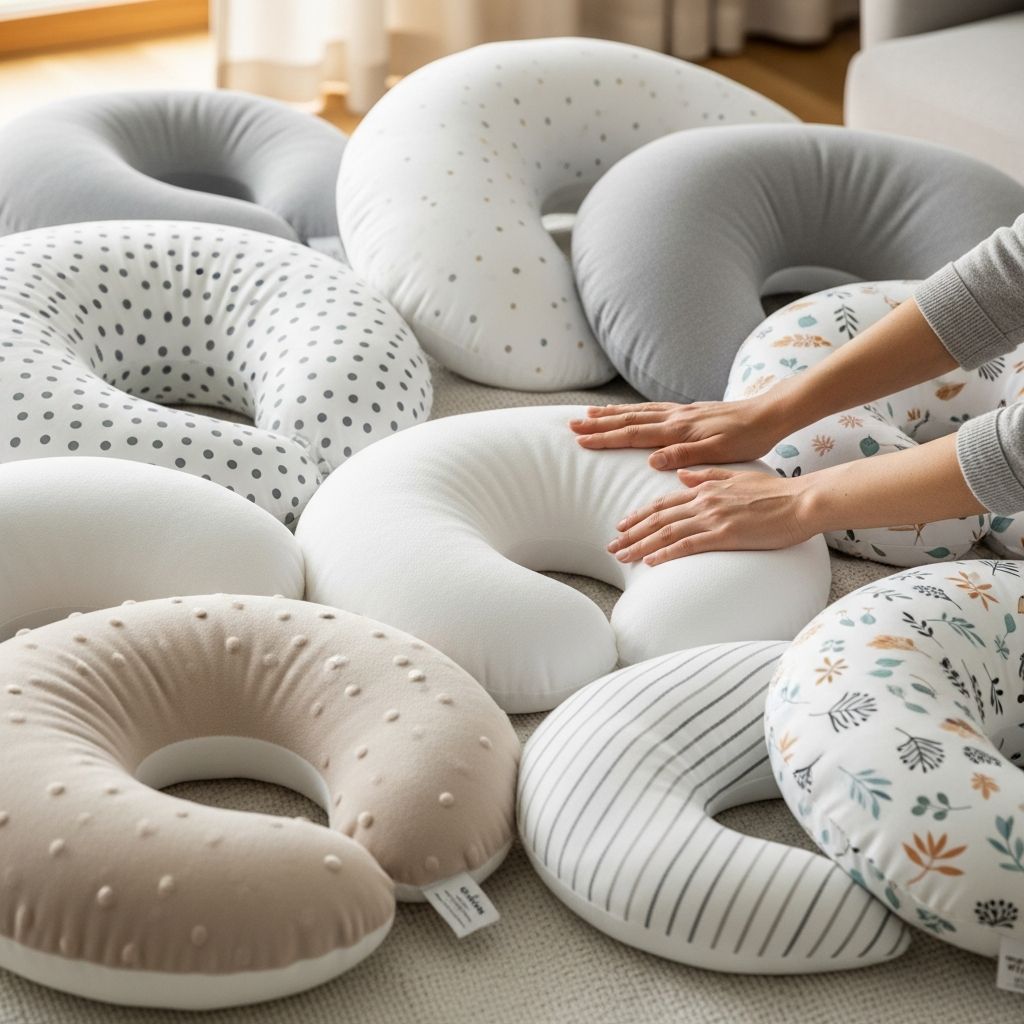
Nursing pillows can transform feeding sessions from painful and awkward to relaxed and sustainable. Whether you are breastfeeding, bottle-feeding, or doing both, the right pillow helps support your baby at breast height, protects your back, and makes long feeds less exhausting for your body.
This guide walks you through what nursing pillows do, how to compare different styles, how to use them safely, and what to consider before you buy.
What Is a Nursing Pillow and Why It Matters
A nursing pillow (also called a feeding pillow or breastfeeding pillow) is a specially shaped cushion designed to support your baby during breast or bottle-feeding. Most are U-shaped or C-shaped and fit around your waist, lifting the baby up to your chest so you are not constantly holding their full weight.
Unlike a regular bed pillow, a nursing pillow is:
- Shaped to curve around your body and stay in place
- Firm enough to support a baby without collapsing under their weight
- Designed to position baby close and aligned with your breast or bottle
Good positioning reduces strain on your back, shoulders, and arms, and can help your baby latch more effectively during breastfeeding.
Key Benefits of Using a Nursing Pillow
Many parents find a nursing pillow becomes one of the most-used items in the early months. While you can feed without one, there are several potential advantages.
1. Better Posture and Less Pain
Feeding without support often leads you to hunch forward or hold your baby up with tense shoulders for long stretches. Over time this can cause neck, shoulder, and lower back pain.
A nursing pillow helps by:
- Bringing baby to breast level so you can sit more upright
- Reducing the effort required from your arms and wrists
- Decreasing strain on post-surgical or tender abdominal areas, especially after a C-section
More comfortable posture can make frequent feeds more manageable and may help you maintain breastfeeding longer.
2. Easier Latching and Positioning
For breastfeeding to work well, your baby needs to be close, facing your body, and aligned so their ear, shoulder, and hip are in a straight line. Their mouth should be at the level of your nipple, not reaching or twisting.
A well-fitted nursing pillow can:
- Keep your baby elevated at an angle of about 45 degrees to support latching and swallowing
- Help you maintain a consistent position as you practice different nursing holds
- Free your hands a bit so you can focus on supporting the breast and guiding the latch
Research and clinical experience show that comfortable maternal positioning supports more relaxed feeds and milk flow, which benefits overall breastfeeding success.
3. Support for Bottle-Feeding Parents Too
Nursing pillows are not only for breastfeeding. Anyone who feeds the baby with a bottle can use the pillow to reduce strain.
Benefits for bottle-feeding include:
- Keeping baby slightly elevated, which may help with reflux and digestion
- Allowing caregivers to hold the bottle and interact without carrying all of baby’s weight
- Providing a familiar feeding routine, whether the feeder is a parent, partner, grandparent, or sitter
4. Potential Extra Uses (With Caution)
Some families use nursing pillows as support during supervised awake time, such as:
- Tummy time (placing the pillow under the baby’s chest while you closely watch)
- Assisted sitting when babies are learning to balance (with an adult within arm’s reach)
However, safety experts strongly advise that nursing pillows must not be used for infant sleep, including naps or overnight, because of the risk of suffocation and positional asphyxia.
Types of Nursing Pillows and How They Compare
There is no single “best” nursing pillow. The right choice depends on your body, your feeding setup, and your baby’s needs. Below is a comparison of common types.
| Type | Shape & Structure | Main Advantages | Potential Drawbacks |
|---|---|---|---|
| Classic U- or C-shaped | Curves around your waist, often soft but supportive | Widely available, versatile for breast and bottle-feeding | May shift or leave gaps if not a good fit for your body |
| Wraparound / 360° support | Closes behind your back; firm, flat surface for baby | Stable, less slipping; strong back support; good for long feeds | Bulkier; less flexible for other uses; may feel too firm for some |
| Adjustable / layered | Stackable or inflatable sections to change height | Customizable for different positions and caregivers | More parts to adjust; may cost more |
| Curved ergonomic pillows | Contoured to maintain baby’s head slightly elevated | Aims to protect caregiver posture and support digestion | Shape may not suit every body type or chair |
How to Choose a Nursing Pillow That Fits You
When you are evaluating nursing pillows, think about the way you usually sit and where you expect to feed most often.
Consider Your Body and Recovery
- Waist size and torso length: Make sure the pillow can wrap around your body without digging into your sides or riding up under your breasts.
- C-section recovery: Choose a pillow with a smooth, firm edge that sits above your incision so it does not press directly on tender tissue.
- Back pain history: A design with built-in back support or wraparound structure may provide more relief during long sessions.
Match the Pillow to Your Feeding Space
Think about the chair, couch, or bed where you are most likely to feed.
- In a narrow glider or chair, low-profile or contoured pillows often fit better than very bulky ones.
- On a deep couch or bed, a firmer or wraparound pillow can help prevent baby from sinking between you and the cushions.
- If you travel frequently, a lighter pillow or one that compresses well may be more practical.
Look at Fabric, Filling, and Maintenance
- Removable covers: A zip-off cover you can machine wash is very helpful for handling leaks and spit-up.
- Firmness: The pillow should be firm enough that your baby does not roll into gaps, but not so hard that it feels uncomfortable against your body.
- Materials: Choose breathable fabrics and fillings that do not trap too much heat, especially if you live in a warm climate.
How to Use a Nursing Pillow Step by Step
The basic setup is similar for most nursing positions. Always follow your pediatrician’s and lactation consultant’s guidance, and adjust for your comfort.
- Position yourself first. Sit with your back supported and feet on the floor or a stool. Relax your shoulders and keep your spine neutral.
- Place the pillow around your waist. Slide it in close to your body so there is no gap between you and the pillow. If it wraps around, fasten it according to the manufacturer’s instructions.
- Bring baby to the pillow, not the pillow to baby. Lift your baby onto the pillow and turn them so their belly faces your belly. Their head and neck should be supported, with their nose opposite your nipple.
- Check alignment. Make sure their ear, shoulder, and hip form a straight line, and their chin is not pressed into their chest.
- Fine-tune height and angle. If your baby is too low, add a small folded blanket under them (while supervising closely) or adjust your seat height. If they are too high, lower your chair or remove extra padding.
For bottle-feeding, the steps are similar, but you may angle baby slightly more upright, which can help reduce reflux and support more controlled feeding.
Safety Guidelines for Nursing Pillows
Nursing pillows can be safe and helpful when used correctly, but they are not designed as sleep surfaces. Safety organizations and consumer advocates emphasize several key points.
- Never leave a baby unattended on a nursing pillow. Babies can roll, slump, or nuzzle into the pillow and have their airway blocked.
- Do not use a nursing pillow in a crib, bassinet, or sleep space. Safe sleep guidelines recommend a firm, flat mattress with no pillows, bumpers, or soft objects.
- Limit use to supervised awake time. If baby falls asleep on the pillow, move them to a safe sleep surface as soon as you can.
- Inspect regularly. Look for torn seams, exposed filling, or broken fasteners that could pose a hazard.
Cleaning and Caring for Your Nursing Pillow
Because feeding is messy, plan for regular cleaning:
- Choose pillows with machine-washable covers, and consider buying a spare so you can rotate them.
- Follow the manufacturer’s washing instructions to avoid damaging foam or structured components.
- Let the pillow dry completely before use to prevent mold or mildew, especially if the inner pillow gets wet.
When Your Nursing Pillow Might Not Be Enough
Even the best pillow cannot fix every feeding challenge. If you experience any of the following, contact a lactation consultant or healthcare provider:
- Persistent nipple pain, cracks, or bleeding
- Baby not gaining weight as expected
- Ongoing back or shoulder pain despite good support
- Concerns about baby’s breathing or swallowing during feeds
Specialists can help you adjust positions, evaluate latch, or explore alternative strategies beyond pillow choice.
Frequently Asked Questions About Nursing Pillows
Do I really need a nursing pillow, or can I use regular pillows?
Regular pillows can provide some support, but nursing pillows are shaped and designed to keep your baby aligned at breast height and to support your arms more effectively. Many parents find that the dedicated design makes frequent feeds much more comfortable.
Can I use a nursing pillow after a C-section?
Yes. Many people find a nursing pillow very helpful after a C-section because it can keep your baby’s weight off your incision area. Look for a pillow that sits above the scar and does not press directly on your abdomen, and pair it with positions like the football hold as recommended by your healthcare team.
Is it safe for my baby to nap on the nursing pillow?
No. Nursing pillows are not safe sleep surfaces. Safety experts recommend that babies always sleep on a firm, flat surface with no pillows or soft bedding to reduce suffocation risks. If your baby falls asleep while using the pillow, move them to a safe sleep space as soon as possible.
Until what age can I use a nursing pillow?
There is no strict age limit. Many families use nursing pillows most intensively in the first few months, when babies feed frequently and need full support. As babies grow and gain head and trunk control, you may transition to holding them in different ways or using the pillow only occasionally, such as for longer feeds or for supervised sitting practice.
Can partners or other caregivers use the nursing pillow?
Absolutely. Nursing pillows work well for any caregiver who bottle-feeds or offers expressed milk. They help keep baby elevated and aligned, reduce arm fatigue, and create a familiar feeding routine no matter who is holding the baby.
References
- What to Know About Nursing Pillows — WebMD. 2022-06-09. https://www.webmd.com/parenting/baby/what-to-know-nursing-pillows
- Nursing pillow uses and benefits — Koala Babycare. 2023-03-15. https://koalababycare.com/blogs/koalavibes/why-use-a-nursing-pillow-all-the-benefits
- How to Use a Nursing Pillow and How To Choose Yours — Boppy. 2023-04-20. https://www.boppy.com/blogs/boppy/how-to-use-a-nursing-pillow
- Breastfeeding Pillow Guide — Aeroflow Breastpumps. 2023-02-10. https://aeroflowbreastpumps.com/care-guides/post/breastfeeding-pillows
- Nursing Pillow Regulations Tighten. Is Yours Safe? — Consumer Reports. 2021-06-23. https://www.consumerreports.org/health/breastfeeding/is-your-nursing-pillow-safe-a7352345554/
- The Nursing Pillow: Natural Curve — Ergobaby. 2022-05-12. https://ergobaby.com/the-nursing-pillow
- 7 Essential Benefits Of Using A Nursing Pillow — For Your Little One (blog). 2022-08-05. https://foryourlittleone.com/blogs/news/7-functions-of-a-nursing-pillow-what-to-know