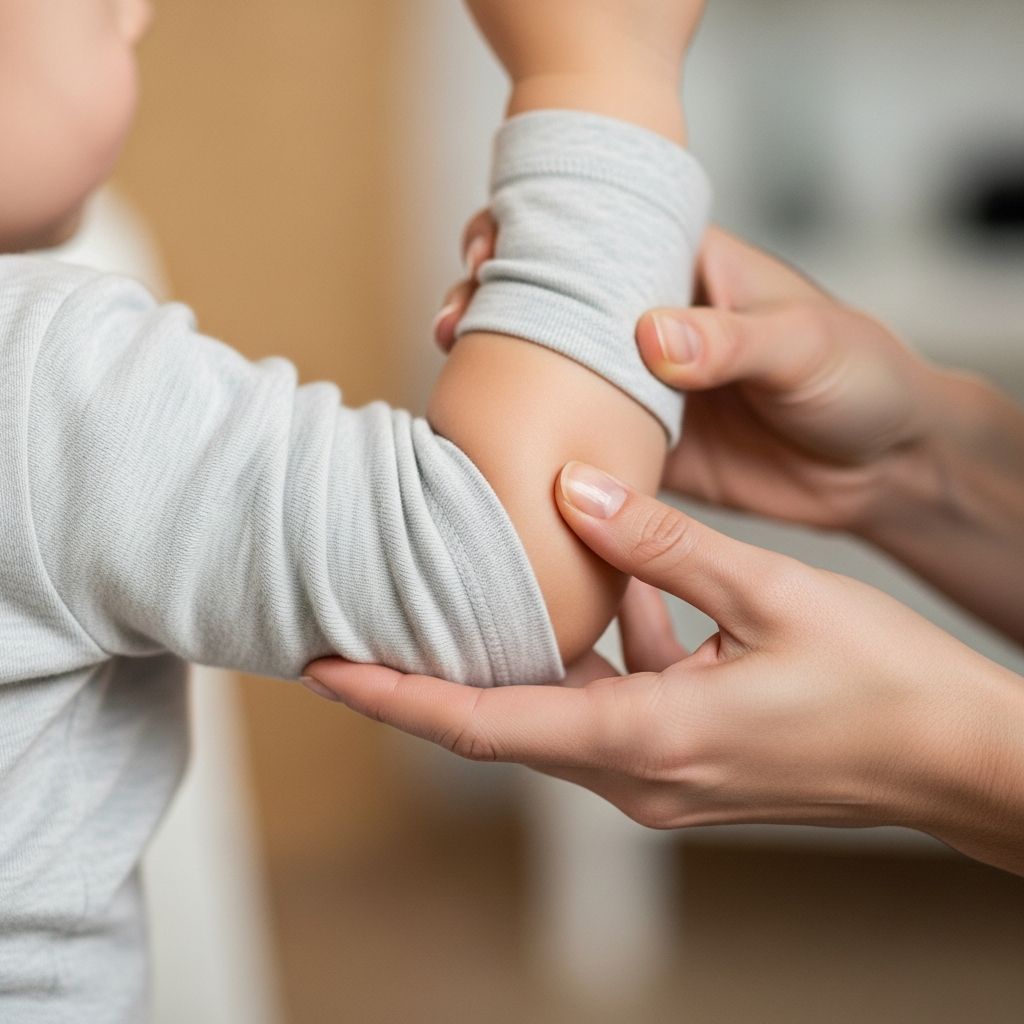
Nursemaid’s elbow, also called a pulled elbow or radial head subluxation, is a frequent elbow injury in young children that looks scary but usually heals quickly once treated properly.
What Is Nursemaid’s Elbow?
Nursemaid’s elbow is a type of partial dislocation at the elbow joint, where one of the forearm bones (the radius) slips out of its usual position under a surrounding ligament. This slip prevents the elbow from moving normally and causes pain when a child tries to use the arm.
The term “nursemaid’s elbow” comes from a time when caregivers were often blamed for the injury, but today it is understood as a common accident that can happen even in very careful families. Doctors also call it radial head subluxation, meaning the top of the radius bone has shifted but not completely dislocated.
Why Young Children Are Especially at Risk
Younger children have softer, more flexible ligaments around their joints, including the elbow, which makes it easier for a bone to slip out of its normal position. As kids grow, their ligaments become stronger and tighter, so the risk of nursemaid’s elbow naturally goes down.
Nursemaid’s elbow most often affects toddlers and preschoolers, typically between 1 and 5 years old, although it can occasionally happen in slightly younger infants or slightly older children. By school age, the likelihood drops because the joint is more stable and children are better at catching themselves during falls.
Common Everyday Causes
Nursemaid’s elbow usually happens after a sudden pull on a child’s straightened arm. The force does not need to be very strong; a quick tug at the wrong angle is often enough to shift the bone.
Some typical situations that can lead to nursemaid’s elbow include:
- Pulling a child by the hand to hurry across a street or up stairs.
- Lifting a child by one hand or wrist instead of supporting under the arms.
- Playing swinging games by holding a child’s hands and spinning.
- Breaking a child’s fall by grabbing their hand suddenly.
- A child yanking their arm away forcefully when an adult is holding their hand.
Because the injury can happen during normal, loving interactions like play or helping a child stand up, many parents feel guilty afterward. It is important to remember that nursemaid’s elbow is a common accident and, once treated, usually does not cause lasting damage.
Typical Signs and Symptoms Parents Notice
One of the most confusing parts of nursemaid’s elbow is that the arm often looks normal from the outside, with no obvious swelling, redness, or bruising. The main clue is how the child behaves and holds the arm.
Common signs include:
- The child suddenly stops using one arm after a pulling incident.
- The arm hangs straight down or is slightly bent at the elbow, close to the body.
- The child resists any attempt to bend or rotate the elbow, especially turning the palm up.
- The child may cradle the injured arm with the other hand.
- Crying or distress when the arm is moved, touched, or lifted.
- Pain often described around the elbow, wrist, or forearm, even though the problem is at the elbow joint.
Because the injury can be subtle, some caregivers worry about a fracture or think the child is just “babying” the arm. Any child who will not use an arm after an injury should be evaluated by a health professional, even if the arm looks normal.
How Nursemaid’s Elbow Differs from a Broken Arm
Parents often fear a broken bone when their child refuses to use an arm, but nursemaid’s elbow has some features that can help distinguish it from a fracture. While only a medical professional can make a definite diagnosis, recognizing these patterns can help you understand what doctors are looking for.
| Feature | Nursemaid’s Elbow | Possible Fracture |
|---|---|---|
| Common cause | Sudden pull on straight arm (lifting, swinging, yanking). | Fall, direct blow, or significant trauma. |
| Appearance of arm | Usually no swelling or deformity. | May look swollen, bruised, or misshapen. |
| Movement | Child holds arm still, especially avoiding rotation. | Movement is painful in most directions; child may guard one specific area. |
| Age group | Most common in toddlers and preschoolers. | Can occur at any age. |
Even if the pattern seems typical for nursemaid’s elbow, home attempts to force the bone back are risky and can worsen a different type of injury. The safest approach is always to let a trained professional evaluate and treat your child.
When to Seek Medical Care
Any time a child suddenly refuses to use an arm or seems in significant pain after an injury, medical evaluation is important. Nursemaid’s elbow is not usually an emergency in the life-threatening sense, but it does require timely attention so the child does not remain in pain and so other injuries are not missed.
Contact a doctor or go to an urgent care or emergency department promptly if:
- Your child will not move the arm or says it hurts to move it.
- You noticed a pulling or lifting motion just before the pain started.
- The arm looks limp or hangs differently from usual.
- Your child seems very distressed, especially when the arm is touched.
- There is any visible deformity, large swelling, or your child fell directly on the arm.
Before you leave, avoid pulling, twisting, or trying to straighten the arm forcefully. Supporting it in a comfortable position and keeping your child calm is the most helpful thing you can do.
What Happens at the Doctor’s Office
During the medical visit, the clinician will first ask how the injury occurred, when the pain started, and how your child has been holding or using the arm since then. These details help distinguish nursemaid’s elbow from other possible injuries.
The doctor will gently examine the arm, shoulder, wrist, and hand, checking for tenderness, swelling, or obvious deformity. If the story and exam fit nursemaid’s elbow and there are no red flags, the doctor may proceed directly to a reduction maneuver—a specific movement to guide the bone back into place—without needing X-rays.
How Doctors Treat Nursemaid’s Elbow
The treatment for nursemaid’s elbow is a quick procedure called a reduction, which means returning the slipped part of the bone to its normal position. The clinician carefully positions and rotates the child’s forearm and elbow in a precise way to free the trapped ligament and let the radius slide back under it.
Although the maneuver is brief, it can be uncomfortable for a moment, and some children cry during the procedure. Many parents are surprised at how quickly the child calms once the joint is back in place, often beginning to use the arm again within minutes.
Do Children Need X-Rays or Splints?
In many straightforward cases, X-rays are not required because nursemaid’s elbow does not usually show obvious changes on standard images, and the diagnosis is made based on the story and exam. However, if there is concern for a fracture, if the mechanism of injury does not match a classic pull, or if the child still refuses to use the arm after reduction, imaging may be ordered to rule out other problems.
Most children with an uncomplicated nursemaid’s elbow do not need a cast or long-term splint. Once the bone is back in place and the child is moving the arm normally again, no special brace is typically required. In rare or complicated situations, a short period of immobilization may be advised, but this is not the norm.
Recovery: What to Expect After Treatment
After a successful reduction, many children start using the affected arm again within 5 to 30 minutes, gradually regaining comfort and confidence. Some may be cautious at first, but play and normal movement usually return quickly.
It is common for parents to worry that their child will damage the arm again right away. Once the bone is back in place, regular gentle use of the arm is actually helpful and safe, although pulling or swinging the arm should still be avoided. If the child refuses to use the arm for more than an hour after treatment, or if pain seems to get worse, follow-up with the clinician is recommended.
Can Nursemaid’s Elbow Happen More Than Once?
Because the ligaments in young children are still loose, some children are more prone to repeat episodes of nursemaid’s elbow, especially within the first months after an initial injury. Once it has happened, even a smaller pull can occasionally cause it to recur.
Recurrent nursemaid’s elbow can be frustrating, but it usually becomes less common as the child grows and the ligaments strengthen. Preventive habits—such as avoiding pulling on the hands—are especially important in children who have already experienced this injury.
Practical Prevention Tips for Parents and Caregivers
Preventing nursemaid’s elbow focuses on protecting the elbow from sudden pulling forces. These changes may feel small but can make a big difference in day-to-day life with a toddler or preschooler.
Helpful strategies include:
- Lift under the arms. When picking up your child, place your hands under the arms or around the trunk, not by grabbing the hands or wrists.
- Avoid swinging games by the arms. Instead of spinning children while holding their hands, try holding them around the torso, or choose games that do not involve lifting by the arms.
- Be gentle when guiding. When walking with your child, hold hands loosely and avoid sudden tugs, especially if the child trips or resists.
- Teach helpers and relatives. Make sure grandparents, babysitters, and older siblings know not to pull or lift the child by the hand.
- Use child-size tools. Step stools, low hooks, and easy-to-reach storage reduce the need to pull a child up suddenly to reach sinks, counters, or playground equipment.
These habits not only lower the risk of nursemaid’s elbow but also protect young joints in general, helping children move and play more safely.
Comforting Your Child and Managing Pain
Before treatment, the main goal is to keep your child comfortable and avoid extra movement of the injured arm. Holding or carrying your child in a way that supports the arm close to the body can help reduce pain.
After a successful reduction, many children no longer need pain medicine, but your clinician may recommend an age-appropriate dose of an over-the-counter pain reliever if there is lingering soreness. Always follow professional guidance on type and amount of medication, especially for very young children.
Long-Term Outlook and Reassurance for Families
For most children, nursemaid’s elbow heals fully without long-term problems once the joint has been properly reduced. The injury does not usually affect future strength, growth, or athletic ability.
While the experience can be frightening for caregivers, it is important to remember that this is a common pediatric injury that health professionals treat routinely. Learning how it happens and how to prevent it helps many families feel more confident and less anxious if an episode occurs.
SEO-Friendly Frequently Asked Questions
Is nursemaid’s elbow dangerous?
Nursemaid’s elbow is painful but not usually dangerous when treated promptly by a medical professional. The main concern is the discomfort and temporary loss of arm function, not permanent damage in otherwise healthy children.
Can nursemaid’s elbow fix itself?
Occasionally, the bone may slip back into place on its own, especially if the arm is gently moved through different positions. However, relying on this is risky, and a child who is not using an arm should always be evaluated to be sure there is no fracture or other serious injury.
Can parents safely fix nursemaid’s elbow at home?
Attempting to perform reduction maneuvers at home without training can worsen an undiagnosed fracture or cause additional pain. It is safest to let a doctor, nurse practitioner, or other qualified clinician treat the injury and show you what to watch for afterward.
How long does recovery from nursemaid’s elbow take?
Once the elbow is properly reduced, most children begin using the arm again within minutes and return to regular activities very quickly. Any persistent pain, swelling, or refusal to move the arm after treatment deserves a follow-up evaluation.
What if nursemaid’s elbow keeps coming back?
Repeat episodes are not unusual in very young children whose ligaments are still loose, especially if pulling forces continue to occur. Strictly avoiding lifting or swinging by the hands and teaching all caregivers safer handling techniques can greatly reduce the chances of recurrence.
This article is for general educational purposes and does not replace personalized advice from a healthcare professional. Always consult a qualified clinician regarding any concerns about your child’s health or injuries.