Nursemaid’s elbow is a very common elbow injury in babies, toddlers, and preschoolers. It sounds frightening, but with prompt medical care it is usually quick to fix and does not cause lasting damage. Understanding how and why this injury happens can help parents recognize it early, get the right help, and reduce the chances of it happening again.
What Is Nursemaid’s Elbow?
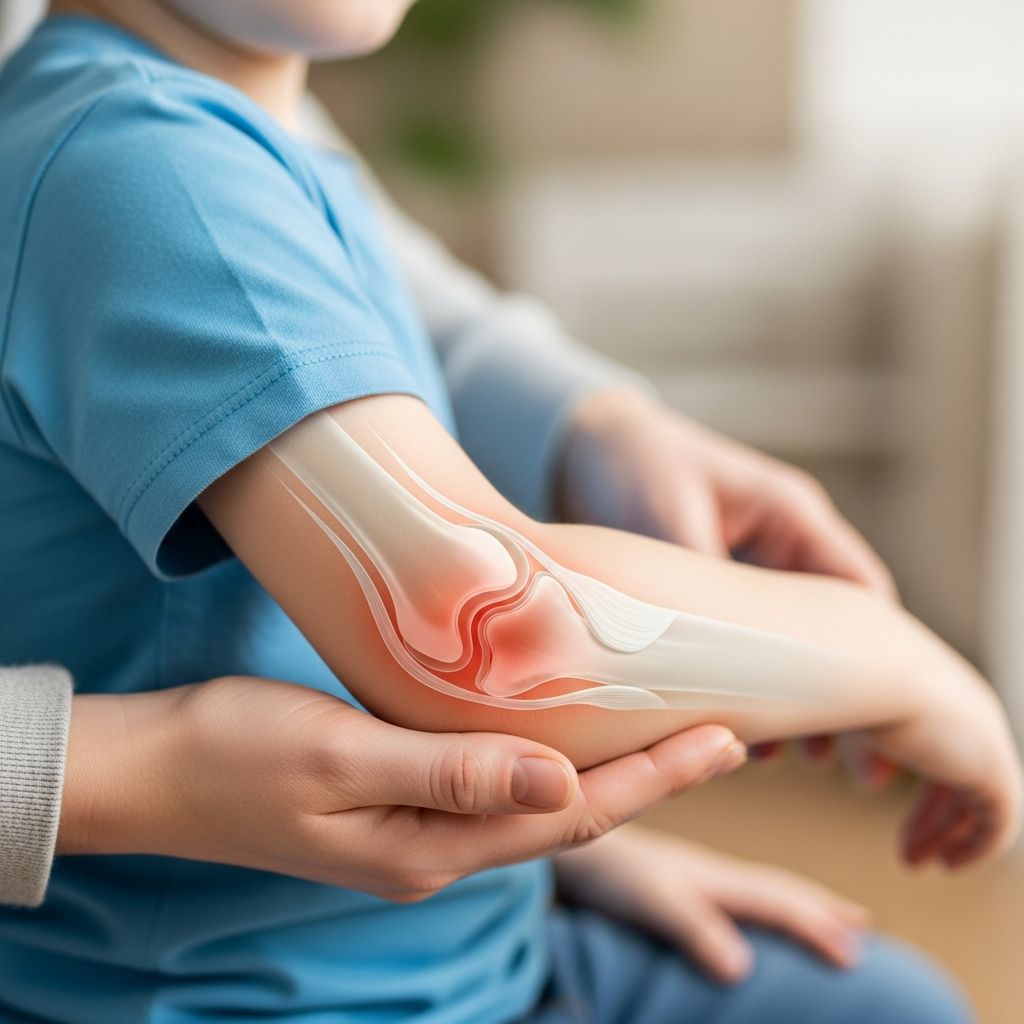
Nursemaid’s elbow, often called a “pulled elbow,” occurs when one of the forearm bones (the radius) slips partly out of its normal position at the elbow joint. Doctors call this radial head subluxation. In young children, the tissues and ligaments that hold the bones together are still soft and flexible. Because of this, a sudden pull on the child’s hand or wrist can cause the radius to shift out of place at the elbow.
This injury usually affects children under 5 years old. As children grow, their ligaments become stronger and more stable, making nursemaid’s elbow much less likely in older kids and adults.
Why Young Children Are at Higher Risk
The structure of a young child’s elbow makes this injury more likely. The round top of the radius bone is smaller and not yet fully developed, and the ligament that wraps around it can be relatively loose. When the arm is pulled suddenly, that ligament can briefly slide over the bone and allow it to shift.
Because this happens inside the joint, there may be no bruising or swelling on the outside. This can surprise caregivers, who notice that the child will not use the arm but cannot see an obvious injury.
Common Ways Nursemaid’s Elbow Happens
Nursemaid’s elbow is usually caused by a quick pulling or lifting force on the arm. It can happen during everyday activities and often takes parents by surprise. Typical situations include:
- Lifting a child up by one hand or wrist, especially onto a step, curb, or into a stroller.
- Pulling on a child’s arm to prevent a fall or keep them from running into the street.
- “Swinging” games where an adult or older child holds a child by the hands and spins or swings them.
- Sudden jerking of the arm when a child resists holding hands and pulls away.
In some cases, the pull is mild and not even noticed. Occasionally the injury can happen from a fall or when a baby rolls over awkwardly on the arm, but a direct blow to the elbow is more likely to cause a different type of injury, such as a fracture.
Signs and Symptoms Parents May Notice
The most important clue is a sudden change in how the child uses one arm. The onset is usually quick: one moment the child is using the arm normally, and the next they stop moving it. Common signs include:
- The child refuses to move the affected arm or cries when it is touched or moved.
- The arm hangs straight down at the side or is held slightly bent, often with the palm turned inward toward the body.
- The child may protect the arm and reach for toys only with the other hand.
- There is pain when the elbow or forearm is turned or bent, but the child may not be able to describe exactly where it hurts.
Many parents expect to see redness, swelling, or bruising with an elbow injury, but these are usually mild or absent with nursemaid’s elbow. The lack of obvious visible changes can make the injury confusing, especially for first-time caregivers.
How Nursemaid’s Elbow Differs from Other Elbow Injuries
Elbow pain in children can come from several causes, including fractures, sprains, and nursemaid’s elbow. Recognizing the differences helps parents understand why a medical exam is important.
| Condition | Usual Cause | Visible Changes | Child’s Behavior |
|---|---|---|---|
| Nursemaid’s elbow | Sudden pull on hand or wrist | Often no swelling or bruising | Refuses to move arm; holds it still in a set position |
| Elbow sprain | Twist or stretch of ligaments | Possible mild swelling or tenderness | Painful but may still use the arm somewhat |
| Fracture (broken bone) | Fall, direct blow, or high-force injury | Often swelling, bruising, or obvious deformity | Severe pain; refuses to move the elbow or arm |
Only a healthcare professional can reliably tell these conditions apart. If there is any doubt, it is safer to assume the injury is serious and seek prompt care.
When to Seek Medical Help
Any child who suddenly stops using one arm should be evaluated by a healthcare professional. Parents should not attempt to adjust or “pop” the elbow back into place at home, because it is easy to mistake a fracture or other injury for nursemaid’s elbow.
Emergency or urgent care is especially important if:
- The child will not move the arm at all or cries intensely when the elbow is touched.
- There is visible swelling, deformity, or the arm looks crooked.
- The child had a fall from a height, a direct hit to the elbow, or another significant trauma.
- The child appears very ill, unusually sleepy, or has other concerning symptoms.
Diagnosis: What Happens at the Clinic or ER
In many cases, doctors can diagnose nursemaid’s elbow based on a careful medical history and physical examination. They will ask how the injury occurred, when the symptoms started, and how the child has been using the arm since.
During the exam, the provider gently checks the elbow, wrist, shoulder, and hand. The way the child holds the arm and reacts to certain movements often gives strong clues. If the story or exam suggests another injury—such as a fracture—imaging tests like an X-ray may be ordered to look at the bones around the elbow.
The Reduction Procedure: Putting the Elbow Back in Place
Treatment for nursemaid’s elbow involves a quick maneuver called a reduction, in which the healthcare provider moves the child’s forearm in a specific way to guide the radius back into its proper position under the ligament. This procedure usually takes only a few seconds.
The maneuver may be uncomfortable, and some children cry briefly while it is performed. However, once the bone is back where it belongs, the pain typically improves quickly. Many children start moving the arm again within minutes and are able to return to normal activities shortly afterward.
After the Elbow Is Reduced
Once the joint is back in place, most children need little or no additional treatment. The doctor or nurse may gently encourage the child to reach for a toy or move the arm to confirm that the elbow is functioning normally again. If the child is still reluctant to move the arm after some time, follow-up evaluation or imaging may be recommended to rule out other injuries.
Pain medicine is not always necessary, but if the elbow is still a bit sore afterward, the healthcare provider may suggest an age-appropriate dose of an over-the-counter pain reliever. Caregivers should always follow dosing instructions carefully and ask a professional if they are unsure.
Home Care and Recovery
In most straightforward cases, children recover very quickly once the elbow is reduced. Still, some gentle home care can make the child more comfortable and support healing. Helpful steps include:
- Encouraging calm activities for the rest of the day so the child is not tempted to overuse the arm immediately.
- Observing how the child plays, reaches, and holds objects. If the arm seems weak or painful, call the doctor for advice.
- Using a cool pack wrapped in a thin cloth on the elbow for short periods if the area feels sore, as recommended by the healthcare provider.
Most children return to normal play very quickly and have no long-term problems from a single episode of nursemaid’s elbow.
Can Nursemaid’s Elbow Happen More Than Once?
Unfortunately, once a child has had nursemaid’s elbow, the same elbow is more likely to slip out of place again, especially in the months that follow. The ligament may be a bit looser in that area or more easily stretched by pulling forces. Recurrent episodes are fairly common in children who are still in the high-risk age range.
The risk tends to decrease as the child grows older and the ligaments become stronger. Many children who have several episodes when very young never experience it again after early childhood.
Prevention: Safe Ways to Lift and Play
While not every episode can be prevented, changing a few everyday habits can significantly lower the risk of nursemaid’s elbow. Parents, grandparents, and other caregivers can protect young elbows by:
- Avoiding swinging games by the hands or wrists. If you like to spin or lift your child playfully, support them under the arms or around the torso instead.
- Not lifting children by one arm. Use both hands under the arms or around the chest rather than pulling on a hand or forearm.
- Being gentle with hand-holding. When guiding a child, hold hands without yanking or jerking. If a child pulls away, try stopping and talking instead of tightening your grip and pulling harder.
- Educating other caregivers. Babysitters, older siblings, and relatives should be told not to swing or pull the child by the arms.
These simple precautions are helpful not only for children who have already had nursemaid’s elbow, but also for any young child with still-developing joints.
Emotional Reassurance for Parents and Children
Seeing a child suddenly stop using an arm can be very alarming. Many parents fear that they have caused a serious injury. It is important to remember that nursemaid’s elbow is common and often happens during ordinary, well-intentioned activities. Healthcare providers encounter this injury frequently and are prepared to manage it quickly and safely.
Children may also feel frightened by the pain and by the trip to the clinic or emergency department. Offering calm reassurance, bringing a favorite toy or blanket, and staying nearby during the exam can help a child feel more secure.
Frequently Asked Questions About Nursemaid’s Elbow
Is nursemaid’s elbow dangerous?
Nursemaid’s elbow is painful but is not usually dangerous when treated promptly. The joint is not completely dislocated, and there is typically no damage to the bones. Once the elbow is reduced by a trained professional, most children regain normal use of the arm very quickly and do not have long-term problems.
Can it heal on its own without treatment?
In rare cases, the elbow may slip back into place on its own, but there is no reliable way to know if that has happened without an examination. If a child is still refusing to use the arm or seems to be in pain, it is important to seek medical attention rather than waiting for it to improve on its own.
Will my child need an X-ray?
An X-ray is not always needed to diagnose nursemaid’s elbow. If the healthcare provider is confident that the symptoms and exam match this condition, they may treat it without imaging. However, if there is concern about a fracture or another type of injury—especially after a fall or direct blow—an X-ray may be recommended to check the bones.
Is the reduction procedure safe?
Reduction is a standard, well-studied procedure performed by trained healthcare professionals. It is very quick and does not usually require anesthesia or sedation. Although it can briefly increase pain, proper technique helps restore normal alignment of the joint, which relieves discomfort and protects the elbow from further injury.
What should I do if it happens again?
If your child has had nursemaid’s elbow before and suddenly stops using the arm in a similar way, contact your pediatrician or go to an urgent care or emergency department. Even if the symptoms seem familiar, it is important to have each new episode evaluated. Never attempt to perform the reduction yourself unless a medical professional has specifically trained you and advised you to do so.
Will my child grow out of it?
Most children do outgrow the tendency for nursemaid’s elbow as they approach school age. As the bones and ligaments mature and the joint becomes more stable, the risk of the radius slipping out of position decreases. For many families, this injury is a brief but memorable phase of early childhood that does not return later in life.
Key Takeaways for Busy Parents
- Nursemaid’s elbow is a common injury in young children caused by a sudden pull on the hand, wrist, or forearm.
- Children with this injury usually stop using one arm suddenly and hold it in a fixed position, but the elbow may look normal from the outside.
- A quick medical procedure to guide the bone back into place usually restores comfort and movement within minutes.
- Gentle handling of the arms, avoiding swings by the hands, and lifting children under the arms can greatly reduce the risk.
Understanding nursemaid’s elbow can help parents respond calmly and confidently if it ever affects their child, and can also guide safer play and lifting habits in daily life.