Norovirus is one of the most common causes of sudden vomiting and diarrhea in children, often called the “stomach bug” or “stomach flu.” It spreads very easily, especially in places where kids are close together, such as homes, schools, and daycare centers.
What Exactly Is Norovirus?
Norovirus is a highly contagious virus that infects the stomach and intestines, leading to an illness called acute gastroenteritis. It can affect people of any age, but young children tend to get sick more often and may become dehydrated more quickly than adults.
Unlike true influenza, which mainly affects the respiratory system, norovirus targets the digestive tract. That is why the most common problems are nausea, vomiting, diarrhea, and stomach cramps rather than cough or sore throat.
How Norovirus Spreads Among Kids
Norovirus spreads very efficiently because only a tiny amount of virus is needed to make someone sick. Children can catch it in several ways, especially when hygiene slips for even a moment.
- Person-to-person contact: Caring for, hugging, or sharing utensils and cups with someone who is infected.
- Contaminated surfaces: Touching toys, doorknobs, bathroom fixtures, or tablets that have virus particles on them, then touching the mouth.
- Food and water: Eating food handled by someone who is infected and did not wash their hands well, or drinking contaminated water.
- Shared spaces: Daycare centers, schools, camps, and playdates where many children share bathrooms and play equipment.
Norovirus particles are tough and can survive on surfaces for days if not properly cleaned. A single vomiting episode can release countless virus particles into the environment, which is why cleaning and isolation are so important.
Typical Symptoms in Children
Symptoms usually appear quickly, often within 12 to 48 hours after a child is exposed. In many cases, a child who seems fine in the morning may suddenly start vomiting in the afternoon or evening.
- Sudden nausea and vomiting, often without much warning.
- Watery diarrhea (sometimes very frequent).
- Crampy or aching belly pain.
- Mild fever or chills.
- Headache, fatigue, or general body aches.
Most children start to feel better within one to three days, but they may feel tired and have a sensitive stomach for a short period afterward. Some children never develop obvious symptoms but can still pass the virus to others, which is another reason outbreaks can be hard to control.
Recognizing Dehydration Early
The biggest danger of norovirus in children is dehydration from losing a lot of fluids through vomiting and diarrhea. Spotting early signs of dehydration helps parents act quickly before it becomes serious.
| Body Area / Symptom | Mild to Moderate | More Serious – Call Doctor Urgently |
|---|---|---|
| Mouth and lips | Dry lips, sticky mouth | Very dry mouth, cracked lips |
| Eyes and tears | Fewer tears when crying | No tears at all, sunken-looking eyes |
| Urine | Darker yellow urine; fewer wet diapers or bathroom trips | Very little or no urine for 6–8 hours (or a dry diaper) |
| Energy level | Tired, less active than usual | Very sleepy, difficult to wake, floppy, or extremely fussy |
| Infant-specific signs | Fewer wet diapers than usual | Sunken soft spot on the head, weak cry |
If your child shows any serious signs, especially very low urine output, extreme lethargy, or inability to keep fluids down, medical care is needed promptly.
Helping Your Child Feel Better at Home
There is no specific medicine that cures norovirus directly; the illness usually has to run its course. Home care focuses on keeping your child comfortable and preventing dehydration.
Hydration: The Most Important Step
- Offer small, frequent sips rather than large drinks, which can trigger more vomiting.
- Use an oral rehydration solution designed for children, if available, to replace lost fluids and minerals.
- For babies, breast milk or formula can usually continue, in small, frequent feeds, unless a healthcare professional advises otherwise.
- Avoid sugary drinks, undiluted fruit juice, or caffeinated drinks, which can worsen diarrhea.
Rest and Comfort
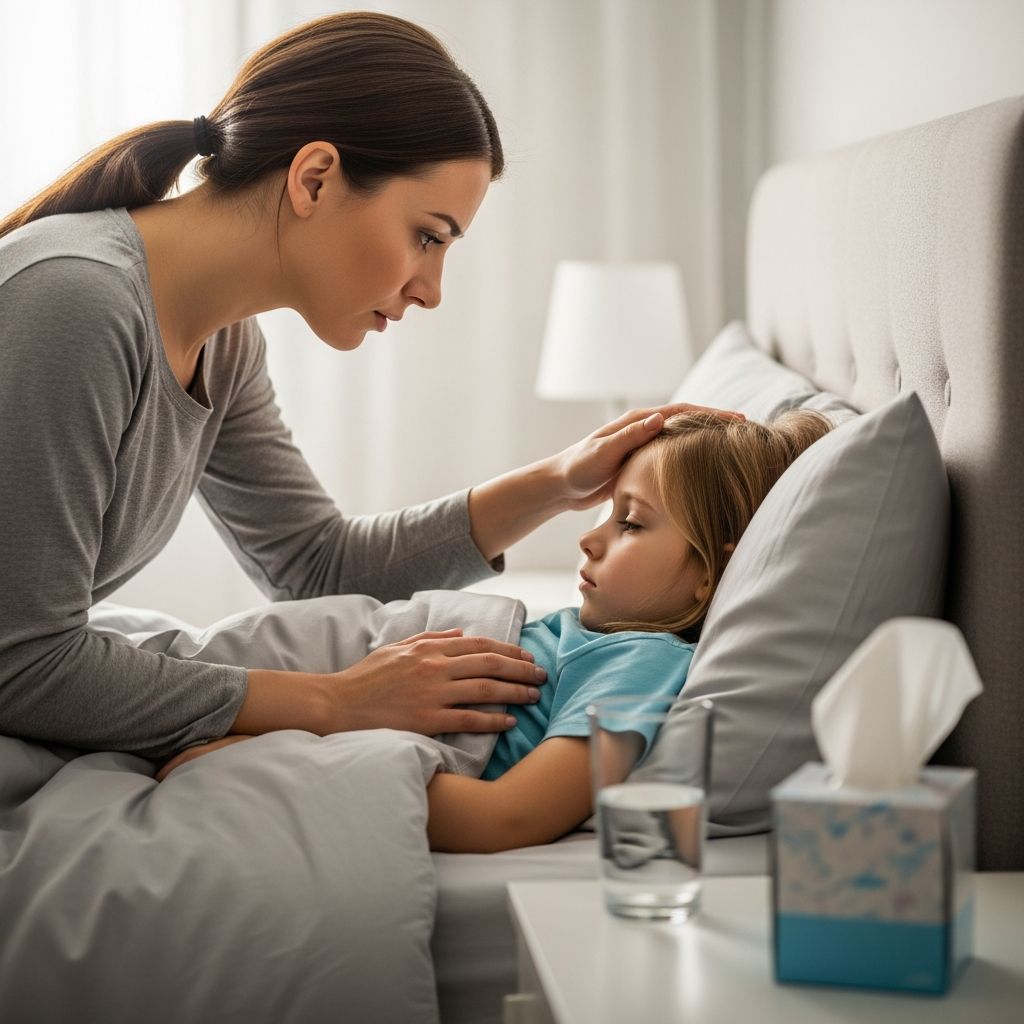
- Encourage plenty of rest; children may want to sleep more while they recover.
- Dress them in light clothing and use breathable bedding to prevent overheating.
- Have a bucket or bowl nearby in case vomiting happens suddenly.
Reintroducing Food
Once vomiting has slowed or stopped, most children can gradually return to eating. There is no single perfect diet, but gentle foods are usually best at first.
- Start with very small amounts of bland foods such as plain bread, crackers, toast, rice, or bananas.
- Avoid greasy, fried, or very spicy foods until your child’s stomach feels normal again.
- Don’t force food; focus on fluids first. Appetite usually returns as the child improves.
Do not give over-the-counter anti-diarrheal or anti-nausea medicines to children unless a healthcare professional tells you specifically to do so. Some of these medicines can cause side effects or are not safe for younger ages.
When to Call the Doctor or Seek Emergency Care
Although most children recover from norovirus without complications, there are cases when professional medical advice is essential. Trust your instincts; if your child seems much sicker than a typical stomach bug, get help.
- Vomiting or diarrhea that continues with little improvement after 2–3 days.
- Any sign of severe dehydration, such as no urine for many hours, dry mouth, or extreme sleepiness.
- Blood in vomit or stool, or very dark, tar-like stool.
- High fever that does not respond to fever-reducing medicine, or fever in a very young infant.
- Severe stomach pain that does not ease between cramps or causes the child to double over.
- A child with a chronic health condition or weakened immune system who develops norovirus symptoms.
Emergency care is especially important for infants, very young children, and kids with other medical conditions, as they can become dehydrated more quickly.
Protecting Other Family Members
Because norovirus spreads so easily, taking steps to prevent transmission is just as important as caring for the sick child. A few consistent habits can greatly reduce the chances of the bug sweeping through the whole household.
Hand Hygiene
- Wash hands with soap and water for at least 20 seconds, especially after diaper changes, bathroom use, and cleaning up vomit or stool.
- Help younger children wash thoroughly, making sure they scrub between fingers and under nails.
- Use alcohol-based hand sanitizer only as a backup; soap and water are more reliable for removing virus particles.
Cleaning and Disinfection
- Immediately clean surfaces soiled by vomit or diarrhea, following the instructions on any disinfectant product used.
- Pay special attention to bathroom fixtures, light switches, tabletops, and toys that many hands touch.
- Wash bedding, pajamas, and towels in hot water and dry them thoroughly. Wear disposable gloves while handling heavily soiled items if possible.
Limiting Contact
- Keep the sick child at home and away from school, daycare, or group activities until they have been free of vomiting and diarrhea for a recommended period, such as at least 24–48 hours, according to your local guidance.
- Avoid sharing food, drinks, utensils, and toothbrushes.
- If space allows, assign one bathroom mainly for the sick child and a small number of caregivers.
Norovirus Prevention Beyond the Home
Norovirus outbreaks are common in places where people gather and share facilities. Parents can help reduce risk outside the home with some simple habits.
- Teach children to wash hands before eating, after using the restroom, and after playing outside or with animals.
- Remind kids not to share water bottles, utensils, or lip balm with friends.
- When eating out, encourage children to wash hands or use sanitizer before touching food.
- If your child is sick, keep them home from school or daycare and inform the facility so they can step up cleaning and monitoring.
Common Myths About Norovirus
Misinformation can make caring for a sick child more stressful. Understanding what is true and false helps parents respond calmly and effectively.
- “It’s just food poisoning.” Norovirus can spread through contaminated food, but it also spreads easily from person to person and from surfaces.
- “Once my child has had it, they are immune for life.” Immunity is incomplete and short-lived; children can get norovirus more than once, sometimes even within the same year.
- “Hand sanitizer is enough.” Hand sanitizer can help, but thorough washing with soap and water is more reliable against norovirus.
- “You must stop all diarrhea with medicine.” In most children, the body clears the virus on its own. Certain medicines can be unsafe or unnecessary, and should only be used with professional guidance.
Building a Family “Stomach Bug Plan”
Because norovirus is so common, it is helpful for families to prepare in advance. A simple plan can make a stressful illness easier to handle when it happens.
- Keep a small supply of oral rehydration solution or similar products at home.
- Store extra laundry detergent, disposable gloves, and cleaning supplies suited for disinfecting bathroom and kitchen surfaces.
- Decide in advance which adult will primarily care for a sick child and who will handle tasks for siblings.
- Post your pediatrician’s office number and an after-hours or nurse advice line in an easy-to-find place.
Having these items ready means you can focus on comforting your child instead of rushing to gather supplies while they are actively vomiting or having diarrhea.
FAQs About Norovirus in Children
Is norovirus the same as the flu?
No. The flu (influenza) mainly affects the lungs and causes symptoms like cough, sore throat, and body aches, while norovirus primarily causes vomiting and diarrhea. The two illnesses are caused by different viruses.
How long is my child contagious?
Children are most contagious while they have active vomiting and diarrhea, but they can continue to spread the virus for a short time after symptoms improve. This is why careful handwashing and cleaning should continue even when a child seems better.
Can adults in the home catch norovirus from a sick child?
Yes. Norovirus spreads easily between family members, regardless of age. Adults should wash hands frequently, avoid sharing food or drinks with the sick child, and clean contaminated surfaces quickly.
Is there a vaccine for norovirus?
At this time, there is no widely available vaccine for norovirus. Prevention focuses on hygiene, safe food handling, and avoiding close contact with people who are sick.
Can my child go swimming after having norovirus?
Wait until your child is completely recovered and has been free of vomiting and diarrhea for the recommended time before allowing swimming. Pools and water parks can be sources of spread if someone who has recently been ill enters the water.
Key Takeaways for Parents
- Norovirus is a very contagious stomach virus that commonly causes sudden vomiting and diarrhea in children.
- The main risk is dehydration, so frequent fluids and close monitoring are essential.
- Good handwashing, thorough cleaning of contaminated surfaces, and keeping sick children at home help protect the rest of the family and community.
- Most children recover within a few days, but urgent medical care is needed if warning signs of severe dehydration or other serious symptoms appear.