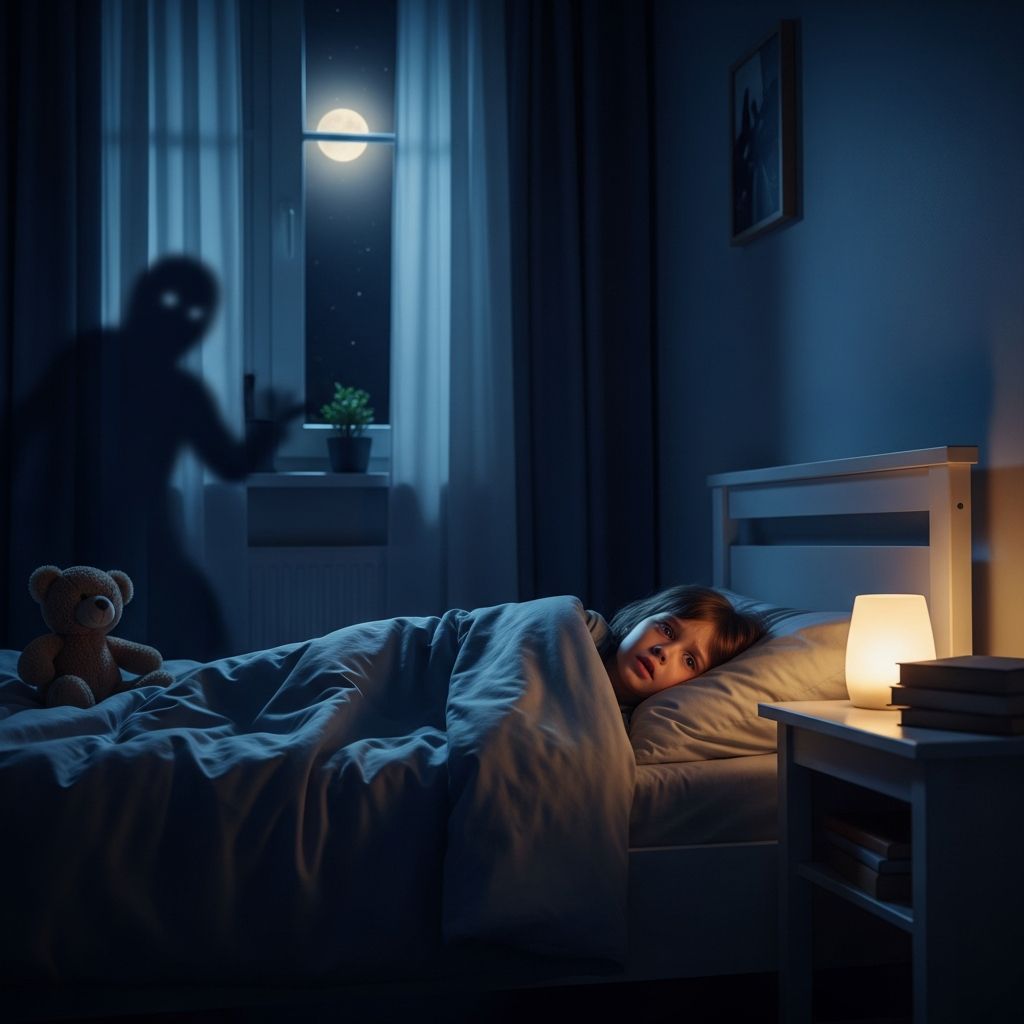
Night terrors represent a prevalent sleep disturbance in young children, characterized by sudden episodes of extreme fear during non-REM sleep stages, typically occurring 1-3 hours after falling asleep. These events, also called sleep terrors, impact 2-7% of children aged 3-7 years and often resolve by adolescence.
Defining Night Terrors and Their Impact on Families
Night terrors differ from typical nightmares as they arise from deep non-REM sleep rather than REM stages, leaving children with no recollection upon waking. Parents frequently describe these as alarming, with children appearing awake yet unresponsive, screaming intensely while showing physical signs of distress. This parasomnia can disrupt family sleep routines, heightening parental anxiety despite being benign for the child.
Understanding this distinction helps caregivers respond appropriately, avoiding actions that might prolong episodes. Prevalence peaks around ages 4-7, with familial patterns observed in many cases, suggesting a genetic component.
Recognizing the Hallmarks of a Night Terror Episode
During an episode, children may bolt upright, emit piercing screams, exhibit rapid breathing, sweating, dilated pupils, and a racing heart. They might thrash, kick, or even attempt to flee the bed, yet remain partially asleep and inconsolable. Episodes last 10-30 minutes before the child returns to sleep without memory of the event.
- Sudden intense screaming or shouting
- Physical agitation like flailing arms or legs
- Autonomic responses: heavy sweating, hyperventilation, tachycardia
- Staring blankly with wide eyes, unresponsive to comfort
- No recall the following day
These signs cluster in the first third of the night, distinguishing them from REM-based nightmares that occur later.
Primary Triggers Behind Night Terrors
While the exact etiology remains unclear, multiple factors contribute. Overtiredness from insufficient sleep or irregular schedules tops the list, as exhaustion destabilizes sleep architecture.
Genetic predisposition plays a key role; if parents or siblings experienced night terrors, children face higher risk. Emotional stressors, such as family changes or anxiety, exacerbate vulnerability by heightening arousal thresholds.
Medical triggers include fevers, illnesses, or sleep-disrupting conditions like obstructive sleep apnea (OSA), which fragments sleep and increases episode frequency. Other contributors encompass caffeine intake, new sleep environments, medications affecting the central nervous system, or recent anesthesia.
| Trigger Category | Examples | Impact on Sleep |
|---|---|---|
| Sleep-Related | Fatigue, OSA, schedule shifts | Increases partial arousals from deep sleep |
| Genetic/ Familial | Family history of parasomnias | Hereditary sleep instability |
| Environmental/Emotional | Stress, new settings, caffeine | Heightens fight-or-flight responses |
| Physiological | Fever, illness, medications | Disrupts normal sleep cycles |
Distinguishing Night Terrors from Similar Sleep Issues
Confusing night terrors with nightmares or seizures is common. Nightmares wake children fully, allowing recall and comfort; night terrors do not. Seizures involve rhythmic movements and post-event confusion, unlike the diffuse agitation of terrors.
- Nightmares: REM sleep, later night, remembered, consolable
- Confusional Arousals: Similar but milder, shorter duration
- Sleepwalking: Related parasomnia, ambulatory behavior
- Seizures: Involuntary jerks, medical evaluation needed
Persistent or frequent episodes warrant pediatric assessment to rule out OSA or other disorders.
Practical Steps for Parents During an Episode
Interventions focus on safety and minimal disturbance. Gently guide the child back to bed without forceful waking, as this can prolong confusion. Ensure a safe sleep space by securing furniture and using bed rails.
Remain calm nearby, speaking softly if needed, but avoid physical restraint. Time episodes to predict and preempt with scheduled awakenings—waking the child 15-30 minutes before typical onset for a few nights.
Long-Term Management Strategies
Proactive measures reduce recurrence. Prioritize consistent sleep schedules with 10-12 hours nightly for ages 3-7, avoiding overstimulation before bed.
Address underlying issues: screen for OSA via snoring or breathing pauses, manage stress through routines, limit screens and caffeine. Behavioral techniques like relaxation stories or anticipatory awakenings prove effective in trials. Medications are rarely used, reserved for severe cases.
Most children outgrow terrors by puberty, with 80% resolving spontaneously. Track patterns in a sleep diary to identify triggers.
When to Seek Professional Guidance
Consult a pediatrician if episodes exceed 2-3 weekly, last over 30 minutes, involve injury risk, or accompany daytime sleepiness/breathing issues. Sleep studies may diagnose comorbidities like OSA.
- Frequent nightly occurrences
- Daytime behavioral changes
- Suspected sleep apnea symptoms
- Family distress impacting sleep
Frequently Asked Questions (FAQs)
What age group is most prone to night terrors?
Children aged 3-7 years experience the highest incidence, though they can occur up to age 12 or beyond.
Do night terrors harm my child long-term?
No, they are harmless with no psychological sequelae; children lack memory and outgrow them.
Can I prevent night terrors entirely?
Not always, but consistent sleep hygiene, stress reduction, and treating triggers like illness minimize frequency.
Should I wake my child during a night terror?
Avoid full awakening; it increases disorientation. Stay present for safety until they settle.
Are night terrors linked to psychological problems?
Rarely primary, but stress can trigger; persistent cases merit evaluation for anxiety or disorders.
Building Healthy Sleep Habits for Terror Prevention
Foster resilience with bedtime rituals: dim lights, reading, avoiding electronics 1 hour prior. Promote physical activity daytime but wind down evenings. Hydration and nutrition support stable sleep; monitor for fever precursors.
Family education demystifies terrors, reducing panic. Share experiences via support groups for coping strategies.
In summary, night terrors, though frightening, are transient. Empowered parents through knowledge transform distress into manageable routines, ensuring restful nights.
References
- Night Terrors in Children — Comprehensive Sleep Care Center. 2023-08-23. https://comprehensivesleepcare.com/2023/08/23/night-terrors-in-children/
- Night terrors in children — MedlinePlus Medical Encyclopedia. n.d. https://medlineplus.gov/ency/article/000809.htm
- Night Terrors: Definition, Causes, Symptoms, and Treatment — WebMD. n.d. https://www.webmd.com/sleep-disorders/night-terrors
- Sleep terrors (night terrors) – Symptoms and causes — Mayo Clinic. n.d. https://www.mayoclinic.org/diseases-conditions/sleep-terrors/symptoms-causes/syc-20353524
- Night Terrors — Nemours KidsHealth. n.d. https://kidshealth.org/en/parents/terrors.html