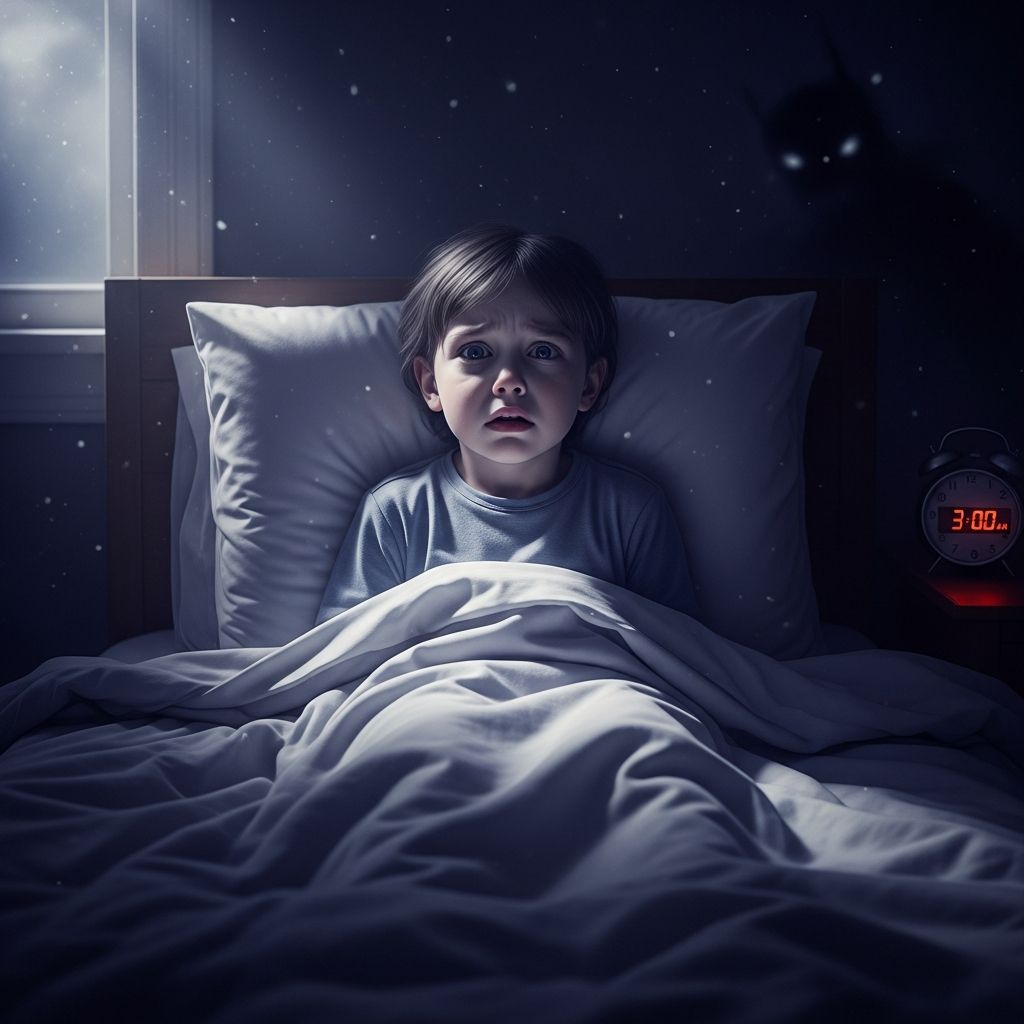
What Are Night Terrors and How Do They Differ From Nightmares?
Night terrors, also called sleep terrors, are episodes of extreme fear or panic that occur during non-rapid eye movement (NREM) sleep, typically during the deepest stages of slumber. Unlike nightmares, which happen during rapid eye movement (REM) sleep and often result in the child waking up and remembering the dream, night terrors occur when the child is partially aroused but not fully awake. During these episodes, a child may scream, thrash around, or appear genuinely distressed, yet they remain largely unaware of their surroundings and may have little to no memory of the event upon waking.
The distinction between these two sleep phenomena is crucial for parents to understand. Nightmares are dreams with frightening content that typically cause the child to wake up, remember the content, and seek comfort from parents. Night terrors, by contrast, involve a child appearing terrified while remaining asleep or in a state between sleep and wakefulness, without conscious awareness of what triggered the episode. Parents often find it difficult to console a child experiencing night terrors because the child cannot articulate what frightened them—because they are not truly conscious of any specific threat.
Understanding the Developmental Timeline of Sleep Disruptions
Sleep disturbances in children evolve as they grow and develop cognitively. Infants and very young toddlers experience different types of sleep disruptions compared to preschoolers and older children. Young infants may experience general sleep restlessness or brief arousals, while toddlers between 18 months and 3 years are more prone to night terrors. These episodes typically peak between ages 2 and 5 years and tend to decrease significantly as children enter school age.
As children mature and their cognitive abilities expand, the nature of their nighttime fears and disturbances changes. Preschool-age children develop more vivid imaginations, which can manifest as fears of monsters or imaginary threats—concerns that may actually interrupt their sleep through nightmares rather than night terrors. By the school-age years, children develop greater capacity for rational thought and reality testing, allowing them to better manage sleep-related anxieties. Understanding these developmental progressions helps parents recognize what is typical for their child’s age and what may warrant professional attention.
Why Night Terrors Happen: Underlying Causes and Triggers
Night terrors result from a partial arousal during the deepest stages of sleep, when the brain is transitioning between different sleep cycles. This partial arousal creates a mismatch between the sleeping and waking brain systems—the child’s body responds to perceived threat while consciousness remains largely offline. Several factors can predispose children to experience night terrors or increase their frequency.
Genetic and Temperamental Factors: Research indicates that some children are born with temperaments that make them more prone to anxiety and sleep disruptions. If parents or other family members experienced night terrors or sleep disorders during childhood, their offspring face increased risk. This genetic component suggests that some children’s nervous systems are simply more reactive or sensitive to arousal during sleep.
Sleep Deprivation and Fatigue: Children who are not getting adequate sleep or maintaining irregular sleep schedules are more susceptible to night terrors. When a child is overtired, the brain may struggle to navigate sleep cycles smoothly, increasing the likelihood of partial arousals that manifest as terrors.
Stress and Environmental Factors: Major life changes, anxiety, or stressful events can contribute to increased frequency of night terrors. Children who have experienced frightening events, witnessed disturbing media, or overheard concerning adult conversations may develop heightened arousal states that make sleep disturbances more likely.
Fever and Illness: Children experiencing fever or acute illness sometimes exhibit night terrors. The elevated body temperature and systemic effects of illness can disrupt normal sleep architecture and increase arousal susceptibility.
Medications and Substances: Certain medications or stimulating substances can influence sleep quality and increase the risk of parasomnia episodes. Parents should discuss sleep changes with their pediatrician if medication adjustments coincide with onset of night terrors.
Recognizing Night Terror Episodes: What Parents Observe
Identifying night terrors involves recognizing specific behavioral patterns that distinguish them from other sleep disturbances. During an episode, parents may observe:
- Sudden onset of intense screaming or shouting, often without clear trigger
- Thrashing, kicking, or violent movements in bed
- Eyes that are open but appear unseeing or unfocused
- Profuse sweating and rapid heart rate
- Apparent inability to recognize or respond to parental presence
- Disorientation if the child partially awakens, with confusion about what happened
- Quick return to deep sleep after the episode subsides, with little or no memory of events
Episodes typically last between 5 and 15 minutes, though they may feel longer to distressed parents. The child usually returns to normal sleep without waking completely or may drift back to sleep with minimal intervention. Upon waking in the morning, children have no recollection of the night terror, which distinguishes it markedly from nightmares, which children remember and discuss with adults.
Health Implications: When Night Terrors Are Concerning
Most children who experience night terrors are entirely healthy and face no long-term physical consequences from the episodes themselves. The sleep disruption occurs during restorative sleep stages, but the overall quantity of sleep often remains adequate because the child returns to sleep relatively quickly. However, when night terrors become frequent or cause significant distress to the child or family, further evaluation may be warranted.
Parents should consider consulting a healthcare provider if:
- Night terrors occur multiple times per week or interfere significantly with family sleep
- Episodes are accompanied by other concerning symptoms such as sleepwalking that risks injury
- The child or family experiences emotional distress that impacts daytime functioning
- Night terrors persist beyond age 8 or develop for the first time in adolescence
- Episodes become more intense or frequent over time rather than naturally decreasing
Effective Strategies for Managing Night Terrors at Home
Maintain Consistent Sleep Schedules: Establishing regular bedtimes and wake times helps regulate the sleep-wake cycle and reduces overall sleep debt. Children who get sufficient sleep experience fewer night terrors. Aim for age-appropriate sleep duration and consistent timing, even on weekends.
Create an Optimal Sleep Environment: Ensure the bedroom is dark, cool, quiet, and free from stimulating devices. Remove potential hazards that could cause injury if the child thrashes or moves during an episode. Consider using nightlights if the child fears darkness, as this differs from the unconscious state during terrors.
Manage Stress and Anxiety: Help children process emotions and concerns through conversation, play, or creative activities. Limit exposure to frightening media, scary stories, or upsetting news before bedtime. Create calming pre-sleep routines that might include gentle music, reading, or quiet time with parents.
During an Episode—Prioritize Safety Over Awakening: Contrary to intuition, attempting to fully wake a child during night terror may prolong confusion and distress. Instead, ensure the child cannot fall from bed or strike furniture. Speak calmly and avoid sudden movements. Most importantly, do not attempt to restrain the child unless necessary to prevent injury. Simply wait for the episode to pass, as it typically resolves on its own within minutes.
Scheduled Awakening Technique: If night terrors occur at predictable times each night, some sleep specialists recommend gently awakening the child 15 to 30 minutes before the typical episode onset. This interruption of the sleep cycle may prevent progression into the deep sleep state where terrors originate. This approach requires parental observation to identify patterns and must be done gently to avoid distressing the child.
Behavioral and Relaxation Approaches: Teaching children age-appropriate relaxation techniques, such as deep breathing, progressive muscle relaxation, or visualization, may reduce overall arousal levels and anxiety. While a child in the midst of a terror cannot consciously employ these techniques, regular practice during waking hours may reduce underlying tension that predisposes to episodes.
When to Seek Professional Evaluation
Although night terrors typically resolve without intervention as children mature, consulting a pediatrician or sleep specialist may be beneficial in specific circumstances. A healthcare provider can rule out underlying sleep disorders such as obstructive sleep apnea, which can both cause arousals and be mistaken for night terrors. Medical evaluation is particularly important if night terrors develop suddenly in a child who previously slept well, occur with extreme frequency, or are accompanied by other symptoms such as significant daytime sleepiness or behavioral changes.
Sleep specialists may recommend a sleep study if the diagnosis is unclear or if terrors involve complex behaviors or significant safety concerns. Cognitive-behavioral therapy or other psychological approaches may benefit older children whose night terrors are closely linked to anxiety or trauma.
The Role of Parental Response and Family Impact
Children are remarkably resilient regarding night terrors, but parents often experience significant emotional impact. Witnessing a child in apparent distress is frightening and exhausting. It is important for parents to understand that night terrors are not dangerous, that the child is not in pain or danger during the episode, and that parental anxiety can inadvertently increase the child’s daytime anxiety, potentially worsening sleep-related issues.
Maintaining calm during episodes, resisting the urge to over-react, and reassuring oneself that the child will pass through this developmental phase helps create a more stable household environment. Parents might benefit from connecting with other families experiencing similar challenges or seeking support from healthcare providers to manage their own stress.
Natural Resolution and Prognosis
Most children naturally outgrow night terrors as their nervous system matures and develops greater regulatory capacity. By school age, the frequency typically decreases significantly, and by adolescence, night terrors are relatively uncommon. The developmental progression of sleep architecture and cognitive abilities appears to naturally resolve the conditions that generate these episodes.
While night terrors themselves generally do not indicate long-term psychological or neurological problems, they sometimes co-occur with or may be exacerbated by anxiety disorders or sleep-related conditions. Identifying and addressing any underlying anxiety or sleep issues may help night terrors resolve more quickly.
Frequently Asked Questions About Night Terrors
Q: Are night terrors dangerous?
A: Night terrors themselves are not physically dangerous to the child’s health or development. However, the thrashing behavior during episodes may lead to injury if the child strikes furniture or falls from bed. Ensuring a safe sleep environment prevents such injuries.
Q: Should I wake my child during a night terror?
A: Full awakening is typically not necessary and may prolong the child’s confusion and distress. Instead, ensure safety and allow the episode to resolve naturally, which usually occurs within minutes. Brief, gentle reassurance without forceful awakening is generally the best approach.
Q: Can stress or anxiety cause night terrors?
A: While stress and anxiety do not directly cause night terrors, they can increase overall arousal levels and may trigger or exacerbate episodes in predisposed children. Managing a child’s stress and creating a calm environment may reduce frequency.
Q: Will my child remember night terrors?
A: Most children have no memory of night terror episodes. Unlike nightmares, which children remember and discuss, terrors occur while the child is not fully conscious and produce little or no recall upon waking.
Q: At what age do night terrors typically start and end?
A: Night terrors most commonly begin between ages 18 months and 5 years, with peak frequency around ages 2 to 3. They typically decrease significantly by school age and are uncommon in adolescence and adulthood.
Q: Can medications help treat night terrors?
A: Medication is rarely necessary for typical childhood night terrors. Pediatricians generally recommend behavioral and environmental approaches first. In severe cases with significant family impact, some doctors may discuss medication options, but this is not standard treatment.
References
- Childhood Fears and Worries — Nemours KidsHealth. 2024. https://kidshealth.org/en/parents/anxiety.html
- Understanding Childhood Fears — Brown University Health. 2024. https://www.brownhealth.org/node/90481
- Childhood fears: What’s common and how can you help? — Children’s Hospital Colorado. 2024. https://www.childrens.com/health-wellness/childhood-fears
- Fears & Phobias in Children: How Parents Can Help — American Academy of Pediatrics HealthyChildren.org. 2024. https://www.healthychildren.org/English/health-issues/conditions/emotional-problems/Pages/Understanding-Childhood-Fears-and-Anxieties.aspx
- Childhood Fears and Phobias — Lurie Children’s Hospital. 2024. https://www.luriechildrens.org/en/blog/childhood-fears-and-phobias/
- Phobias — Boston Children’s Hospital. 2024. https://www.childrenshospital.org/conditions-treatments/phobias