Few things rattle a parent more than hearing their baby suddenly scream in the middle of the night, eyes wide but strangely distant, as if you cannot reach them. Night terrors can make even experienced parents feel helpless, guilty, and more than a little afraid. This guide untangles what night terrors really are, how they affect babies, and what you can practically do to protect your child and your own sanity.
Night Terrors in Babies: A Plain-Language Overview
When a baby has a night terror, they are caught in a strange in-between state: their body is acting as if it is terrified, but their brain is still deeply asleep. Unlike a nightmare, a night terror is not a bad dream your baby will remember later; it is more like a brief glitch in the sleep system that causes an intense physical reaction.
Parents often describe these episodes as “possessed crying” or “screaming with the lights off behind their eyes.” The intensity of the moment does not reflect lasting emotional trauma for the baby, but it can cause enormous emotional wear and tear for the adults who love them.
How Night Terrors Differ From Nightmares
Night terrors and nightmares are both dramatic, but they arise from different parts of sleep and look very different once you know what to watch for. Understanding the difference can stop you from blaming yourself or assuming something is deeply wrong.
| Feature | Night Terror | Nightmare |
|---|---|---|
| When it usually happens | Within the first few hours of sleep, during deep non-dream sleep | Later in the night, during dream (REM) sleep |
| Baby’s awareness | Baby seems awake but is actually still asleep and unreachable | Baby fully wakes up and can usually be comforted |
| Typical behavior | Screaming, thrashing, stiff body, rapid breathing, glassy eyes | Crying, clinging, seeking comfort, clearly aware of caregiver |
| Next-morning memory | No memory of the episode | Older children may recall a scary dream |
| Effect on caregivers | Extremely distressing, feels like you cannot help | Upsetting but usually easier to soothe |
If your baby seems inconsolable, looks through you rather than at you, and settles quickly afterward with no signs of fear the next day, you are likely witnessing a night terror rather than a nightmare.
What a Night Terror Looks Like in a Baby
Because babies cannot tell you what they feel, parents rely on behavior. Night terrors often follow a recognizable pattern, although the intensity and exact details can vary from night to night and child to child.
Common Signs During an Episode
- Sudden, blood-curdling screaming or crying that starts without warning.
- Eyes wide open but unfocused or glassy, as if your baby is looking “through” you.
- Stiff or thrashing limbs, arching the back, or flailing arms.
- Rapid breathing, pounding heartbeat, and sometimes sweating or flushed skin.
- No response to your voice, touch, or usual calming tricks even though the eyes are open.
- A quick return to quiet sleep once the episode passes, with no clinginess or fear afterward.
Episodes can last anywhere from a few seconds to several minutes. To a shaking parent, even ninety seconds can feel like an eternity, so it may help to set a mental timer and remind yourself that the storm usually passes much more quickly than it feels in the moment.
Why Night Terrors Happen: The Sleep System Under Construction
In the first years of life, a baby’s sleep architecture is still under construction. Their brain is learning how to glide smoothly between deep sleep, lighter sleep, and dream sleep. Night terrors are thought to be a kind of rough patch on that glide path.
Factors That May Contribute
Researchers do not fully agree on a single cause, but several patterns appear repeatedly in families who report night terrors:
- Overtiredness: Long, busy days and skipped naps can make deep sleep unusually intense and unstable.
- Stress or change: Big transitions—moving house, starting daycare, a new caregiver, travel—can show up as restless sleep, even in very young babies.
- Illness or fever: When the body is fighting something off, temperature and sleep depth can swing more dramatically.
- Family tendency: Families with histories of sleepwalking or night terrors often see similar patterns in their children.
- Developing nervous system: As the brain matures, it becomes better at coordinating the “on/off” switches of different sleep stages; until then, misfires are more likely.
Blaming yourself or one specific event rarely helps. Night terrors are usually a phase in the maturation of the sleep system rather than proof that something has gone wrong permanently.
How to Respond in the Middle of a Night Terror
Parents’ first instinct is often to wake the baby, pick them up, or talk loudly over the screaming. With night terrors, those strategies can actually prolong the episode or intensify the agitation. The goal is safety and calm containment, not full awakening.
Step-by-Step Approach
- Check for real danger. Quickly scan for choking hazards, twisted limbs, or signs of a medical emergency such as rigid jerking, blue lips, or difficulty breathing.
- Keep your baby physically safe. Gently block rolling toward the edge of the mattress, remove loose blankets from around the face, and ensure they cannot fall from a couch or bed.
- Dim the environment. Keep lights low and noise minimal. Sudden bright light or loud talking can jolt the nervous system and feed the distress.
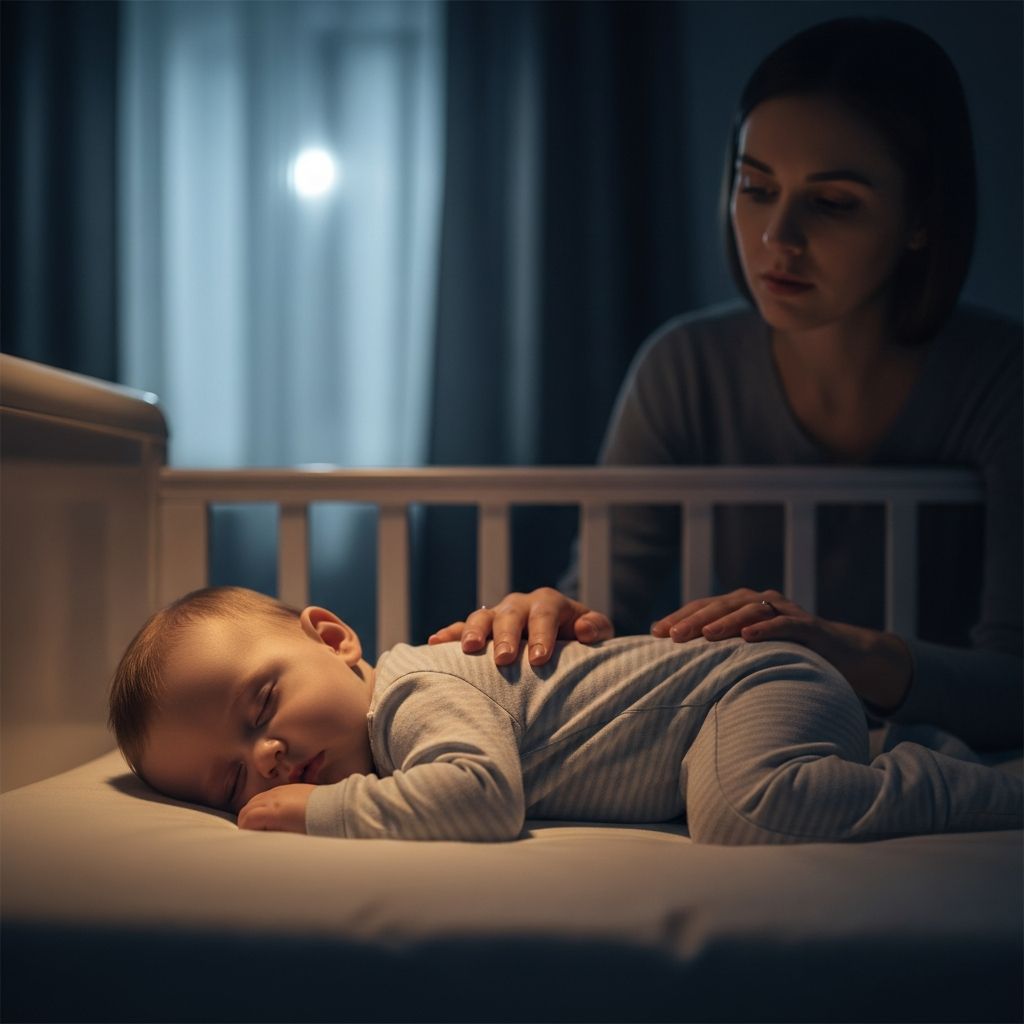
- Offer quiet presence, not stimulation. If your baby tolerates touch, place a steady hand on the chest or back. Hum softly or speak in brief, gentle phrases if you feel the urge to talk.
- Avoid shaking, loud calling, or intense rocking. These actions are well-intentioned but can make the episode last longer because the brain is not truly ready to wake up.
- Let the wave pass. Once the crying eases, many babies relax back into deeper sleep on their own with no need to fully wake them.
If you feel too shaky to stay calm, it is okay to swap out with another adult or set your baby gently down in a safe sleep space and step away for a moment to take a few deep breaths before returning.
Building a Night-Terror-Friendly Sleep Routine
Although you cannot flip a switch to stop night terrors, you can create conditions that make them less likely. Think of this like baby-proofing the sleep schedule and environment rather than trying to control every episode.
Daytime Habits That Help
- Protect naps. An overtired baby is more prone to restless, choppy sleep. Prioritize naps over errands when possible.
- Watch wake windows. Avoid letting your baby stay awake much longer than their typical happy stretch between naps and bedtime.
- Balance stimulation. Plenty of play is healthy, but constant noise, screens, and activity right up until bedtime can rev up the nervous system.
Evening and Bedtime Strategies
- Create a predictable wind-down routine. A short sequence—such as bath, pajamas, feeding, brief cuddles, and a song—signals to the brain that it is time to power down.
- Keep the last hour calm. Save roughhousing, screen time, and loud games for earlier in the day.
- Consider an earlier bedtime. Many babies showing night terrors are actually chronically overtired and benefit from a shift of 15–30 minutes earlier.
- Check comfort basics. Make sure the room is not too hot or cold, clothes are not scratchy, and diapers are not overly tight.
Safety Checklist for Families Dealing With Night Terrors
Because babies in the middle of a night terror may fling their bodies around, safety matters as much as soothing. Taking time to adjust the sleep setup during the day can spare you from panicked scrambling at 2 a.m.
Practical Safety Steps
- Use a firm, flat sleep surface free from loose pillows, stuffed animals, and extra blankets.
- Lower the crib mattress if your baby is pulling up, so thrashing does not turn into climbing or tumbling over the side.
- Remove sharp-cornered furniture close to the sleep area or cover corners with soft guards.
- Keep cords, strings, and monitor wires well away from the crib or bassinet.
- Consider a breathable sleep sack instead of loose blankets to keep legs contained but comfortable.
If your baby sometimes has an episode in a car seat, stroller, or someone else’s home, work to recreate similar safety measures—secure straps, flat surfaces, and supervision—wherever they sleep.
When It’s Time to Call the Pediatrician
Most night terrors are frightening but harmless. That said, there are times when outside input brings clarity and peace of mind. You never have to apologize for asking your child’s doctor about sleep; it is a crucial part of health, not a trivial side issue.
Red-Flag Signs
Reach out to your pediatrician if you notice any of the following:
- Episodes that include stiff jerking, drooling, or unusual eye movements that make you wonder about seizures.
- Snoring, gasping, or pauses in breathing between cries.
- Night terrors happening several times every night for weeks without a break.
- Daytime sleepiness so severe your baby is hard to wake for feeds or play.
- Injuries from falling, hitting the crib, or other unsafe movements during episodes.
When you call, it helps to keep a simple log of when the episodes happen, how long they last, and what you observe. Many providers can reassure you with this information alone, and if needed, they may recommend further evaluation by a sleep specialist or neurologist.
Emotional Impact on Parents: Your Feelings Matter Too
Night terrors do not only happen to babies; they also happen to the adults who sit beside the crib, helplessly listening to screams. The fear that you are missing something serious or somehow causing the problem can be overwhelming.
Normal Reactions You Might Experience
- Surge of panic: Heart racing, shaky hands, feeling like you must act immediately or something terrible will happen.
- Guilt and self-blame: Wondering if the day was too busy, if you missed sleep cues, or if something you ate or did is at fault.
- Resentment and exhaustion: Feeling angry at the situation or at your partner while knowing none of you are the true cause.
Finding ways to care for your own nervous system—short naps, breaks from nighttime duty, talking with trusted friends, or reaching out to a therapist—can help you support your baby from a steadier place. Calm parents do not magically cure night terrors, but they create a safer emotional climate for the whole household.
Frequently Asked Questions About Baby Night Terrors
1. Are night terrors painful for my baby?
Night terrors look painful, but there is no evidence that babies experience them as physical pain or as remembered emotional trauma. The distress is mainly in the observable behavior, not in lasting suffering afterward. Most babies have no sign the next day that anything unusual occurred.
2. Can night terrors damage my baby’s brain or development?
Current understanding suggests that night terrors are a developmental quirk of the sleep system, not a sign of brain injury or permanent damage. Healthy development includes periods of uneven sleep as the brain learns to organize itself, and night terrors tend to fade as this organization improves.
3. Should I wake my baby during a night terror?
Trying to fully wake a baby in the middle of a night terror usually makes the situation more chaotic. Instead, protection and gentle presence are more effective: keep your baby safe, remain nearby, and let the episode run its short course unless your pediatrician has advised otherwise.
4. Will my baby remember these episodes when they are older?
One hallmark of night terrors is that the person experiencing them typically does not remember them later. This applies to babies as well as older children. The vivid, upsetting memories tend to belong to the parents, not the child.
5. Do night terrors mean my baby is anxious or traumatized?
Night terrors alone are not a reliable indicator of underlying trauma or serious anxiety. While stress and big life changes can contribute to restless sleep, many calm, securely attached babies still experience night terrors simply because their sleep systems are maturing.
6. Is there anything I can do to prevent night terrors completely?
There is no guaranteed prevention method, but consistent routines, age-appropriate bedtimes, and attention to illness or overtiredness can lower the odds. Some families find that gently adjusting bedtime or nap schedules reduces the frequency and intensity of episodes over time.
Key Takeaways for Tired Parents
- Night terrors are dramatic but usually harmless sleep disturbances rooted in a developing nervous system.
- Babies experiencing a night terror are not fully awake and do not typically remember the event the next day.
- Your main job during an episode is to ensure physical safety and offer quiet presence, not to “snap” your baby out of it.
- Regular routines, reasonable bedtimes, and attention to illness or stress can make episodes less frequent.
- If anything about your baby’s episodes feels off to you—especially if there are breathing issues, stiff jerking, or daytime changes—consult your pediatrician promptly.
Most importantly, remember that night terrors say nothing about your worth as a parent. You are navigating a demanding, confusing part of early childhood sleep, and seeking information and support is already a sign that your baby is in caring hands.