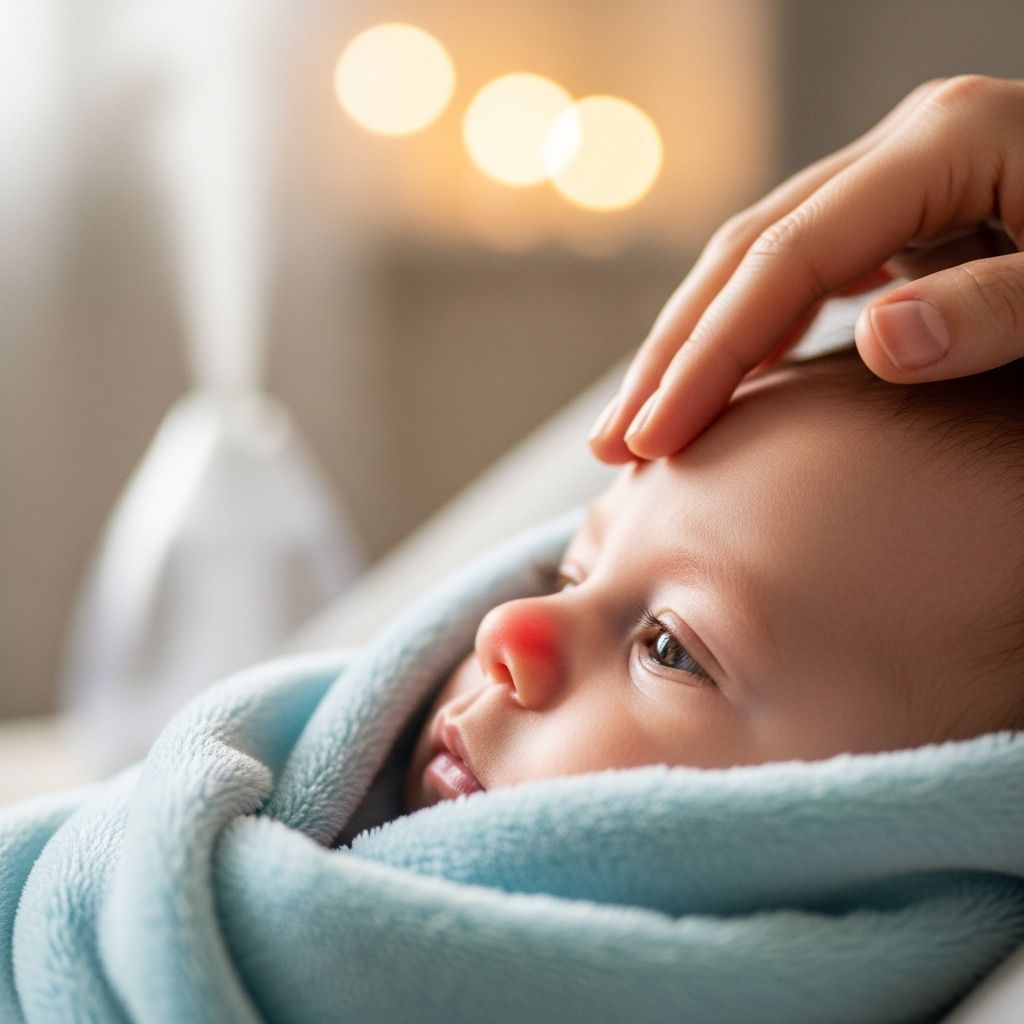
Newborns enter the world with sleep patterns vastly different from adults, characterized by short cycles dominated by active and quiet phases. Over the first year, these evolve into more predictable rhythms supporting growth and development.
Fundamentals of Infant Sleep Cycles
Infant sleep divides into rapid eye movement (REM), or active sleep, and non-REM, or quiet sleep. Newborns allocate nearly equal time to both, spending up to 50% in REM, which aids brain maturation. A typical cycle lasts 40-50 minutes, much shorter than the 90 minutes in adults.
During active sleep, babies exhibit twitching limbs, rapid eye movements beneath closed lids, irregular breathing, and occasional pauses known as periodic breathing, which resolves by mid-year. Quiet sleep features stillness, regular respiration, and deeper rest, making arousal harder.
- Active Sleep Traits: Limb jerks, mouth movements, uneven breaths.
- Quiet Sleep Traits: Minimal motion, steady breathing, harder to wake.
- Cycle Length: 20-50 minutes per burst, repeating frequently.
Daily Sleep Requirements from Birth
Newborns require 14-17 hours of sleep across 24 hours, fragmented into 2-4 hour stretches due to feeding needs. They lack day-night distinction initially, leading to erratic patterns.
Wake windows remain brief: 35-60 minutes for 0-4 weeks, extending to 60-90 minutes by 4-12 weeks. Hunger cues dictate feeds every 2-3 hours, including cluster feeding evenings.
| Age Group | Total Sleep (24h) | Nap Duration | Night Sleep |
|---|---|---|---|
| 0-3 Months | 14-17 hours | 2-3 hours bursts | 8-10 hours, interrupted |
| 3-6 Months | 12-16 hours | 3-4 hours total naps | 9-11 hours |
| 6-12 Months | 11-16 hours | 2-4 hours (2-3 naps) | 10-14 hours |
This table summarizes averages; individual variations occur based on health and temperament.
Month-by-Month Sleep Progression
0-1 Month: Pure Survival Mode
In the first month, expect 12-16 hours total sleep in 30-50 minute cycles. Frequent arousals stem from hunger and immature regulation. Parents often face all-night vigils as babies feed 8-12 times daily.
Tip: Respond promptly to cries; swaddling mimics womb security, easing transitions.
1-3 Months: Emerging Rhythms
By 1-3 months, longer stretches emerge, up to 4-5 hours at night. Total sleep holds at 14-17 hours, but REM proportion dips slightly. Periodic breathing fades.
Wake windows lengthen subtly. Introduce dim lights daytime, dark rooms nights to cue circadian shifts.
3-6 Months: Cycle Maturation
Sleep consolidates: babies mimic adult cycles with NREM stages 1-3 and REM. Night blocks reach 6-8 hours for some, though most wake once.
Naps: 3-4 daily, totaling 3-4 hours. Overtiredness risks increase; watch drowsy signals like yawning, eye-rubbing.
6-12 Months: Predictable Patterns
Total sleep drops to 11-16 hours. Night sleep dominates at 10-14 hours, with 2-3 naps (2-4 hours total). By 9 months, many achieve 10-12 hour nights.
Teething or milestones may disrupt, but routines stabilize. Transition to one nap around 12 months.
Safe Sleep Environments Essentials
Prioritize back-sleeping on firm, bare mattresses in cribs free of pillows, blankets, toys. Room-share sans bed-sharing minimizes SIDS risk.
- Use sleep sacks over blankets.
- Maintain 68-72°F room temperature.
- White noise machines soothe cycle transitions.
Avoid overheating; light clothing suffices. Pacifiers offer comfort without dependency past 6 months.
Building Healthy Sleep Habits
Consistency fosters security. Feed-play-sleep routines prevent sleep associations like nursing to doze.
Daytime Strategy: Expose to natural light, engage in tummy time, limit naps post-4 PM.
Bedtime Ritual: Bath, massage, feed, story—dim lights signal wind-down. Aim for 7 PM bedtime aligning with melatonin rise.
For night wakings under 6 months, feed minimally, minimize stimulation. Post-6 months, encourage self-soothing via pauses before intervening.
Nutrition’s Role in Rest Quality
Full tummies promote longer sleeps. Breastfed infants may wake more due to faster digestion; formula-fed stretch further.
Introduce solids around 6 months to bridge night gaps, but consult pediatricians. Cluster feeding peaks growth spurts (2-3 weeks, 6 weeks, 3 months).
Recognizing Sleep Challenges
Common issues: Short naps (under 30 minutes signal poor transitions), serial awakening (fails cycle links), early risings (overtired prior day).
Solutions: Extend wake windows gradually, blackout curtains, consistent wake-up times. If persistent, rule out reflux or allergies medically.
Frequently Asked Questions
Why does my newborn grunt and squirm during sleep?
Newborns process breaths inefficiently, causing grunts in active sleep. This normalizes by 6 months.
How can I tell if my baby is overtired?
Signs: Hyperactivity, intense crying, averted gaze. Catch cues early within wake windows.
When will my baby sleep through the night?
Most by 3-6 months for 6-8 hours; full 10-12 by 9-12 months. Patience key.
Is it okay to let my baby cry at night?
For newborns, no—meet needs promptly. Post-6 months, brief checks build independence.
Should I wake my sleeping newborn for feeds?
Yes, every 3-4 hours initially to ensure growth, especially pre-term or jaundiced babies.
Long-Term Benefits of Quality Sleep
Consistent rest boosts immunity, cognition, mood regulation. Parents gain recharge time, reducing exhaustion risks.
Track patterns via apps; adjust iteratively. By year one, 11-14 hours total yields thriving toddlers.
Embrace variability—each baby timelines uniquely. Pediatric guidance tailors advice.
References
- Stages of Newborn Sleep — American Academy of Pediatrics (HealthyChildren.org). 2023. https://www.healthychildren.org/English/ages-stages/baby/sleep/Pages/phases-of-sleep.aspx
- Infant Sleep Cycles: How Are They Different From Adults? — Sleep Foundation. 2024-10-15. https://www.sleepfoundation.org/baby-sleep/baby-sleep-cycle
- Typical Sleep Behaviour – Newborn (0-3 months) — Better Health Channel (Victoria.gov.au). 2023. https://www.betterhealth.vic.gov.au/health/healthyliving/typical-sleep-behaviour-nb-0-3-months
- Understanding Baby Sleep Cycles and Phases — Pampers. 2024. https://www.pampers.com/en-us/baby/sleep/article/baby-sleep-cycles
- Newborn sleep: what to expect — Raising Children Network (Australian Government-funded). 2024. https://raisingchildren.net.au/newborns/sleep/understanding-sleep/newborn-sleep
- Baby sleep patterns by age — Pregnancy Birth and Baby (Australian Government). 2024. https://www.pregnancybirthbaby.org.au/sleep-patterns-for-babies
- Newborn Sleep Schedule — Taking Cara Babies. 2024. https://www.takingcarababies.com/blogs/sleep-schedules/newborn-sleep-schedule