Preparing for Your Newborn: The Essentials You Can’t Do Without
Welcoming a newborn into your home is an exciting milestone, but it can also feel overwhelming. With so many products and recommendations, it’s important to focus on what truly matters for your baby’s first weeks. This guide outlines the essential items every new parent should have, organized by category for easy reference. Each section explains why these items are important and how they support your baby’s health, comfort, and safety.
Feeding Essentials
Whether you plan to breastfeed or bottle-feed, having the right supplies makes feeding easier and more comfortable for both you and your baby.
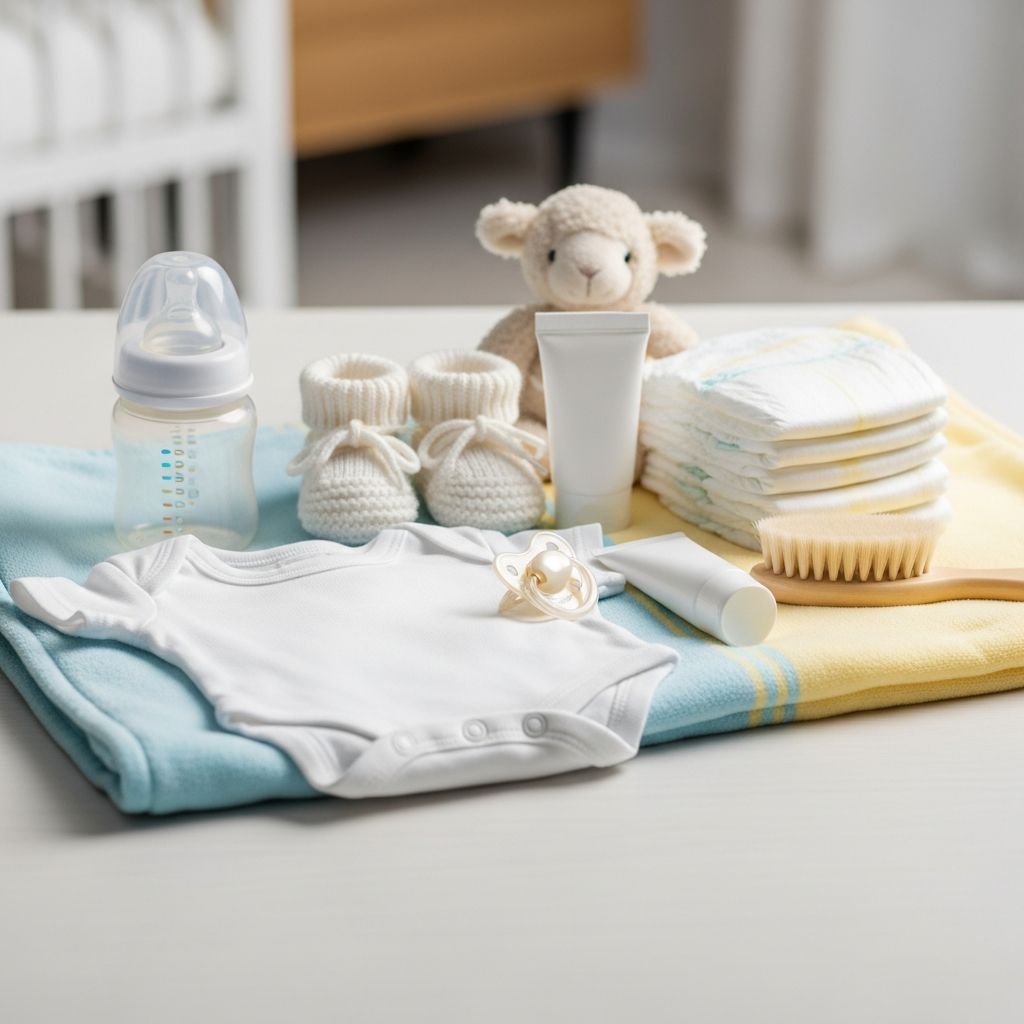
- Bottles and nipples: If you’re bottle-feeding, choose bottles with slow-flow nipples designed for newborns. Have at least 6–8 bottles on hand, and consider a bottle brush for cleaning .
- Breast pump and accessories: For breastfeeding parents, a reliable breast pump, milk storage bags, and nursing pads are essential. Nipple cream can help prevent soreness .
- Burp cloths and bibs: Keep a supply of burp cloths (6–8) and bibs (4–6) to manage spit-up and messy feedings .
- Formula (if needed): If you’re not exclusively breastfeeding, stock up on a gentle newborn formula and a sterilizer for bottles and pump parts .
Safe Sleep Setup
A safe sleep environment is crucial for your newborn’s health and well-being. The American Academy of Pediatrics recommends a firm crib mattress with a fitted sheet and no loose bedding or toys.
- Crib or bassinet: Choose a crib or bassinet that meets current safety standards. A firm mattress and fitted sheets (3–4) are essential .
- Swaddles or sleep sacks: Swaddles or sleep sacks help keep your baby warm and secure, reducing the risk of SIDS. Have 2–3 on hand for rotation .
- Blackout curtains: These help create a calm, dark environment for better sleep .
- Monitor: An audio or video monitor allows you to keep an eye on your baby while they sleep .
Diapering Must-Haves
Newborns go through many diapers each day, so having the right supplies ensures quick, clean changes.
- Diapers: Stock up on newborn-sized diapers (2–3 packs) as babies can use 10–12 per day .
- Gentle wipes: Choose wipes with minimal ingredients, especially for sensitive skin. Unbleached cotton wipes are a good option .
- Changing pad: A waterproof changing pad makes diaper changes easier and protects surfaces .
- Diaper rash cream: Keep a tube of gentle, pediatrician-approved cream to prevent and treat rashes .
- Diaper bag: A waterproof, washable diaper bag is ideal for outings and travel .
Comfortable Clothing
Soft, breathable clothing keeps your newborn comfortable and makes dressing easier.
- Onesies and sleepers: Have 8–10 onesies and 6–8 sleepers in newborn and 0–3 month sizes. Cotton is best for sensitive skin .
- Socks and hats: Newborns lose heat quickly, so keep a few pairs of socks and 2–3 hats on hand .
- Mittens: These prevent scratching and are especially useful in winter .
- Extra outfits: Pack a few extra outfits for travel and unexpected messes .
Health and Safety Gear
Having basic health and safety items on hand helps you respond to common newborn needs.
- Thermometer: A digital thermometer is essential for monitoring your baby’s temperature .
- Nail clippers or emery board: Keep your baby’s nails short to prevent scratching .
- Nasal aspirator: This helps clear your baby’s nose if they’re congested .
- Humidifier: A humidifier can ease breathing, especially in dry climates .
- Baby-proofing supplies: Outlet covers and cabinet locks help keep your home safe as your baby grows .
On-the-Go Essentials
Whether you’re running errands or traveling, having the right gear makes outings easier.
- Car seat: A properly installed infant car seat is a must for safe travel .
- Stroller: Choose a stroller that allows your newborn to lie flat, especially for the first few months .
- Diaper bag: Fill your diaper bag with diapers, wipes, changing pad, extra clothes, and a blanket .
- Carrier or wrap: A soft carrier or wrap is convenient for hands-free carrying .
Additional Helpful Items
While not strictly essential, these items can make life easier for new parents.
- Rocking or glider chair: A comfortable chair is helpful for feeding and soothing your baby .
- Feeding pillow: This supports your arms during breastfeeding or bottle-feeding .
- Activity mat: An activity mat provides a safe space for tummy time and play .
- Bath supplies: A baby tub, gentle soap, washcloths, and hooded towels make bath time easier .
FAQs: Newborn Essentials
| Question | Answer |
|---|---|
| How many diapers should I buy for a newborn? | Stock up on 2–3 packs of newborn diapers, as babies use 10–12 per day . |
| Do I need a breast pump if I’m breastfeeding? | A breast pump is helpful for storing milk and managing supply, but not strictly necessary for all parents . |
| What size clothes should I buy for a newborn? | Buy mostly 0–3 month sizes, as many babies outgrow newborn sizes quickly . |
| Is a humidifier necessary for a newborn? | A humidifier can help with congestion and dry air, but it’s not essential for every home . |
| How many burp cloths do I need? | Have at least 6–8 burp cloths for daily use . |
Preparing for your newborn doesn’t have to be complicated. Focus on the essentials that support feeding, sleeping, diapering, and safety, and add other items as your needs become clearer. With this guide, you’ll be ready to welcome your baby with confidence and peace of mind.