Neurofibromatosis type 1 (NF1) is a common genetic condition that affects the skin, nerves, and sometimes bones and learning. It can be frightening to hear this diagnosis for the first time, but many children with NF1 grow up to lead active, fulfilling lives with the right support and medical follow-up.
This guide explains NF1 in everyday language so you can understand what is happening in your child’s body, what to expect over time, and how to partner with your child’s care team.
What Is Neurofibromatosis Type 1?
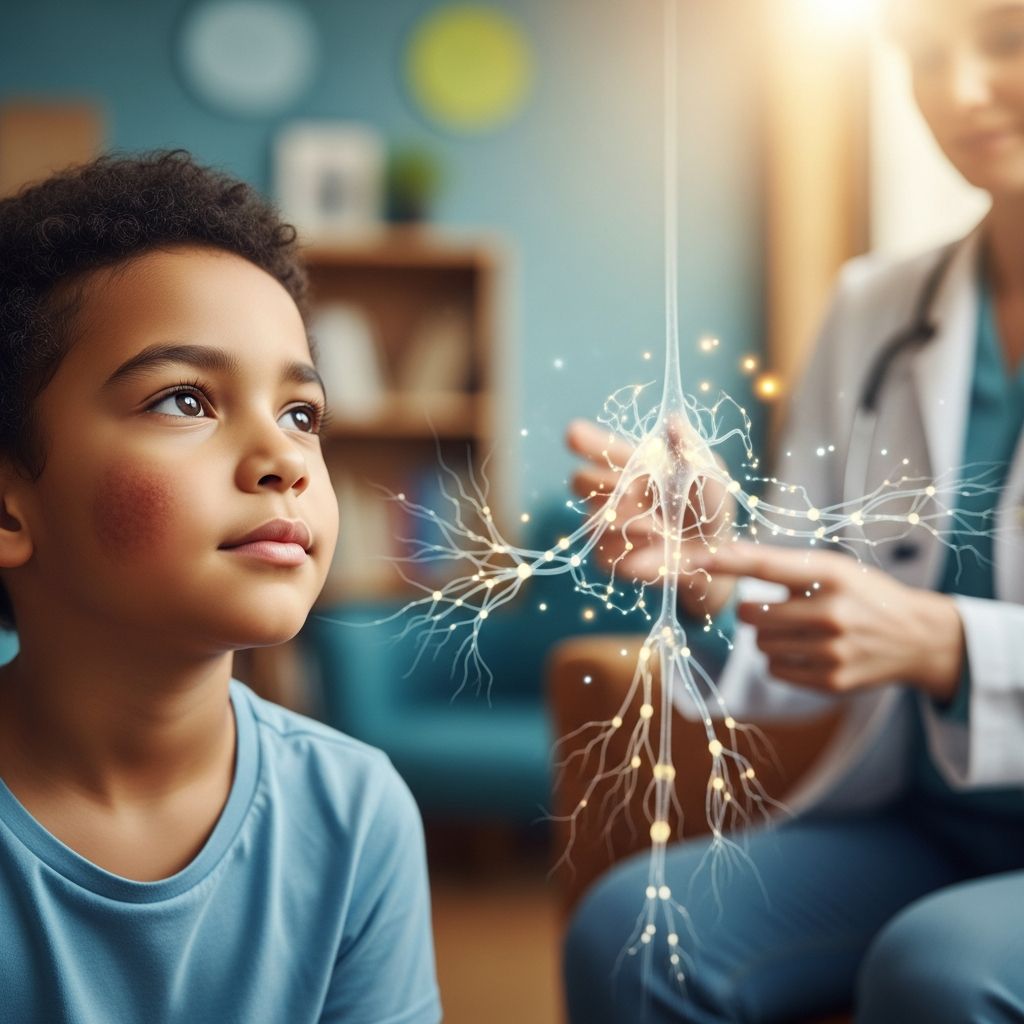
Neurofibromatosis type 1 is a genetic disorder that mostly affects the skin and nervous system. Children with NF1 are born with a change (variant) in a gene called the NF1 gene, which normally helps control how cells grow. When this gene does not work as it should, certain cells can grow in unusual ways, leading to skin spots, benign (noncancerous) tumors on or under the skin, and other features.
NF1 is considered a lifelong condition, but the signs and symptoms can vary widely even within the same family. Some people have very mild features, while others develop more complex medical issues that need closer monitoring.
How Common Is NF1?
- NF1 affects about 1 in 3,000 people worldwide, making it one of the most common genetic disorders affecting the nervous system.
- It affects children of all races and genders.
- Signs usually begin in childhood and are almost always present by around age 10.
NF1 vs. Other Types of Neurofibromatosis
There are several related conditions under the umbrella term “neurofibromatosis”:
| Condition | Main Features | Typical Age of Onset |
|---|---|---|
| NF1 | Skin spots (café-au-lait), freckles in skin folds, benign nerve tumors (neurofibromas), learning issues, bone changes | Mostly childhood; signs often appear before age 10 |
| NF2-related schwannomatosis | Tumors on nerves that control hearing and balance (vestibular schwannomas), hearing loss, balance problems | Often late teens or young adulthood |
| Other schwannomatosis types | Multiple schwannomas (nerve sheath tumors), often pain; usually fewer skin signs | Usually adulthood |
This article focuses specifically on NF1 in children.
Why Does NF1 Happen?
NF1 is caused by a change in the NF1 gene on chromosome 17. This gene normally makes a protein called neurofibromin, which helps keep cell growth under control. When the gene does not work properly, cells can grow and divide more than they should, especially in nerves and skin.
Is NF1 Inherited?
- NF1 follows an autosomal dominant inheritance pattern.
- If a parent has NF1, each child has a 50% chance of inheriting the condition.
- About half of all NF1 cases occur because of a new (spontaneous) gene change in a child with no family history.
Once someone has NF1, they can pass it on to their children, even if their own symptoms are mild.
Common Signs and Symptoms in Children
NF1 affects each child differently, but doctors look for a combination of characteristic signs that tend to appear over time.
Skin Changes
Skin findings are often the earliest and most visible signs of NF1.
- Café-au-lait spots: Flat, light to medium brown patches on the skin, usually present in early childhood.
- Freckles in skin folds: Small clusters of freckles in places like the armpits or groin.
- Neurofibromas: Soft, benign lumps on or just under the skin that tend to appear later in childhood, the teen years, or adulthood.
These spots and lumps are not contagious, but they may affect how a child feels about their appearance as they grow older.
Eye Findings
- Lisch nodules: Tiny, benign bumps on the colored part of the eye (iris). They usually do not affect vision and are often found on eye exams.
- Optic pathway glioma: A benign tumor along the nerve that connects the eye to the brain (optic nerve), which can sometimes affect vision or hormone function.
Bone and Growth Differences
- Shorter height than peers of the same age.
- Curving of the spine (scoliosis) that may get worse as a child grows.
- Abnormal shaping or thinning of bones, especially in the lower legs, which can increase fracture risk in some children.
- Larger head size compared with other children, often due to increased brain volume.
Learning and Behavior
NF1 does not affect intelligence in the same way for every child, but learning and attention challenges are common.
- Specific learning disabilities, such as difficulty with reading, writing, or math.
- Attention-deficit/hyperactivity disorder (ADHD) symptoms, including trouble focusing or sitting still.
- Coordination and motor skills delays, such as being slower to crawl, walk, or use fine hand movements compared with peers.
- Speech and language delays in some children.
With early recognition and school-based support, many children with NF1 can do well academically and socially.
Other Possible Health Issues
- Headaches, including migraine-type headaches in some children.
- High blood pressure due to blood vessel changes in a small number of patients.
- Benign or, less commonly, malignant tumors along nerves elsewhere in the body.
Serious complications are less common in childhood but are the reason regular follow-up is so important.
How NF1 Is Diagnosed
NF1 is usually diagnosed by a pediatrician, geneticist, or neurologist using a set of clinical criteria based on physical features and family history.
Clinical Evaluation
During an evaluation, the doctor may:
- Count and measure café-au-lait spots and look for freckling in skin folds.
- Check for neurofibromas or other lumps on the skin.
- Review your child’s growth, bone development, and spine alignment.
- Ask about headaches, vision changes, or learning concerns.
- Take a detailed family history to see if a parent or sibling also has NF1 signs.
Genetic Testing
Genetic testing can look for changes in the NF1 gene and may be recommended when:
- The diagnosis is uncertain based on physical signs.
- Your child is very young and has only a few features so far.
- Parents are considering future pregnancies and want more information about recurrence risk.
Genetic testing can confirm NF1, but some families choose not to test right away. Your care team can discuss the benefits and limits of testing in your situation.
Monitoring and Treatment
There is currently no cure that can correct the NF1 gene change, but many symptoms and complications can be treated or managed. The focus of care is on regular monitoring and addressing problems early.
Regular Checkups
Children with NF1 usually benefit from:
- Yearly visits with a clinician familiar with NF1 to track growth, skin findings, blood pressure, and development.
- Regular eye exams by a pediatric ophthalmologist to watch for changes in vision or signs of an optic pathway glioma.
- Periodic checks of the spine and bones, especially during growth spurts.
Managing Skin Tumors and Other Growths
- Small neurofibromas that cause irritation, pain, or cosmetic concern can sometimes be removed surgically.
- Larger or deeper tumors may require imaging tests (such as MRI) and, in some cases, surgery or other targeted treatments in specialized centers.
- A sudden increase in size, pain, or firmness of a neurofibroma should be evaluated promptly to rule out more serious change.
Support for Learning and Behavior
Because learning and attention differences are common, early support can make a meaningful difference.
- Neuropsychological testing to identify specific strengths and weaknesses.
- Individualized Education Programs (IEPs) or 504 plans at school, when needed.
- Behavioral therapy, occupational therapy, or speech therapy.
- Medication for ADHD when recommended by your child’s clinician.
When to Call the Doctor Urgently
Contact your child’s doctor right away or seek urgent care if your child with NF1 has any of the following:
- Sudden or severe headache, especially with vomiting or behavior change.
- Vision changes, such as blurred or double vision.
- New weakness, numbness, or trouble with balance.
- A neurofibroma that grows rapidly, becomes very painful, or feels much firmer than before.
- Unexplained, persistent high blood pressure readings (in older children and teens).
Living Day to Day With NF1
NF1 is only one part of who your child is. Many children with NF1 go to regular schools, play sports, make friends, and build careers as adults. The goal is to help your child stay as healthy and confident as possible.
Helping Your Child Emotionally
- Use simple, honest language to explain the condition: that NF1 is something they were born with and it is not anyone’s fault.
- Prepare your child for medical visits by explaining what will happen.
- Encourage open questions about body changes or worries about appearance.
- Ask your doctor about counseling or support groups if your child feels sad, anxious, or different from peers.
School and Social Life
- Share information (with your child’s permission) with teachers and school nurses so they understand NF1 and any learning or health needs.
- Address teasing or bullying early; ask the school to help if needed.
- Focus on your child’s strengths and interests, such as art, music, sports, or hobbies that build confidence.
Supporting the Rest of the Family
- Brothers and sisters may worry or feel left out; include them in age-appropriate conversations.
- Parents may want to meet with a genetic counselor to discuss family planning and testing options.
- Consider parent support networks for NF, which can provide community, shared experience, and practical tips.
Long-Term Outlook
The course of NF1 can be hard to predict in any one child. Some will have mainly skin spots and mild learning issues, while others may develop more complex medical problems.
Overall:
- Many people with NF1 have a near-normal life expectancy, especially when they receive appropriate monitoring and treatment for complications.
- Serious tumors or major bone problems affect only a subset of individuals, but they require care from experienced specialists when they occur.
- Research is ongoing to better understand NF1 and develop targeted treatments; families may choose to ask about clinical trials in specialized centers.
Frequently Asked Questions (FAQs)
Did I do something during pregnancy to cause my child’s NF1?
No. NF1 is caused by a change in the NF1 gene and is not the result of anything you did or did not do during pregnancy. In about half of cases, the change arises for the first time in the child, without any prior family history.
Will my child’s café-au-lait spots or neurofibromas go away?
Café-au-lait spots usually remain throughout life and may increase in number as a child grows, but they are harmless themselves. Neurofibromas may appear gradually over time. Some can be removed for comfort or cosmetic reasons, but new ones may still develop.
Can NF1 turn into cancer?
Most tumors in NF1 are benign. However, a small percentage of people with NF1 develop certain cancers, often from deeper nerve tumors. This is why regular follow-up and prompt evaluation of sudden changes in tumors or new neurological symptoms are so important.
Should my other children be tested?
If one parent has NF1, each child has a 50% chance of inheriting the gene change. A genetics professional can discuss whether clinical exams, genetic testing, or both are appropriate for siblings, depending on their signs, age, and your family’s preferences.
Can my child with NF1 play sports and be active?
In many cases, yes. Most children with NF1 can participate in regular physical activities, though some may need adjustments if they have bone problems, significant scoliosis, or vision or coordination challenges. Your child’s care team can advise on any limits or precautions.
References
- Understanding NF — Children’s Tumor Foundation. 2023-05-01. https://www.ctf.org/about-nf/
- Neurofibromatosis 1 — Cincinnati Children’s Hospital Medical Center. 2022-11-10. https://www.cincinnatichildrens.org/health/n/neurofibromatosis
- Neurofibromatosis type 1 – Symptoms and causes — Mayo Clinic. 2024-02-02. https://www.mayoclinic.org/diseases-conditions/neurofibromatosis-type-1/symptoms-causes/syc-20350490
- Neurofibromatosis type 1 (NF1) — NHS. 2023-03-15. https://www.nhs.uk/conditions/neurofibromatosis-type-1/
- Pediatric Neurofibromatosis Type 1 (NF1) — UChicago Medicine Comer Children’s Hospital. 2022-08-19. https://www.uchicagomedicine.org/comer/conditions-services/pediatric-neurology-neurosurgery/conditions-services/neurofibromatosis/nf-1
- Neurofibromatosis (NF) — Seattle Children’s Hospital. 2023-06-21. https://www.seattlechildrens.org/conditions/neurofibromatosis/
- Kids Health Info: Neurofibromatosis type 1 (NF1) — The Royal Children’s Hospital Melbourne. 2021-09-01. https://www.rch.org.au/kidsinfo/fact_sheets/Neurofibromatosis/