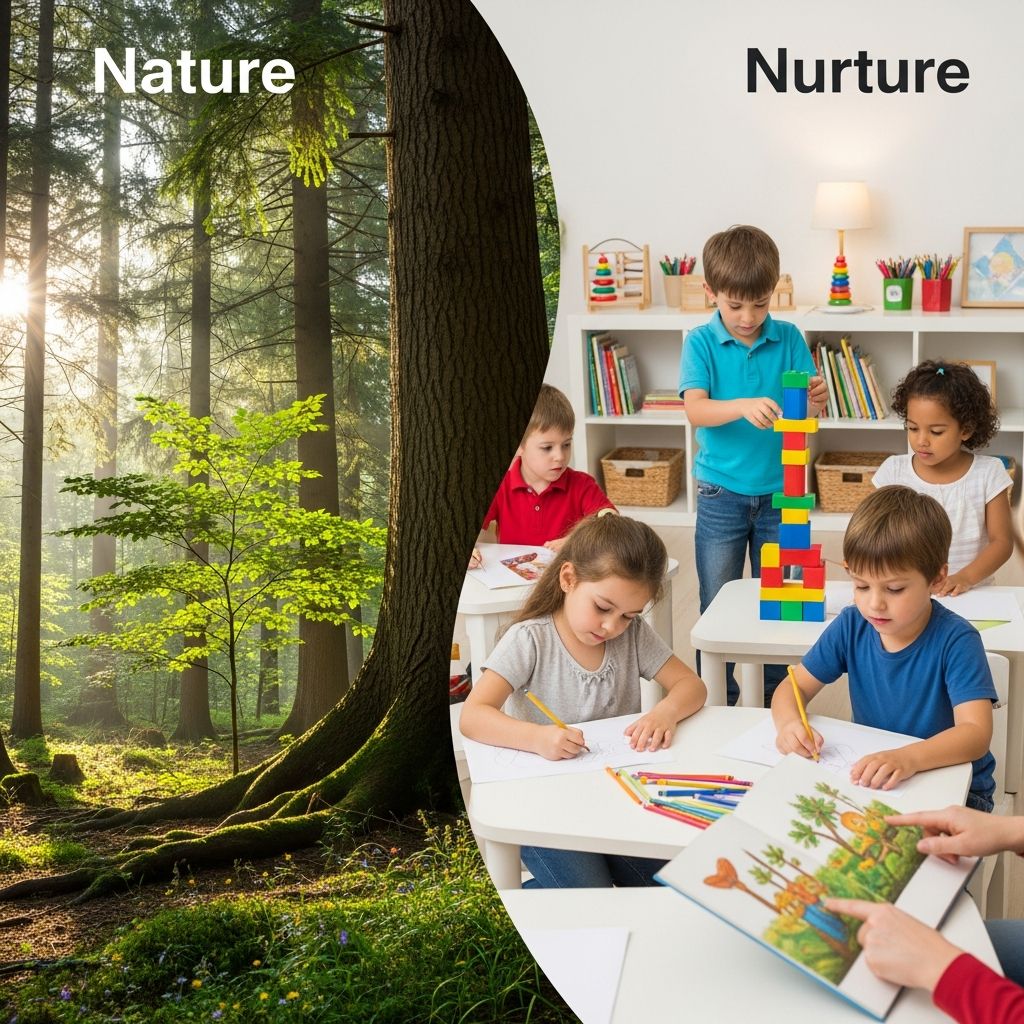
The longstanding discussion on whether a child’s traits stem primarily from inherited genetics or surrounding influences continues to captivate parents, educators, and scientists alike. Modern research reveals that both biological inheritance and life experiences collaborate intricately to mold a child’s path.
Defining the Core Concepts
Nature encompasses all genetic and hereditary elements that form a child’s foundational blueprint, including physical features, predispositions to certain behaviors, and physiological responses. These are passed down from parents via DNA, influencing everything from eye color to potential temperament tendencies.
Nurture, conversely, involves the external world: family dynamics, cultural norms, educational opportunities, nutrition, and social interactions. These factors can amplify, suppress, or redirect genetic potentials throughout developmental stages.
Historically, thinkers like empiricists championed nurture as the sole architect of personality, arguing that sensory experiences alone craft the mind. Nativists, however, insisted on innate structures dictating development. Today’s consensus leans toward an interactive model where neither dominates unilaterally.
The Interplay: Beyond Opposition
Contemporary science, particularly behavioral genetics, demonstrates that most traits arise from polygenic inheritance—countless genes each contributing subtly, modulated by environment. For instance, while genetics might predispose a child to higher intelligence, enriching surroundings like stimulating toys and reading can unlock that potential.
Epigenetics further bridges the divide, showing how experiences alter gene expression without changing DNA. Stressful early environments might ‘silence’ genes for resilience, while supportive ones activate adaptive pathways. This bidirectional dynamic means a child’s nature influences the nurture they receive—e.g., a naturally sociable infant elicits more interactions.
- Genes set the stage but do not dictate the script.
- Environments provide the props and cues for performance.
- Their transaction over time yields unique outcomes.
Biological Foundations of Nature
Genetic influences manifest early. Newborn reflexes like grasping or rooting are hardwired, as are milestones such as first steps, though timing varies genetically. Twin studies, especially identical ones reared apart, reveal striking similarities in IQ (heritability around 50-80%) and personality traits like extraversion.
Neurotransmitters and genome sequencing underpin nature’s role. Variations in serotonin-related genes can affect mood regulation, potentially increasing anxiety risk if unmanaged. However, these are not deterministic; they represent susceptibilities.
| Trait | Heritability Estimate | Source Insight |
|---|---|---|
| Intelligence | 50-80% | Strong genetic base, amplified by education |
| Personality | 40-60% | Traits like openness show polygenic effects |
| Aggression | 30-50% | Moderated by parenting styles |
Environmental Forces in Nurture
From infancy, surroundings profoundly shape growth. Secure attachments with caregivers foster emotional security, enhancing brain areas for empathy. Conversely, neglect or toxins like lead exposure impair cognitive function.
Socioeconomic status exemplifies nurture’s power: children in resource-rich homes access better nutrition and schooling, boosting outcomes. Cultural practices influence language acquisition—bilingual homes accelerate cognitive flexibility.
Non-shared environments (unique experiences differing even among siblings) often outweigh shared ones post-infancy, explaining why brothers diverge despite identical upbringings.
Critical Periods and Lasting Impacts
Developmental windows heighten nurture’s leverage. In early childhood, synaptic pruning refines neural circuits based on stimulation; inadequate input risks permanent gaps. Language blooms between 18-24 months, where exposure determines fluency.
Adversity’s echoes persist: chronic stress elevates cortisol, altering brain architecture and heightening mental health vulnerabilities. Yet, resilience-building interventions, like quality preschool, can recalibrate trajectories.
Real-World Examples from Research
Identical twins separated at birth often share IQ levels and habits, underscoring nature, but diverge in specifics shaped by locales—one urban twin might excel athletically from access to sports, another artistically via arts programs.
The Bobo doll experiments illustrated learned aggression: children mimicked adult violence, nurture overriding innate pacification. Similarly, Romanian orphanage studies showed deprived kids lagging developmentally, but foster care placements spurred catch-up, highlighting plasticity.
Parental Strategies for Optimal Balance
Parents can’t alter genes but can optimize environments. Provide diverse stimuli: read daily to build vocabulary, encourage play for social skills, model calm to teach regulation.
- Observe your child’s natural inclinations—extroverts thrive in groups, introverts in quiet pursuits.
- Foster secure bonds through responsiveness.
- Mitigate risks: safe housing, balanced diet, limited screen time.
- Seek early interventions for delays.
Gene-environment fit maximizes thriving. A high-energy child’s unstructured play nurtures focus better than rigid routines.
Implications for Education and Policy
Schools should personalize learning, blending genetic potentials with tailored support. Policies promoting universal preschool address nurture gaps, equalizing starts.
Public health campaigns targeting toxins underscore nurture’s preventives. Understanding interactions informs ethical adoption and foster care, prioritizing stability.
FAQs
Does nature or nurture matter more for intelligence?
Both contribute; genetics set a range (50-80% heritability), but enriched environments realize it fully.
Can bad parenting override good genes?
Extreme neglect can hinder potentials, but positive interventions often restore paths, per epigenetic findings.
How do twins prove the debate?
Identical twins show genetic sway in similarities despite different upbringings, yet differences highlight nurture.
Is personality fixed at birth?
No, it’s 40-60% heritable but molded lifelong by experiences.
What role does culture play?
Culture, a nurture pillar, shapes values, language, and behaviors uniquely across societies.
References
- Nature vs. Nurture Child Development — Maryville University Online. 2023. https://online.maryville.edu/blog/nature-vs-nurture-child-development/
- Exploring The Nature Vs. Nurture Child Development Debate — BetterHelp. 2024. https://www.betterhelp.com/advice/parenting/how-does-nature-vs-nurture-affect-your-child/
- Nurture the nature — National Center for Biotechnology Information (PMC). 2017-10-25. https://pmc.ncbi.nlm.nih.gov/articles/PMC5659093/
- The Nature-Nurture Debate and Public Policy — National Center for Biotechnology Information (PMC). 2009. https://pmc.ncbi.nlm.nih.gov/articles/PMC2790282/
- Nature vs. Nurture Debate In Psychology — Simply Psychology. 2024. https://www.simplypsychology.org/naturevsnurture.html