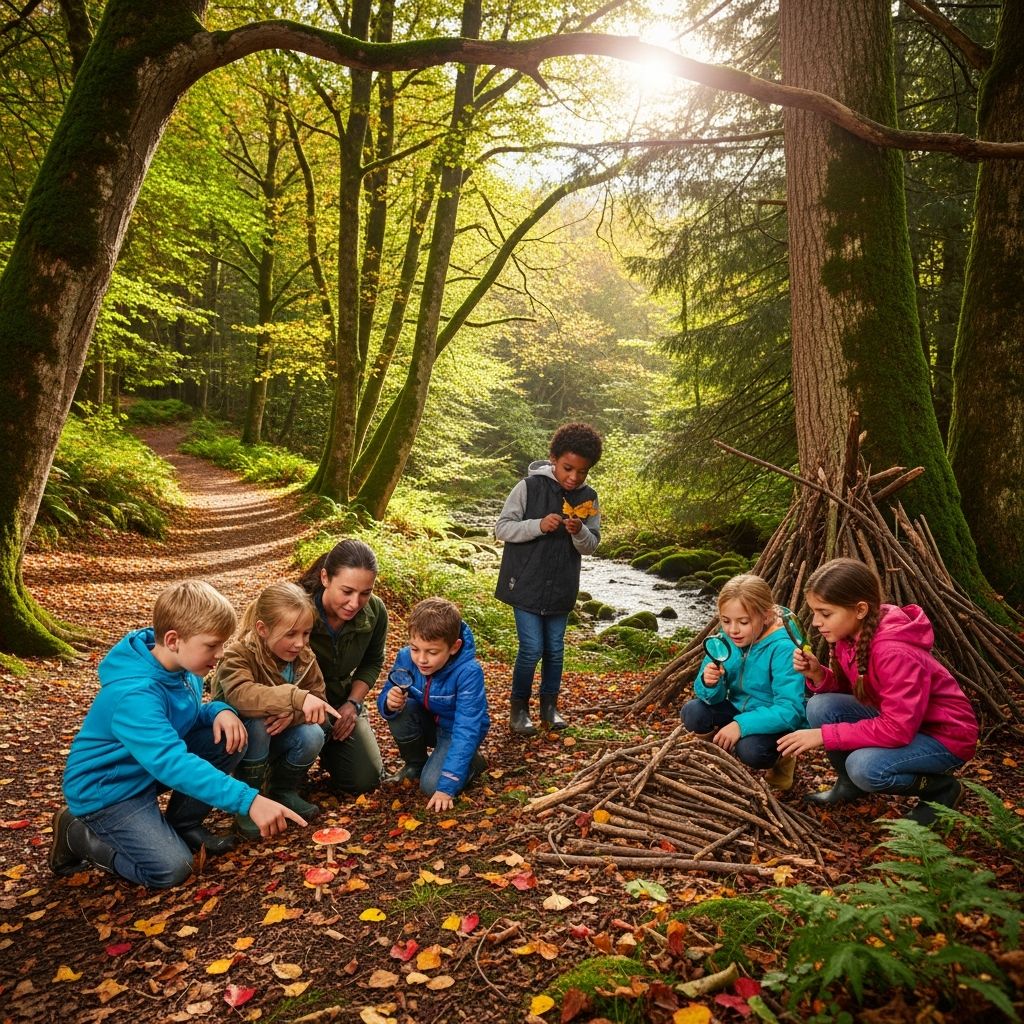
Imagine a classroom without walls, where lessons unfold amid rustling leaves, babbling streams, and towering trees. Nature immersion schools, often called forest kindergartens or forest schools, represent a growing educational movement that prioritizes outdoor, child-led exploration. These programs shift traditional learning paradigms by embedding education deeply within natural settings, fostering holistic child development from an early age. Rooted in Scandinavian traditions, they have gained traction worldwide, offering children regular, immersive experiences in woodlands and wild spaces.
Defining Nature Immersion Education
Nature immersion schools emphasize prolonged, repeated exposure to outdoor environments as the core of the curriculum. Unlike conventional preschools with occasional field trips, these programs conduct most activities outside, rain or shine. Children aged 3 to 7 typically participate in sessions lasting several hours, blending structured guidance with free play. Educators act as facilitators, encouraging discovery rather than direct instruction. This approach draws from philosophies that view nature as the ultimate teacher, promoting self-directed learning through sensory engagement and risk-taking in safe bounds.
Key principles include seasonality—adapting activities to weather and natural cycles—and child-centered progression, where skills build organically. For instance, building a simple stick fort might teach engineering basics, teamwork, and perseverance without formal lessons. Programs often incorporate local ecosystems, teaching children about native plants, insects, and wildlife through direct interaction.
Physical Development Through Active Exploration
- Enhanced Motor Skills: Navigating uneven terrain, climbing logs, and balancing on rocks sharpen gross motor abilities. Youngsters develop agility, strength, and coordination far beyond indoor play.
- Boosted Fitness and Immunity: Daily movement combats sedentary lifestyles, reducing obesity risks while exposing children to microbes that strengthen immune responses.
- Endurance Building: Extended outdoor sessions promote cardiovascular health and stamina, preparing bodies for lifelong activity.
Research highlights how these environments encourage vigorous play, leading to healthier physiques. Children in such settings exhibit superior motor proficiency, like mastering rock-hopping early on, which builds confidence in physical challenges.
Cognitive Growth in Natural Classrooms
Outdoor settings ignite curiosity, turning the world into a living laboratory. Children observe ant colonies, track weather patterns, or experiment with natural materials, fostering critical thinking. Problem-solving emerges naturally—deciding how to cross a muddy stream or construct a leaf boat hones logical reasoning.
| Indoor Learning | Nature Immersion Learning |
|---|---|
| Structured desks, limited sensory input | Dynamic landscapes, multi-sensory stimulation |
| Abstract concepts via books | Concrete experiences, e.g., planting seeds to learn growth cycles |
| Short attention spans | Prolonged focus through self-directed inquiry |
Studies confirm nature play enhances concentration, memory, and academic readiness. Participants in forest programs show improved knowledge of local ecology and heightened awareness of environmental affordances.
Social and Emotional Resilience Forged in the Wild
Group dynamics thrive in nature’s unstructured arena. Collaborative tasks, like group shelter-building, teach negotiation, empathy, and conflict resolution. Fewer conflicts arise due to ample space, reducing overstimulation common in crowded indoors.
- Emotional Regulation: Nature’s calming influence lowers stress, aiding self-control and mindfulness.
- Confidence Boost: Overcoming fears, such as touching slimy creatures, builds self-efficacy.
- Empathy Development: Caring for natural elements extends to peers, nurturing prosocial behaviors.
Evidence points to reduced infections and behavioral issues, with children forming deeper bonds through shared adventures.
Fostering Creativity and Imagination
Boundless natural materials—twigs, stones, mud—spark inventive play. Role-playing as explorers or fairies evolves into complex narratives, unhindered by toy limitations. This freedom cultivates divergent thinking, essential for innovation.
Research links nature-based activities to superior creative problem-solving. Children replicate outdoor inventions at home, extending learning beyond school hours.
Environmental Stewardship from Early Years
Daily immersion cultivates biophilia—an innate love for nature. Learning wildlife habitats or plant uses instills respect and responsibility. Children become advocates, picking up litter or protecting habitats instinctively.
Long-term, this seeds lifelong conservation habits, countering nature-deficit disorders.
Implementing Nature Immersion at Home
Parents can replicate benefits without full programs:
- Schedule weekly woodland walks, encouraging free exploration.
- Create backyard nature nooks with logs, rocks, and wildflowers.
- Embrace mess—mud kitchens foster sensory play.
- Journal observations to build reflection skills.
- Address safety fears through education and gradual exposure.
Overcoming barriers like weather or urban constraints involves community partnerships or school advocacy.
Global Perspectives and Program Variations
Scandinavian models pioneered rain-or-shine attendance, influencing U.S., U.K., and beyond. Some integrate hybrid indoor-outdoor days; others are fully wild. Certification bodies ensure trained facilitators manage risks effectively.
Challenges and Practical Considerations
- Weather Adaptation: Layered clothing and seasonal activities keep comfort high.
- Safety Protocols: Risk-benefit assessments allow calculated adventures.
- Parental Buy-In: Workshops demonstrate benefits to ease concerns.
- Accessibility: Urban green spaces suffice for starters.
Frequently Asked Questions (FAQs)
What age is best for nature immersion schools?
Ideal for preschoolers 3-6 years, when curiosity peaks and motor skills develop rapidly. Benefits extend through elementary years.
Do kids learn academics in forest settings?
Yes—math via counting acorns, literacy through storytelling, science from observations. Skills transfer indoors effectively.
What about bad weather?
Programs persist with gear; rain enhances sensory play, building resilience.
Is it safe?
Trained educators use risk assessments; injuries are rarer than indoors due to space.
How to find or start one?
Search local networks; advocate via school boards for integration.
Future of Outdoor Education
As screen time rises, nature schools counter with proven outcomes: healthier, happier, smarter kids. Policy shifts and research momentum promise wider adoption, ensuring generations grow attuned to our planet.
References
- Encouraging play in the natural environment: A child-focused case study of forest school — Ridgers, N., Knowles, Z., Sayers, J. 2012-02-01. https://research.childrenandnature.org/research/forest-school-nature-play-offers-multiple-benefits-for-six-and-seven-year-old-children/
- 10 Powerful Ways Forest Schools Boost Healthy Childhood Development — Creative Nature Academy. 2023-01-15. https://www.creativenatureacademy.org/blog/10-ways-forest-school-help-promote-healthy-childhood-development
- Forest School Benefits: Why Outdoor Learning Helps Kids Thrive — Green Child Magazine. 2022-05-10. https://www.greenchildmagazine.com/rain-or-shine-school/
- Take It Outside: A History of Nature-Based Early Childhood Programs — NAEYC. 2021-09-01. https://www.naeyc.org/resources/pubs/yc/fall2021/take-it-outside
- What is Forest School? — Forest School Association. 2024-03-20. https://forestschoolassociation.org/what-is-forest-school/