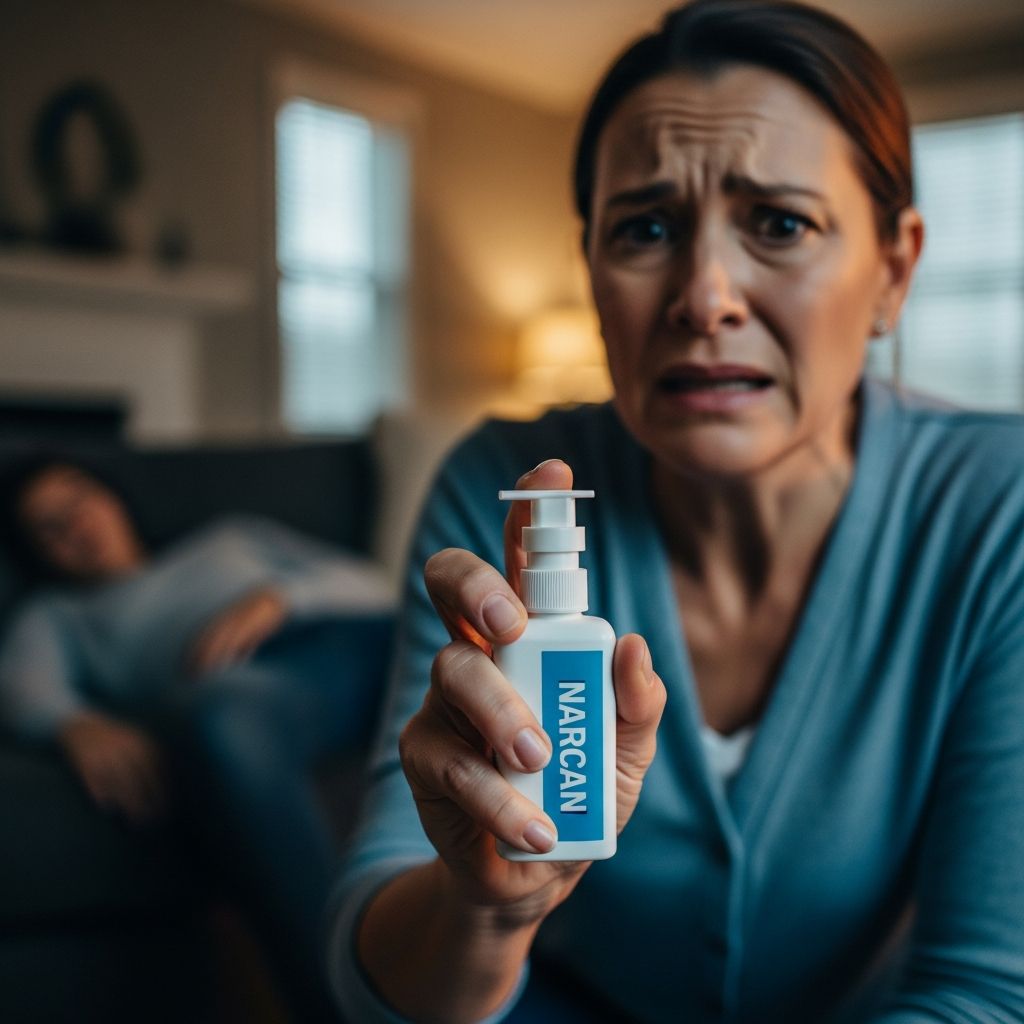
Opioid overdoses can happen suddenly and without warning, including to teenagers and young adults. Knowing how to recognize an overdose and how to use Narcan (a brand of naloxone) gives parents and caregivers a powerful tool to save a life.
Understanding Opioids and Overdose
Opioids are medicines or drugs that act on specific receptors in the brain to reduce pain and create a sense of relaxation. They include prescription pain relievers, such as oxycodone, hydrocodone, codeine, and morphine, as well as illegal drugs like heroin and synthetic opioids like fentanyl. When used in high doses or mixed with other substances, opioids can slow a person’s breathing to dangerously low levels.
An opioid overdose occurs when the amount of opioid in the body overwhelms the brain’s control of breathing. The person may become very sleepy, unresponsive, and eventually stop breathing completely. Without quick help, a lack of oxygen can cause brain damage and death within minutes.
- Opioids may be prescribed after surgery, injury, or dental work.
- Teens may encounter opioids through misused prescriptions or counterfeit pills.
- Overdose risk increases when opioids are combined with alcohol, anxiety medications, or other sedatives.
What Is Narcan (Naloxone)?
Narcan is a brand name for naloxone, a medication that temporarily reverses the effects of opioids during an overdose. It works by quickly attaching to the same receptors in the brain that opioids use and pushing the opioids off, allowing breathing to start again. Narcan does not work on non-opioid drugs such as cocaine, methamphetamine, or alcohol alone, but it is often used when any opioid overdose is suspected.
Naloxone has been used for many years in hospitals and by first responders, and it is considered very safe. It has one main purpose: to counteract an opioid overdose long enough for emergency medical care to take over. If a person has no opioids in their system, Narcan will not give them a “high” or cause intoxication.
| Feature | Details |
|---|---|
| Medication type | Opioid antagonist (blocks opioid receptors) |
| Main purpose | Temporarily reverse life-threatening opioid overdose |
| Works on | Overdoses involving opioids (prescription or illicit) |
| Does not work on | Non-opioid drugs (e.g., alcohol alone, stimulants) |
| Effect on non-users | No effect if opioids are not present in the body |
Why Families Should Consider Having Narcan
Keeping Narcan on hand is similar to having a fire extinguisher or an epinephrine auto-injector in the home: it prepares families for an emergency that may be unlikely but potentially devastating. Even families who do not think of themselves as “at risk” can be affected if a teen experiments with pills, a visitor brings medications into the home, or a child accidentally ingests an opioid.
Because Narcan is easy to use and has a strong safety profile, many public health organizations encourage wider availability in households, schools, and community settings. Parents, guardians, coaches, and other adults who spend time with teens can benefit from basic training in recognizing overdose signs and using Narcan correctly.
- Teens may assume prescription pills are safer than street drugs, not realizing they can still cause overdose.
- Counterfeit pills may contain unexpected amounts of fentanyl, greatly increasing overdose risk.
- Having Narcan does not promote drug use; it simply provides a safety net in case of an emergency.
Recognizing Signs of an Opioid Overdose
Recognizing an opioid overdose quickly is crucial because Narcan works best when given as soon as breathing problems start. Parents and caregivers should learn the typical signs so they can respond confidently rather than hesitating in an emergency.
Not every person will have all symptoms, and it can sometimes be hard to tell if someone is just very sleepy or in serious trouble. When in doubt, treat the situation as an overdose and call emergency services immediately.
Common Warning Signs
- Very slow or stopped breathing, or gasping for air.
- Unresponsiveness: the person does not wake up to shouting or firm shaking.
- Small, “pinpoint” pupils in the eyes.
- Skin that is pale, grayish, or bluish, especially on lips or fingertips.
- Snoring, gurgling, or choking sounds that may signal blocked airways.
- Limp body, with little or no movement.
If you suspect an overdose, it is safer to act than to wait. Call your local emergency number first, then prepare to give Narcan if it is available.
How Narcan Works in the Body
Opioids attach to specific receptors in the brain and body that control pain, mood, and breathing. During an overdose, so many of these receptors are filled with opioids that the brain’s breathing center slows down or shuts off. Narcan competes for those same receptor spots and binds more tightly than most opioids.
When Narcan binds to the receptors, it pushes opioids away and blocks their effects for a period of time. This release allows the brain to restart normal breathing, often within a few minutes. Because Narcan’s effects usually last only 30 to 90 minutes, medical help is still necessary, especially for longer-acting opioids that can remain in the body after Narcan wears off.
Forms of Narcan and How It Is Given
Narcan is most commonly available to families as a pre-packaged nasal spray designed for simple, rapid use in emergencies. Medical professionals may also use injectable forms of naloxone in hospitals or ambulances, but non-medical caregivers are usually trained on the nasal spray only. The nasal spray does not require needles and is used by spraying the medicine into one nostril while the person lies on their back.
The device is single-use and comes pre-measured, so there is no need to calculate doses or adjust the amount. In some cases, more than one dose may be needed, especially if strong opioids like fentanyl are involved or if the person does not respond after a few minutes.
| Form | Who Usually Uses It | Key Points |
|---|---|---|
| Nasal spray | Parents, caregivers, school staff, community members | Pre-measured, needle-free, sprayed into one nostril while the person is on their back. |
| Injectable (into muscle, under skin, or vein) | Emergency medical personnel, trained clinicians | Allows dose adjustments; typically used in clinical or emergency settings. |
Step-by-Step: Using Narcan Nasal Spray
In a crisis, having a clear mental checklist can reduce panic and help you move quickly. The following steps outline a general approach for using Narcan nasal spray; always read and follow the specific instructions that come with your product, as devices may differ slightly.
- Check responsiveness and breathing. Try to wake the person by calling their name, shaking their shoulders, and rubbing your knuckles firmly on their breastbone. If they do not respond and breathing seems slow, noisy, or absent, treat it as a possible overdose.
- Call emergency services. Dial your local emergency number (such as 911) immediately and explain that you suspect an opioid overdose. Put the phone on speaker if possible so you can keep your hands free.
- Position the person. Lay the person on their back on a flat surface. Gently tilt their head back and support the neck to open the airway.
- Prepare the Narcan device. Remove the nasal spray from its packaging. Hold it with your thumb on the bottom of the plunger and two fingers on either side of the nozzle.
- Administer the spray. Gently insert the tip of the nozzle into one nostril until your fingers touch the base of the nose. Press the plunger firmly once to release the entire dose.
- Watch and support breathing. After spraying, remove the device and monitor the person. If you are trained in rescue breathing or CPR and the person is not breathing, follow the instructions you have been taught while waiting for the medicine to work.
- Give additional doses if needed. If there is no response after about 2–3 minutes and you have another spray, give a second dose in the other nostril. Continue to follow the instructions from emergency responders.
- Place in recovery position once they start breathing. If the person begins to breathe on their own and becomes more responsive, roll them onto their side with the top knee bent to prevent choking if they vomit.
What to Expect After Giving Narcan
When Narcan begins to work, the person may go from unresponsive to very awake or confused within a short time. They may breathe more normally, open their eyes, and start to move. In people who regularly use opioids, Narcan can cause sudden withdrawal symptoms because it rapidly pushes opioids off their receptors.
Withdrawal symptoms can include headache, nausea, vomiting, sweating, trembling, anxiety, and irritability. These reactions can be uncomfortable and frightening, but they are usually not life threatening compared with the overdose itself. Emergency medical staff can help manage these symptoms and decide on next steps for ongoing care.
Safety, Side Effects, and Myths
Narcan is considered very safe, even for children, and it has no effect on people who do not have opioids in their system. The most common “side effects” are actually withdrawal symptoms in individuals who are physically dependent on opioids. These may feel intense but are a sign that the medicine has displaced the opioids from their receptors.
Families sometimes worry that keeping Narcan at home will encourage drug use, but research and public health experience do not support this fear. Instead, Narcan is best viewed as an emergency intervention, similar to a life preserver: it does not stop someone from falling into the water, but it can keep them alive long enough to be pulled to safety.
- Myth: Narcan is only for “heavy drug users.”
Reality: Anyone taking opioids, even as prescribed, can experience an overdose under certain conditions. - Myth: Using Narcan could seriously harm someone who is not overdosing.
Reality: Narcan has no known serious effects in people without opioids in their body. - Myth: Having Narcan encourages riskier behavior.
Reality: Access to Narcan is part of a broader safety plan and does not cause people to start or increase drug use.
Storage, Expiration, and Preparation
Like any medication, Narcan should be stored properly to remain effective. Keep it at room temperature, away from direct sunlight, and out of extreme heat or cold. Do not store it in places that regularly get very hot or very cold, such as a car glove compartment in extreme weather.
Check the expiration date on the box or device and replace your supply when it expires. While some expired naloxone may still have partial effectiveness, relying on up-to-date medication gives the best chance of fully reversing an overdose. Keep Narcan in a location that is easy to access during an emergency and let trusted family members, babysitters, and caregivers know where it is stored and how to use it.
Talking With Kids and Teens About Narcan
Conversations about Narcan can open the door to broader discussions about substance use, peer pressure, and safety. Explaining why the medication is in the home helps reduce fear and misunderstanding. The goal is not to frighten children, but to empower them with knowledge and encourage open communication.
With younger children, keep language simple, focusing on safety and the idea that some medicines can be dangerous if taken the wrong way. With teens, be honest about overdose risks, counterfeit pills, and the role Narcan plays in saving lives. Emphasize that the best protection is avoiding misuse of drugs altogether, but that Narcan is available in case of emergencies.
- Invite questions and avoid judgmental reactions when your child brings up drugs or friends’ behaviors.
- Discuss safe storage of medications and why sharing prescriptions is never okay.
- Remind teens that calling for help in an overdose situation is the right thing to do, even if they are worried about getting in trouble.
After an Overdose: Next Steps for Families
Surviving an overdose is often a turning point for families. After emergency care, health professionals may recommend follow-up visits, mental health support, and treatment options for opioid use disorder. Medications such as buprenorphine or methadone, combined with counseling, can help stabilize brain chemistry and reduce cravings for opioids.
Parents may feel guilt, anger, or confusion after a child or teen experiences an overdose. Seeking support from counselors, parent groups, or community organizations can help families cope and rebuild trust. Keeping Narcan available afterward remains important, as the risk of another overdose can be higher during periods of instability or early recovery.
Frequently Asked Questions About Narcan
Is Narcan only for adults, or can it be used in children? Narcan can be used in children of all ages if an opioid overdose is suspected. In emergencies, the priority is to restore breathing, and naloxone has a strong safety record across age groups. Always seek immediate medical help after giving Narcan to a child. What if I am not sure it is an opioid overdose? If you see signs like slow or absent breathing, unresponsiveness, and blue or gray skin, call emergency services and use Narcan if available. The medication will not harm someone who does not have opioids in their system, and waiting to be certain can cost valuable time. Can Narcan replace emergency medical care? No. Narcan is a temporary measure that buys time until professional care is provided. Its effects wear off, and the person may need more doses or treatment for complications, especially if long-acting or powerful opioids are involved. How many doses of Narcan might be needed? Some overdoses respond to a single dose, while others, especially those involving strong synthetic opioids, may require multiple sprays given a few minutes apart. Always follow the instructions that come with your product and the guidance of emergency responders. Where can families get Narcan? Access varies by region, but Narcan is often available through pharmacies, community health programs, harm-reduction organizations, and sometimes schools or local initiatives. In many areas, it can be obtained without a personal prescription. Ask your child’s health care provider or local health department for guidance on where to obtain it and training on its use. Does Narcan treat opioid addiction? No. Narcan is an emergency medication that reverses overdose temporarily; it does not treat the underlying substance use disorder. Long-term recovery typically involves ongoing medical care, counseling, support groups, and sometimes medications designed specifically for addiction treatment.
Opioid overdoses are medical emergencies, but prompt recognition and rapid use of Narcan can turn a potential tragedy into a second chance. By learning how this medication works, storing it properly, and talking openly with children and teens, families can be better prepared to protect the people they love.