Childhood is more than test scores and schedules; it is the brief window when curiosity is wild, imagination is limitless, and ordinary days can still feel magical. As a parent or caregiver, you cannot control everything that happens to your child, but you can intentionally create moments and experiences that help them grow into capable, compassionate, and resilient adults.
This guide offers a fresh way to think about “must-have” childhood experiences—not as a checklist to stress over, but as gentle themes you can return to throughout the years. The goal is simple: help your child live a childhood that feels rich, not rushed.
Why Childhood Experiences Matter More Than Stuff
Experiences shape a child’s inner world far more deeply than toys or trends. A camping trip, a tough team season, or a day spent volunteering can quietly build problem-solving, empathy, and confidence in ways no gadget can.
- Shared experiences strengthen bonds between children and caregivers, creating stories and inside jokes that last decades.
- Trying new things teaches kids to experiment, make mistakes, and recover—skills that matter far more than perfection.
- Facing age-appropriate challenges in a safe, supported way helps children discover that they are more capable than they realized.
Instead of counting how many activities your child does, think about the variety of experiences they get over the years: new places, new people, new feelings, and new responsibilities.
Nurturing Curiosity: Let Them Explore the World
A curious child is already halfway to becoming an independent learner. Curiosity thrives when children are allowed to ask questions, investigate, and sometimes get messy. You do not have to be an expert to support this—your willingness to wonder out loud with them is enough.
Simple Ways to Spark Curiosity
- Visit a place that invites questions, like a museum, farm, science center, harbor, or construction site (from a safe distance).
- Host a “question night” at dinner where every family member brings one wild or serious question to explore together.
- Keep simple tools at home—magnifying glass, measuring tape, notebooks, basic art and craft materials—to turn random questions into mini investigations.
- Encourage your child to say “I wonder…” and resist the urge to answer immediately; instead, ask “How could we find out?”.
| Age | Type of Activity | Example |
|---|---|---|
| 3–6 years | Hands-on discovery | Sorting rocks or leaves by color, size, or texture. |
| 7–10 years | Simple research projects | Choosing an animal or planet to learn about and creating a poster. |
| 11–14 years | Independent experiments | Trying a safe kitchen science experiment or building a simple model. |
| 15–18 years | Real-world problem solving | Helping plan a family purchase, trip, or budget by comparing options. |
Building Resilience: Let Them Struggle (Just Enough)
Many of the most important childhood experiences do not look magical in the moment. They look like scraped knees, tears after a lost game, or the frustration of a tricky assignment. These are not failures of parenting; they are training grounds for resilience when handled with care and support.
Healthy Challenges Every Child Should Face
- Losing at something that matters. Whether it is a game, election, or competition, learning to lose with dignity and try again is crucial.
- Sticking with a commitment. Finishing a season, performance, or long project, even when enthusiasm dips, teaches follow-through.
- Learning something that doesn’t come easily. Maybe it’s swimming, public speaking, or math; wrestling with difficulty builds grit and patience.
- Fixing a mistake. Calling a friend to apologize, redoing a chore, or rewriting an assignment shows that mistakes can be repaired, not hidden.
The key is not to shield kids from all discomfort but to walk beside them while they navigate it. Offer empathy, not instant rescue. Ask, “What could you try next?” instead of solving the problem for them.
Connection and Belonging: Growing Up Loved and Seen
Children need to feel that there are people in their lives who truly see them—interests, quirks, moods, and all. Experiences that deepen connection teach kids that they are not alone in the world and that relationships can weather both fun and conflict.
Connection-Rich Childhood Moments
- Being part of a team or group. Sports, clubs, music ensembles, youth groups, or volunteer crews teach cooperation and shared purpose.
- Creating family rituals. Friday night board games, Saturday walks, or seasonal baking give kids a sense of stability and identity.
- Talking through conflict calmly. Resolving a disagreement with a sibling or friend builds communication skills and empathy.
- Spending uninterrupted time with a caring adult. Even a weekly walk or drive with no devices can become sacred time for deep conversations.
These experiences do not need to be elaborate. Consistency matters more than spectacle. Small, repeated moments of attention add up to a powerful sense of belonging.
Nature and the Outdoors: Let Them Get Dirty
Modern childhood often takes place indoors and on screens, but many of the richest memories are formed under the open sky. Time outside helps kids regulate stress, move their bodies, and learn their place in a larger, living world.
Outdoor Experiences Worth Making Time For
- Watching a sunrise or sunset together and noticing how the sky changes.
- Sleeping outdoors at least once—camping in the backyard, a tent on a balcony, or a full camping trip.
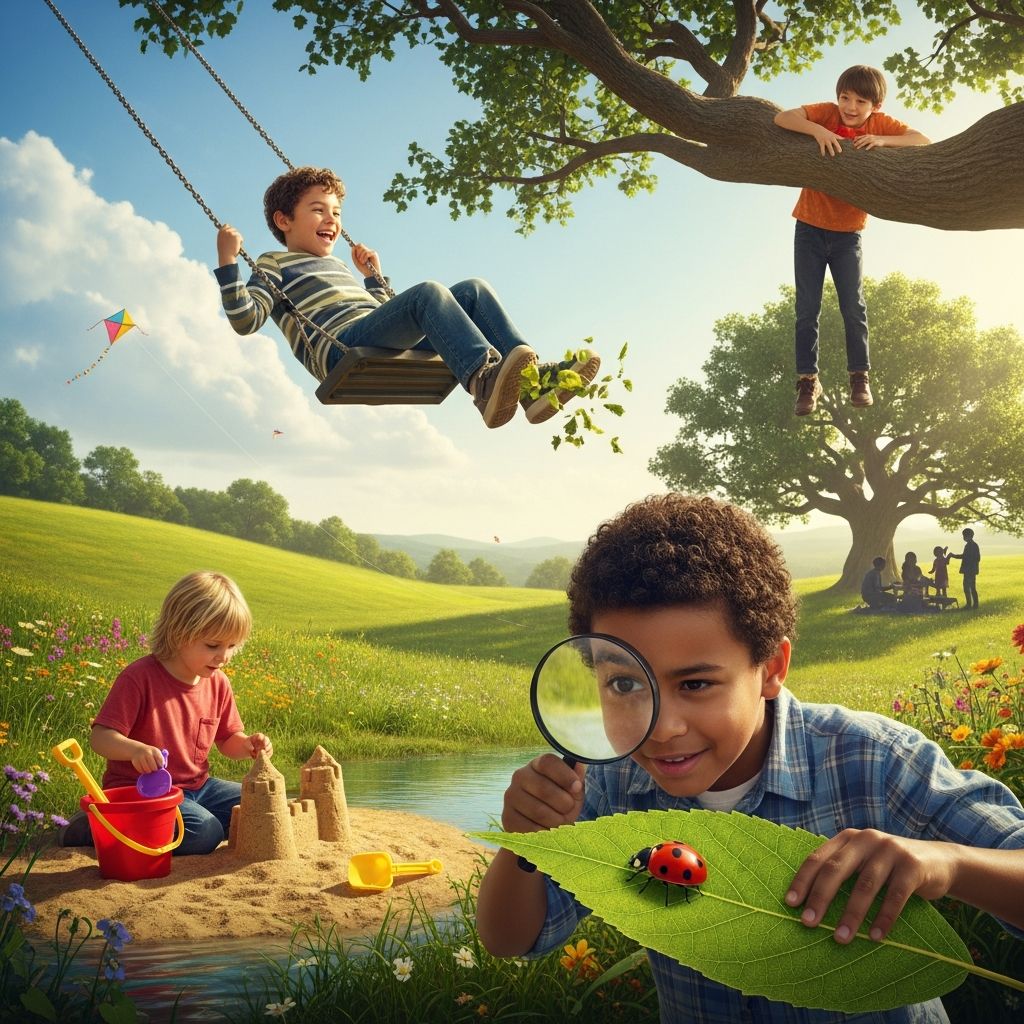
- Playing in natural spaces: climbing trees, wading in a stream, running through a field, or digging in the garden.
- Experiencing different weather: walking in light rain, feeling snow on their face, or listening to a thunderstorm from a safe place.
If you live in an urban area, “nature” can be a city park, a community garden, or even a balcony full of plants. The goal is for your child to feel the textures, sounds, and rhythms of the natural world firsthand.
Independence and Responsibility: Let Them Take the Lead
Children become trustworthy by being trusted with real, age-appropriate responsibilities. Experiences that involve planning, decision-making, and follow-through help them move from dependence to capable independence.
Responsibility-Building Experiences
- Managing a regular chore. Feeding a pet, taking out the trash, or being in charge of setting the table every night teaches reliability.
- Planning something from start to finish. A small party, family outing, or simple meal can be a practice ground for lists, timing, and problem-solving.
- Handling a small budget. Allowance or gift money, with guidance, teaches trade-offs, saving, and delayed gratification.
- Going on supervised independence “steps.” Walking to a nearby shop, taking public transportation with a friend, or ordering in a restaurant helps them practice autonomy.
The goal is to gradually expand your child’s circle of autonomy. Instead of doing everything for them, ask, “Which part can you handle on your own?” and let that piece grow over time.
Creativity and Imagination: Let Them Make Something from Nothing
Every child deserves the chance to feel the quiet joy of making something unique—whether it’s a drawing, story, dance, or homemade invention. Creative experiences teach kids to express their inner worlds and to see that ideas can turn into reality through effort.
Creativity-Boosting Experiences
- Having unstructured time with open-ended materials: cardboard boxes, fabric scraps, tape, blocks, or simple art supplies.
- Finishing a creative project: a comic book, short video, handmade gift, or simple craft that they can proudly show others.
- Performing in some way: a school play, open mic, family talent show, or just a living-room performance builds courage.
- Experimenting with different art forms: music, dance, painting, photography, or creative writing to discover personal interests.
These experiences do not require expensive classes. What matters most is time, freedom, and your willingness to value the process rather than the final product.
Values and Contribution: Discovering Their Power to Help
A meaningful childhood includes moments when a child sees that they can make a positive difference in someone else’s life. Acts of contribution—big or small—develop empathy, purpose, and a sense of responsibility toward others.
Experiences That Cultivate Kindness and Purpose
- Volunteering in age-appropriate ways: helping at a community event, cleaning a local space, or supporting a donation drive.
- Showing care for someone nearby: making a card for a sick neighbor, baking for a new family, or helping a younger child.
- Participating in family decisions about giving: choosing a cause to support or selecting items for a donation box.
- Practicing everyday kindness: noticing people who are left out, standing up gently for others, or offering help without being asked.
When you talk with your child about these experiences, focus on how it felt to help, not just what they did. This helps them connect kindness with inner satisfaction, not just external praise.
Everyday Joy: Little Moments That Become Big Memories
Not every memorable childhood moment is life-changing. Many of the experiences kids remember most clearly are small, repeated bits of joy that quietly mark their growing-up years. These moments are easy to overlook but simple to create.
Small Joys That Often Stick
- Staying up a little late for a special event like a meteor shower, fireworks, or a family movie marathon.
- Sharing a simple tradition around food: pancakes on birthdays, “backwards dinner” where dessert comes first, or picnic meals on the floor.
- Having a place that feels “theirs”—a reading corner, favorite climbing tree, or regular spot at the park.
- Receiving a heartfelt letter or note from a caregiver that they can keep and reread as they grow.
These experiences tell children, “You matter, and your presence brings joy.” That message can carry them through harder seasons later in life.
Putting It All Together: A Flexible Experience Map
Every family’s circumstances are different. Not every child can travel, join multiple activities, or spend hours outdoors. The good news is that most of the experiences that truly matter are about feelings and skills, not locations or price tags.
| Theme | Core Skill or Feeling | Everyday Example |
|---|---|---|
| Curiosity | Wonder, questioning, exploration | Investigating how something at home works together. |
| Resilience | Bouncing back, persistence | Trying a new sport or hobby and finishing a season. |
| Connection | Belonging, trust | Regular family rituals like shared meals or game nights. |
| Nature | Calm, perspective | Weekly walks in a park or green space. |
| Independence | Confidence, competence | Being responsible for a task from start to finish. |
| Creativity | Self-expression, originality | Time set aside for drawing, building, or inventing. |
| Contribution | Empathy, purpose | Helping a neighbor, sibling, or community group. |
Use these themes as a loose compass rather than a strict checklist. Over the course of many years, most children can experience each theme in multiple ways, at different ages, and in forms that fit your family’s reality.
FAQs About Childhood Experiences
Do I need to plan a huge bucket list for my child?
No. An enormous list often creates pressure instead of joy. Focus on a handful of meaningful experiences each year that touch on curiosity, connection, resilience, and responsibility. Many experiences will happen naturally; your job is to notice them and support your child as they unfold.
What if our budget is tight or we have limited time?
Most powerful childhood experiences are low-cost or free. Reading together, exploring a local park, cooking as a family, visiting the library, or starting a small home project can all build skills and memories. Intentional attention matters far more than expensive outings.
How can I balance safety with giving my child independence?
Think in terms of gradual steps. Start with small freedoms you can supervise at a distance, such as playing in the yard, then build up to choices like walking to a nearby friend’s house or managing a small purchase. Talk about safety rules clearly and review experiences afterward to build judgment.
My child resists trying new things. Should I push?
Gentle encouragement is helpful; force usually backfires. Offer choices between two new experiences instead of presenting just one, and pair new activities with familiar comforts, like going with a friend or bringing a favorite snack. Celebrate the attempt, not just the outcome.
How will I know if my child is getting “enough” of these experiences?
There is no perfect standard. Look for signs that your child is slowly becoming more curious, more capable of handling frustration, more connected to others, and more willing to help. If you see even small shifts in these directions over time, you are offering what they need most: chances to grow while feeling deeply loved.
In the end, unforgettable childhoods are rarely about doing everything. They are about doing some things with heart, attention, and a long view of the person your child is becoming.