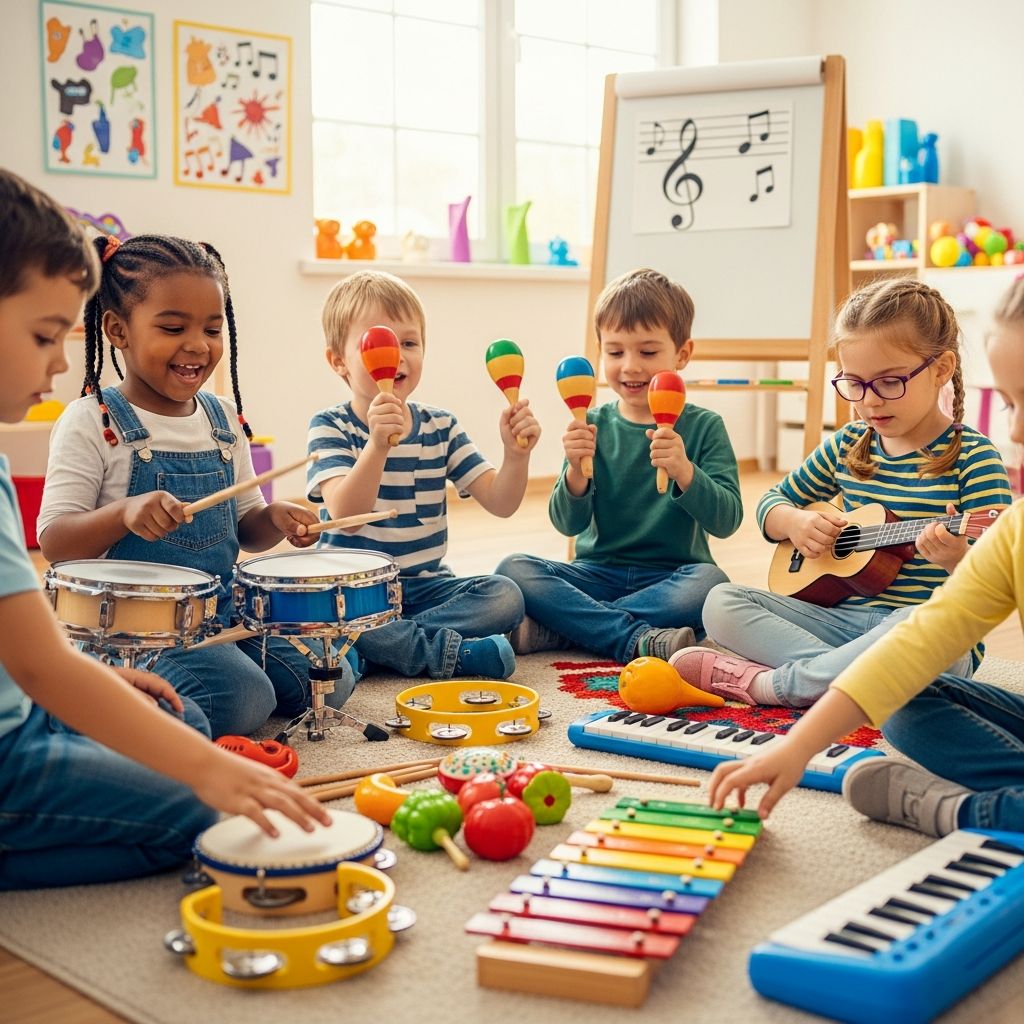
Music serves as a powerful tool in early childhood education, engaging young minds and bodies in ways that promote holistic development. For children aged 3 to 5, rhythmic play and songs build essential skills while providing endless entertainment. This guide offers fresh ideas for incorporating music into daily routines at home or in preschool settings, drawing on proven benefits to foster growth.
Why Music Matters in Early Years
Engaging preschoolers in musical experiences goes beyond mere entertainment; it lays foundational blocks for lifelong learning. Research highlights how rhythm and melody stimulate brain areas responsible for memory, attention, and problem-solving, leading to stronger cognitive abilities. Physically, activities like dancing refine coordination and balance, supporting both gross and fine motor progress. Socially, group singing encourages cooperation and emotional expression, helping children form bonds and regulate feelings.
Emotionally, music acts as a mood regulator, releasing endorphins to reduce stress and boost joy, which is crucial during the energetic preschool phase. Linguistically, rhymes and repetitive lyrics enhance phonological awareness, vocabulary, and even early reading readiness by mimicking speech patterns. Overall, these elements create a joyful learning environment that motivates children to explore and connect.
Core Benefits of Musical Engagement
Music’s impact spans multiple developmental domains, making it indispensable for preschool curricula and home play.
- Cognitive Growth: Patterns in beats and songs sharpen memory, categorization, and sequencing skills. Children discern rhythms, aiding pattern recognition essential for math and logic.
- Physical Advancement: Movements like clapping or jumping develop large muscles, while instrument play hones fine motor precision for tasks like writing.
- Language Boost: Singing expands vocabulary and syllable clapping improves sound awareness, paving the way for literacy.
- Social-Emotional Gains: Collaborative activities teach turn-taking and empathy, while expressive songs help process emotions.
- Creative Spark: Freestyle dancing or sound experimentation fuels imagination and self-expression.
Simple Singing and Rhythm Games
Start with everyday songs adapted for movement to build rhythm sense and listening skills. Choose familiar tunes and add actions like waving arms for “Twinkle Twinkle Little Star” or marching for counting songs. These require no materials and fit seamlessly into mornings or transitions.
For rhythm focus, use body percussion: clap patterns, pat laps, or stomp beats while echoing a leader’s sequence. This game strengthens memory and coordination as kids replicate increasingly complex rhythms. Vary speeds to challenge focus and adaptability.
Instrument Exploration Activities
Introduce homemade or simple instruments to deepen sensory engagement. Shake rice-filled bottles as shakers for high-energy dances, or tap sticks together for steady beats. These build hand-eye coordination and auditory discrimination.
Create a “sound station” with pots (drums), spoons (cymbals), and rubber bands on boxes (strummy guitars). Let children experiment freely, then guide them to match sounds to emotions or stories, blending creativity with cognitive play.
Dance and Movement Challenges
Dancing channels boundless energy into structured fun. Play upbeat tracks and call out actions: “freeze on the drum,” “wiggle like worms,” or “gallop like horses.” This enhances spatial awareness, balance, and body control.
For partner play, form pairs to mirror movements, promoting teamwork and observation skills. Slow, flowing dances to calm melodies teach emotional regulation, ideal for winding down.
Storytelling Through Melodies
Combine narratives with music for immersive learning. Sing simple stories like animal adventures, pausing for kids to add sound effects or movements. This merges language, imagination, and rhythm.
Use scarves for visual flair: wave them high for birds or low for fish in a sung tale. Such activities expand vocabulary and comprehension while encouraging expressive participation.
Seasonal and Themed Music Play
Align activities with holidays or seasons for relevance. For autumn, crunch leaves underfoot to drum-like beats or sing harvest songs with basket marches. Winter calls for jingle bell shakes and snowball tosses to rhythms.
Summer splash dances with water toys synced to splash sounds add sensory delight. Theming keeps engagement high and connects music to real-world experiences.
| Activity Type | Skills Targeted | Materials Needed | Group Size |
|---|---|---|---|
| Singing Games | Language, Memory | None | Any |
| Instrument Play | Fine Motor, Listening | Household items | Small-Large |
| Dance Challenges | Gross Motor, Social | Music player | Medium |
| Story Songs | Imagination, Vocab | Scarves/Props | Small |
Integrating Music into Daily Routines
Weave music throughout the day for maximum impact. Greet with hello songs, transition with cleanup chants, and end with lullaby circles. Consistency reinforces skills and builds routine comfort.
At home, mealtimes become syllable-clapping games, baths turn into echo songs. Parents report calmer evenings and better family bonding through these habits. In classrooms, short 10-minute bursts prevent overload while sustaining enthusiasm.
Tips for Successful Music Sessions
- Keep it short: 5-15 minutes to match attention spans.
- Follow the child’s lead: Adapt to their energy and interests.
- Involve everyone: Rotate leaders to build confidence.
- Vary tempo: Mix fast and slow for emotional range.
- Record progress: Capture sessions to revisit and celebrate growth.
Observe for individual needs—some thrive in groups, others prefer solo play. Inclusivity ensures all children benefit.
Frequently Asked Questions
Is music necessary for preschool development?
Yes, music holistically supports cognitive, physical, and social growth, enhancing school readiness.
What if my child is shy about singing?
Start privately or with instruments; build gradually through fun, non-judgmental play.
Do I need professional instruments?
No, household items work wonders and encourage creativity.
How often should we do music activities?
Daily short sessions yield the best results for retention and joy.
Can music help with emotional regulation?
Absolutely, rhythms calm the mind and movement releases tension.
Long-Term Impacts of Early Music Exposure
Children immersed in music early show advanced skills in reading, math, and social competence by kindergarten. Habits formed now foster lifelong appreciation, confidence, and resilience. Parents and educators investing time here reap rewards in curious, capable kids.
References
- Music and Movement for Preschoolers and Toddlers — Brightwheel. 2023-10-15. https://mybrightwheel.com/blog/preschool-music-and-movement
- Role of Music and Movement in Preschool — Premier Christian Academy. 2024-05-20. https://www.premierchristianacademy.com/blog/the-role-of-music-and-movement-in-preschool-education/
- 5 Benefits of Music in Preschool Classrooms — Highlights Early Learning. 2023-08-12. https://earlylearning.highlights.com/blogs/the-confident-classroom/5-benefits-of-music-in-preschool-classrooms