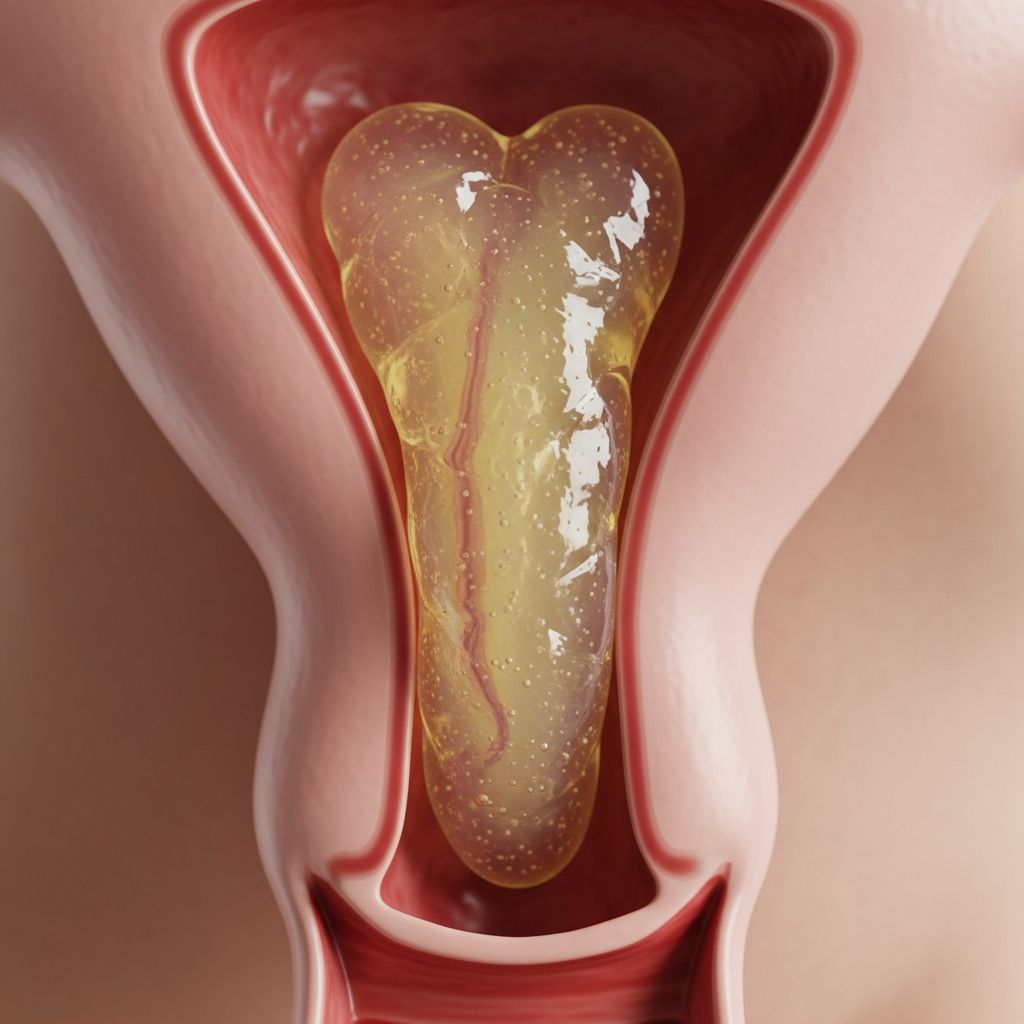
The mucus plug is one of those pregnancy topics that rarely comes up at baby showers but matters a lot for your health and peace of mind. It is a natural barrier that forms in the cervix early in pregnancy and helps protect the uterus and baby from infection. Losing it can be a normal sign that the cervix is changing, but in early pregnancy it can sometimes point to a problem, so it is important to understand what you are seeing and when to ask for medical advice.
What Exactly Is the Mucus Plug?
The mucus plug is a concentrated collection of thick cervical mucus that sits in the cervical canal during pregnancy. It acts like a soft, jelly-like seal that closes off the opening between the vagina and the uterus, reducing the chance that bacteria will travel upward toward the baby. Hormonal changes, particularly shifts in estrogen and progesterone, stimulate the cervix to produce this dense mucus after conception, and the plug is usually fully formed by the end of the first trimester.
Rather than being a single solid object, the plug is typically made of layers of sticky mucus held together, so it may look like a clump or thick strand when it eventually comes out. This protective “seal” stays in place throughout most of pregnancy, only loosening when the cervix begins to soften, thin, or open as labor approaches or if there is preterm cervical change.
How and When the Mucus Plug Forms
Shortly after a fertilized egg implants in the uterus, progesterone increases and causes cervical mucus to become thicker and more acidic. This change in consistency and chemistry makes the mucus less friendly to bacteria, helping create ideal conditions for a protective plug. Over the next several weeks, the cervix continues to secrete mucus until the cervical canal becomes filled.
By around 12 weeks of pregnancy, the mucus plug is typically established and continues to be maintained by ongoing hormone activity. It is not a one-time production; the cervix can keep adding fresh mucus, so the plug can regenerate to some extent if a small portion comes away before the final weeks of pregnancy.
What the Mucus Plug Looks Like
Appearance can vary widely from person to person, and even from one pregnancy to another, which is why there is no single “normal” look. In many cases, the mucus plug appears as:
- Thick, jelly-like, or gelatinous mucus.
- Clear, off-white, or slightly yellow in color.
- Sometimes tinged with pink, brown, or small streaks of red blood as tiny cervical blood vessels break.
Some people notice one obvious clump that is a few centimeters long, while others see smaller pieces over several days. The texture is usually thicker and more cohesive than regular pregnancy discharge and may remind you of mucus from a head cold. Importantly, it should not have a strong, foul odor, which can suggest infection.
Mucus Plug vs. Normal Pregnancy Discharge
Pregnancy itself brings an increase in vaginal discharge, often called leukorrhea, which is usually thin, milky, and mild-smelling. Distinguishing that from the mucus plug can be confusing, especially early in pregnancy. Generally, normal discharge is more fluid and consistent over time, while plug material is thicker and more clumpy.
| Feature | Mucus Plug | Usual Pregnancy Discharge |
|---|---|---|
| Consistency | Thick, sticky, gelatinous, may come out in a clump | Thin, creamy, or slightly sticky, more fluid |
| Color | Clear, off-white, yellowish, or streaked with pink/brown/red | Usually clear, white, or light yellow without blood |
| Timing | Often lost late in pregnancy as cervix changes; early loss may signal a problem | Present throughout pregnancy, often starting early and varying with hormones |
| Amount | Can appear as a noticeable clump or series of thicker pieces | Smaller amounts seen regularly on underwear or when wiping |
| Odor | Mild or no odor; foul smell may indicate infection | Mild or no odor; strong odor is not typical |
When Does the Mucus Plug Usually Come Out?
In many pregnancies, the mucus plug is released in the later part of the third trimester, often sometime after 37 weeks, when the cervix begins to soften, shorten, and open in preparation for birth. As the cervical tissue changes shape, the plug can no longer sit snugly in the canal and is squeezed out.
However, there is a wide range of normal. Some people lose the plug days or even weeks before active labor starts, while others do not notice it at all and go straight into contractions or their water breaking. Because the cervix can continue to produce mucus, it is possible for more thick discharge to appear even after a plug-like clump has already come out.
Can You Lose the Mucus Plug in Early Pregnancy?
Yes, it is possible for part or all of the mucus plug to come out before the last weeks of pregnancy, but this is less common and may require medical evaluation. Any condition that causes the cervix to dilate or thin too soon, such as preterm labor or cervical insufficiency, can lead to early loss.
Early loss does not always mean that pregnancy will end or that birth is imminent, because the cervix can continue secreting mucus and, in some cases, rebuild a protective barrier. Still, because early cervical change can increase the risk of preterm birth or infection, healthcare providers usually want to know if the plug seems to be coming away before 37 weeks, especially if you have other symptoms.
What Early Loss Might Look Like
In early or mid-pregnancy, losing the mucus plug might show up as an unexpected amount of thick mucus when you wipe or in your underwear. The mucus may be:
- More gelatinous and dense than your usual discharge.
- Clear, white, or yellowish, sometimes mixed with streaks of blood.
- Passed all at once or in several smaller pieces over a day or two.
Occasional small pieces of thick mucus, without pain, contractions, or bleeding, can sometimes be benign, but any noticeable change that concerns you is worth mentioning to your provider. Early loss combined with pelvic pressure, cramping, backache, or regular tightening of the uterus may be a sign of preterm labor and needs prompt attention.
Does Losing the Mucus Plug Early Mean Miscarriage?
Losing the mucus plug by itself is not considered a direct sign of miscarriage. Miscarriage is more commonly associated with heavy bleeding, strong cramping, and passage of tissue, whereas isolated discharge of thick mucus is more related to cervical changes.
That said, losing the plug before 37 weeks can sometimes reflect underlying issues, such as preterm dilation or infection, which in turn can affect pregnancy outcomes. Because of this possible connection, medical professionals generally recommend contacting your provider if you think you have lost your plug early, particularly if you also notice bleeding as heavy as a period, severe pain, or contractions that do not go away.
Mucus Plug vs. Bloody Show
The terms “mucus plug” and “bloody show” are often used together but do not mean exactly the same thing. The mucus plug refers specifically to the thick mucus that seals the cervix, while bloody show describes mucus that is clearly mixed with blood, usually indicating that small blood vessels in the cervix have broken as it opens.
It is possible to lose a mostly clear or off-white plug and then later notice bloody show, or to see bloody mucus the first time you realize the plug has come away. Bloody show is often considered a more specific sign that labor is near, especially when it appears together with regular contractions or other labor signs.
Signs of Infection or Other Problems
Changes in discharge are not only about the mucus plug; they can also provide clues about infection. While the plug itself should not have a strong unpleasant smell, discharge that is green, yellow, or gray and foul-smelling is more typical of vaginal infections rather than normal plug loss. Pain, itching, or burning in or around the vagina can further support this interpretation.
Untreated infections may increase the risk of complications during pregnancy, including preterm labor in some cases. Because of that, it is important to contact your provider promptly if you notice abnormal color, odor, or discomfort, regardless of whether you think you have lost the mucus plug. Early treatment can often resolve the issue and protect both your health and your baby’s.
When to Call Your Healthcare Provider
Some mucus changes can be safely monitored at home, while others call for quick medical advice. In general, you should contact your healthcare provider if you:
- Think you lost the mucus plug before 37 weeks of pregnancy.
- Notice thick mucus accompanied by bright red bleeding or bleeding heavier than a normal period.
- Have regular contractions, pelvic pressure, or back pain along with increased discharge, especially before term.
- See green, gray, or strongly foul-smelling discharge, or experience itching, burning, or swelling.
- Feel fluid leaking that might be your water breaking rather than mucus.
Trust your instincts. If you are worried or unsure what you are seeing, reaching out to your provider is always appropriate. They can ask specific questions, examine you if needed, and, in some situations, check your cervix or perform tests to rule out preterm labor or infection.
What Happens After You Lose the Mucus Plug at Term?
Losing the mucus plug at or after 37 weeks is usually a normal part of the body’s preparation for labor. For some, labor may start within hours, while for others it may still be days or even weeks away. The exact timing varies and the plugin alone is not a precise predictor of when contractions will become regular.
Many people notice other early labor signs around the same time, such as stronger Braxton Hicks contractions, lower back discomfort, or a feeling that the baby has dropped deeper into the pelvis. Staying hydrated, watching for a pattern of contractions, and having your hospital bag ready can help you feel more prepared during this period of waiting.
Practical Tips for Monitoring Discharge
Because discharge and mucus can change from day to day, a few simple habits can help you keep track without becoming obsessed:
- Use unscented, breathable underwear and avoid douches or harsh soaps so you can more easily notice true changes in color or odor.
- Consider using a light panty liner if you have frequent discharge, changing it regularly so you can see new mucus clearly.
- Note any new symptoms in a pregnancy journal or app, especially if they coincide with pain, contractions, or decreased baby movements.
Remember that seeing more discharge is often a normal part of pregnancy. Rather than examining every wipe, focus on patterns: sudden shifts in amount, color, smell, or the appearance of clots of mucus mixed with blood are the changes most likely to be medically important.
Frequently Asked Questions About the Mucus Plug
Is it normal to never notice my mucus plug?
Yes. Some people never see an obvious plug and still have completely normal labors and births. The plugin can dissolve gradually into existing discharge or be passed during active labor when attention is focused elsewhere, so missing it does not indicate a problem.
Can sexual activity or an exam make me lose the mucus plug?
Sex and cervical exams can sometimes irritate the cervix and dislodge some mucus, particularly late in pregnancy when the cervix is already softening. This is why some people notice more discharge or a small amount of blood-tinged mucus after intercourse or a check. However, if pregnancy is otherwise healthy and near term, this is usually not dangerous, though it is still reasonable to call your provider with any questions.
Will the mucus plug grow back if I lose it too early?
The cervix can continue to produce mucus, and in some situations a partial barrier may re-form after early loss. That said, early loss can be a warning sign that the cervix is under strain or beginning to open, so medical evaluation remains important. Even if the plug appears to re-establish, your provider may want to monitor you more closely for signs of preterm labor.
How can I tell the difference between mucus plug and my water breaking?
The mucus plug is thick and sticky, often forming clumps, while rupture of membranes (water breaking) is typically a gush or steady trickle of thin, watery fluid. If you are unsure, place a clean pad in your underwear and check whether the fluid soaks it like water rather than appearing as stringy mucus, and then contact your healthcare provider for guidance.
Should I keep the mucus plug if I see it?
There is no medical need to save the plug, but if you are planning to call your provider, taking a clear description or even a discreet photo (for your provider’s use only) can sometimes help them understand what you are seeing. Once any needed medical questions are addressed, it is safe to dispose of it as you would any other body fluid.
Key Takeaways
- The mucus plug is a thick collection of cervical mucus that forms early in pregnancy and helps block bacteria from entering the uterus.
- It is usually lost late in pregnancy as the cervix softens and opens, but early loss can signal preterm cervical changes and should be evaluated.
- Normal plug material is thick and jelly-like, often clear or off-white, and may contain small streaks of blood, but it should not have a strong foul odor.
- Contact your healthcare provider if you lose the plug before 37 weeks, have heavy bleeding, suspect your water has broken, or notice signs of infection.
Understanding the mucus plug can turn a surprising bathroom moment into a useful piece of information about how your body is supporting pregnancy. When in doubt, sharing what you see with your healthcare team is one of the best ways to stay safe and feel reassured as you move toward meeting your baby.