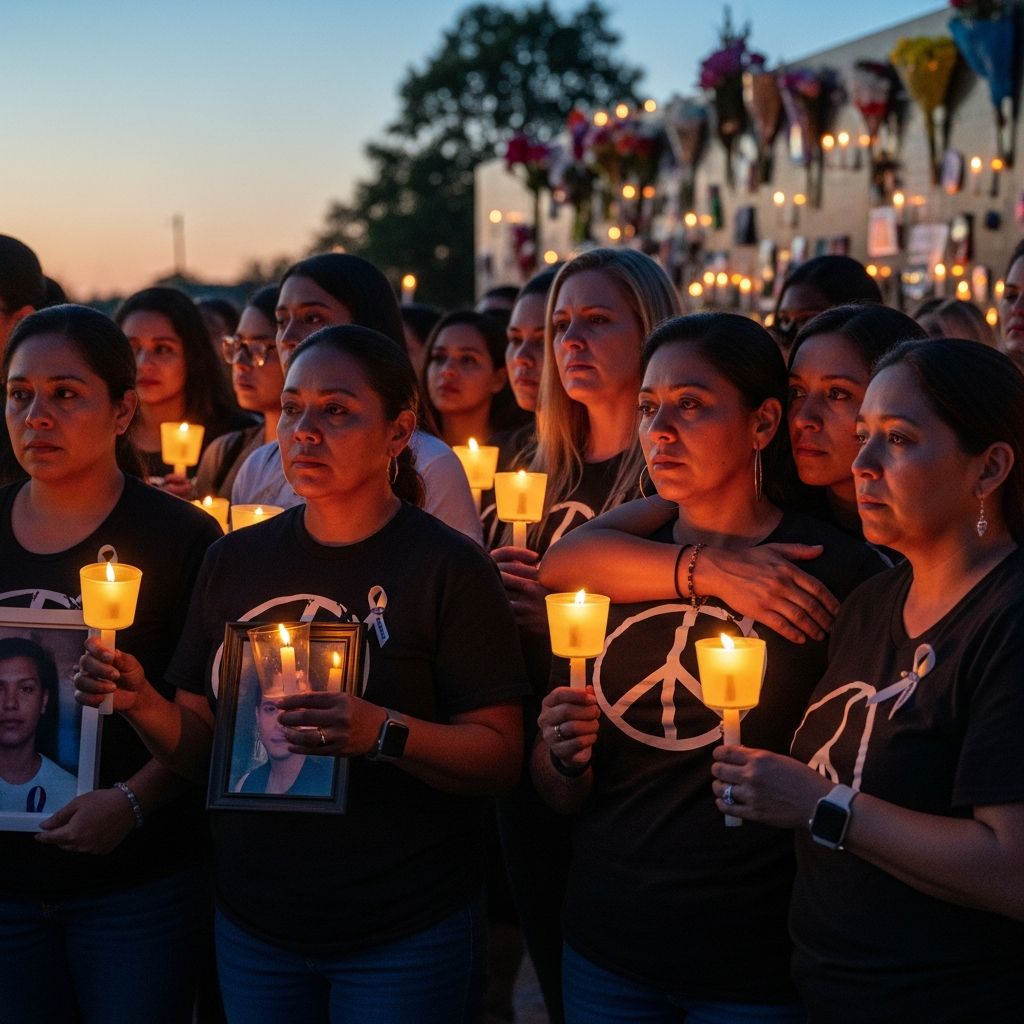
Across America, mothers are at the forefront of a movement to confront the devastating impact of gun violence on families. From survivors of school shootings to parents gripped by daily fears, their stories highlight the urgent need for change. This article delves into personal testimonies, statistical realities, and potential paths forward, emphasizing the power of maternal advocacy in building safer futures for children.
Surviving the Unthinkable: A Mother’s Enduring Story
In 1997, a tragic event at Heath High School in Paducah, Kentucky, forever altered one family’s life. Missy Jenkins Smith, then a teenager, was among students gathered in prayer when gunfire erupted. Paralyzed from the chest down after a bullet struck her spine, she recalls the chaos vividly—the fall of friends, the loss of three girls, and the lifelong challenges that followed.
Despite profound physical limitations, Missy rebuilt her life. She graduated high school, earned a social work degree, counseled at-risk youth, married, and raised two sons. Her forgiveness of the shooter, rooted in faith and family support, did not erase her conviction that preventable factors enabled the tragedy. The perpetrator accessed guns from an unsecured garage, underscoring failures in storage and access.
Missy’s journey illustrates resilience amid trauma. She now speaks nationwide, advocating not against guns per se, but for responsible ownership and laws preventing easy access by unstable individuals. Her experience challenges the notion of such events as isolated anomalies, pointing to a pattern seen in subsequent shootings.
Parental Fears in an Era of School Shootings
The shadow of mass shootings looms large over American families. A recent survey reveals that 32% of U.S. parents with K-12 children are very or extremely worried about a shooting at their child’s school, with mothers (39%) expressing higher concern than fathers (24%). Demographic disparities amplify this anxiety: 50% of Hispanic parents, 40% of Black parents, 35% of Asian parents, and 22% of White parents share extreme worry, alongside 49% of low-income families versus 19% of upper-income ones.
- Mothers’ heightened vigilance: Daily routines like school drop-offs carry unspoken dread.
- Income and racial gaps: Marginalized communities face disproportionate fears due to higher exposure risks.
- Universal impact: No family feels immune, fostering a culture of pervasive unease.
These statistics reflect a societal crisis where school safety dominates parental conversations. Mothers, often primary caregivers, bear the emotional weight, channeling fear into action.
Differing Views on Solutions: Bipartisan Challenges
Parents agree on the problem but diverge on fixes. A majority (63%) believe improving mental health screening and treatment would be highly effective, with 70% of Democrats and 55% of Republicans in support. Yet partisan lines sharpen elsewhere: 61% of Republicans favor armed school security (versus 38% Democrats), while 67% of Democrats support assault weapon bans (opposed by 67% of Republicans).
Republican mothers show nuance, with 25% favoring assault weapon restrictions compared to 12% of Republican fathers. This table summarizes key divides:
| Solution | Democrats (% Very/Extremely Effective) | Republicans (% Very/Extremely Effective) |
|---|---|---|
| Mental Health Improvements | 70% | 55% |
| Armed Security | 38% | 61% |
| Ban Assault Weapons | 67% | 33% (implied) |
Such divisions complicate progress, yet common ground exists in addressing root causes like mental health.
Beyond Guns: A Sandy Hook Mother’s Perspective
Scarlett Lewis, whose son was killed in the 2012 Sandy Hook shooting, argues guns are not the sole culprit. As a Boston University alum, she advocates social-emotional learning (SEL), reduced screen time, and better parental modeling over solely stricter laws. Her grief fueled the Jesse Lewis Choose Love Movement, promoting character education to teach empathy and conflict resolution.
Lewis emphasizes personal responsibility: “Nothing will change until each one of us takes personal responsibility for what’s going on.” She believes SEL could prevent tragedies like Sandy Hook and Uvalde by equipping children with emotional tools. This approach complements gun reforms, targeting societal factors like isolation and poor role models.
Mothers Driving Change: Advocacy and Hope
Mothers have historically catalyzed social reforms—from suffrage to civil rights—and gun violence is no exception. Groups like Moms Demand Action amplify voices like Missy’s, pushing for secure storage laws and background checks. In Texas, editorials highlight mothers’ potential to end endless shooting anniversaries.
Personal stories humanize statistics. Missy’s work with adolescents aims to guide troubled youth away from violence. Scarlett’s SEL programs reach schools nationwide. These efforts blend policy advocacy with grassroots education, proving mothers’ resolve.
Practical Steps for Safer Communities
Families can act locally:
- Secure firearms: Use locks and safes to prevent child access, as in the Heath case.
- Promote SEL: Support school programs teaching emotional regulation.
- Engage politically: Contact legislators for mental health funding and storage laws.
- Foster dialogue: Discuss safety openly with children without inducing panic.
Communities benefit from multi-faceted strategies. Evidence supports mental health interventions: early screening reduces risks. Responsible ownership prevents theft or misuse.
Emotional Realities of Raising Children Today
In Uvalde and beyond, mothers grapple with a harsh world. Active shooter drills traumatize young minds, yet parents prepare ‘run, hide, fight’ protocols. This new normal erodes childhood innocence, prompting reflection on societal priorities.
Balancing vigilance and normalcy is key. Mothers model resilience, teaching empathy amid fear. Their advocacy ensures children’s voices are heard in policy debates.
Frequently Asked Questions (FAQs)
What percentage of parents worry about school shootings?
32% of U.S. parents with K-12 children are very or extremely worried, with mothers at 39%.
Are mothers more concerned than fathers?
Yes, 39% of mothers versus 24% of fathers report extreme worry.
Can survivors of shootings lead normal lives?
Many do, like Missy Jenkins Smith, who married, had children, and became a counselor despite paralysis.
What do parents think prevents shootings?
63% favor mental health improvements; views split on guns and security.
How are mothers advocating for change?
Through groups like Moms Demand Action and movements like Choose Love, pushing education and laws.
Looking Ahead: A Call to Collective Action
Mothers’ stories—from survival to advocacy—illuminate gun violence’s toll. While debates persist, shared priorities like mental health offer hope. By securing guns, enhancing emotional education, and uniting across divides, society can honor these voices and protect the next generation. The momentum builds; change is within reach.
References
- Missy Jenkins Smith | Moms Demand Action — Moms Demand Action. 2023. https://momsdemandaction.org/missy-jenkins-smith/
- Sandy Hook Mother: Guns Are Not the Root Cause of Mass Shootings — Boston University. 2022-06-15. https://www.bu.edu/articles/2022/sandy-hook-mother-says-guns-not-root-cause-of-mass-shootings/
- A Mother’s Essay on the Uvalde Texas School Shooting — Motherly. 2022. https://www.mother.ly/news/uvalde-texas-school-shooting/
- Parents are worried about school shootings — American Psychological Association. 2023-02. https://www.apa.org/monitor/2023/03/concern-over-school-shootings
- Editorial: Mothers lead the effort to end gun violence — San Antonio Express-News. 2022. https://www.expressnews.com/opinion/editorial/article/editorial-mothers-lead-the-effort-to-end-gun-18096870.php