The Transformation of Beauty Through the Lens of Motherhood
Becoming a parent fundamentally shifts how we perceive ourselves and the world around us. For many women, this transition extends deeply into how they understand and practice beauty. Motherhood does not simply add a new role to our identities—it acts as a transformative prism through which we reassess our values, priorities, and the narratives we have internalized about femininity, appearance, and self-care. When we hold our children and consider the world they will inherit, questions about authenticity, safety, and cultural integrity suddenly become personal and urgent. This shift in perspective often awakens a desire to move beyond conventional beauty standards and instead cultivate practices rooted in wisdom passed down through generations.
The journey of reclaiming beauty through motherhood is not merely about skincare routines or cosmetic choices. It represents a deeper reckoning with inherited narratives about what makes a woman worthy, beautiful, and valued. For many mothers, this process includes revisiting the traditions and practices of their ancestors—discovering that the solutions their grandmothers and great-grandmothers relied upon often surpassed modern alternatives in both efficacy and ethics. This reconnection becomes an act of resistance against systems that have attempted to commodify and standardize beauty while simultaneously severing us from our cultural roots.
Breaking Free From Colonial Beauty Standards
Contemporary beauty industries have been built upon foundations of colonialism, racial hierarchies, and consumption-driven narratives. These systems profit when women feel inadequate and perpetually chase an ever-shifting ideal of perfection. They succeed when we forget that beauty practices existed long before commercial advertising, influencer culture, and manufactured trends. Motherhood offers a unique opportunity to interrupt this cycle. When a woman becomes responsible for nurturing another human, her relationship to her own body and appearance often shifts from performance-based to purpose-driven.
Many mothers find themselves asking difficult questions: What products are safe enough for my child’s skin? What values do I want to model through my choices? What am I teaching my daughters about their worth if I continue pursuing beauty standards that have been designed to keep me perpetually unsatisfied? These questions, born from maternal responsibility, often lead to a broader questioning of inherited beauty paradigms. The process of reclaiming ancestral beauty practices becomes an act of decolonization—a deliberate choice to honor the wisdom of forebears rather than the directives of corporations.
When we examine beauty through the lens of cultural authenticity rather than commercial imperatives, we discover that many ancestral practices share common principles: they work with nature rather than against it, they emphasize community knowledge over individualized consumption, and they produce minimal waste. These approaches offer not only practical benefits but also a form of spiritual and cultural healing, particularly for those whose ancestral traditions have been marginalized or erased.
The Role of Cultural Mothering in Passing Down Wisdom
In many Indigenous and non-Western cultures, the practice of mothering extends beyond biological parents to anyone who nurtures life and cultivates growth within community. This expansive understanding of motherhood as a sacred practice has historically ensured that knowledge, including beauty practices and herbal remedies, flowed continuously through generations. When mothers and elder women shared beauty rituals—grinding botanicals, preparing infusions, applying poultices—they were simultaneously transmitting cultural memory, teaching respect for plant allies, and reinforcing community bonds.
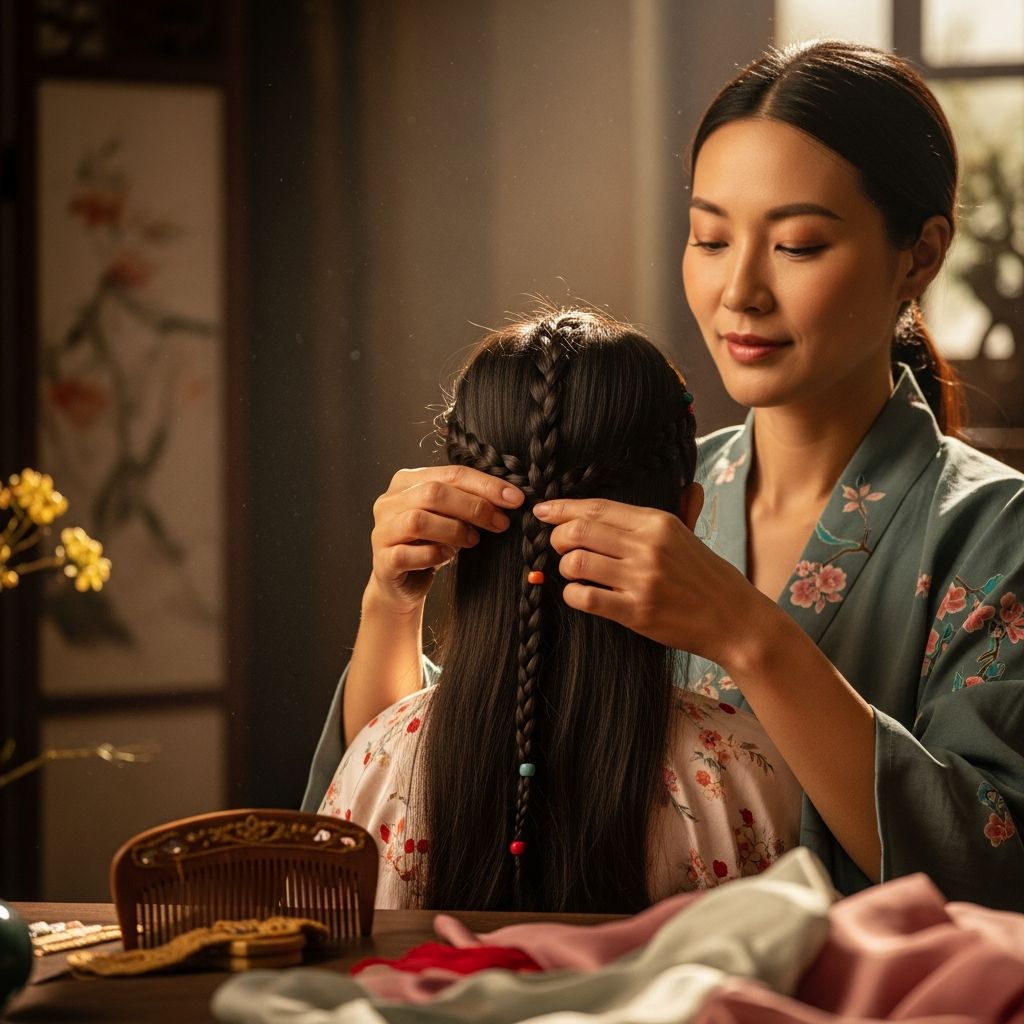
The interruption of these knowledge transmission chains, often resulting from colonization, forced migration, assimilation policies, and economic disruption, left many women disconnected from their ancestral beauty wisdom. Reclaiming motherhood as a vehicle for cultural continuity becomes, in this context, an essential form of resistance and healing. When a mother teaches her daughter to make a face mask from ingredients her great-grandmother used, or when she shares stories about traditional beauty practices while braiding hair, she is not merely performing a beauty routine—she is engaging in an act of cultural preservation and intergenerational repair.
This transmission of ancestral knowledge through mothering creates multiple layers of benefit. Children learn that their heritage has value, that their family’s ways of knowing are legitimate and effective, and that beauty is not a distant ideal to purchase but a practice rooted in relationship and community. Simultaneously, the mother reclaims agency over her own aesthetic choices, stepping away from external validation and toward cultural authenticity.
Building Better Systems for Future Generations
Motherhood often catalyzes a shift in time horizon. Rather than living primarily in the present moment, many mothers find themselves thinking in terms of generations—considering what world their children will inherit and what tools and wisdom they will need to thrive. This expanded temporal awareness frequently motivates a deeper investigation into sustainable, safe, and culturally grounded beauty practices.
Consider the practical implications: conventional beauty products often contain synthetic chemicals, generate substantial packaging waste, and require resource-intensive manufacturing and distribution networks. By contrast, ancestral beauty practices often involve local botanicals, minimal processing, and knowledge that can be shared and recreated without commercial intermediaries. When a mother chooses to learn about traditional skincare methods and teach these practices to her children, she is simultaneously making a choice that benefits her family’s health, reduces environmental impact, and strengthens cultural continuity.
Some mothers have taken this reconnection even further, transforming their personal reclamation journeys into businesses that honor ancestral traditions while meeting contemporary needs. These entrepreneurs become bridges between worlds—maintaining fidelity to traditional formulations and plant knowledge while applying modern standards of safety and efficacy. Their work demonstrates that ancestral beauty practices are not artifacts to be preserved in museums but living traditions capable of evolution and adaptation.
The Intersection of Beauty, Health, and Spiritual Practice
In many ancestral traditions, beauty practices were never separate from health, spirituality, or daily rhythms. A woman’s skincare routine was often intertwined with seasonal cycles, lunar phases, spiritual practices, and the availability of local plants. Beauty was understood not as an isolated pursuit of aesthetic perfection but as one dimension of overall wellbeing and spiritual alignment. This holistic perspective stands in stark contrast to contemporary consumer culture, which fragments beauty into isolated categories, each requiring separate products and specialized knowledge.
Reclaiming this integrated understanding of beauty represents a significant shift in consciousness. When motherhood prompts this reclamation, the benefits extend throughout family life. Children who witness their mothers engaging in beauty practices as expressions of self-respect and cultural connection rather than responses to external pressure develop healthier relationships with their own bodies and aesthetics. They learn that care practices can be grounded in meaning and tradition rather than anxiety and insecurity.
Furthermore, this reintegration of beauty with health and spirituality often reduces the psychological burden many women carry regarding appearance. When beauty is understood as an expression of cultural identity and physical wellbeing rather than a performance for external judgment, the stakes feel different. A mother practicing ancestral beauty rituals is not attempting to meet impossible standards—she is honoring her heritage and tending to her physical and spiritual health.
Creating Space for Self-Reclamation Within Motherhood
A common myth suggests that motherhood requires the complete subsumption of individual identity into the maternal role. Many women internalize messages that prioritizing their own wellbeing—including beauty practices and cultural expressions—represents selfishness or inadequate devotion to their families. This narrative has caused countless mothers to suppress aspects of themselves, including their connection to ancestral traditions and cultural practices.
Yet reclaiming ancestral beauty practices actually challenges this false binary. When a mother engages in beauty rituals connected to her heritage, she is simultaneously caring for herself and modeling cultural pride to her children. She is demonstrating that self-respect and cultural commitment are not luxuries to be deferred until children are grown but essential dimensions of a meaningful life. This modeling becomes one of the most powerful lessons a mother can offer—the embodied knowledge that it is possible to be both devoted to family and committed to personal authenticity.
Furthermore, many ancestral beauty practices can be performed within the rhythms of family life rather than requiring protected isolation. Applying herbal preparations, teaching children about medicinal plants, preparing traditional remedies—these activities can become shared family practices rather than individual indulgences. This integration allows mothers to reclaim aspects of themselves while simultaneously deepening family bonds and transmitting cultural knowledge.
The Power of Reconnection and Resistance
Throughout history, dominant systems have maintained control partly through disconnection—severing people from their cultural traditions, their land, their community knowledge, and their sense of belonging. This disconnection creates vulnerability. When individuals lack grounding in cultural identity and ancestral wisdom, they become more susceptible to external narratives, including those propagated by commercial interests. The beauty industry particularly profits from this vulnerability, selling solutions to problems it has partially created through the promotion of unattainable standards.
Reconnection with ancestral beauty practices represents a form of power recovery. When a woman decides to reclaim her grandmother’s skincare recipes instead of purchasing an expensive commercial product, she is making a choice that extends far beyond cosmetics. She is asserting the validity of her family’s knowledge, reducing economic dependence on commercial systems designed to exploit insecurity, and strengthening her connection to cultural identity. This power multiplies when shared—when mothers teach daughters, when elders share knowledge with younger community members, when ancestral practices are honored and practiced collectively.
For women whose ancestral traditions have been actively suppressed or erased, this reclamation carries particular significance. The choice to research traditional practices, to ask elders, to learn about plants used by ancestors, and to incorporate these methods into daily life becomes a form of cultural restoration. It honors the resilience of ancestors who maintained these practices despite pressure to abandon them and asserts the ongoing relevance and value of ancestral knowledge.
Practical Steps Toward Ancestral Beauty Reclamation
Reclaiming ancestral beauty practices is not necessarily complicated or expensive, though it does require intentionality and curiosity. Several practical approaches can facilitate this journey:
- Engage in intergenerational conversations with elders, asking about traditional beauty practices, ingredients, and rituals they remember or have practiced
- Research cultural beauty traditions through academic sources, community organizations, and historical records related to your heritage
- Experiment with simple preparations using accessible botanical ingredients, noting what works effectively for your skin and body
- Connect with community members who are actively practicing ancestral traditions, creating opportunities for knowledge sharing and collective learning
- Document and share practices within your family, ensuring that knowledge continues to flow to younger generations
- Support businesses and practitioners who are committed to honoring ancestral traditions while applying contemporary standards of safety and efficacy
Challenges and Considerations in the Reclamation Process
While reclaiming ancestral beauty practices offers significant benefits, the process also involves genuine challenges worth acknowledging. For many people, ancestral knowledge has been partially lost or fragmented due to historical disruption. Reconstructing practices may require research, experimentation, and acceptance that perfect replication may not be possible. Additionally, not all ancestral practices remain appropriate or safe in contemporary contexts—some may rely on ingredients that are now endangered, or that interact poorly with modern medications or environmental factors.
The commodification of ancestral practices also presents challenges. As interest in traditional beauty methods grows, commercial entities increasingly attempt to profit from ancestral knowledge, sometimes appropriating practices and removing them from cultural context. Conscious consumers must navigate this landscape carefully, supporting practitioners and businesses that genuinely honor cultural traditions rather than those merely using ancestral aesthetics as marketing strategies.
Additionally, individual experiences of ancestral connection vary widely. Some women have strong family relationships and oral traditions that facilitate learning. Others have experienced cultural disruption, adoption, or migration that complicates their relationship to ancestral knowledge. The reclamation process may be more complex for these individuals, potentially involving research, connection with cultural communities, and navigation of complicated family histories. This diversity of experience is important to honor—there is no single correct way to reclaim ancestral beauty practices.
The Broader Implications of Generational Beauty Practices
When many women simultaneously begin reclaiming ancestral beauty practices, the cumulative effect extends far beyond individual skincare. These choices collectively represent a market signal that consumers value safety, sustainability, and cultural authenticity. They support the growth of small businesses and practitioners rooted in community rather than corporate entities. They reduce demand for resource-intensive industrial processes and excessive packaging. They strengthen community bonds and intergenerational relationships.
Furthermore, this reclamation contributes to broader social movements toward decolonization, cultural recovery, and resistance to systems of exploitation. Every mother who teaches her daughter about ancestral beauty practices is asserting that her family’s knowledge matters, that her culture has value, and that there are alternatives to the dominant paradigms that have attempted to erase or marginalize her heritage.
Frequently Asked Questions
Q: Are ancestral beauty practices effective compared to modern products?
A: Many ancestral beauty practices have sustained efficacy across generations and often contain bioactive plant compounds that modern science is increasingly validating. However, effectiveness varies based on individual skin type, specific ingredients, and preparation methods. The advantage often lies in safety, sustainability, and cultural meaningfulness rather than necessarily superior performance compared to high-quality modern products.
Q: How can I find ancestral beauty practices if I don’t have family knowledge?
A: You can research cultural traditions through academic sources, connect with cultural organizations and community members, consult historical texts about your heritage, and engage with respected practitioners within your cultural community. Many elders are eager to share knowledge, and community organizations often facilitate this intergenerational transmission.
Q: Is reclaiming ancestral practices culturally appropriate for adopted individuals or those with mixed heritage?
A: Yes, with thoughtful engagement. Adopted individuals and those with mixed heritage can respectfully research and learn about traditions connected to their identities, ideally in conversation with cultural communities. The key is approaching with genuine curiosity and respect rather than appropriation.
Q: Can ancestral beauty practices be combined with modern skincare?
A: Absolutely. Many people successfully integrate ancestral practices with contemporary products, creating personalized routines that honor both tradition and scientific advancement. It’s important to research potential interactions and patch-test new preparations.
Q: How do I ensure that products marketed as ancestral are authentically connected to cultural traditions?
A: Research the creator’s background, look for genuine cultural connection rather than superficial marketing, seek recommendations from cultural community members, and support businesses owned by individuals from the cultures whose practices they honor.
References
- Generational Beauty — Meow Meow Tweet. Accessed 2026-04-02. https://meowmeowtweet.com/blogs/blog/generational-beauty
- The Sacredness of Motherhood: Ones Who Gave Us Life — Native Philanthropy. 2021-05-08. https://nativephilanthropy.org/blog/2021/05/08/the-sacredness-of-motherhood-ones-who-gave-us-life
- Motherhood Identity Series with Jennifer Sanford from Shimmer Chef — Mother Chapter Substack. Accessed 2026-04-02. https://motherchapter.substack.com/p/motherhood-identity-series-with-jennifer
- You Will Lose Yourself In Motherhood: Excerpt from Mothershift: Reclaiming Motherhood as a Rite of Passage — Jessie Harrold. Accessed 2026-04-02. https://www.yourzenmama.com/new-blog/you-will-lose-yourself-in-motherhood-excerpt-from-mothershift-reclaiming-motherhood-as-a-rite-of-passage-by-jessie-harrold
- Why I Carried My Baby in a Tikinagan — Today’s Parent. Accessed 2026-04-02. https://www.todaysparent.com/family/parenting/why-i-carried-my-baby-in-a-tikinagan/